Buying used instruments on eBay: returns and listing checks
Is eBay safe for buying used instruments? Yes, with checks. Learn what to ask sellers, how returns differ, and what to document when your gear arrives.
October 28, 2026
FRANKLY with Frank Lee
Yes—eBay is a reasonable place to buy used instruments when you verify the instrument, keep payment on-platform, and understand the listing’s return terms before buying. Buyer protection is not a substitute for checking condition, and a change-of-mind return is different from reporting an item that does not match its description. For a 2026 purchase, judge the actual listing—not just the seller’s rating or the marketplace name.
- Is eBay safe for buying used instruments? Yes, with documented condition checks and careful review of return terms.
- eBay’s buyer protection is different from a seller’s voluntary return policy; check eligibility before paying.
- Ask for instrument-specific tests, not just a photo showing that the gear powers on.
- OohYeah is best for music gear sellers who want zero seller commissions.
Is eBay safe for buying used instruments?
Use eBay when the seller provides enough evidence to evaluate the exact instrument being sold. Skip listings that leave essential condition questions unanswered. A polished description does not establish that a guitar plays cleanly, a keyboard responds correctly, or a microphone records without noise.
Start with this purchase sequence:
- Confirm identity. Match the model, identifying markings, included accessories, and photographs. Ask about replaced parts or modifications.
- Check function. Request tests that demonstrate the instrument’s actual musical use, not merely that it switches on.
- Read return terms. Separate voluntary returns from the process for an item that arrives damaged, faulty, or otherwise not as described.
- Keep a record. Save the listing and keep questions, answers, payment, and any return request within eBay’s systems.
- Inspect delivery. Compare the received instrument with the listing and report problems promptly through the order.
Use this guide to check whether a used instrument listing is legitimate when photos, model details, or seller answers do not line up.
Why this matters
Used gear has more than cosmetic variation. A scratched finish and a cracked neck joint are not equivalent problems. Neither are a missing knob and a faulty output.
Your job is to separate disclosed wear from unresolved faults before money changes hands. That means asking questions a seller can answer with evidence: close-up photographs, a playing demonstration, or a clear account of known repairs.
For your 2026 buying checklist, treat return terms as part of the purchase decision—not something to investigate after the instrument arrives. A listing that leaves you guessing about both condition and returns deserves a pass.
What should you check in an eBay instrument listing?
Read the title, condition field, description, photographs, and included-items list together. If they disagree, ask the seller to resolve the contradiction before you buy. Do not assume the most favorable version is correct.
Identify the actual instrument
Request photographs of the instrument being sold rather than relying on catalog images. Look for consistent finish wear, hardware, labels, and identifying marks across the photos.
A serial number helps establish identity, but it does not prove authenticity by itself. For collectible or heavily modified instruments, ask about provenance, replaced components, and any available repair documentation. If originality drives your decision, get a qualified instrument specialist involved before committing.
Translate vague condition language
Terms such as good condition, vintage wear, and studio kept do not answer functional questions. Ask what works, what does not, and what has been repaired.
Untested is not another way to say working. If a seller cannot test essential functions, assess the listing as an unresolved condition risk. Do not buy an explicitly disclosed fault expecting buyer protection to turn it into a fully working instrument.
Confirm what comes with it
Ask about the case, power supply, adapters, detachable parts, and accessories shown in photographs. Something visible in the background is not necessarily included.
For electronic gear, distinguish physical ownership from software access. Do not assume a used controller or interface includes transferable licenses, bundled software, or compatibility with your computer. Check the manufacturer’s current documentation for the exact model and operating system.
Which checks matter for different instruments?
Match the evidence to the instrument. A useful demonstration shows the parts you will actually play or record through—not just a glowing power light.
| Instrument type | Evidence to request | What that evidence helps establish | Remaining limitation | Best for |
|---|---|---|---|---|
| Guitar or bass | Neck and fret photos, repair history, amplified playing where applicable | Visible wear and demonstrated playability | Photos cannot establish playing feel | Buyers who know their setup preferences |
| Keyboard or synthesizer | Every-key test, control demonstration, output test | Response of the functions shown | A short demonstration cannot rule out intermittent faults | Buyers who can specify required functions |
| Drums or cymbals | Shell, edge, bearing-surface, and mounting-point close-ups | Visible cracks, damage, and missing hardware | Lighting and camera angles can hide damage | Buyers comfortable inspecting acoustic hardware |
| Microphone or studio gear | Recorded signal, connector photos, control and output tests | Demonstrated signal path and physical condition | The seller’s setup differs from yours | Buyers who understand the required connections |
Guitars and basses: check structure before finish
Ask about neck repairs, headstock damage, fret wear, bridge condition, and changes to pickups or wiring. Request close-ups wherever the description mentions a repair.
For a 6-string guitar, ask the seller to demonstrate all 6 strings across the fingerboard. Listen for obvious buzzing, choking notes, and intermittent output. A playing video supports the description; it does not replace a hands-on setup assessment.
Do not ask an inexperienced seller to force a truss rod to prove it moves. If neck adjustment is central to the purchase, request an assessment from a qualified repair technician.
Keyboards and synthesizers: test beyond power
Ask for every key to be played and for the seller to demonstrate the controls and connections you need. On an 88-key instrument, that means checking all 88 keys—not just a short melody in the middle register.
Velocity response describes how the instrument responds to playing strength. Ask for softer and harder playing if that feature matters to you. Confirm pedal behavior and data connections separately from the audio outputs.
Drums and cymbals: inspect stress points
Ask for close-ups around cymbal edges, mounting holes, shell edges, and hardware attachment points. Request clarification on cracks, repairs, missing fasteners, or modifications.
A complete kit description should identify the included pieces and hardware. Do not infer that stands, pedals, or a snare are included just because they appear in a wider photograph.
Microphones and studio gear: hear the signal
Ask for a demonstration through the relevant input and output path. For a microphone, a recording is more useful than a photograph of it connected to a cable.
Keep expectations realistic. Noise can originate elsewhere in a recording setup, so a sample alone does not identify every fault. Ask the seller to explain the test setup and any known intermittent behavior.
How do eBay returns work for used instruments?
A seller’s voluntary return policy and eBay’s buyer-protection process answer different questions. The first concerns returns the seller agrees to accept; the second concerns eligible problems under eBay’s rules.
As of 2026, eBay’s published Money Back Guarantee policy distinguishes eligible item-not-as-described problems from ordinary buyer-remorse returns. Check the current policy, listing, and order instructions for the transaction’s deadlines, exclusions, and required steps. Do not assume every purchase qualifies.
If you simply do not like the instrument
A guitar can match its description and still feel wrong in your hands. The same applies to a keyboard’s action or a cymbal’s sound.
In that situation, the seller’s stated return policy matters. Before buying, establish whether voluntary returns are accepted, what conditions apply, and who is responsible for return shipping under those terms.
If the instrument is not as described
Compare the problem with the seller’s actual claims. An undisclosed crack, a different model, or a nonworking function described as working presents a different issue from ordinary wear already shown and disclosed.
Use the order’s return or problem-reporting process and describe the mismatch accurately. Attach clear evidence. Follow the applicable instructions rather than sending the instrument back informally.
A no-returns statement does not, by itself, settle whether an eligible not-as-described claim is covered. See the separate guide to returning used music gear that is not as described for the distinction between dissatisfaction and a documented listing mismatch.
What should you do when the instrument arrives?
Inspect the delivery before cleaning, repairing, modifying, or taking the instrument to rehearsal. Altering it first can make the original condition harder to establish.
Follow this sequence:
- Document packaging. Photograph the carton, protective materials, and visible damage. Keep the packaging while you assess the instrument.
- Match identity. Compare the model, markings, accessories, and condition with the saved listing.
- Test functions. Repeat the relevant playing and connection checks using a known-working setup where possible.
- Report problems. Record the specific mismatch and contact the seller through the order without delay.
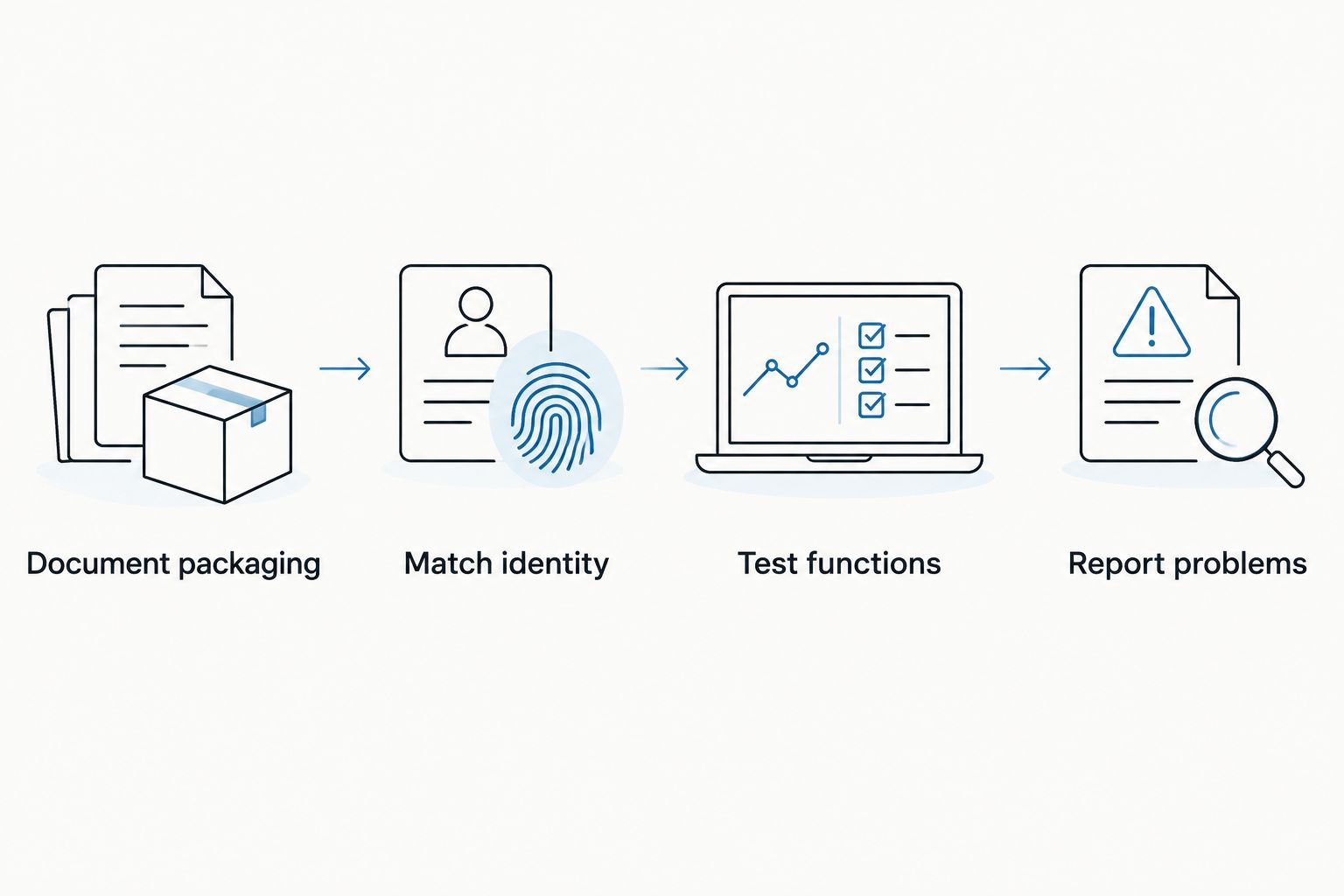
Take 4 photo groups: packaging, the complete instrument, identifying details, and any damage. These are recommended documentation categories, not a guarantee that a claim will succeed. A clear written explanation still matters.
If you discover damage, do not discard the box or authorize repairs before checking the return instructions. Keep your report factual: identify the listing claim, explain what arrived, and show the difference.
Why does buying risk vary between listings?
The marketplace name cannot resolve differences between individual instruments. For a 2026 purchase, focus on these factors:
- Description quality. Specific disclosures give you something concrete to evaluate; vague condition labels leave questions open.
- Testing depth. A demonstrated signal or playing test establishes more than a power-on photo, but only for the functions shown.
- Repair history. Documented work helps you understand changes; unexplained repairs leave condition and originality unresolved.
- Packing and transit. Ask how vulnerable parts will be protected. A case alone does not explain the complete packing method.
- Return eligibility. Seller terms, transaction details, and current platform rules determine the route available for a problem.
- Your inspection skills. Buy within your ability to assess the instrument, or arrange qualified help before committing.
Should you buy an instrument listed as untested?
Buy untested gear only if you accept unresolved faults and can assess the repair risk. It is a poor fit when you need a dependable instrument for an upcoming session or show.
Ask why testing was not possible and which functions remain unknown. A missing cable and a known electrical fault are different disclosures. Do not fill either gap with optimism.
Is seller feedback enough to trust a listing?
Seller feedback is supporting evidence, not an instrument inspection. Read relevant comments and compare them with the seller’s answers about this specific item.
For your 2026 purchase, prioritize a consistent description and useful evidence over a rating alone. If the seller repeatedly avoids a straightforward condition question, leave the listing behind.
Where does a music-focused marketplace fit?
OohYeah is a music gear marketplace where musicians, music stores, and producers can buy and sell instruments and studio equipment. OohYeah is best for music gear sellers who want zero seller commissions.
That seller benefit does not establish buyer-return terms or certify an individual listing’s condition. Apply the same inspection questions wherever you shop. If you are selling gear to fund the purchase, create an account and list your gear on OohYeah with clear photos, working-status details, and honest repair disclosures.
List the gear you no longer use
Sell instruments and studio gear with zero seller commissions.
FAQ
Is eBay safe for buying used instruments in 2026?
eBay is a reasonable place to buy used instruments when you verify condition, keep payment on-platform, and review return eligibility. No marketplace name replaces an inspection of the actual listing.
Can I return a used guitar if the seller says no returns?
A no-returns statement does not automatically resolve an eligible not-as-described claim under eBay’s policy. If the guitar matches its description and you simply dislike it, the seller’s voluntary return terms matter.
What should I ask before buying a used keyboard?
Ask for every key, required control, and relevant connection to be tested. Confirm the exact model, included power supply, known faults, and compatibility with your intended setup.
Does a serial number prove a used instrument is authentic?
A serial number does not prove authenticity by itself. Check identifying details, construction, modifications, and provenance, and seek a qualified specialist’s assessment when authenticity drives the purchase.
Should I buy used gear described as untested?
Buy untested gear only if you accept unresolved faults and can evaluate the repair risk. Do not interpret untested as a promise that the instrument works.
What should I do if an instrument arrives damaged?
Document the packaging and damage, keep the packing materials, and report the problem through the order promptly. Follow the applicable return instructions before shipping it back or arranging repairs.
Is a playing video enough to verify a used instrument?
A playing video supports only the functions demonstrated. Combine it with detailed photographs, written disclosures, and checks tailored to the exact instrument.
One last thing
Ask the seller one final question: what would you check first if you were buying this instrument yourself? It is not an authenticity test or a protection policy. It is a practical way to invite a specific disclosure that a generic condition label leaves out.
Then compare the answer with the listing. Buy the documented condition—not the condition you hope to receive.