Used gear not as described? Evidence, returns, and dispute steps
Can you return used music gear not as described? Request a return with clear evidence. Learn what to save, how to contact sellers, and when to dispute.
October 26, 2026
FRANKLY with Frank Lee
You can request a return when used music gear arrives materially different from its listing, but approval depends on the transaction’s terms, applicable protections, and your evidence. Save the listing, document the mismatch, contact the seller through the purchase channel, and get return instructions before shipping anything back.
- Can you return used music gear not as described? Request a return with evidence; approval depends on applicable terms and protections.
- Save the listing, messages, delivery records, and clear photos before changing or repairing the gear.
- Get written return instructions before shipping; keep tracking and proof of delivery.
- OohYeah connects musicians buying and selling used music gear; check transaction terms before purchasing.
Why this matters
A dead input is different from a guitar tone you dislike. Your strongest complaint identifies something the seller represented and shows exactly how the delivered item differs.
For a used-gear purchase in 2026, treat the listing as part of your transaction record. Before your next purchase, use this guide to checking whether a used instrument listing is legitimate to ask better questions before you pay.
Can you return used music gear not as described?
A documented mismatch supports a return request; dissatisfaction alone does not establish that the listing was inaccurate. Start by separating a description problem from a preference problem or an explicitly disclosed defect.
Examples of description problems include a different model arriving, an advertised accessory missing, or a function described as working failing during a suitable test. These examples are not automatic refund guarantees. The governing terms and available protections determine the remedy.
Choose the resolution that fits the evidence and what you actually want:
| Resolution | Best for | Advantage | Limitation |
|---|---|---|---|
| Return request | Buyers who do not want to keep materially misdescribed gear | Asks to reverse the purchase | Requires agreement or a decision under applicable protections |
| Partial refund request | Buyers willing to keep gear despite a documented issue | Avoids shipping the item back if accepted | Leaves you responsible for keeping and dealing with the gear |
| Formal dispute | Buyers with an unresolved complaint and an eligible dispute route | Creates a structured review of the transaction | Requires evidence, deadlines, and compliance with that process |
| Keep the item | Buyers whose complaint is preference rather than a listing mismatch | Avoids an unnecessary return process | Leaves the purchase unchanged |
Do not accept a partial refund just to end an awkward conversation. First decide whether you would still want the instrument or studio equipment with the problem fully understood.
Build your evidence before changing the gear
Save the listing
Capture the title, description, condition statement, photos, included accessories, and stated return terms. Save the order confirmation and relevant seller messages alongside them.
Preserve what you actually saw when buying. If the seller separately confirmed that every input worked, keep that message with the listing rather than relying on memory.
Photograph what arrived
Take an overall photograph, identifying details, and close-ups of the problem. Include the model designation and serial number where present, while keeping personal information out of anything you share publicly.
Photograph the shipping carton, label, packing materials, and visible impact damage. Keep the packaging until the complaint is resolved or you receive instructions about it.
Record a controlled test
Show the symptom with a simple, repeatable setup. State what you connected, which settings you used, and what happened; do not turn a demonstration into an unsupported diagnosis.
For audio gear, connector details matter. A 3-pin XLR connection, a 1/4-inch instrument connection, and a 5-pin MIDI connection serve different purposes; matching a plug does not establish that your complete setup is correct.
Check the manufacturer’s operating instructions for the actual model. If equipment smells burnt, has exposed wiring, or shows signs of electrical damage, stop testing and document the visible condition instead.
Leave repairs alone
Document first. Get instructions before authorizing repairs or modifications. Opening equipment, replacing parts, installing updates, or attempting a setup adjustment can change the condition you are trying to demonstrate.
If technical assessment is needed, ask the seller or dispute administrator what documentation they require. Keep any technician’s observations separate from your own account, and do not present an estimate as proof of the original cause.
Follow these return and dispute steps in 2026
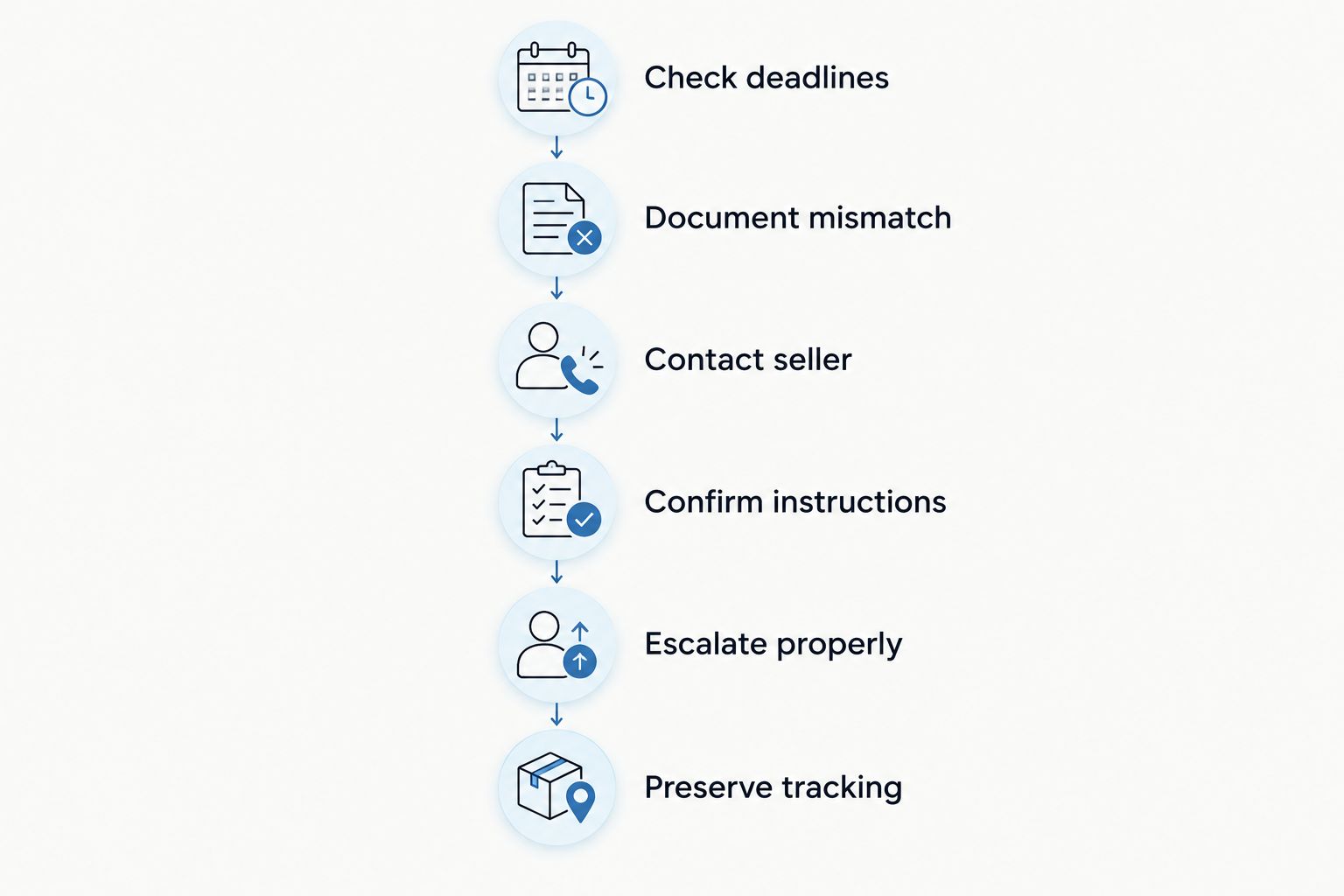
1. Check deadlines
Read the return terms attached to the purchase and the relevant payment-provider or marketplace dispute rules. Record the deadlines that actually apply to your transaction; do not substitute a return window quoted for another platform.
Seller correspondence and formal dispute procedures are separate tracks. Keep checking the applicable deadline while you seek an answer, rather than assuming an informal conversation extends it.
2. Document mismatch
Create a short comparison between the listing and the delivered item. Identify the exact claim, the observed difference, and the evidence supporting that difference.
For example, if an input was advertised as working, describe the failed test and attach the recording. Avoid claiming that an internal component is defective unless a qualified assessment supports that conclusion.
3. Contact seller
Send a concise message through the original purchase channel where possible. Include the order reference, the listing claim, the observed problem, and your requested resolution.
Ask for a return if you want to return the gear. Keep the tone factual: accusations, threats, and unrelated complaints make the transaction harder to follow without adding evidence.
4. Confirm instructions
Before shipping, obtain written confirmation of the return destination, shipping arrangements, required packaging, included accessories, and any inspection requirements. Clarify who is responsible for the return shipment under the applicable terms.
A return address alone does not answer every question. Confirm how the return will be recorded and what must happen before the agreed remedy is completed.
5. Escalate properly
If the seller does not resolve the complaint, use an available marketplace or payment-provider dispute process for which the transaction qualifies. Submit a clean timeline with the listing, payment record, messages, photographs, and test evidence.
Describe the same problem consistently across channels. Disclose any refund already received, and do not seek duplicate recovery for the same loss.
6. Preserve tracking
If a return is authorized, photograph the item and accessories before packing. Follow the agreed shipping instructions and save the shipping receipt, tracking record, and delivery confirmation.
Keep copies until the matter is finished. A parcel marked delivered establishes delivery, not necessarily the condition of everything inside, so retain your packing photographs too.
When the gear is damaged, incomplete, or simply disappointing
Undisclosed functional problems
Tie the malfunction to a specific representation. A synthesizer advertised as fully working presents a different complaint from one explicitly listed with a faulty keybed.
Describe the result you observed without overstating its cause. An interface that disconnects in your setup needs a clear test record; that observation alone does not establish which component caused the disconnect.
Missing or different items
Compare the delivery against the stated package contents. An accessory pictured or listed as included is different from an accessory you assumed would come with the item.
For software or licenses, preserve the exact promise about inclusion or transfer. Do not assume that hardware ownership automatically includes transferable software rights.
Transit damage
Show the item, carton, internal packing, and damage together in your evidence. Notify the seller promptly and follow the applicable instructions for a shipping claim or return.
Do not decide who caused the damage from a dented carton alone. Record the condition and let the relevant process address responsibility.
Personal preference
An accurately described amp can still sound wrong for your band. An accurately described guitar can still feel uncomfortable in your hands.
That is a preference issue unless a specific listing claim is inaccurate. Check whether the seller accepts discretionary returns rather than presenting a change of mind as undisclosed damage.
Why used-gear return outcomes vary
For your 2026 purchase, check these factors against the actual transaction rather than another buyer’s experience:
- The listing: Specific promises about condition, functionality, and accessories give you something concrete to compare.
- The disclosed defects: A clearly described fault is different from an undisclosed one.
- The seller’s terms: Discretionary returns and complaints about inaccurate descriptions are not the same question.
- The purchase channel: Available marketplace and payment-provider procedures depend on their eligibility rules.
- The applicable law: Rights differ by jurisdiction and transaction circumstances; private sellers and businesses are not interchangeable.
- Your evidence and timing: Preserve the record and follow the deadlines that govern your claim.
Avoid treating a seller’s response as a legal determination. Equally, do not assume that opening a dispute guarantees a refund.
Does “as is” mean you cannot return misdescribed gear?
An “as is” statement does not, by itself, settle every complaint about an inaccurate description. Its effect depends on the transaction’s terms, applicable protections, and the facts of the sale.
Save both the disclaimer and the specific claims about the gear. If the dispute involves significant loss or unclear legal rights, seek qualified advice in the relevant jurisdiction.
Should you accept a partial refund instead of returning the gear?
A partial refund fits only if you knowingly want to keep the item with its documented problem. Get the agreement in writing and understand whether accepting it settles the complaint under the governing process.
Do not base that decision on an unverified repair diagnosis. An unfamiliar fault is not a confirmed easy fix.
Buying and selling used gear on OohYeah
OohYeah suits musicians who want a music-focused marketplace to buy and sell instruments and studio gear. The marketplace also connects people with music professionals, but a marketplace’s focus does not replace checking the terms of an individual purchase.
OohYeah offers zero seller commissions. If you are selling, create an account and list your gear with clear condition notes, working-status details, included accessories, and photographs of known defects.
For a 2026 listing, write what you tested and disclose what you did not test. Visit OohYeah when you are ready to buy or list gear; do not assume a particular return entitlement without checking the applicable terms.
FAQ
Can I return used music gear if the seller says no returns?
A no-returns statement does not alone resolve a complaint that used music gear was materially misdescribed. Check the transaction terms, applicable buyer protections, and law, and document the specific mismatch.
What evidence should I keep for a used-gear dispute?
Keep the original listing, seller messages, payment record, delivery information, and clear evidence of the mismatch. Add packaging photos and a controlled test recording when relevant.
Should I repair a used instrument before requesting a return?
Document the issue and seek instructions before authorizing repairs or modifications. Changes can complicate the record of the item's condition when it arrived.
Who pays return shipping for gear that is not as described?
Return-shipping responsibility depends on the applicable terms, protections, and agreed resolution. Get written instructions before purchasing a label or sending the gear back.
Can I dispute a used-gear payment if the seller refuses to help?
You can use an available payment-provider dispute process if the transaction qualifies under its rules. Check eligibility and deadlines directly, and submit evidence rather than assuming seller refusal guarantees recovery.
Do I need an unboxing video to request a return?
An unboxing video is not a universal requirement for requesting a return. Check the governing process and preserve the evidence you have, including the listing, photographs, messages, and delivery records.
What if the guitar arrived as described but I dislike how it plays?
Disliking an accurately described guitar is a preference issue, not evidence of misdescription. Check whether the seller offers discretionary returns and whether your purchase meets those terms.
One last thing
Before closing a used-gear dispute in 2026, check what closing it means under that process. Do not assume you can reopen it if an agreed remedy falls through.
Keep your evidence until the resolution is complete. A promised refund is not a completed refund.