Selling Band Merch Directly to Fans Online with a Store Built for Fans
Learn how selling band merch directly to fans online can grow support with a simple store, fan-ready products, and smart links between online and venue sales.
November 18, 2026
FRANKLY with Frank Lee
Your merch table doesn’t have to end when the show does. Selling band merch directly to fans online starts with a simple storefront, products that fit your music and audience, and a clear way to buy, whether fans are at home or at a venue. Build a lineup that balances easy-to-offer items with more personal releases.
Fans want to support the music they love, and merchandise can keep that connection going between shows. The challenge is choosing what to offer without ending up with unsold stock or making every item from scratch.
Learn how to set up your store, choose fan-ready products, balance custom merchandise with scalable options, and connect online sales with venue sales. The goal is a practical setup that gives fans more ways to support you while keeping the connection direct.
Key Takeaways
- Choose designs that feel true to your music, and use fan feedback to guide which items you offer.
- Build a straightforward store where fans can discover your merchandise and complete purchases on mobile.
- Mix repeatable merchandise with personal, limited-run options to serve different fan preferences.
- Connect online sales with venue merch through thoughtful stock choices, payment preparation, and ways to keep fans engaged after the show.
Choosing products that fit the artist brand and fan demand
The cost of selling through Shopify, Bandcamp, or Big Cartel depends on each platform’s current plan, transaction fees, and payment-processing charges. Include production, packaging, and fulfillment in your budget, then calculate what remains from each sale.
Start with your music and visual identity. A band known for bold artwork might offer shirts with a striking graphic, while a stripped-back acoustic act could choose a simple logo design. Ask fans on social media or through a website poll which ideas they’d actually buy. A pre-sale can also help you estimate demand before committing to production.
Choose products with practical use in mind. Stickers, patches, and buttons are easy to bring to shows; shirts give fans a wearable way to represent the band. Make the design recognizable, and include the band name or logo where it fits naturally. Write a clear description for each item, covering its design, material, available options, and fulfillment details. Use sharp, well-lit images that show the artwork clearly.
Plan your budget and product timeline together. List production, packaging, platform charges, and shipping as separate costs. Check when suppliers need final artwork and order quantities, then set the launch date to account for production and fulfillment time. A pre-sale can help inform that decision.
Before launch, review the store as a fan would. Open it on a phone, inspect the payment options, and complete a test checkout if available. Make sure each product page answers the practical questions a buyer may have.
- Price each item by accounting for production, platform and payment charges, packaging, and fulfillment.
- Set a selling price that covers those costs while leaving a clear amount from each sale for the band.
There’s no single fixed cost: charges vary by platform plan, transaction fees, and payment-processing fees. Your overall budget should also include production, packaging, and fulfillment.
How do I set up an online merch store?
Choose a sales channel, organize your merch pages, and make checkout clear. A storefront for selling band merch directly to fans online should make it easy to find products and place an order.
Store or Marketplace Options
An online store gives your band a dedicated place to present shirts, hoodies, and releases. A marketplace can place merchandise alongside music or artist content, letting fans browse in one setting. Compare how each option displays products, handles payments, and supports mobile checkout. Consider how much control you want over the storefront and how you’ll manage orders and keep product information current.
Direct-to-Fan Storefront Setup
Give your storefront a clear band identity with a name, logo, and consistent artwork. Group items by type, such as apparel, accessories, and special releases, so fans can find what they want quickly. Explain the design and available options in each description. Then view the pages on a phone and test checkout before sharing the store. Selling band merch directly to fans online works best when the buying process is clear.
U.S. Sales Tax Rules
U.S. sales tax requirements vary by state and locality, so no single rule covers every online merchandise sale. Whether you need to collect tax can depend on where your business has a tax connection, what you sell, and how the platform handles transactions. Before opening checkout, understand which tax settings the platform supports and which responsibilities remain yours.
Store Promotion and Direct-to-Fan Sales
Make the store part of your band’s regular communication. Share product links through social posts, email updates, and show announcements, highlighting a specific release or item each time. For example, pair a rehearsal-room photo with a hoodie listing connected to a new release. Keep the store link easy to find in artist profiles, and use clear invitations that tell fans what they’ll find there. This gives selling band merch directly to fans online a visible place in your ongoing fan outreach.
Balancing custom and scalable merchandise
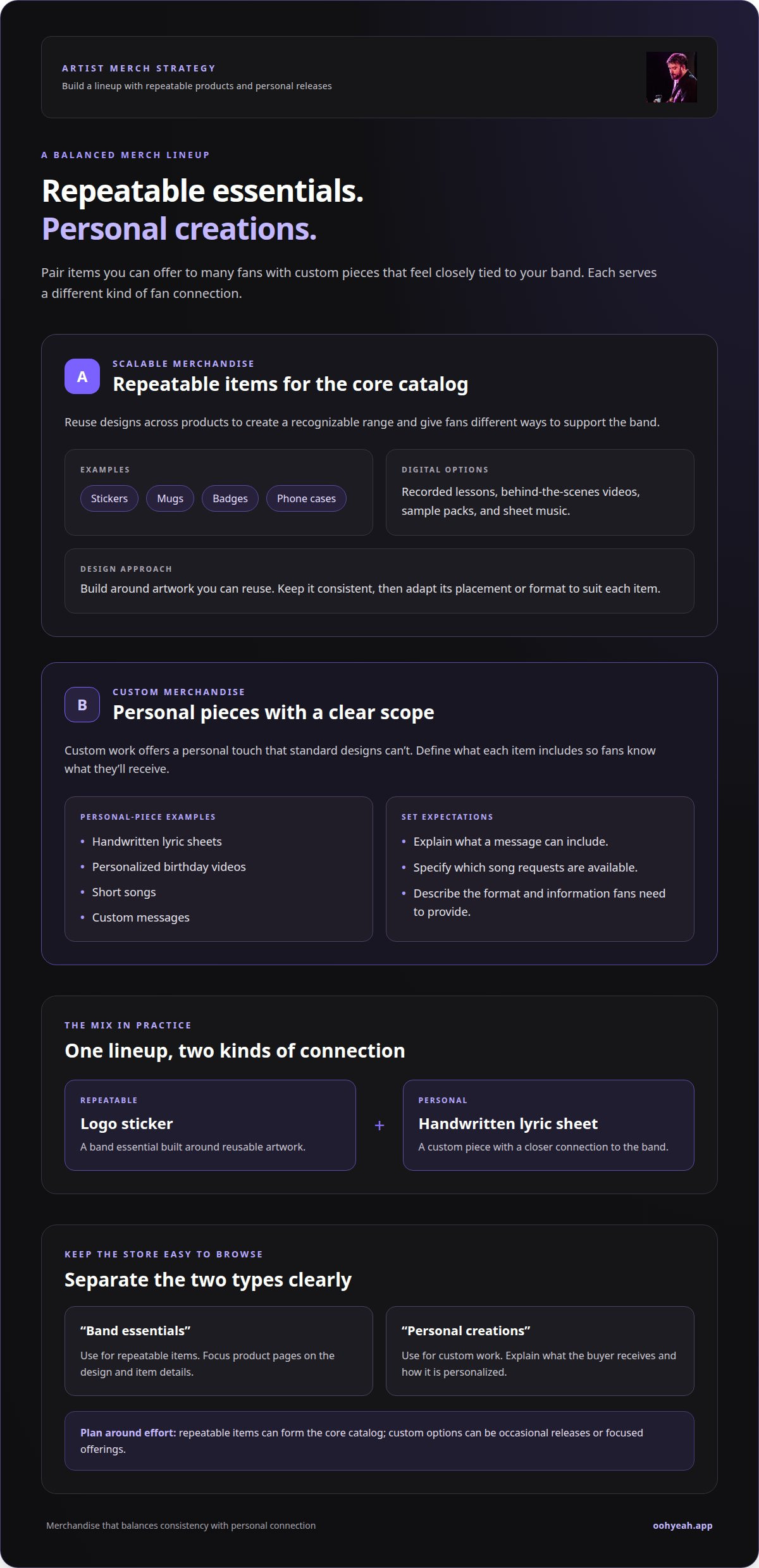
A balanced merch lineup pairs repeatable items with personal creations. Scalable products let you offer the same design to many fans, while custom pieces give supporters something closely tied to your band. For example, list a logo sticker alongside a handwritten lyric sheet. Each offers a different kind of fan connection without making every item a one-off.
Build the scalable side around designs you can reuse across products. A single visual can appear on stickers, mugs, badges, or phone cases. Keep the artwork consistent, then adapt its placement or format to suit each item. This creates a recognizable product range and gives fans different ways to support the band. Choose items that fit your music and visual identity.
Custom merchandise can offer a personal touch that standard designs can’t. Examples include handwritten lyric sheets, personalized birthday videos, short songs, or custom messages. Set a clear scope for each item, such as what a message can include or which song requests are available. Clear expectations help fans understand how a custom piece differs from a standard release.
Separate the two types in your storefront so fans can compare them easily. Use labels such as “band essentials” for repeatable items and “personal creations” for custom work. Describe what the buyer receives and how the item is personalized. For instance, a custom-message page should explain the format and what information fans need to provide. Keep standard product pages focused on design and item details.
Plan your mix around the effort involved, not just the number of products. Repeatable items can form the core of your catalog; custom options can be occasional releases or focused offerings. Recorded lessons, behind-the-scenes videos, sample packs, and sheet music are other examples of scalable digital merchandise. A thoughtful mix gives fans choices while helping you manage the personal work each order requires.
Selling merchandise online and at venues
Online sales keep merchandise available between shows; venue tables let fans take items home immediately. Treat both as connected sales channels. Use the same designs and product names online and at the table, then track stock across both so an item sold at a show isn’t still listed as available online.
Plan venue quantities around the items fans already respond to, and avoid tying up too much stock in untested designs. A pre-sale can help estimate demand before production. Bulk orders may lower the per-unit cost: an example is ordering 120 shirts instead of 100. Balance any potential savings against storage needs and the risk of holding unsold items.
Print-on-demand can reduce the need to buy and store inventory, with the service handling shipping. It can suit ongoing online sales, while a small run may work better for an exclusive show release. Limited-edition items available only until they sell out can also help move remaining live-show stock online.
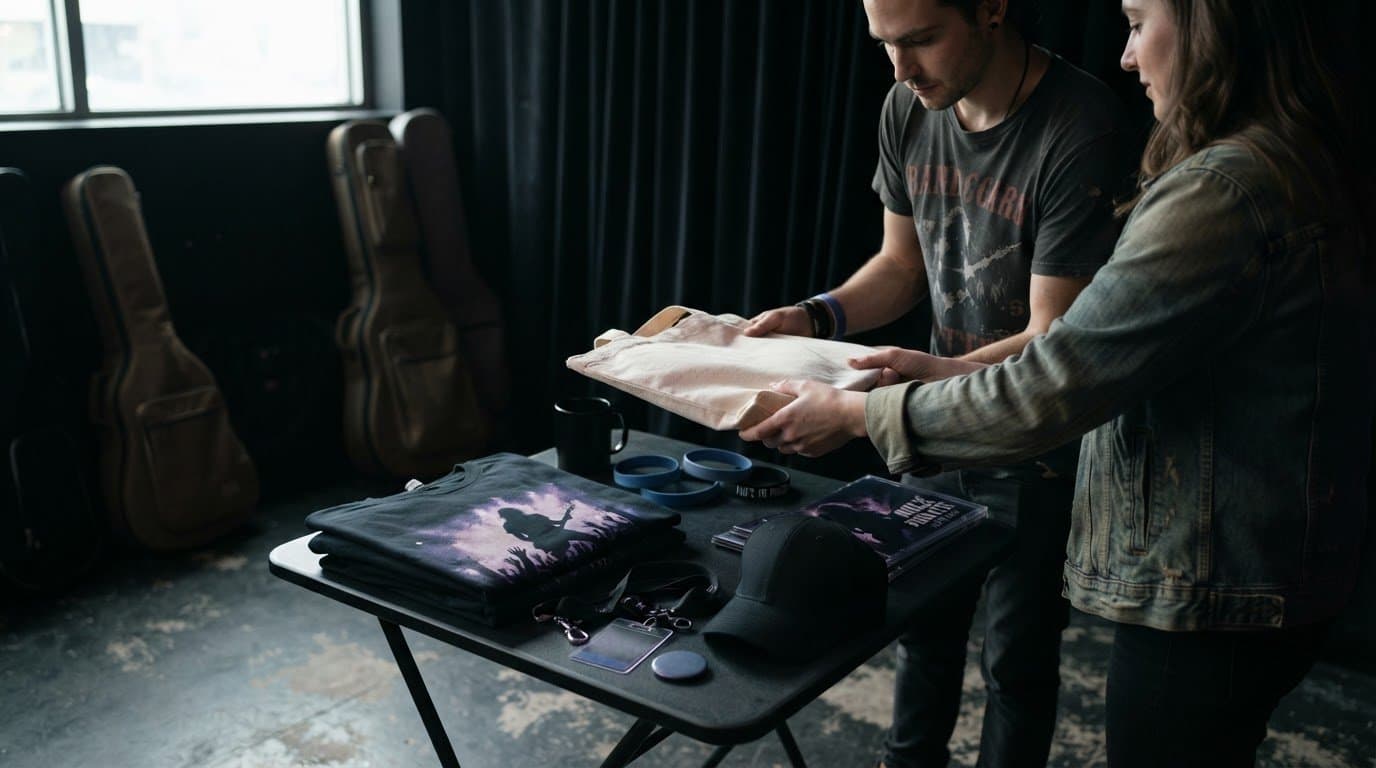
At the venue, prepare a clear display and a way to accept cash and card payments. A cash box and mobile card reader cover both. Posters made for shows can be printed in extra copies for the merch table, while CDs give fans a physical music keepsake. Mailing-list signup forms at the table let supporters stay connected after the performance.
Use bundles to present complementary items together, such as a shirt with a poster. After the show, share the online store with attendees so they can find remaining designs. Invite fans to post photos wearing their merch, use a band hashtag, and respond to their posts. To connect your online listings with direct fan support, set up an online merchandise storefront.
OohYeah!: Merchandise Marketplace
OohYeah! gives artists a Merchandise Marketplace where fans can find and support their work. Use it when you want merchandise alongside your music and artist profile, rather than managing those connections across separate spaces.
Artist Profile Hosting gives fans a place to find your artist presence, while Digital Music Downloads and Exclusive Content Access let you share more than physical merchandise. OohYeah! enables artists to retain 100% of sales revenue from music and merchandise, helping keep fan support connected to the artist. Build your profile around the releases and merchandise you want fans to discover, then use it as a clear home for your direct-to-fan presence.
Explore how OohYeah! can bring your music and merchandise together on its marketplace.
Make Your Store Part of the Fan Connection
Your merch store can grow alongside your music. Treat each release as a chance to deepen the relationship, not just add another item for sale. Let the choices fans respond to shape what you create next, and keep the experience recognizably yours. That’s the lasting value of selling band merch directly to fans online: supporters can connect with your work on their own time, between shows and beyond a single release.
Start with a store that reflects the way you want fans to discover and support your music. As your creative direction changes, let your merch presence evolve with it. The next step is yours. Contact OohYeah! about your merch and explore a path that fits your artist identity. Keep building on your connection with fans, one release at a time.
Frequently Asked Questions
What can I sell?
You can offer physical merchandise, music, and fan-focused digital items. Examples include shirts, posters, stickers, CDs, vinyl, downloadable music, sheet music, and behind-the-scenes content. You can also create personal offerings, such as a handwritten lyric sheet or custom birthday video. Match each item to your music and audience, and make clear what buyers receive before they order.
What platforms are best for selling band merchandise directly to fans online?
The best platform is the one that fits how you sell and connect with fans. Compare whether it supports physical products, digital downloads, mobile checkout, and clear product pages. Consider how orders, payments, and customer questions are handled, too. If you want music and merchandise together, look for a marketplace that makes both easy to discover.
How do bands set up an online merch store?
Begin by choosing a storefront or marketplace, then prepare product names, descriptions, images, and fulfillment details. Organize items so fans can browse by type or release. Before announcing the store, place a test order or walk through checkout on a phone. Decide how you’ll record orders, update stock, and respond to buyers so the store stays accurate after launch.
What types of band merchandise sell best online?
No single item works best for every band. A useful starting point is merchandise connected to your sound, artwork, or current release. A fan of an illustrated album might want a poster, while another supporter may prefer something wearable or a digital extra. Treat interest as something to learn: compare which products fans ask about and which listings attract orders.
What are typical profit margins for band merchandise sold online?
There’s no single margin that applies across all bands and products. Your net earnings depend on production, packaging, payment processing, platform charges, shipping, and unsold inventory. Calculate each item separately: subtract its related costs from the amount received, then compare the result with the selling price. This shows which products contribute most to your merchandise income.
How should bands price shirts, vinyl, and other merch?
Set prices by starting with the full cost of each item, then account for the earnings you want to retain. Shirts and vinyl have different production and fulfillment costs, so calculate them separately instead of applying the same markup across your catalog. Consider how fans value the design or release, and make prices and shipping charges easy to understand before checkout.