
How much are used guitar pedals worth? Price by model and condition
Used guitar pedals resale price comes from matching sold listings, not asking prices. Check revisions, test condition, and build a clear gear listing.
November 27, 2026
FRANKLY with Frank Lee
Used guitar pedals are worth what buyers pay for the same model, revision, and working condition—not a fixed share of the original receipt. Set your 2026 asking figure from comparable completed sales, then separate the pedal’s value from shipping, packing, and any transaction charges that affect what you keep.
- Set your used guitar pedals resale price from completed sales matching the exact model, revision, and condition.
- Separate cosmetic wear from functional faults; photograph both and demonstrate the signal path.
- OohYeah supports used music gear sales with zero seller commissions; calculate other applicable costs separately.
- Keep collectible, modified, and faulty pedals in separate comparison groups.
Why this matters
A scratched enclosure and an intermittent footswitch are different problems. Describe them separately. Buyers need to know whether they are buying a working effect, a restoration project, or a collectible with documented originality.
Before you unplug the board, document your guitar pedal settings. Save the sounds you want to keep, then build a listing around evidence rather than adjectives.
How much are used guitar pedals worth by model and condition?
The strongest valuation starts with the exact pedal, not the effect category. An overdrive is not automatically comparable to another overdrive, and a current revision is not automatically comparable to an earlier version wearing a similar enclosure.
Use this sequence for a 2026 valuation:
- Identify the model. Copy the complete name from the enclosure and label. Include the version or revision when documented.
- Check completed sales. Separate confirmed transactions from active listings and listings simply marked unavailable.
- Match condition. Compare working examples with working examples, and disclosed faults with similar disclosed faults.
- Match the contents. Note the box, power supply, manual, and other included accessories.
- Separate the costs. Record whether shipping was included before comparing transaction totals.
- Choose your asking figure. Base it on the closest matches and your willingness to wait or negotiate.
Do not treat a listing marked sold as proof that the displayed asking figure was the final amount. If an accepted offer is hidden, that transaction provides less precise evidence.
Compare like with like
| Pedal condition | Best for comparison with | Useful evidence | Limitation |
|---|---|---|---|
| Working, light cosmetic wear | Similar working examples | Clear enclosure photos and a functional demo | Appearance alone does not verify operation |
| Working, heavy cosmetic wear | Working examples with comparable wear | Close-ups of chips, labels, and the underside | A cleaner example is not a direct match |
| Modified | Examples with the same documented modification | Modification details and repair records | The modification narrows the comparison group |
| Faulty or intermittent | Examples with similar disclosed faults | A precise description of the failure | Repair needs remain uncertain without diagnosis |
| Collectible or revision-specific | Verified examples of that exact version | Identifying labels and documented originality | A similar-looking reissue is not equivalent evidence |
The table is a sorting tool, not a universal grading standard. Describe the actual pedal even when the marketplace also asks you to select a condition label.
Standard production pedals: match the exact version
Start with the complete model identity. Check the enclosure text, underside label, control layout, and any documented revision markings. Do not infer a circuit revision from paint color alone.
Best for: sellers with a clearly identified, unmodified working pedal. This is the most direct comparison route because you can exclude examples with different electronics, faults, or undocumented alterations.
The limitation is precision. A familiar name does not make every version interchangeable, so keep visually similar but unverified examples outside your main comparison group.
For a 2026 listing, save the date of each comparable sale. An old transaction is historical evidence, not proof of what a buyer will pay today.
Discontinued and collectible pedals: verify before claiming rarity
Discontinued means production stopped. It does not establish a collectible premium by itself. Use completed sales for the exact version rather than adding an unsupported rarity claim to the title.
Best for: sellers who can document the version and originality. Photograph identifying details and include any records that substantiate repairs or component changes.
The advantage is a more specific comparison group. The drawback is that fewer close matches leave more uncertainty; do not fill that gap with unrelated listings or an ambitious active asking figure.
If you cannot verify an internal component, leave the claim out. Never open a pedal just to create a collectible story, especially when doing so risks damage.
Modified pedals: disclose the work, not just the name
A modification changes the comparison. State what was changed, who performed the work if documented, and whether you have receipts or technical notes. Distinguish a modification from a repair intended to restore normal operation.
Best for: sellers with records explaining the altered function. A clear description lets a buyer judge whether the change fits their rig.
Do not assume modification expense transfers into resale value. Compare equivalent modified examples when possible; otherwise, explain the difference without presenting an unmodified sale as an exact match.
Unknown history belongs in plain language: modification status unverified. That is more useful than claiming stock condition because the enclosure looks untouched.
Faulty pedals: sell the symptom honestly
An effect that passes audio but cuts out when engaged is not fully working. Neither is a pedal with an unreliable jack, a failing display, or controls that do not respond consistently.
Best for: buyers seeking repair projects or parts. Describe what you tested and what happened, including whether the fault appeared repeatedly or only under a particular condition.
The useful part of a faulty listing is its specificity. The limitation is diagnosis: a symptom does not establish the failed component or the eventual repair bill.
Avoid phrases such as easy fix unless a qualified diagnosis supports them. Describe the crackle, dropout, or switching failure instead.
Why used guitar pedal value varies
Keep your 2026 comparison notes focused on factors you can verify:
- Exact model and revision. Match the documented version before considering broader examples.
- Functional condition. Separate reliable operation from intermittent faults and untested functions.
- Physical condition. Show enclosure damage, worn labels, missing screws, and adhesive residue.
- Originality and repair history. Disclose modifications and documented repairs rather than assuming they are irrelevant.
- Included accessories. Specify exactly what comes with the pedal; do not imply a photographed adapter is included unless it is.
- Transaction terms. Compare shipping treatment and bundled contents before treating completed sales as equivalent.
These factors explain differences between individual listings. They do not justify applying a universal depreciation percentage across every pedal on your board.
How do I test a pedal before setting the asking figure?
Test the pedal away from the rest of your board. Use a known-working guitar, cables, amplifier or recording input, and a power source that matches the manufacturer’s requirements.
Read the power label first. Match voltage, polarity, connector, and current requirements; never assume every compact effect uses the same supply.
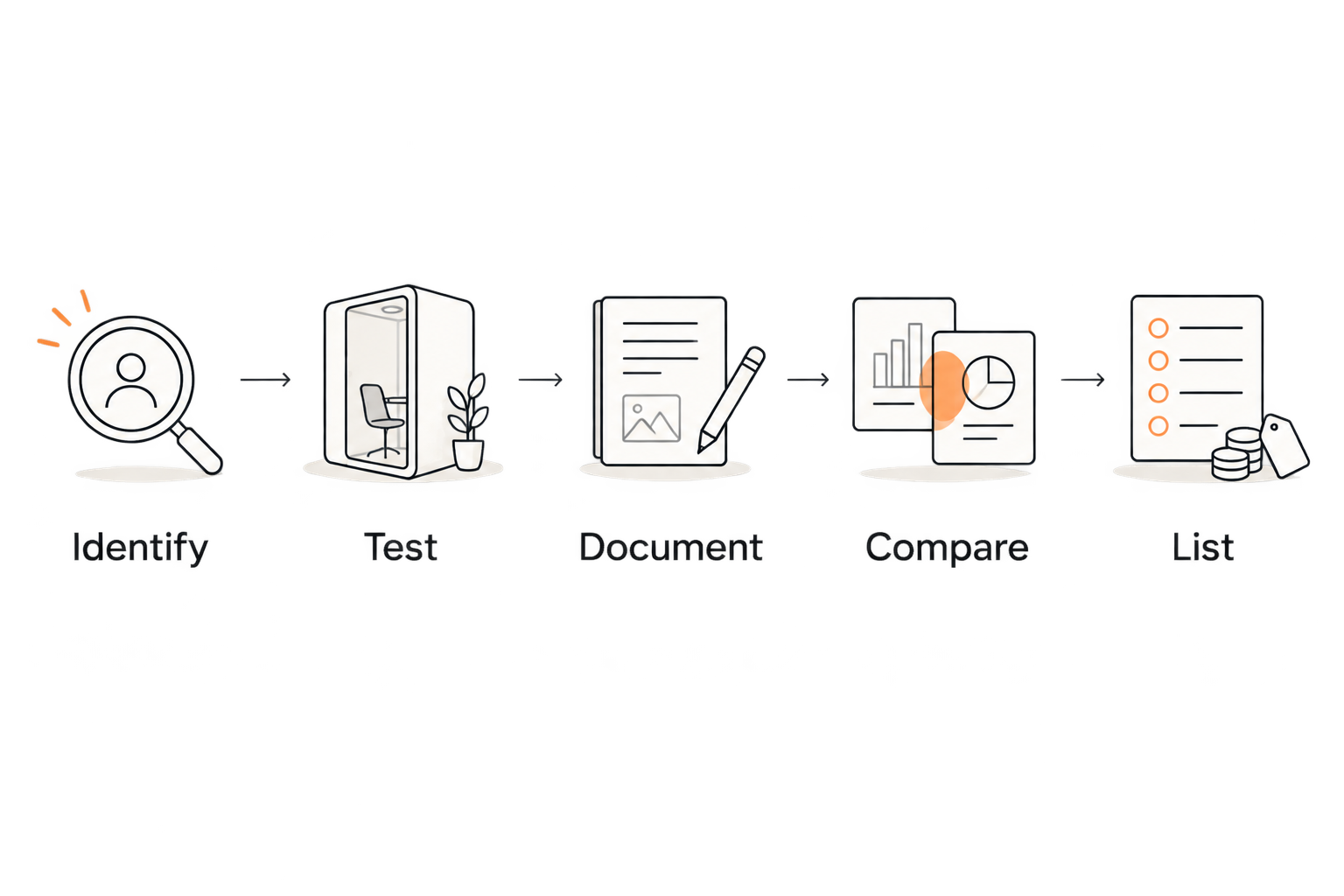
Identify
Photograph the model label and inspect the enclosure before testing. Note loose hardware, damaged sockets, missing covers, or signs of battery leakage without guessing at the cause.
Test
Check bypass and engaged operation. Move each control through its travel, operate switches repeatedly, and listen for dropouts or unexpected noise. For effects with additional inputs, outputs, or modes, state which functions you actually tested.
A successful mono test does not verify stereo operation. Likewise, checking external power does not establish that the battery connection works.
Document
Record 3 short clips as a practical listing checklist: bypass, the effect engaged, and the controls or switching in use. Keep the recording chain unchanged so buyers can understand what they are hearing.
Compare
Return to your completed-sale notes with the test results in hand. Remove comparisons that no longer match the pedal’s actual condition.
List
Write the condition description before choosing a condition label. Lead with the model, then explain operation, wear, included items, and any untested functions.
Should I clean or repair a pedal before selling it?
Clean gently. Remove loose dust with a soft cloth and follow the manufacturer’s care instructions; keep liquid away from sockets, switches, openings, and labels.
Do not scrape adhesive off a collectible enclosure or spray cleaner into controls without appropriate guidance. A cosmetic cleanup should not become an undocumented repair attempt.
For a functional fault, get a diagnosis before deciding whether to repair. Compare the repair quote with completed sales for working and faulty examples, then decide whether the work makes sense for your sale.
Keep the paperwork if you proceed. State the repair accurately, but do not claim that servicing makes an older pedal equivalent to a new one.
How do I calculate what I keep after the sale?
Your net proceeds are the sale amount minus the selling costs you actually pay. Account for packing materials, shipping you absorb, applicable payment charges, and any agreed repair or preparation expense.
Keep 2 separate totals in your notes: the buyer’s total and your net proceeds. They answer different questions. A competitive buyer total does not automatically meet your personal minimum.
OohYeah is best for musicians who want a used music gear marketplace with zero seller commissions. That removes the seller-commission line from the calculation, not the need to check other applicable transaction and shipping costs.
Create an account on OohYeah and list the pedal with its test results, clear photos, and an exact contents list. The marketplace gives you a place to sell; your valuation still depends on comparable transactions, and a listing does not guarantee a buyer or a sale date.
List your pedal
Create an account and list your tested gear with zero seller commissions.
Is it better to sell pedals separately or as a bundle?
Sell separately when you want buyers to evaluate each pedal on its own evidence. Best for: a mixed collection of independently identifiable effects. The trade-off is managing separate listings, messages, and packing.
Bundle when the contents form a clearly described package. Best for: a seller who wants to offer the board as one transaction. The limitation is comparability: individual completed sales do not prove what the whole package will achieve.
For a 2026 bundle listing, name every included pedal and accessory. Explain whether the board, case, patch cables, and power supply are included, then document each pedal’s condition rather than calling the entire collection excellent.
FAQ
How do I work out my used guitar pedals resale price?
Work out your used guitar pedals resale price from completed sales matching the exact model, revision, working condition, and included accessories. Separate shipping before comparing totals, and treat hidden accepted offers as less precise evidence.
What percentage of the original purchase amount should I ask for?
Do not use a universal percentage of the original purchase amount. Match completed sales for the pedal you own; your receipt does not establish current buyer demand.
Does the original box make a used pedal worth more?
An original box is an included accessory, not proof of a premium. Compare otherwise similar completed sales with and without packaging before assigning it additional value.
Can I sell a guitar pedal that crackles or cuts out?
You can describe a crackling or intermittent pedal as faulty rather than fully working. Explain the symptom, your test setup, and any untested functions without guessing at the repair.
Should I include a power supply with my pedal?
State exactly whether a power supply is included. If you include one, verify that it matches the pedal’s documented electrical requirements and photograph its label.
Is an active listing proof of what my pedal is worth?
An active listing shows what a seller is asking, not what a buyer has paid. Use completed transactions as your main evidence and active listings as context.
Does OohYeah charge seller commissions on used music gear?
OohYeah has zero seller commissions on used music gear sales. Calculate shipping, packing, and any other applicable transaction costs separately when working out your net proceeds.
One last thing
Untested is not a condition grade. It describes a gap in what you checked, not proof that a pedal works or that it is broken.
Close that gap where you safely can. Otherwise, name the untested function directly and let the buyer evaluate the listing without decoding vague language.