Unhappy with a music producer’s work? Revisions and refund terms
Music producer revisions and refunds depend on your agreement. Learn how to request fixes, document missed deliverables, and settle cancellation terms.
November 27, 2026
FRANKLY with Frank Lee
You cannot assume you can return a hired producer’s work just because you dislike the result: music producer revisions and refunds depend on your agreement, applicable platform terms, and legal rights. Start by separating an unmet deliverable from a creative disagreement, then request the specific correction or refund your terms support; cancellation also needs a written agreement about payments and use of the recordings.
- Music producer revisions and refunds depend on the agreement, not dissatisfaction alone.
- Request specific fixes before treating a creative disagreement as failed delivery.
- OohYeah connects songwriters with music professionals; confirm revision and cancellation terms before hiring.
- Keep the brief, approvals, delivered files, and settlement terms together.
Unhappy with a music producer’s work? What are your options?
Match the remedy to the problem. A missing instrumental mix, an unwanted drum sound, and a decision to abandon your release are different disputes. Describe what happened before deciding what to request.
| Route | Best for | Advantage | Limitation |
|---|---|---|---|
| Revision | Specific changes within the agreed brief | Gives the producer a clear chance to address the issue | Does not automatically include a new arrangement or performance |
| Scope change | A new direction after earlier approvals | Lets both sides reset the assignment | Requires agreement on additional work and payment |
| Cancellation agreement | A project both sides want to stop | Establishes a clear stopping point | Does not automatically settle refunds or recording rights |
| Refund request | Undelivered work or another supported contractual claim | Connects the request to an identifiable obligation | Approval and amount depend on the terms and circumstances |
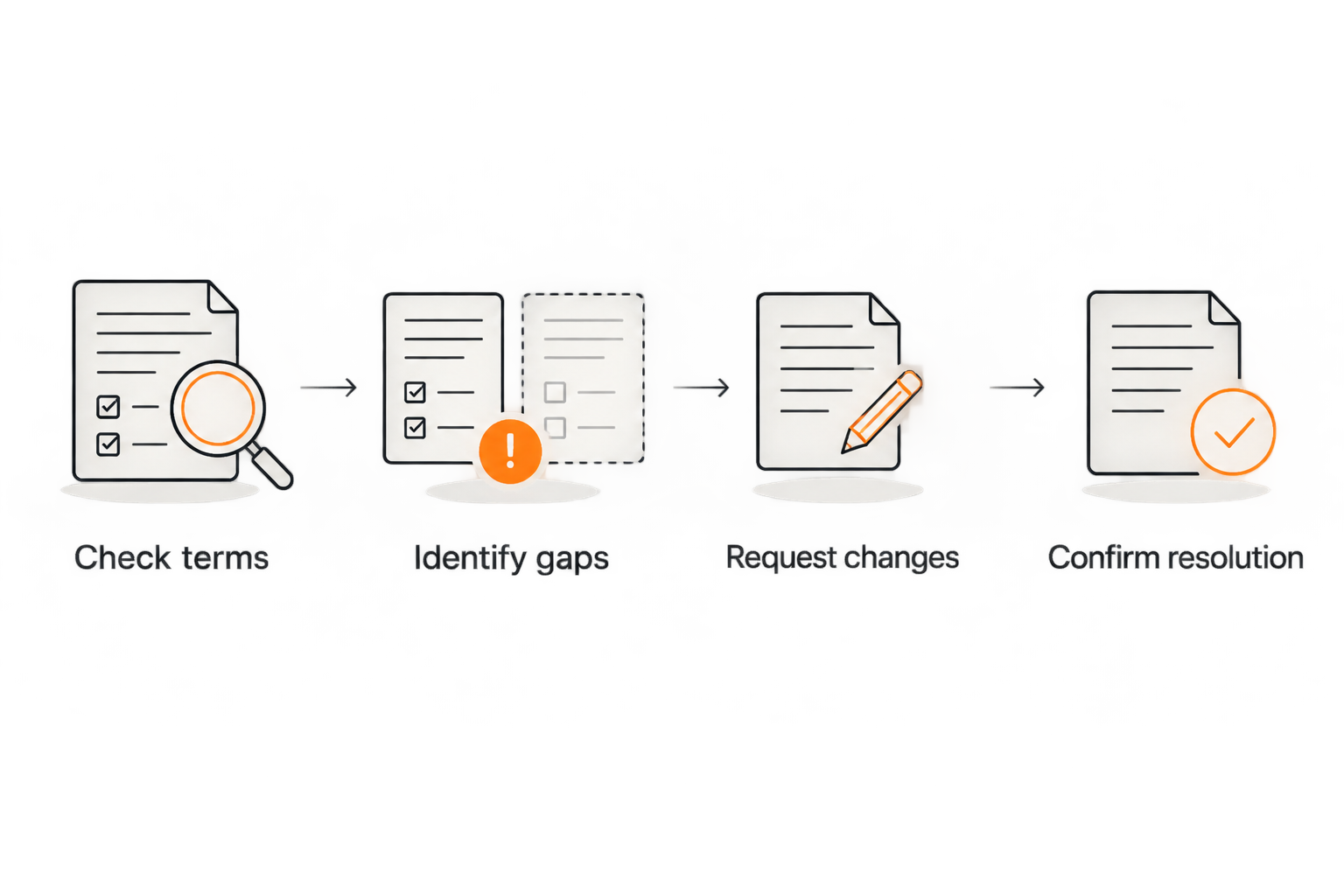
Use this sequence before sending an angry message:
- Check terms. Read the proposal, order details, messages, cancellation language, and applicable platform rules.
- Identify gaps. Compare the delivered work with the agreed brief and your documented approvals.
- Request changes. Send a consolidated list of corrections and ask which fall within the existing scope.
- Confirm resolution. Record the agreed next delivery, cancellation, or settlement in writing.
Why this matters
A production agreement covers work, decisions, and deliverables—not just whether you love the final bounce. Protect the song and the working relationship by making your complaint precise. Disliking the result deserves a conversation, but it does not establish a refund entitlement by itself.
For a 2026 project, save the terms presented when you book, together with any changes both sides accept. If you hire through OohYeah, confirm the professional’s project-specific terms before work starts. A marketplace’s service description is not a substitute for a written production brief.
Revisions: fix the agreed work
A revision adjusts work within the assignment you agreed on. Making the lead vocal clearer or correcting an export error is different from replacing the singer, rewriting the chorus, or changing the song’s genre.
Ask the producer to classify each request before work resumes. That gives you a chance to challenge an unexpected scope decision rather than argue after another delivery.
Read what the agreement means by a revision round. Does a round mean a consolidated feedback message, a revised delivery, or something else? Also check whether corrections to missed specifications count toward the revision allowance. Do not assume either answer.
The advantage of revising is continuity: the producer already has the session and understands the project. The limitation is creative fit. Detailed notes cannot guarantee that a producer whose musical direction differs from yours will become the right collaborator.
If you approved the arrangement and now want a different structure, acknowledge the change. Ask for a revised scope rather than presenting a new assignment as an unfinished correction.
Cancellation: stop the project without leaving loose ends
Cancellation ends the working arrangement. It does not, by itself, answer what happens to completed recordings, outstanding payments, or your right to release anything.
Propose a stopping point in writing. Identify the latest delivered version, the work you want stopped, and the files you need returned or transferred. Ask the producer to confirm any outstanding obligations before treating the matter as closed.
A cancellation agreement offers clarity when neither side wants another revision. Its limitation is that both sides still need to resolve the consequences of stopping.
Do not assume a cancellation request pauses contractual deadlines or payment obligations. Check the terms and ask for written confirmation of any pause. If the producer has engaged a singer, engineer, or studio, ask how those commitments affect the proposed settlement; do not assume those separate arrangements disappear with your project.
Refunds: connect the request to a specific obligation
A refund request is strongest as an explanation of what was promised, what happened, and what remedy you want. Keep it factual. A missing agreed deliverable is easier to document than a general statement that the production lacks energy.
Identify the relevant term and attach the supporting record. If the producer promised an instrumental version and delivered only the vocal mix, name the missing file. If the dispute concerns musical direction, show the brief and the feedback that established that direction.
Do not describe a requested refund as an approved refund. Get the settlement, payment method, and timing confirmed in writing, along with any conditions attached to it.
A refund can resolve a payment dispute, but it does not automatically settle ownership, credits, confidentiality, or permission to release the recording. Those questions need their own answers. For a 2026 booking, check the actual contract and applicable rules rather than relying on another musician’s experience with a different service.
Why music producer revisions and refunds vary
These project details determine which questions you need to resolve:
- Scope: Producing an arrangement, recording musicians, mixing, and mastering are different assignments. Check which work was included.
- Revision language: The agreement needs to explain what counts as a round and how you submit feedback.
- Approval history: Documented approval helps distinguish an unfinished task from a later change of direction.
- Project stage: Identify what has been started, delivered, accepted, or left incomplete.
- Cancellation and rights terms: Check what happens to payments, recordings, and permitted use if work stops.
- Applicable rules: Platform procedures and legal rights need checking alongside the agreement, not replacing with assumptions.
No universal revision allowance or refund deadline applies to every producer. Use the terms governing your own project.
How do you ask for revisions without starting a fight?
Send notes the producer can act on. Name the file version, the song section, the audible issue, and the intended result. Keep the discussion about the recording rather than the producer’s talent or motives.
Group your feedback by purpose:
- Corrections: Missing agreed files, wrong edits, or departures from documented instructions.
- Creative adjustments: Vocal balance, drum tone, effects, arrangement density, or transitions within the brief.
- New requests: Replacement performances, additional instruments, new song sections, or a changed production direction.
An illustrative note could explain that the lead vocal becomes hard to understand when the chorus guitars enter, then ask for clearer vocal definition without changing the performance. That describes the problem and desired result without dictating an engineering move you have not tested.
Agree internally before you send the notes. Conflicting messages from the songwriter, manager, and band members leave the producer without a clear decision. Pick a feedback lead and separate required corrections from preferences.
For your 2026 revision pass, review the same file version throughout the conversation. Keep playback volume consistent when comparing versions, and identify the listening setup if the problem appears only on a particular device. Do not approve a mix you have not actually reviewed.
Can independent feedback settle a creative disagreement?
Independent feedback can help you describe a problem, but it does not decide a contractual dispute. Ask a qualified music professional to distinguish songwriting, performance, arrangement, recording, and mix concerns. Each points to different work.
For example, a chorus that feels weak might need a stronger performance or a different arrangement rather than a louder master. Ask the reviewer to explain the audible issue and the suggested next step. Avoid asking for a verdict on who is right.
Comparing custom song service quality rankings requires the same distinction: songwriting, performance, and production are separate criteria, so a single overall impression cannot identify which part of your brief was missed. Judge your commissioned recording against the work actually agreed, not an unrelated service’s reputation.
Before sharing an unreleased track for review, check your agreement and obtain any necessary permissions. Keep the review focused, and ask the producer to respond to actionable observations rather than treating an outside opinion as binding authority.
Wrote some songs, now what? Set the next brief before hiring
Define what finished means before anyone opens a session. For a 2026 production brief, describe the song, intended use, creative direction, performances, and required delivery files. Decide who approves each stage and what happens when the direction changes.
Use references with explanations. Specify whether you want the intimacy of a vocal, the space around the drums, or the build into a chorus—not a copy of the entire record. The guide to sharing reference tracks with a music producer addresses that briefing step.
If you are turning a Suno demo into a recording performed by real musicians, label what the demo communicates. Separate the lyric, melody, arrangement idea, and sound you want reconsidered. Do not assume the demo answers questions about rights or permission to use supplied material.
When hiring Nashville studio musicians or remote session players, define who books them, directs the performances, reviews takes, and coordinates corrections. State whether you expect individual tracks, grouped stems, or a finished mix. Stems are grouped audio exports; they are not necessarily the editable recording session.
OohYeah is for songwriters seeking music professionals and musicians offering their services. Use the Music Pros section to explore collaborators, then confirm scope and terms directly. The limitation remains the same: finding a professional does not establish your revision allowance or refund entitlement.
If you offer production or session services, create an account and describe your work clearly. Explain what the client supplies, what you deliver, and how changes are handled. Do not promise outcomes you cannot control, including commercial success or guaranteed bookings.
What should a final settlement say about files and rights?
List the files included in the resolution. A stereo mix, instrumental, vocal-only export, stems, and editable session are different deliverables. Ask for exactly what the agreement supports rather than assuming every working file comes with the project.
Also separate possession from permission. Receiving audio files does not, by itself, answer every question about ownership or permitted use. Confirm what you can release, edit, transfer to another producer, or use in promotion under the settlement.
Address credits, songwriting claims, production royalties, and third-party performances wherever relevant. Do not assume a refund erases those issues, or that retaining payment automatically gives either side every right.
For an unresolved 2026 dispute involving significant money or release rights, get advice from a qualified attorney familiar with the applicable jurisdiction. Keep the contract, messages, approvals, and delivered versions available. Avoid public accusations while the underlying facts remain disputed.
Can I get a refund if I simply do not like the song?
Disliking the song does not establish an automatic refund entitlement. Check whether the agreement includes a satisfaction promise or another applicable refund provision. Otherwise, explain the specific mismatch and discuss revisions or a negotiated cancellation.
Can a producer charge for another revision?
Additional work depends on the agreed scope and revision terms. Ask whether the request is an included correction, an included creative adjustment, or a new assignment. Require agreement before authorizing work outside the existing scope.
Can I hire someone else to finish the recording?
Confirm file access and usage rights before handing the project over. Tell the replacement producer what materials you can lawfully provide and what remains unresolved. A new collaborator needs both usable audio and a clear assignment.
FAQ
Can I return a producer’s work like a physical product?
You cannot assume a commissioned recording has the same return terms as a physical product. Revision, cancellation, and refund questions depend on your agreement, applicable platform terms, and legal rights.
How many revisions should a music producer include?
There is no universal revision allowance for every music producer. Agree on the allowance, what counts as a round, and how corrections are handled before booking.
What should I send with a refund request?
Send the relevant agreement, the unmet obligation, and the records supporting your request. Identify the delivered version and state the resolution you want without presenting it as already approved.
Does cancelling a project mean I get all my money back?
Cancellation does not automatically establish a full refund. Resolve completed work, outstanding obligations, payment treatment, and recording rights in writing.
Can I release a track after getting a refund?
Do not assume a refund includes permission to release the track. Confirm release rights and any conditions in the settlement before distribution.
Does OohYeah guarantee a refund if I dislike a production?
Do not treat dissatisfaction as a guaranteed refund from OohYeah. Check the applicable terms and the professional’s written agreement before hiring.
What should a producer do when a client keeps changing direction?
Identify the changed requests and compare them with the approved brief. Agree on a revised scope before starting additional work, and preserve the approval history.
One last thing
Name the approved version, not just the approved song. Your settlement should identify which mix, arrangement, or performance it covers. Keep earlier versions and feedback, but mark the final decision clearly. That gives both sides a shared record of what was accepted, what remains unfinished, and what happens next.