How to get song feedback from music industry professionals
Get song feedback that leads to clear revisions. Choose the right music professional, prepare your demo, and turn critique into your next recording step.
November 11, 2026
FRANKLY with Frank Lee
Get song feedback from music industry professionals by choosing someone whose work matches your genre, sending a focused listening brief, and agreeing on the critique’s scope before sharing files. Ask for specific revision priorities—not a verdict on your talent—and keep feedback separate from promises of representation, placements, or bookings.
- Get song feedback from a professional whose experience matches the problem: songwriting, performance, production, or mixing.
- Send a demo, lyrics, and focused questions; request revision priorities instead of a general rating.
- OohYeah connects songwriters with music professionals; agree on feedback scope directly before hiring.
- Treat critique as direction for your next draft, not a promise of industry access.
Why this matters
Wrote some songs, now what? Before you book a studio or replace every instrument, find out whether the problem lives in the writing, the performance, or the recording. Those are different jobs.
A louder chorus cannot fix an unclear lyric. A stronger lyric cannot remove distortion from a recorded vocal. Start by understanding how to choose between a producer and a mixing engineer, then ask the right person to listen.
For your 2026 release plan, make feedback a decision point before the next production commitment. The goal is a clearer next move, not permission to keep making music.
How do you get song feedback from music industry professionals?
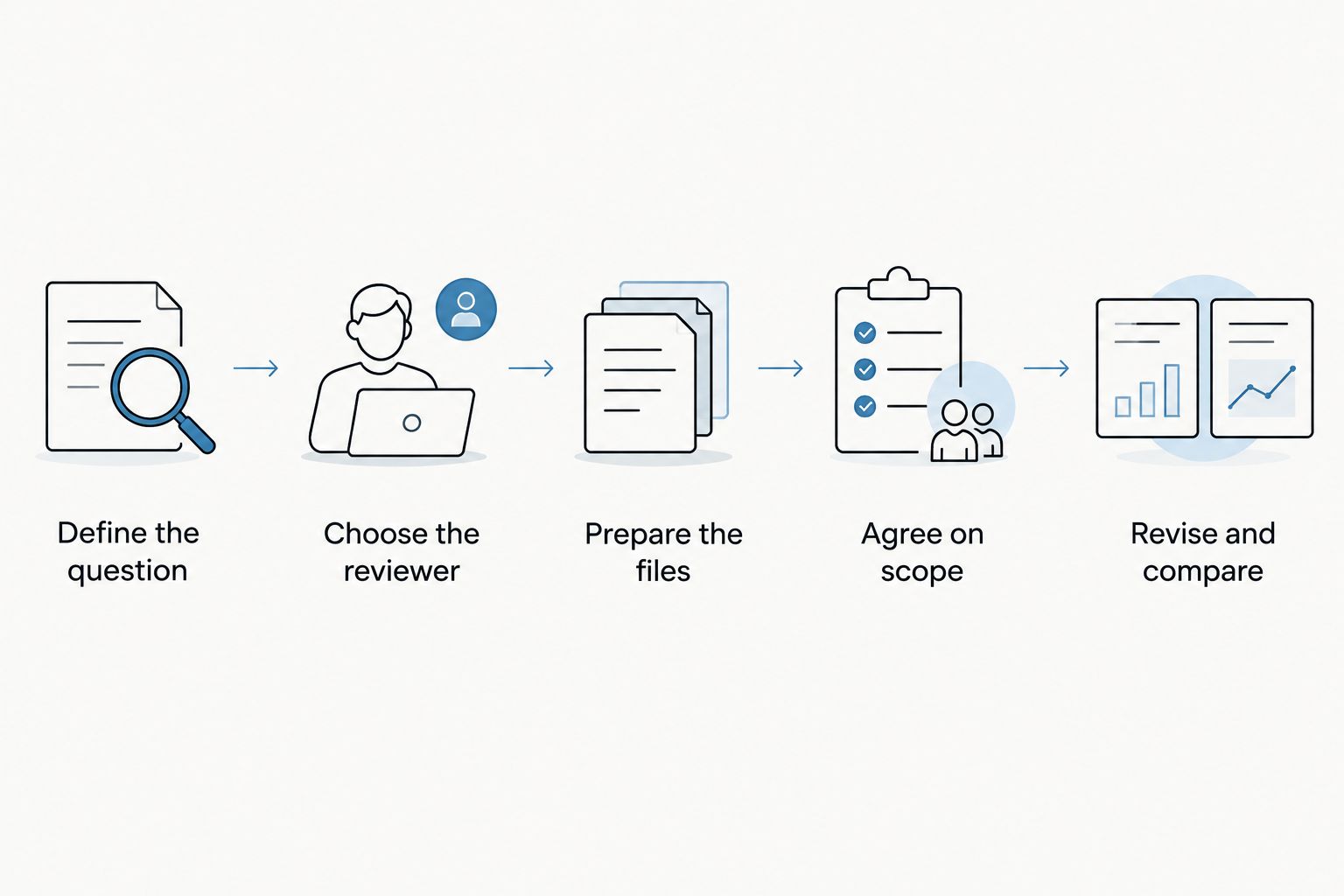
Use this process to turn a broad request into a defined piece of work. You need a reviewer, a clear brief, an agreed deliverable, and a way to apply the notes.
1. Define the question
Name what you need to decide. Is the chorus memorable? Does the verse explain enough? Does the vocal communicate the emotion, or does the arrangement bury it?
Choose 3 questions for the first review. That is a practical limit for your brief, not an industry standard; it keeps the request focused enough for detailed answers.
2. Choose the reviewer
Listen to relevant work and check the person’s credited role. Producing a recording, singing on it, and mixing it demonstrate different skills. Match the experience to your question rather than choosing the most recognizable name.
Ask whether the professional offers critique as a standalone service. Do not assume a recording or mixing service includes songwriting advice.
3. Prepare the files
Send a clearly named demo, a lyric sheet, and listening access that works without an approval request. Identify the version under review. Add timestamps wherever a question concerns a particular moment.
Include 2 reference tracks if they help explain your intended sound. Describe what matters in each: vocal intimacy, chorus lift, rhythmic feel, or arrangement space. References should clarify your direction, not demand a copy.
4. Agree on scope
Confirm whether you will receive written notes, recorded commentary, or a conversation. Ask what the review covers, when the response is due, and whether clarification or a revised submission is included.
Feedback is not automatically editing, production, or co-writing. Get those distinctions in writing before work starts.
5. Revise and compare
Save the original version. Make a revision that addresses the highest-priority problem, then compare both versions at similar playback levels.
Choose 1 next action after the review: rewrite the chorus, simplify the arrangement, retrack the vocal, or brief a collaborator. Avoid changing everything before you know which edit helps.
Which music professional should review your song?
Choose the role that matches the decision. These are working distinctions, not rigid boundaries; confirm what the individual actually offers.
| Professional | Best for | What the perspective adds | Limitation to confirm |
|---|---|---|---|
| Songwriter or songwriting coach | Lyrics, melody, structure | Examining how the composition communicates | Recording or mix work is separate |
| Music producer | Arrangement and recording direction | Connecting the song’s intent to the production | Detailed lyric critique is not automatic |
| Singer or vocal coach | Delivery, phrasing, singability | Testing how the melody and words perform | Full production review is a different scope |
| Session musician | Instrument parts and musical feel | Assessing playable parts and performance choices | Whole-song critique requires agreement |
| Mixing engineer | Balance, clarity, recorded sound | Identifying issues within the recorded material | Mixing does not replace songwriting revision |
Do not hire all of them by default. Start with the unresolved decision that blocks your next step. If you cannot explain that decision yet, request an initial assessment and ask the reviewer to identify the priority.
Songwriting feedback: fix the composition first
Best for: writers questioning the lyric, melody, or structure. Ask whether the central idea is clear, whether the chorus delivers it, and whether each section earns its place.
The benefit is focus: you can examine the song without treating every weakness as a recording problem. The limitation is that a composition review does not automatically address vocal technique or production execution.
Ask the reviewer to distinguish a confusing line from a deliberate ambiguity. You need to know what the listener understood—not simply which words the reviewer would have chosen.
Production feedback: test the arrangement
Best for: writers whose song works in a simple performance but loses impact in the recording. Ask where the arrangement supports the vocal and where competing parts distract from it.
A producer’s perspective connects musical choices to the intended recording. The limitation is scope: a production critique does not include rebuilding the track unless you agree to that work.
For a 2026 demo, state what is temporary. A placeholder drum part should not consume the review if your real question concerns the transition into the chorus.
Performance and mix feedback: separate the source from the balance
Best for: artists deciding whether to rerecord a part or improve the existing recording. Ask the reviewer to identify whether the issue comes from delivery, recording quality, arrangement, or balance.
That distinction helps you brief the next collaborator. Its limit is equally important: processing cannot recover a performance that was never recorded, and a new performance does not automatically solve a crowded arrangement.
Request a diagnosis before requesting a fix. Otherwise, you risk commissioning work that addresses a different problem.
Why song feedback varies
Different notes do not automatically mean someone is wrong. Compare the assumptions behind the review.
- Professional role: A songwriter examines composition; a mixing engineer concentrates on the recorded sound. Ask each reviewer to stay within the agreed scope.
- Genre experience: Check relevant work so you understand the musical context behind the advice.
- Song stage: A rough writing demo and a finished mix require different decisions. Tell the reviewer what can still change.
- Intended outcome: A song for your own artist project needs a different brief from a demo intended to communicate a song to another performer.
- Your questions: An open-ended request invites broad opinions. A focused request gives the reviewer a specific decision to address.
Keep taste separate from diagnosis. A preference for sparse production is not proof that your fuller arrangement fails; ask what it prevents the listener from hearing or feeling.
What should I send with my song feedback request?
Send enough context to make the review useful without burying the song in its backstory. Use this brief for your 2026 project:
- Project: Working title, genre, and intended use.
- Stage: Writing demo, performance demo, production draft, or mix.
- Materials: Listening file, lyrics, and relevant reference tracks.
- Questions: The decisions you want help making.
- Boundaries: What is temporary and what you are not changing.
- Deliverable: The feedback format and agreed response date.
If you intend to submit a demo to a producer, distinguish a critique request from a production inquiry: one asks what needs work; the other asks someone to help make the recording. State which conversation you want before discussing deliverables.
Ask for notes organized by priority. Each useful note should identify the passage, explain the issue, and suggest a test. For example, the reviewer can identify a crowded chorus and propose removing a competing part; you then compare the result rather than accepting an abstract judgment.
Can I get feedback on a Suno demo before hiring musicians?
Yes. Ask the reviewer to separate the underlying song idea from the generated performance and production. Identify which lyrics and melodies you intend to retain, and which elements are placeholders.
For a Suno-to-musicians project in 2026, request decisions that performers can act on: key, structure, feel, instrumentation, and vocal direction. Generated audio alone does not tell a hired musician which details you consider essential.
If you plan to hire Nashville studio musicians, explain whether you want close recreation, a fresh arrangement, or room for interpretation. Confirm the material you can authorize others to use; feedback is not a rights assessment.
Where can I find professionals to discuss my song?
OohYeah is for songwriters who want to find music professionals for their next recording. Its Music Pros section fits the search for producers, engineers, singers, and session musicians; ask each professional whether they offer song feedback and what that service includes.
Use OohYeah to start that search. The benefit is access to the kinds of collaborators your project needs; the limit is that a marketplace connection does not establish a reviewer’s fit, critique scope, or commitment to your project. Confirm those directly.
Listen to relevant work, explain your goal, and agree on the deliverable. Finding a profile is the start of the hiring conversation, not confirmation of a booking.
Offering song feedback? Make your service specific
Producers, singers, engineers, and songwriters should describe what they actually assess. Replace broad promises about making songs better with a clear scope: lyric and structure notes, vocal performance critique, arrangement review, or mix assessment.
For your 2026 service description, name the materials you need and the format you deliver. Explain whether follow-up questions or another version require a separate agreement. Do not imply that critique includes introductions, placements, or guaranteed work.
Distinguish feedback from creative contribution, too. If a critique turns into writing new lyrics or melodies together, pause and agree on the collaboration before continuing. Clear boundaries protect both sides.
How do I use conflicting feedback without losing my direction?
Start with your intention for the song. Sort each note into a problem to investigate, a suggested solution, or a taste preference. Those categories deserve different responses.
When reviewers identify the same confusing moment but suggest different fixes, test the diagnosis first. Preserve the original, change a specific element, and listen again. You can accept the problem without adopting someone else’s preferred solution.
Keep the artistic decision yours. Ask what a change improves, what it sacrifices, and whether that trade-off serves the song you want to make.
FAQ
Who should I ask for song feedback?
Ask a professional whose experience matches your question. Choose a songwriting specialist for composition, a producer for arrangement, or a mixing engineer for recorded balance and clarity.
Can I get professional feedback on an unfinished song?
Yes, an unfinished song can be reviewed when you identify its stage and explain what is temporary. Ask for decisions that help you finish rather than a release-readiness verdict.
What should I ask a producer about my song?
Ask a producer where the arrangement supports the song and where it distracts from the intended impact. Confirm whether songwriting, vocal performance, or technical mix notes are included.
Can OohYeah help me find someone to review my song?
OohYeah connects musicians with music professionals through its Music Pros section. Ask individual professionals whether they offer song feedback and agree on the scope before hiring.
Should I send separate audio tracks for a first critique?
Send a listening version first unless the reviewer requests separate tracks. Individual tracks become relevant when the agreed review requires closer examination of the recording.
Does professional song feedback guarantee a record deal?
No, professional song feedback does not guarantee a record deal, placement, representation, or booking. Keep the agreement focused on the critique and its deliverables.
Do I have to follow every note about my song?
No, you retain the artistic decision. Test notes against your intended result and keep changes that serve the song rather than collecting approval.
One last thing
Ask the reviewer what they would leave untouched. That question identifies the song’s strengths before revision starts. Keep those strengths visible in your notes so fixing a weak section does not erase the reason you liked the song.