What Is Selling Digital Products, a Guide for Creators
Learn what is selling digital products, how creators monetize downloads, subscriptions, and bundles, and how pricing, delivery, and rights shape every sale.
October 20, 2026
Music Marketplace Advisor
Buying & SellingSelling digital products is the exchange of downloadable files, subscriptions, licenses, or other intangible goods for payment. A musician might sell a finished track, offer a sample pack to other producers, and run a monthly membership for fans who want early releases.
You may already have the raw materials: unreleased recordings, session files, production knowledge, and listeners asking how they can support your work. The difficult part isn't exporting another file. It's deciding what someone is buying, why they'd pay for it, and what you can reliably deliver.
For an independent artist, the useful question isn't what is selling digital products. It's how to turn creative work into complementary offers without confusing fans or creating more obligations than you can sustain.
The Core Idea Behind Selling Digital Products
You've finished a beat. A listener wants it for their playlist, another artist wants to record vocals over it, and a producer wants the drum sounds. They're interested in the same creative work, but they aren't asking for the same product.
Treating every request as a download would miss those differences. Instead, define the offer before building the sales page.
The decisions behind every offer
- Product type: Decide whether you're selling a finished recording, reusable production assets, educational material, or ongoing access.
- Price: Match the payment structure to what the buyer receives and what you'll need to provide afterward.
- Delivery method: Specify whether the customer receives files, access to hosted content, or entry to a member area.
- Usage rights: Explain whether the buyer can listen privately, create something new, or use the material commercially.
These choices work together. A beat with permission for a commercial release is a different offer from the same recording sold for personal listening, even if both purchases include an audio file.
The diagram below shows the distribution advantages behind this model.
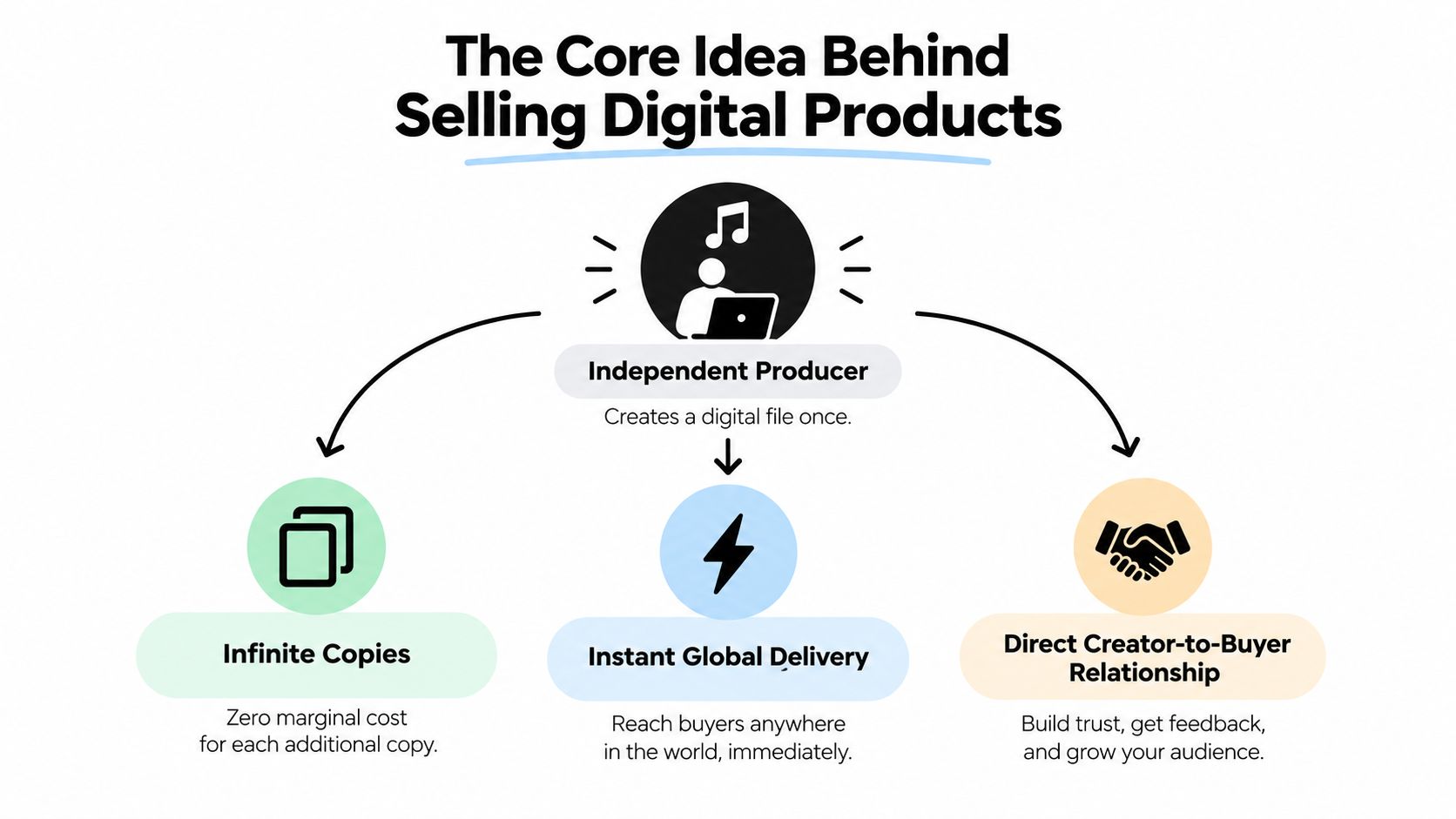
Digital distribution removes physical inventory requirements, not business costs. You still need to account for production, hosting, payment processing, promotion, and support.
For context, UNCTAD's e-commerce measurement reports nearly $28 trillion in business e-commerce sales across 46 economies in 2024. That measures digitally ordered goods and services broadly, not digital downloads alone.
Your practical opportunity is narrower: make something valuable for a defined audience and make buying it understandable. If you're packaging a lyric book or production guide, BarkerBooks' resource on ebook marketing and pricing strategies offers an adjacent publishing perspective to consider.
Don't assume every fan wants the same format. Build offers around different uses of your work.
The Main Types of Digital Products Creators Sell
A collector, an aspiring producer, and a dedicated supporter may all enjoy your music. What they're willing to buy can differ substantially.
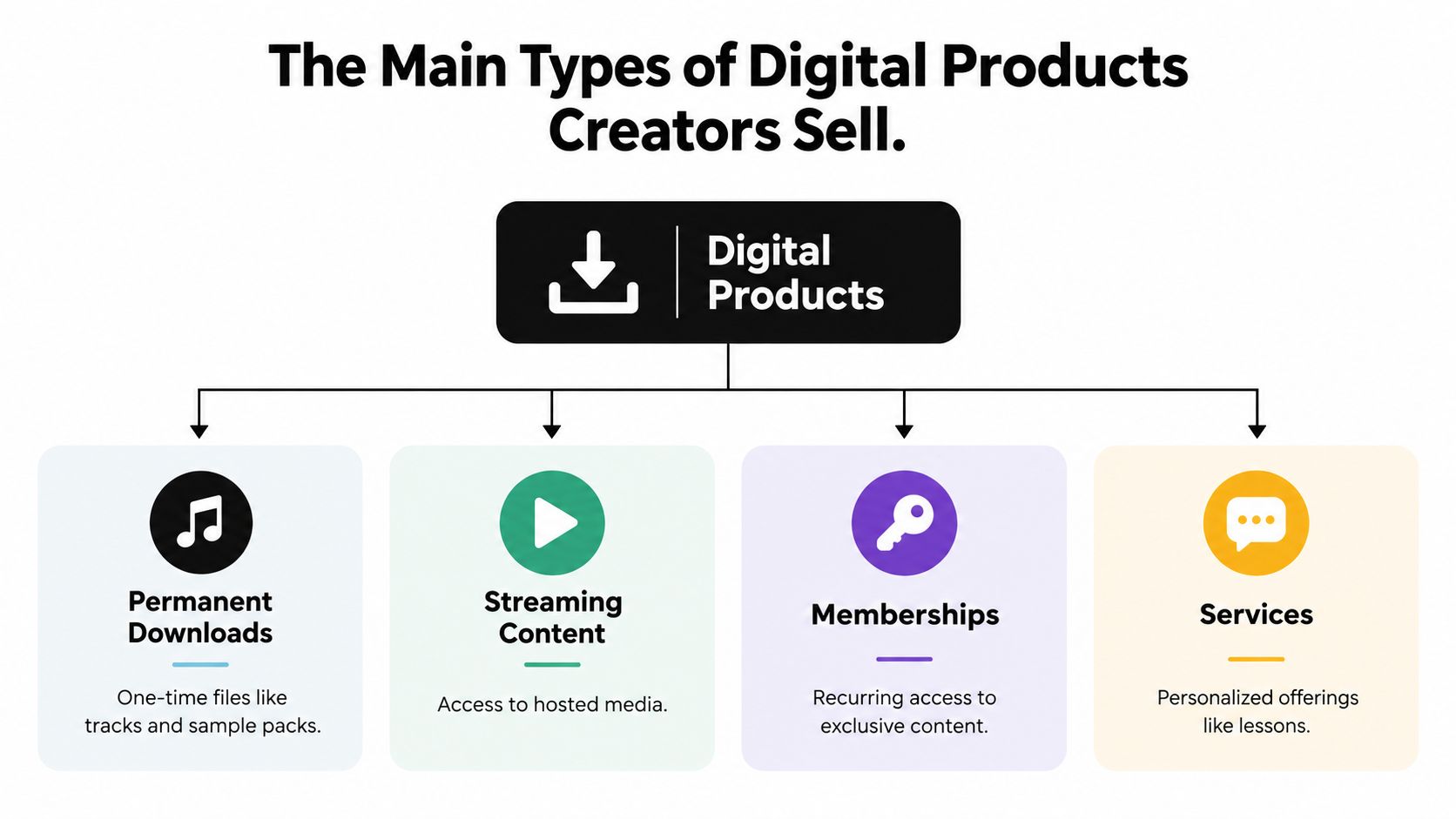
Use this product map as a starting point, while keeping the distinction between reusable products and time-based services clear.
Match the format to the buyer
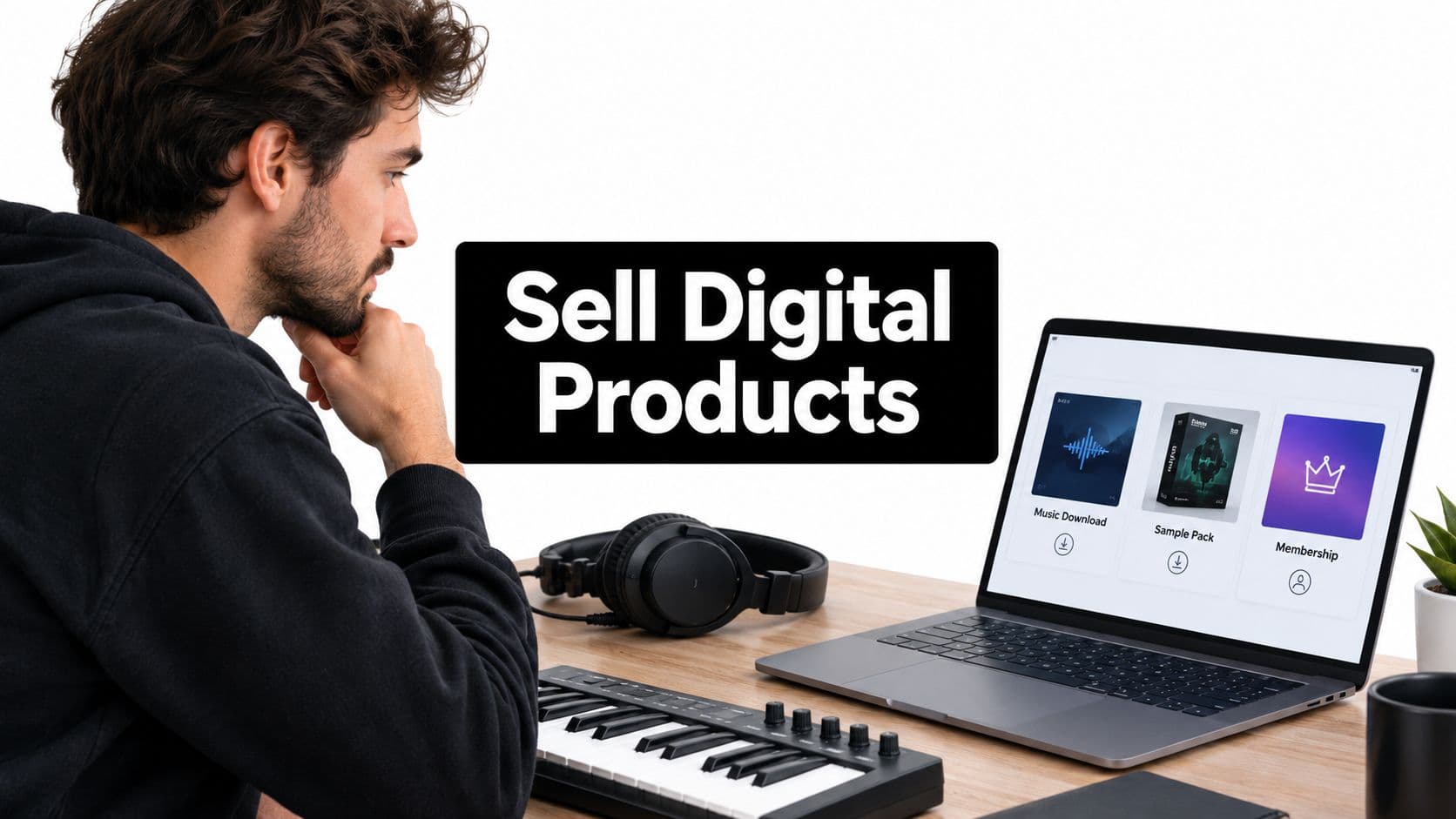
Permanent downloads suit customers who want files they can keep under the purchase terms. Examples include tracks, sample packs, presets, MIDI files, and digital artwork. A DJ buying a downloadable recording has a different practical need from someone listening through a hosted player.
Memberships and hosted content suit people who want an ongoing connection. A songwriter might offer demo commentaries, rehearsal recordings, or early listening sessions. The purchase is continued access to a defined experience, not necessarily a permanent copy of everything.
Licenses suit buyers who want permission to use creative material. A filmmaker seeking background music needs an appropriate usage agreement, not merely a listening download.
Digital merchandise and educational products serve collectors and learners. Think lyric books, wallpapers, production walkthroughs, or practice worksheets. Musicians who teach can also explore how to create and sell coaching templates through Coachful's resource, then consider whether a reusable worksheet fits their teaching.
A personalized lesson differs from a downloadable lesson guide: your availability limits the service, while the guide can be delivered repeatedly.
Why formats belong together
IFPI's recorded-music industry data puts global revenue at $29.6 billion in 2024, with streaming representing 69.0% and downloads plus other non-streaming digital formats representing 2.8%. Those categories describe industry revenue, not the likely sales mix of your own shop.
My recommendation is to give each format a job rather than expect downloads to replace streaming. A bundle can connect those jobs by combining a recording with artwork, commentary, or production assets.
For another explanation of digital-product selling, this video offers additional context.
Pricing Models That Shape Digital Sales
Start pricing with the buyer's intended use, not the file's size. A short audio asset licensed for a commercial project can represent a different purchase from a long recording intended for private enjoyment.
Also distinguish revenue from profit. Your selling price needs to leave room for the costs and effort attached to the offer, including updates, support, collaborators, and promotion.
Choose a model for a specific purpose
| Pricing model | Useful when | Main caution |
|---|---|---|
| Flat purchase | The buyer receives a clearly defined finished product | Don't imply future additions unless they're included |
| Tiered bundles | Different buyers want different combinations of assets | Make the differences easy to compare |
| Pay-what-you-want | You want flexible support or an accessible entry offer | Don't build essential spending commitments around uncertain payments |
| Free entry with paid upgrades | A preview can demonstrate the paid product's usefulness | Keep the upgrade meaningfully distinct |
| Subscription | You can maintain a continuing benefit | Budget for the work after launch |
An emerging producer might begin with a finished sample pack rather than promise regular new packs immediately. An established artist with an engaged audience and dependable release schedule might be better placed to test recurring access.
Use a pricing worksheet to examine the work and costs behind each offer.
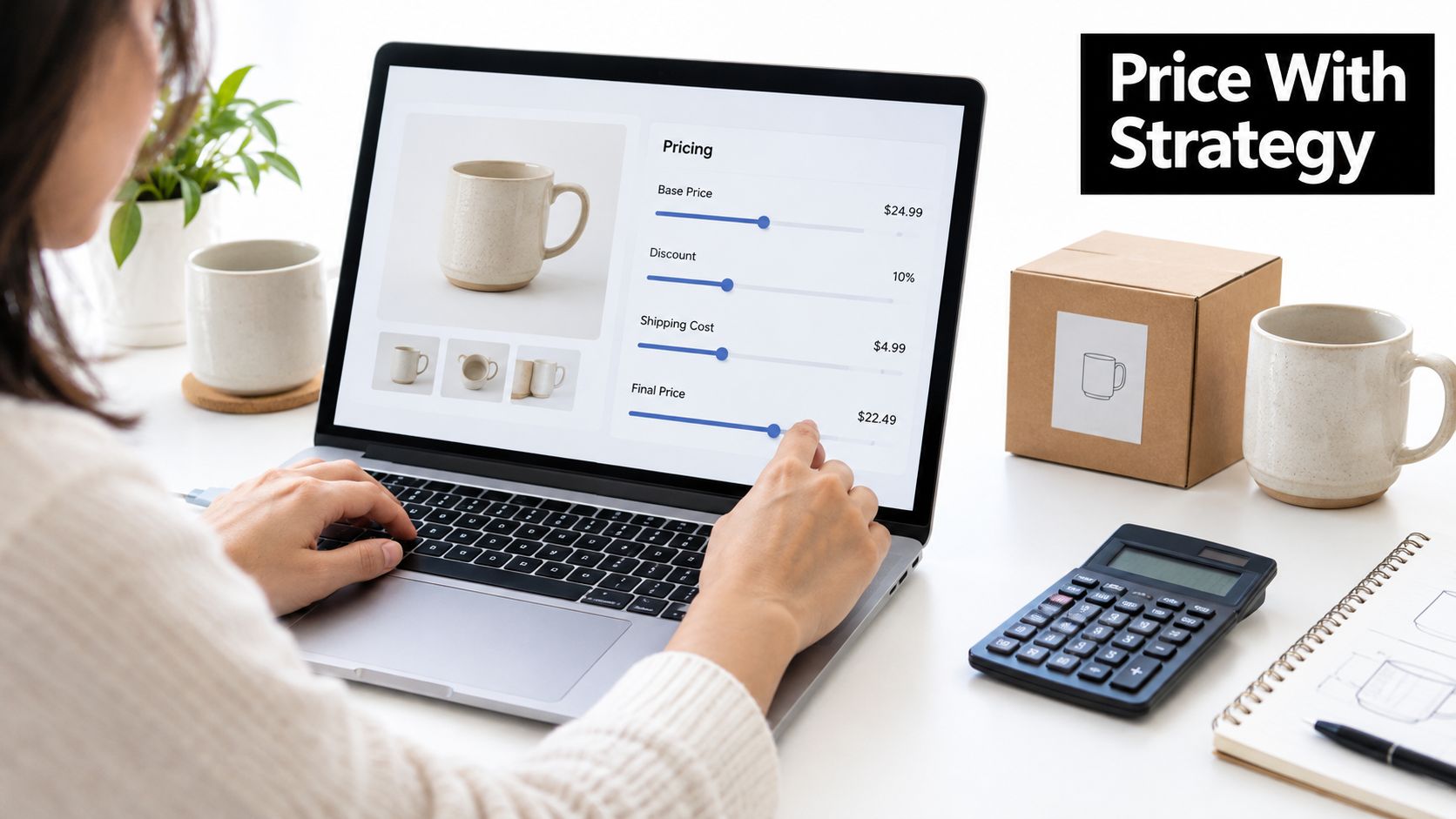
Make upgrades earn their price
A basic recording, an expanded creative bundle, and a membership can coexist if each serves a distinct purpose. Fans shouldn't need to decode overlapping descriptions to understand which purchase fits them.
Price anchoring means presenting a higher-priced option that gives buyers a comparison point. Use it carefully: the premium offer should contain something worthwhile, not exist only to make another option look inexpensive.
Pricing rule: Don't lower the price until you've checked whether the offer itself is unclear.
Ask interested listeners what they'd use, what feels missing, and what would stop them buying. Treat those answers as input for a test, not a guarantee of demand.
Delivery Methods and the Checkout Experience
A buyer pays for a sample pack while traveling. Their connection drops before the download finishes. If they can't recover the purchase without sending you a message, your delivery process needs attention.
Build for that interruption before launch. The intended purchase journey should remain understandable even when a browser closes or a receipt lands in a spam folder.
Design the handoff after payment
- Prepare the files: Use descriptive filenames, organized folders, compatibility notes, and clear installation instructions where needed.
- Confirm payment: Configure access around confirmed payment status, including what happens when a payment remains pending.
- Protect access: Consider signed download links with limited validity rather than publicly accessible file addresses.
- Support recovery: Provide a documented way to retrieve purchases and replace expired links.
- Send confirmation: Include the order details, access instructions, and a support contact in the receipt.
Signed links can limit access to hosted files, but they don't prevent a buyer from redistributing a downloaded copy. Likewise, a streaming embed provides playback access, not automatically a downloadable file or ownership of copyright.
This flow illustrates the intended handoff.
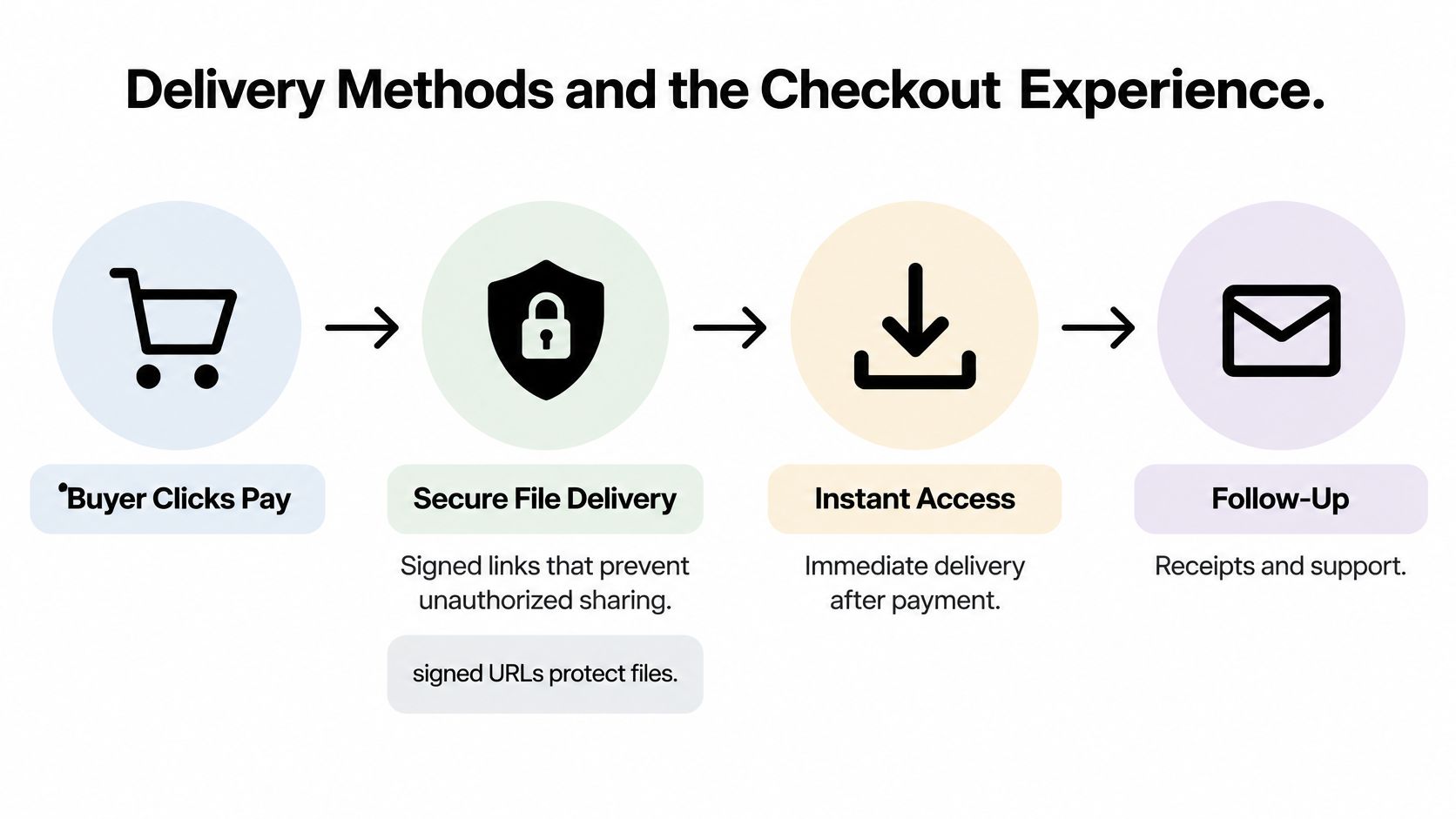
Remove avoidable checkout work
Baymard's checkout usability research reports average cart abandonment of about 70.19%, drawing on research involving 11,777 participants, and estimates an average 35.26% conversion-rate improvement opportunity for large e-commerce sites through checkout improvements. That's a broad benchmark, not a forecast for an artist's storefront.
Use it as a reason to test the purchase path carefully. Show the full payable amount, support guest purchases where possible, use mobile-friendly fields, and preserve progress after an error.
When assessing an artist-focused option such as the music marketplace, check the actual buyer journey rather than judging only the storefront appearance. Test payment, file access, receipts, and recovery separately.
Rights, Licensing, and Legal Basics
A buyer purchases your stems and releases a remix. You intended them for private experimentation; they assumed commercial release was permitted. Both parties may feel misled because the product description never addressed the difference.
Receiving a file and receiving permission to exploit it are separate matters. Your terms should make that distinction understandable before payment, not introduce it afterward.
Write permissions in plain language
- Personal use: State what private listening, study, or experimentation permits and what it excludes.
- Commercial use: Describe the allowed projects, distribution, attribution, and any restrictions.
- Exclusivity: Explain whether you'll offer the same rights to other buyers and how earlier licenses are treated.
- Scope: Identify the applicable material, territory, duration, and permitted modifications.
- Ownership: Clarify what remains yours and whether any rights are assigned rather than licensed.
Don't assume an exclusive license automatically transfers copyright. For agreements involving substantial rights or commercial partners, seek qualified advice; Coto & Waddington, Attorneys at Law provides brand licensing legal guidance as a starting resource for understanding licensing questions.
Treat policies as product information
Publish refund rules, delivery expectations, subscription cancellation terms, and a support contact. Don't assume that describing a download as nonrefundable overrides applicable consumer protections.
For international sales, establish who handles taxes and how VAT or GST is calculated and displayed where applicable. Confirm those responsibilities with your platform and an appropriate adviser rather than guessing.
Buyers shouldn't need legal training to understand what they're allowed to do with a purchase.
Trust also affects payment decisions: Shopify's discussion of Baymard checkout research reports abandonment associated with card-information distrust at 19%, required account creation at 18%, and an overly long or complicated checkout at 17%.
Review the platform terms of service alongside your own buyer-facing terms. Keep transaction and delivery records for disputes, and disclose accessibility provisions such as captions, transcripts, or readable companion documents.
Building a Sustainable Revenue Mix
Direct sales shouldn't be presented as an automatic escape from uncertain music income. In the 2025 Xposure Music Independent Music Industry Report, 13.3% of surveyed independent artists earned a full living from music, 77.8% earned less than $15,000 from music during the year, and 63% named streaming royalties as their largest music-income source, as reported in this account of the independent-music findings.
Those results describe surveyed artists, not a guaranteed outcome for everyone. They support a cautious approach: add direct products to a broader income plan rather than assuming a shop will immediately replace existing earnings.
Digital Product Tiers for Independent Musicians
The price column below describes positioning, not measured market averages. Set actual prices around your audience, permissions, costs, and workload.
| Product Format | Typical Price Range | Fan Relationship | Primary Use |
|---|---|---|---|
| Listening download | Accessible entry tier | Listener or collector | Purchase a finished release |
| Expanded digital bundle | Above the basic release | Engaged fan | Explore a release more deeply |
| Production assets with a license | Varies with scope and permissions | Fellow creator | Make new work |
| Membership | Recurring commitment | Ongoing supporter | Maintain continuing access |
| Premium fan experience | Higher-value, capacity-limited tier | Highly involved supporter | Participate directly |
Plan around capacity, not just sales
Consider a download launch alongside a membership and an occasional expanded collection. The download brings concentrated release income; the membership introduces recurring payments and recurring work; the collection gives interested fans another reason to return.
Compare them using gross receipts minus direct costs and delivery effort. Subscription income continues only while people remain subscribed, and a generous bundle may become unprofitable if it includes open-ended personal support.
Portfolio check: Every offer needs both a clear buyer benefit and a manageable creator obligation.
Streaming, merchandise, publishing, live performance, and premium experiences can remain part of the same plan. No format should be dismissed automatically, and none should be assumed sufficient without evidence from your own business.
Use the artist platform overview to assess how direct offers could fit your existing activity. Add formats because they serve an identifiable need, not because a longer product menu looks more established.
A Walkthrough of a First Digital Product Launch
Consider a hypothetical independent producer preparing a release. Listeners have asked for a downloadable version, while other producers have asked how the arrangement was built.
The producer starts with a finished listening download. The page includes an audio preview, file-format information, cover artwork, and a description that distinguishes this offer from production material.
Build an expansion around a different need
Rather than attaching every session file to the basic release, the producer creates an expanded bundle for learners. It includes organized stems, arrangement notes, and terms explaining the permitted use of those materials.
The distinction matters: the listener buys the recording, while the learner buys a closer look at the creative process. The bundle's higher price reflects its additional contents, not a vague promise of being more exclusive.
- Free preview: A public performance excerpt introduces the release without giving away the full production package.
- Paid download: The finished recording gives interested listeners a clear purchase.
- Expanded bundle: Supporting materials serve buyers who want to study the production.
- Membership candidate: Early releases and a community channel remain a planned offer until the producer can support them consistently.
Rehearse the purchase before announcing it
The producer opens the product page on a phone and asks a trusted listener to explain what each offer includes. If the listener expects remix permission where none is included, the description needs revision.
Next, the producer tests checkout and delivery, opens the downloaded package, and checks that the instructions match its contents. A failed download or unclear license is fixed before promotion begins.
After launch, the producer records purchases, support questions, refund requests, and time spent helping customers. Membership comes later if buyers express interest and the producer can define a sustainable schedule.
This is a proposed launch sequence, not a reported success story. Its value is that each decision can be tested before the creator makes a larger commitment.
Practical Next Steps for New Digital Sellers
Begin with material you can confidently finish, explain, and support. An existing recording or useful production resource is a more manageable starting point than an unfinished catalogue of promised products.
Your first goal is a purchase that makes sense to a stranger. Someone who hasn't followed your creative process should still understand what they're getting.
Prepare the smallest complete offer
- Select a flagship product: Choose work with a recognizable buyer and a specific use.
- Package it carefully: Check filenames, contents, compatibility, artwork, and instructions.
- Define permissions: Write readable terms and get professional advice where the rights are complex.
- Set an intentional price: Account for costs and obligations instead of copying another artist's price.
- Publish policies: Make access, refunds, cancellation, and support expectations visible.
- Test the journey: Check the sales page, payment process, receipt, and recovery route.
- Keep a learning record: Track what people buy, what they misunderstand, and what takes your time.
Expand only when the evidence supports it
Ask a small group of likely buyers to review the offer before committing to a broader launch. Ask what they'd expect to receive and what would prevent them purchasing, rather than asking whether they like your music.
Avoid treating a low price as the answer to every hesitation. The problem may be missing information, unsuitable rights, or an offer that doesn't match the audience.
Your immediate next move is concrete: choose the product, write its description and permissions, then rehearse the purchase. Build the wider revenue mix from what you learn, not from obligations you hope future sales will cover.
OohYeah offers a music-first platform for streaming, selling downloads, sharing exclusive content, and offering subscriptions directly to fans while controlling pricing and distribution. Visit OohYeah to explore how a finished release, an expanded bundle, and a future membership could fit your artist storefront.