Music and Merchandise Bundles That Sell
Discover top music and merchandise bundle ideas that boost sales without sacrificing profit margins. Start selling smarter in 2026.

September 13, 2026
Music Marketplace Advisor
Buying & SellingRelease day arrives, the track is live, and your audience is engaged. Then the numbers expose the problem: a listener can stream the song, enjoy the post, and leave without giving you a meaningful direct sale. A well-planned merchandise offer closes that gap, but only if it gives different fans a reason to buy at a price they can accept.
The strongest music and merchandise programs don't treat every supporter like a T-shirt buyer. They match products, bundles, and pricing to fan intent, then protect margin through careful production and fulfillment choices. That shift matters in a category that independent industry reporting estimates at $6.8 billion in 2025, with a projection of $13.4 billion by 2034. Apparel remains the largest category, while North America accounts for the largest regional share in the same analysis (artist merchandising market data).
Why Music and Merchandise Work Better Together
A fan who buys only a digital release has made a transaction. A fan who buys the release with a shirt, poster, or subscription has entered a more valuable relationship with the artist. The product gives the music a physical presence, while the music gives the product emotional context.
That distinction changes how a release should be built. Instead of publishing an album and adding a merch link later, connect the two from the start. A digital album can sit beside an everyday apparel option, an exclusive visual can accompany a limited poster, and a membership can give committed fans early access to future drops. The offer feels designed rather than assembled.

The commercial logic is straightforward. Streaming builds reach, but direct products create more room for pricing, packaging, and repeat engagement. Merchandise also gives fans a visible way to signal identity and support. That doesn't mean every listener wants a hoodie. It means the artist needs several paths into the same world.
Basket size matters more than a generic bestseller
Recent venue merchandise data shows why a one-product strategy can miss the opportunity. Only 23% of arena and stadium fans bought merchandise in 2025, yet average merch spend reached $67.53 per fan, and purchases rose to 2.1 items per buyer (AtVenu's fan spending insights). The practical reading is that committed buyers are expanding their baskets, even while many attendees still don't purchase.
That points managers toward segmented offers. Casual fans need a low-friction entry product. Active supporters may want music plus apparel. Superfans respond to scarcity, access, and physical objects that aren't available everywhere. Treating those groups as one audience usually creates either weak conversion or unnecessary discounting.
Artist merchandising has been commercially significant for decades. Historical industry reporting cites Elvis Presley generating more than $20 million in merchandise sales in 1956, while the Spice Girls reportedly generated more than $385 million worldwide in 1997 (music merchandise history). The lesson isn't to imitate superstar scale. It's to recognize that artist identity and product strategy have long worked together.
For practical design direction, teams starting from scratch can review this guide to how to create sellable band apparel. The useful question is always the same: does this product express the artist clearly enough that a fan wants to own it, not merely receive it?
Designing Merch That Matches Your Fans and Your Brand
Start with the audience, not the blank product template. A strong assortment usually has a recognizable anchor, such as a shirt or hoodie, then adds formats that reflect how different supporters engage with the artist. Apparel still deserves attention because it carries the brand in public, but it shouldn't become an automatic answer to every demand signal.

Younger fans under 24 over-index for non-T-shirt formats including hoodies, posters, keychains, and jewelry, according to the fan purchasing research summarized in the verified market data (fan purchasing behavior research). That doesn't mean every artist should add all four. It means a team should test whether its audience wants objects, accessories, or subtler references rather than assuming a large front print will carry the entire range.
Build a narrow range before expanding
Use a simple assortment map:
- Core item: Choose the product that communicates the artist most clearly and works for the broadest audience.
- Accessible item: Add a lower-commitment product, such as a small accessory, poster, or digital add-on.
- Collector item: Create a limited or signed-feeling object for fans who want something distinctive.
- Experimental item: Test one format outside the usual apparel range, then let buyer behavior determine whether it stays.
The design should carry a clear point of view. A minimal mark may suit an electronic producer, while a tour date grid may fit a rock band with a strong live identity. Subtle references can work better than oversized branding for fans who want an insider signal. The product must still be legible in a storefront thumbnail, because a beautiful item that disappears on a phone screen won't earn attention.
Validate the idea before committing cash
A small drop is a decision tool, not a sign of weak ambition. List a controlled assortment, promote it to the audience most likely to care, and watch which formats attract clicks, purchases, and repeat interest. On OohYeah, artists can use a unified seller environment to manage music, merchandise, and subscription offers, then apply the available analytics to compare product response rather than relying on broad industry averages. The OohYeah seller guide can help organize the setup before a public launch.
Size planning deserves the same discipline. Tour teams often lose margin by overbuying popular designs while misreading the size mix. Keep the range tight, preserve cash for proven items, and use on-demand production when the audience signal isn't strong enough for a bulk order.
A useful review question is: what specific fan behavior does this item serve? A poster may suit a collector, a keychain may suit a casual supporter, and a hoodie may suit someone who wants a more substantial expression of fandom. If the answer is “artists usually sell it,” the product probably needs more work.
The following video can add practical context for artists planning a physical range:
Building Bundles That Add Value Without Discounting Too Deep
A bundle should increase relevance before it reduces price. Pair items that belong to the same fan moment, such as a new release with a wearable reference to that release. The buyer should understand why the products are together within a few seconds of seeing the offer.
Three architectures cover most independent artist campaigns:
- Music plus apparel: Pair an album download with a shirt for everyday supporters who want both the release and a visible connection to it.
- Exclusive content plus object: Combine early-access tracks, behind-the-scenes video, or studio material with a poster for fans who value access and context.
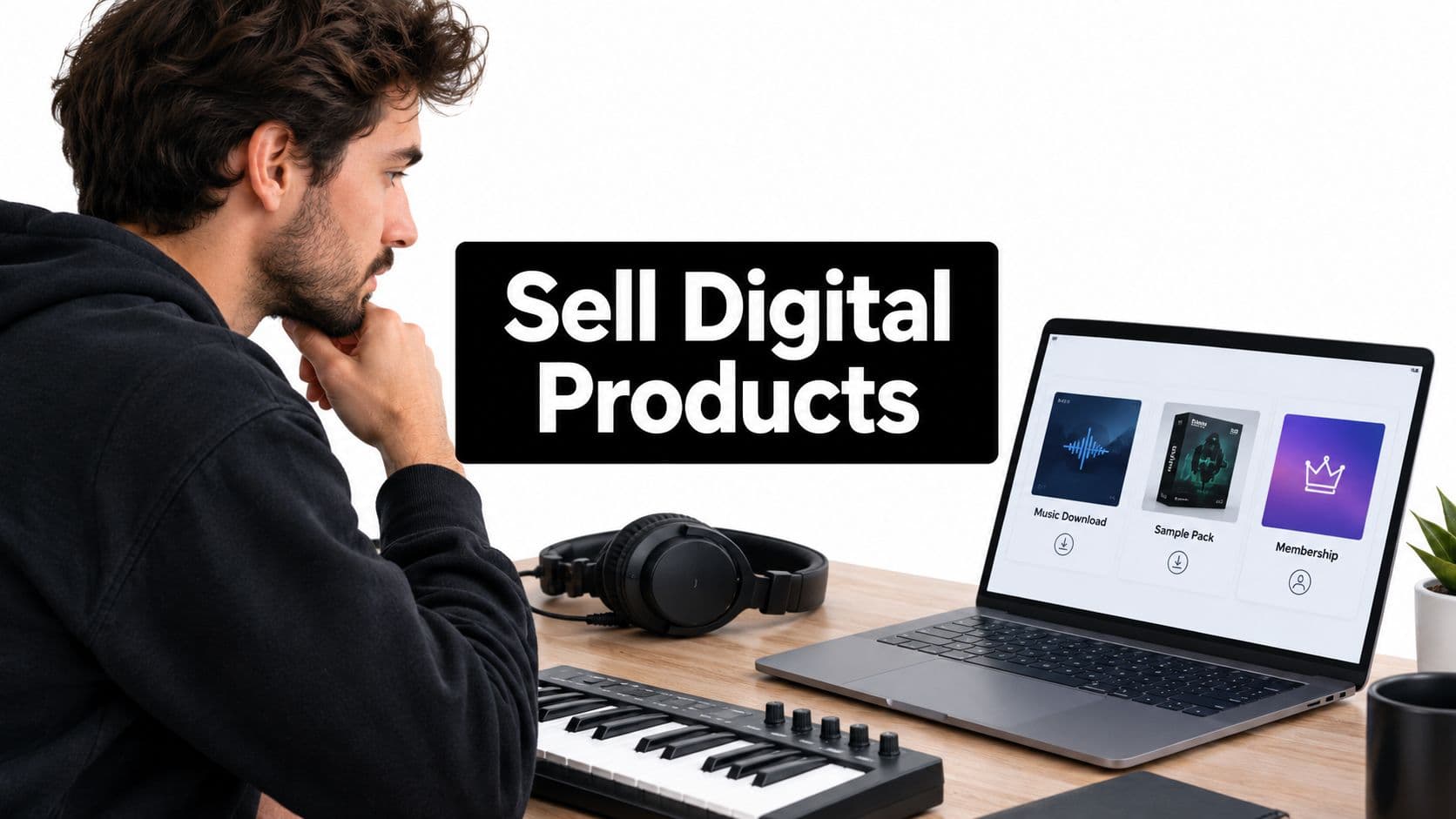
- Subscription plus limited merch: Connect membership to a recurring limited drop for committed supporters who want an ongoing relationship with the artist.

The structure matters because each bundle addresses a different purchase motive. A casual buyer wants clarity and low commitment. A collector wants uniqueness. A subscriber wants continuity and recognition. Combining those motives in one overloaded package can make the offer harder to understand.
Use access as value
Exclusive content often has a low marginal production cost after the artist has already created it. That makes it useful inside a bundle, provided the content feels exclusive. Early listening, private updates, alternate artwork, voice notes, or a production breakdown can make a physical purchase feel more personal without forcing a deep price cut.
Scarcity works best when it reflects real limits. A numbered poster, a short preorder window, or a seasonal design gives fans a clear reason to act. Fake urgency damages trust, especially when the same supposedly limited item returns immediately after the campaign.
Bundle rule: Add access, context, or rarity before adding a discount.
Keep the offer ladder easy to read
Present a small set of choices rather than every possible combination. One entry offer can introduce the release. One middle offer can combine the music and the main product. One premium offer can add limited access or a collector item.
Subscriptions can support this ladder when the benefit is concrete. A membership might include early access to a drop, exclusive content, or a recurring product benefit. It shouldn't be framed as a vague promise of “more content.” Fans need to know what arrives, when it arrives, and why membership is different from buying a single release.
For teams assembling physical kits, a practical reference on affordable hat kit assembly can help clarify how accessories and headwear fit into a broader package. The sourcing decision still belongs to the artist, and every extra component should earn its place through fan relevance or contribution margin.
Promote the bundle in direct messages, release posts, and community updates with one clear sentence about who it's for. Don't train fans to wait for constant promotions. A consistent offer with a strong reason to buy will usually build more confidence than a rotating sequence of emergency discounts.
Pricing for Profit While Keeping Fans Coming Back
A shirt can sell well and still lose money. Start with the complete landed unit cost, including production, packaging, shipping to you, platform fees, and payment processing. Add the venue's cut before approving a retail price for event sales.
Verified touring guidance sets a practical apparel target at a 50% to 60% margin. Its example shows why the calculation matters: an $8 shirt at a 60% margin implies a $20 minimum retail price (tour merchandise pricing guidance). The example leaves room for shipping, fees, defects, and event deductions. A price based only on the blank garment cost does not.
Cost-Plus Pricing Quick Check for Apparel
| Cost Component | Example Amount | Notes |
|---|---|---|
| Production | $8 shirt | The verified example uses an $8 unit cost |
| Packaging | Add your actual cost | Include mailers, labels, inserts, and protective materials |
| Shipping to you | Add your actual cost | Allocate inbound freight across the units received |
| Platform fees | Add your actual cost | Confirm the fee structure before publishing |
| Payment processing | Add your actual cost | Include the transaction cost in the landed unit calculation |
| Target retail price | $20 minimum example | The verified example applies a 60% apparel margin |
Only the first and last figures come from the cited pricing workflow. Pull the remaining amounts from invoices, shipping records, platform terms, and processor fees. Recalculate when any of those costs change.
Create an affordable entry point
A margin-protected offer ladder gives different fans a way to participate. Use a lower-cost digital or small-format product for casual supporters, then reserve heavyweight garments, signed objects, or limited editions for buyers willing to spend more. On OohYeah, basket size and format preferences can guide which combinations deserve promotion, instead of forcing every fan toward the same apparel offer.
The premium item does not need to become cheap. It needs a clear role alongside an accessible entry point. That structure protects profit while reducing the risk that the highest-priced product becomes the only meaningful way to support a release.
Affordability still affects repeat demand. Independent reporting in 2026 found that nearly half of US fans say merchandise is becoming unaffordable (music merchandise affordability research). Rising basket value can reflect committed superfans continuing to buy while casual supporters leave the offer untouched. Set prices for both groups, with different formats rather than one compromise price.
Audit the price before launch
Run every product and bundle through four questions:
- What is the complete landed cost?
- Does the retail price preserve the intended apparel margin?
- Does the offer give less committed fans a realistic entry point?
- Will venue deductions, returns, defects, or unsold stock change the result?
Review the answer at the offer level, not only at the item level. A bundle may raise basket size while reducing margin if its added components, packaging, or shipping are not included in the calculation. Test the expected basket mix before launch, then compare it with actual sales and contribution after the drop.
Online storefront benchmarks can provide directional context, but they should not set your price. Your product page, audience, traffic source, price, and fulfillment experience determine the result. Protect the margin first, then adjust the format, access, or bundle composition so the offer remains affordable without training fans to wait for discounts.
Fulfillment and Logistics Options That Scale With You
A tour date can expose a weak fulfillment setup quickly. Missing sizes, late cartons, or untracked stock turn a strong release into lost sales and avoidable work. Choose the operating model around cash flow, order volume, product complexity, and the labor the team can sustain. Print-on-demand can limit risk for an online test, while touring needs stock on hand and a reliable count after every show.

Compare the operating choices
Self-fulfillment preserves control over packing, inserts, and personal touches. It fits manageable order volumes, but the artist or manager must store stock, print labels, resolve delivery problems, and prevent shipping work from taking over release activity.
Print-on-demand limits unsold inventory and supports quick design tests. The trade-off is less control over production timing, garment availability, and packaging. Order samples before promotion. A product mockup does not show the customer's actual experience.
Third-party logistics transfers storage and shipping to an outside warehouse. This can help once internal fulfillment repeatedly blocks other work. Review storage fees, pick-and-pack charges, returns handling, and service expectations before signing up.
Tour fulfillment is built around event readiness. Stock must arrive before the show, counts must cover each size and design, and venue terms can change the profit. Tour inventory should not be treated as online inventory unless both channels share accurate catalog and stock records.
Hybrid fulfillment gives independent artists room to match the model to demand. Use print-on-demand for uncertain online products, bulk production for proven tour items, and a limited run for collector-focused products.
Operational principle: Choose the model that protects the customer experience without assigning more inventory or labor than the campaign can support.
Plan stock around actual behavior
Tour planning guidance commonly uses extra stock for popular sizes and designs and tracks items per transaction to reduce overstock and pricing errors. Treat those figures as starting points, then adjust them using sell-through, size mix, event history, and the difference between online and venue demand.
A shared catalog makes segmented offers easier to manage. Keep an accessible product for price-sensitive fans, proven formats for larger baskets, and limited products only where demand justifies the handling cost. OohYeah's Printful POD listing setup can support production tests, but review sample quality, delivery expectations, and support response before sending traffic to a partner.
Inventory research can broaden product ideas beyond standard shirts. Use discover profitable Amazon Merch ideas for starting points, then filter each concept through the artist's identity, audience, format preferences, and target margin. The goal is a readable offer mix, not a larger catalog.
Launch Market and Protect Your Margins on OohYeah
A launch can lose money before demand becomes clear if the catalog is too broad. Start with one release, one core physical product, one accessible option, and one premium or limited offer. Fans get a readable choice, while the team can identify which format and bundle produce healthy baskets.
Use a launch sequence
- Prepare the catalog. Upload the music, physical products, digital additions, and subscription terms. Check product images, size options, delivery expectations, and descriptions before promotion begins.
- Calculate the floor price. Use the full landed cost and include venue deductions where relevant. A popular item still needs enough margin to support the release.
- Assign each offer to a fan segment. Position the entry product for casual supporters, the main bundle for active listeners, and the limited or subscription offer for committed fans.
- Build the message around the release. Explain what the fan receives and why the products belong together. Replace vague claims such as “exclusive bundle” with the specific exclusive element.
- Promote through direct channels. Use community posts, direct messages, release announcements, and live-event reminders. Give each message one action instead of several competing links.
- Review the results. Compare conversion, basket composition, returns, stock movement, and margin. Keep the offer that attracts the right buyers, not the item that earns the most attention.
Segmented bundles also protect affordability. A lower-priced entry product can serve fans with smaller budgets, while a music-led bundle or limited format gives committed supporters a reason to increase basket size. Let audience behavior guide the next test, whether that means a hoodie, poster, accessory, bundle, or subscription benefit.
Market forecasts provide context, but first-party results should set your operating decisions. The global music merchandise market is projected to reach $16.3 billion annually by 2030, with projected growth of about 1.6% per year. That outlook favors disciplined assortments and margin control over adding products without evidence.
OohYeah provides a place to sell music and merchandise directly, with storefront tools for artist-led offers and direct fan access. Use it as the commercial layer of the release, while product selection, pricing, and fulfillment remain management decisions. The offer still needs a clear audience, a defensible price, and delivery that matches the promise.
The winning merch program isn't the one with the largest catalog. It's the one that gives each fan segment a relevant reason to buy while leaving enough margin to keep creating.
Publish the focused bundle, watch the basket rather than only the buyer count, and use the results to decide what earns a second production run. This turns music and merchandise into a repeatable operating system built around format preferences, affordability, and profit.
OohYeah gives artists one place to sell music, merchandise, and subscription offers while communicating directly with fans. Build one release-led bundle, set its price from the full landed cost, and present the offer through a direct storefront.