Ways to build subscriber value with early releases, demos, and email
Explore early access to new music releases for fan subscribers, with practical release windows, personal emails, demos, and a smooth public launch plan.
October 29, 2026
FRANKLY with Frank Lee
A 1-2-week head start gives fans time to enjoy a release before it goes public, while leaving room to build anticipation. There’s no universally right window, so treat this as a practical starting point for early access to new music releases for fan subscribers. The best fit depends on your release goals and the exclusive content you can keep sharing.
Fans want more than an early link. They want to feel included as the music takes shape. A demo, a personal email, or a note about the story behind a song can make an early listen feel like a real connection.
Learn how to choose a release window, use email to bring subscribers into the moment, and share demos and other exclusive content without making your schedule harder to manage. Then see how to release music to subscribers first and open it to everyone else on launch day.
Key Takeaways
- Set the early-release window around your launch goals and the exclusive material you can sustain, not a one-size-fits-all schedule.
- Use release emails to give fans a clear next step and a personal reason to stay connected.
- Make demos and behind-the-scenes updates feel valuable by sharing the creative choices and stories behind the music.
- Plan the handoff from subscriber access to public release so fans know when the music opens to everyone.
1. Choosing the length of an early-access window
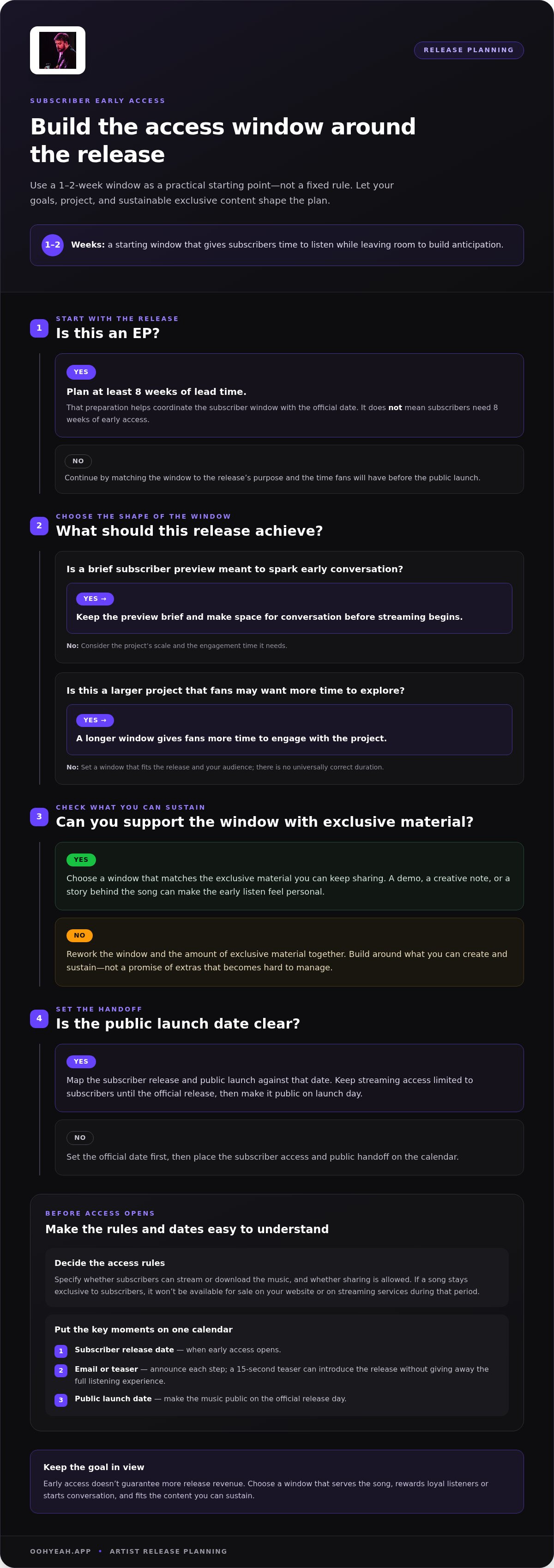
Start with a 1-2-week window. That gives subscribers time to listen, while leaving space to build anticipation before the official launch. There’s no universally correct duration for a direct-to-fan release. Treat this range as a starting point, then match it to the release and your audience.
Choose the window by considering three practical questions: What should this release achieve? How much exclusive material can you create? When will the public version arrive? A single may have a different purpose from an album. A brief subscriber preview can encourage early conversation, while a longer window gives fans more time to engage with a larger project.
For an EP, plan further ahead. A guide recommends at least 8 weeks of lead time for an EP release. That preparation time helps you coordinate the subscriber window with the official date. It doesn’t mean subscribers need 8 weeks of early access. Keep planning time separate from the period fans receive the music early.
Then build a simple calendar. Set the subscriber release date, public launch date, and the email or teaser that announces each step. A 15-second teaser can introduce the release without giving away the full listening experience. Check that each date supports the same goal, whether that’s rewarding loyal listeners or starting conversations before streaming begins.
What restrictions apply to early-access music, such as downloads or sharing? There’s no single rule for every release. Decide whether subscribers can stream or download the music, and say whether sharing is allowed. If a song remains exclusive to subscribers, it won’t be available for sale on your website or on streaming services during that period.
Finally, define the handoff. Keep streaming access limited to subscribers until the official release date, then make it public on launch day. Early access doesn’t guarantee more release revenue, so choose a window that serves the song and fits the content you can sustain.
2. Email lists and direct audience relationships
Email gives artists a direct way to reach their audience around a release. A streaming post can get lost in a busy feed, while an email can explain why a song matters, tell subscribers when access opens, and direct them to one clear listening destination. A focused plan for early access to new music releases for fan subscribers can make each email part of the release experience.
How can fans sign up for early access to new music releases? Fans can join through an artist’s email signup form or subscriber page. Before they sign up, explain what they’ll receive and how the early music will be delivered.
Make each release email useful, not just promotional. Start with the track or project name, the access date, and a short note from the artist. For example, share what inspired a lyric, then include the listening link and public release date. Fans should understand the benefit without searching through a long message.
Send a focused sequence instead of repeating the same announcement. First, invite fans to subscribe. Next, announce that the early listen is available. Then send a public-launch reminder with a fresh detail, such as the story behind the recording. Give each email one main action, such as listening, replying, or sharing a permitted public link. This helps early access to new music releases for fan subscribers feel personal, not automated.
Measure the response after each send. A healthy benchmark for an artist’s release email is an open rate above 30%. Compare similar messages over time, and note whether subject lines, timing, or content changed. Opens alone don’t show whether fans listened, so pair that measure with meaningful replies, clicks, and subscriber activity where available.
Keep the relationship personal. Use a recognizable sender name, write in the artist’s own voice, and invite replies with a specific prompt about the music. A simple question about a favorite lyric gives fans a reason to respond, rather than just receive another promotion.
A clear artist page can bring the signup invitation and release destination together. Consider an artist page for direct fan connections as part of that path.
3. Exclusive demos and behind-the-scenes content
A demo lets subscribers hear how a song changes before its official release. Share an early vocal take, an acoustic version, or a rough arrangement. Add a note explaining a creative choice, such as why you kept a quiet verse instead of adding another instrument. That context turns an unfinished recording into a meaningful glimpse of your process.
Behind-the-scenes material can deepen that connection without requiring polished production. Send a short studio note about a lyric, a photo of handwritten edits, or an audio clip describing a chorus change. Give each piece a clear purpose. Subscribers should learn something about the music, not receive an unrelated update.
Build a repeatable plan around each release. First, choose a demo or creative detail you can share. Next, decide whether it belongs in an email, a subscriber space, or a social media post for everyone. Keep the most revealing material exclusive if that distinction makes the subscription feel worthwhile. A public post can still point fans toward the deeper story.
Make rewards manageable. Artists starting fan subscriptions can add 1-2 bonus rewards for each higher tier. Choose rewards you can deliver consistently, such as a demo alongside a release or a brief recording note. Avoid promising a stream of new extras if your recording schedule makes that difficult. A reliable, focused offer beats a growing list that becomes hard to maintain.
Use the waiting period to invite participation without giving up creative control. Ask subscribers which arrangement detail they noticed, or invite them to share a favorite lyric privately. Then follow up with a short explanation of what changed in the final version. This makes fans feel involved while keeping the finished song yours.
Set expectations for each exclusive item. Label a demo as an early version, explain whether it may change, and clarify how subscribers can access it. When the official track arrives, connect the early recording to the final release. Fans can hear the evolution, and your bonus content feels connected to the music rather than added just to fill a calendar.
4. Giving subscribers early access before public release
Early access works best as a clear release sequence, not a hidden perk. Give subscribers the music first, tell them when public access begins, then open it to everyone on the official release date. This rewards dedicated listeners and gives them time to start conversations before the wider launch.
Which music streaming services offer early access to new releases for subscribers? Early access isn’t tied to one named streaming service. Artists can limit a release to members until its official date, then make it public on launch day.
Which artists offer fan-club or mailing-list early access to new music? Artists offer it when they announce early listening as a fan-club or mailing-list benefit for a specific release. Follow artists whose music you care about, and look for clear access details in their announcements.
Do Patreon, Bandcamp, or artist memberships provide early access to music? A membership can include early access when the artist sets it up as a member benefit. A Patreon or Bandcamp membership alone doesn’t mean every release arrives early, so look for the artist’s terms for that specific release.
Are early-access releases available in the United States? Yes. Artists can offer subscribers access in the United States before releasing music publicly. The artist’s announcement should explain where subscribers can listen and when the public release begins.
To find upcoming releases, follow the artist’s mailing list, fan page, and social media announcements. Look for the track name, subscriber access details, and public release date. Save the announcement so you know when early access starts and when the release opens to other listeners.
Artists can make the sequence easy to follow: announce the reward, deliver the music to subscribers, and share the public release date. Keep each message focused on what listeners can access now and what happens next. To share subscriber-first releases through an artist profile, set up the access path and make the release timeline clear.
OohYeah!: Artist Profile Hosting
OohYeah! gives artists a place to host their profile and share music directly with fans. If you’re ready to bring subscriber-first releases, demos, and artist updates together, an artist profile can give supporters a clear destination.
Artists can offer Digital Music Downloads and Exclusive Content Access, creating a place for fans to access music and valued bonus material. The Merchandise Marketplace also lets artists share merchandise with their audience. These tools suit creators who want to build direct relationships around their work, rather than rely only on public streaming releases.
Use your profile to make the next step easy to understand: what subscribers can access, where to find a release, and when it becomes public. Visit oohyeah.app to explore OohYeah!.
Shape your next release around the fans who show up
Your next release can do more than announce a finished song. Use it to invite supporters into the moment, give them a meaningful way to participate, and build a stronger connection that continues after launch. A clear plan for early access to new music releases for fan subscribers can make that relationship part of your creative practice, not a one-time promotion.
OohYeah! offers Artist Profile Hosting, Digital Music Downloads, and a Merchandise Marketplace. These offerings can bring your profile, music, and merchandise together in one place for fans. Choose the approach that suits your next release, then make the experience easy for supporters to understand.
Ready to explore what that could look like for your music? Contact OohYeah! about your release. Keep creating on your terms, and bring your fans along for the next step.
Frequently Asked Questions
How long should a direct-to-fan release window last?
A 1-2-week window is a practical starting point, but no single duration fits every release. Consider whether fans need time to explore a full project or simply hear one track early. After the launch, review subscriber replies and listening activity. Use those signals to shape the next window, rather than assuming the same schedule will suit every release.
What should be checked before announcing an exclusive window?
Before you announce the release, make the access format, start date, public release date, and sharing expectations clear. Decide whether subscribers can stream or download the music, and explain what they may share publicly. If the track is exclusive during the window, remember it won’t be available for sale on your website or on streaming services during that period.
How far ahead of the public release can subscribers listen to new music?
Artists choose how early subscribers can listen; there’s no universal maximum. Set the subscriber start date by working backward from the public release and allowing fans time to hear the music. Then include both dates in the announcement and access page. For example, state when the private link becomes available and when the wider audience can listen.