Monetizing Live Concert Recordings With Direct-to-Fan Sales
Learn how monetizing live concert recordings direct to fans creates income, preserves performances, and complements streaming, merch, and exclusive fan content.
October 28, 2026
FRANKLY with Frank Lee
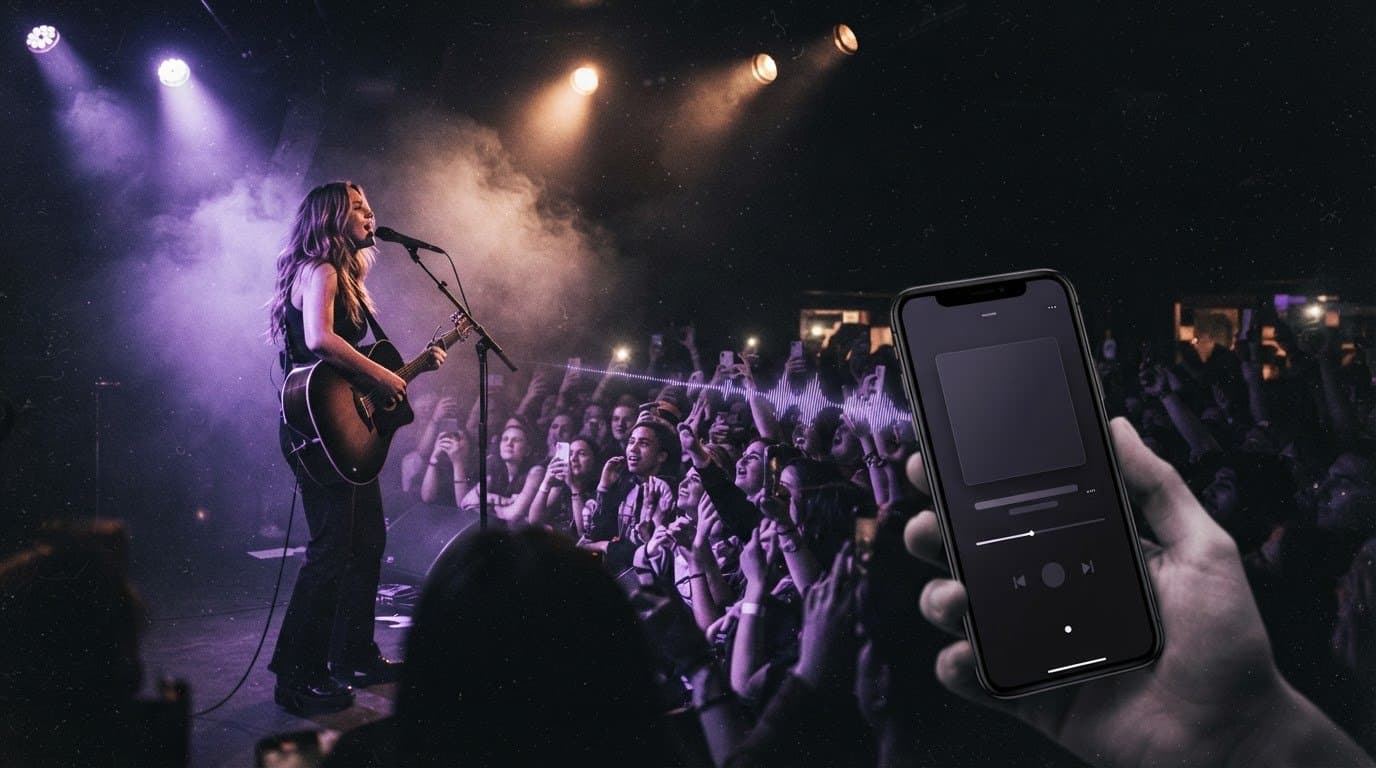
A concert doesn’t have to end when the lights come up. Monetizing live concert recordings directly to fans means turning a performance into an album fans can buy and download, creating another income stream from music you’ve already played. It works best as part of a broader mix, not as a replacement for streaming, merchandise, or shows.
It makes sense to seek more value from the energy and work behind a live performance. A recording can preserve the moment for fans who were there and give those who missed it a way to connect with the music. Treat the release as both a meaningful keepsake and a practical addition to your income mix.
This article explains how live recordings become direct-to-fan sales, what affects their appeal, and how they can complement streaming, merchandise, and exclusive content. You’ll also see how a digital music marketplace can support that approach, helping you build a closer connection with listeners and give them another way to support your work.
Key Takeaways
- Build a mix of income streams so live recordings complement streaming, merchandise, and exclusive fan content.
- Shape a live album around the performance’s strongest moments and the experience fans will want to revisit.
- Choose a direct-sales platform that makes it easy to present your music and connect recordings with other fan offerings.
- Set a price by weighing the recording’s production, its value to your audience, and the way you plan to sell it.
Diversifying musician income
Live recordings can add a creative revenue stream alongside streaming, merchandise, and ticket sales. They also give fans another way to revisit a performance after the show.
Rules for Direct-to-Fan Digital Sales
Direct-to-fan sales deliver digital music to buyers through an artist-controlled or third-party storefront. For U.S. sales, account for applicable tax collection, accurate product descriptions, clear purchase terms, and responsible handling of customer data. These considerations shape checkout and customer communication. Explain what the live recording contains and which format buyers receive so they can make an informed choice.
Platform Revenue Shares and Fees
Platform revenue shares and fees affect how much an artist keeps from each sale. Terms differ, so compare each platform’s stated share and transaction charges before choosing where to distribute a recording. An artist website can offer more control over presentation and a direct fan connection; streaming and download platforms can provide wider access. Weigh control against reach, as well as the terms of each platform.
Copyright, Publishing, and Performance Royalties
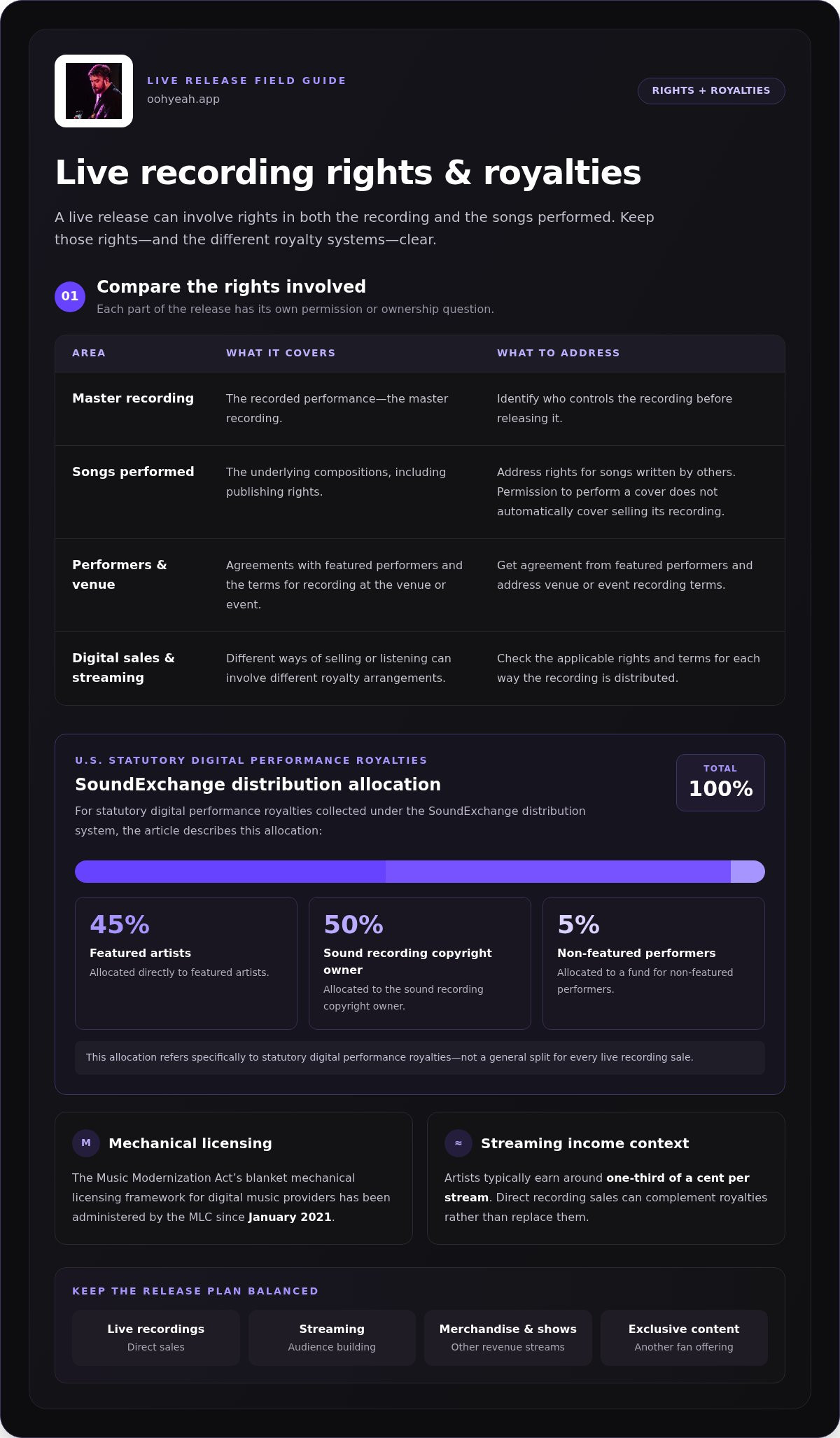
A concert recording can involve rights in both the recorded performance and the songs performed. For a release, identify who controls the recording and address the underlying compositions, including publishing rights. Digital sales and streaming can also involve different royalty arrangements. In the United States, statutory digital performance royalties collected under the SoundExchange distribution system allocate 45% directly to featured artists, 50% to the sound recording copyright owner, and 5% to a fund for non-featured performers. According to the U.S. Copyright Office, the Music Modernization Act’s blanket mechanical licensing framework for digital music providers has been administered by the MLC since January 2021.
Use a live album as one part of a balanced plan: streaming can help build an audience, while merchandise and live shows create other revenue streams. Artists typically earn around one-third of a cent per stream, so direct recording sales can complement royalties rather than replace them. Exclusive content or a subscription can give supportive fans another way to access music and behind-the-scenes material.
Live albums
A live album turns a performance into a release fans can revisit and support. Strong audio, clear rights, and a thoughtful sales plan help it stand apart from casual concert videos.
Platforms for Direct-to-Fan Sales
Direct-to-fan platforms let artists present recordings in a storefront they control or manage, giving audiences a clear path from discovery to purchase. For artists, monetizing live concert recordings direct to fans starts with a useful release page: identify the show, share its date and set list, and preview its sound. Promote it through live shows, email, and short YouTube videos. Clear details help fans choose confidently. An artist profile and music sales can bring music and artist information together.
Rights and Permissions for Live Recordings
Rights and permissions determine who may record, release, and sell a performance. Before recording, clarify ownership of the master recording and permissions for songs written by others. Get agreement from featured performers and address venue or event recording terms. If the set includes a cover, don’t assume permission to perform it also covers selling a recording. Clear rights help ensure fans can access the release without confusion.
Pricing Live Recordings
Pricing connects a recording’s value to fans with the income an artist earns from each sale. Consider production quality, set length, added material, and what supporters receive. A polished full-show album offers a different experience from a short set or single track. Streaming income depends on listening activity and platform terms, while each direct download is an individual purchase. Explain what each format includes so buyers can compare options.
Recording and Delivering Live Albums
Recording and delivery turn a performance into an album fans can hear clearly. Capture a clean feed from the mixing desk, then add room microphones to preserve audience energy. Review the recordings after the event, remove distracting noise, and balance vocals with instruments. Master tracks for consistent playback, then check the files and track order before uploading. Include accurate titles and artwork on the release page. These steps lay a practical foundation for monetizing live concert recordings direct to fans.
What are the best platforms for selling live concert recordings directly to fans?
The best choice depends on whether you need direct sales, discovery, or ongoing fan engagement. An artist-controlled store can put a live album front and center, while a download marketplace can place it alongside other releases. Streaming platforms help listeners discover music, but their listening-based model differs from a direct purchase. Decide which outcome matters most before choosing where your recording will be available.
For direct sales, compare platforms by the buyer’s path from release page to playback. Can fans identify the concert, see the track list, and understand the file format before buying? A simple page for a hometown show, for example, can pair the recording with its date, venue, set list, and a short note about the performance. Clear presentation helps fans make an informed choice.
Consider how each platform supports your relationship with listeners after a purchase. An artist profile can keep a concert recording alongside studio releases, while an exclusive-content platform can offer bonus material such as backstage notes or an alternate set. Choose tools that fit your release plan, and avoid scattering updates across pages fans may struggle to find. Consistency makes promotion easier.
Many artists can use more than one platform, with each serving a distinct purpose. Share a preview through social channels or streaming services, then direct interested fans to the page selling the full recording. Keep the title, artwork, and description consistent across destinations. For a tour release, one platform might host the complete download while another offers a short preview to help new listeners discover it.
Before committing, review how the platform handles file delivery, sales reporting, customer access, and release updates. A live album may need corrected track information or a replacement file, so understand how to manage the release. The right fit matches your audience, keeps the purchase experience clear, and supports how you plan to distribute and promote the recording.
How much can artists charge for live concert recordings, downloads, and streams?
There’s no universal price for a live recording. Set one by weighing the release’s production quality, length, uniqueness, and value to your audience. A full set with clear audio and a memorable performance offers a different experience from a short recording or single track. Make the contents clear so fans can judge the value before buying.
For a direct download, consider the work involved in recording, mixing, editing, and mastering. Then compare the finished release with what your fans already support, such as studio albums, merchandise, or tickets. A recording from a special hometown show may feel more personal when its page includes the set list and performance context. Set a price that reflects the experience, not just the file length.
Streaming works differently. Artists typically earn around one-third of a cent per stream, so income depends on listening activity rather than a fan’s one-time purchase. Treat streaming as a discovery and listening option, then offer a complete download for supporters who want to own the concert recording. The formats can serve different preferences without making the release feel repetitive.
Before setting a price, define what each version includes. A standard download might contain the concert audio, while an expanded version could add an encore or performance notes. Keep the differences clear and don’t imply that buyers will receive extras that aren’t included. Review sales and listener response after release, then use that feedback to guide future recordings and format choices.
Direct sales give you room to present the recording and its value in your own words. For a release page that supports digital music sales, set up a direct-to-fan music profile and make the concert recording easy for supporters to find.
Streaming accounted for more than $22 billion of global recorded music revenue in 2025; in the United States, it generated about $9.5 billion of recorded music revenue in 2025. Platforms can generate income from streams and help boost merchandise and ticket sales, helping independent musicians build a fan base and encourage those purchases.
In 2023, the average artist earned over $10,000 in gross merchandise sales per concert. Crowdfunding platforms can raise money to record an album or produce a music video, offering backers rewards such as private performances.
OohYeah!: Artist Profile Hosting
OohYeah! gives artists a place to present their music and connect with supportive fans. Artist Profile Hosting can bring your live album and artist information together, while Digital Music Downloads let fans purchase recordings. You can also offer bonus material through Exclusive Content Access to deepen the experience around a release.
When you want a live recording to support more than a single sale, connect it with other ways fans can support your work. The Merchandise Marketplace puts music and merchandise in the same direct-to-fan ecosystem. Artists retain 100% of their sales revenue from music and merchandise, supporting a more direct income stream.
Explore OohYeah! at oohyeah.app to see how it could fit your release.
Make your next performance part of the plan
A live release can become more than a record of one night. Make it an ongoing connection with listeners: invite them to share the moment they remember, gather feedback on future releases, and use their response to guide what you create next. This gives your audience a role beyond pressing play.
A thoughtful approach to monetizing live concert recordings directly to fans starts with one clear decision: which performance best represents your sound and community? Build from there. Give the recording a distinct identity, make the release easy to understand, and keep the conversation with fans active after launch. Each release can show you what resonates and shape the next opportunity.
If you’re ready to explore a direct-to-fan home for your music, contact OohYeah! to discuss your recordings. Your next performance can keep connecting with listeners long after the final song.
Frequently Asked Questions
What formats and pricing models work best for live concert releases?
Offer a complete-show digital album, selected tracks, or a streaming release, then match the price to the format. A fixed purchase price gives buyers a clear choice; a pay-what-you-want option lets supporters choose their contribution. Keep versions distinct, such as the full set versus a standout song, and label exactly what each includes. Make purchase terms clear before checkout so fans know what they’re choosing.