How much should independent artists charge for downloads?
Learn how pricing digital music downloads for independent artists can support a release. Compare streaming, set prices, bundle offers, and use discounts wisely.

November 16, 2026
FRANKLY with Frank Lee
A stream and a paid download aren’t the same kind of support. Pricing digital music downloads for independent artists means choosing a clear amount that reflects the release and gives fans a direct way to back the work, rather than treating one price as right for every artist.
It’s natural to wonder whether a lower price will attract more buyers or whether discounts make a release feel less valuable. The right choice depends on what you’re selling, how you want fans to experience it, and what you want the price to communicate. A simple, consistent approach makes the decision easier.
This guide compares streaming with direct-download revenue and explains practical ways to set prices, present bundles, and use discounts intentionally. You’ll learn how to make your offer easy to understand while keeping the focus on your music and your connection with listeners.
Key Takeaways
- Use direct downloads to give fans a clear way to support a release beyond streaming.
- Keep your pricing options simple so buyers can quickly understand what each offer includes.
- Use bundles to bring music and merchandise together when the combination adds clear value.
- Explain what makes a release worth buying, and use discounts deliberately rather than by default.
1. Streaming versus direct-download revenue
Streaming and direct downloads generate income in different ways. Streaming services have been described as retaining approximately 30% of collected money, while artists receive about 13% of total revenue generated from their works. A download is a direct purchase of a track or album. For pricing digital music downloads for independent artists, weigh the value of each release against how fans prefer to support it.
Pay-what-you-want pricing lets fans choose how much to contribute, while free downloads make it easier to start listening. Either can work when you make the terms clear. A tip jar offers a separate, optional way to contribute. Decide whether a free track is a preview or the complete offer.
US tax collection depends on the sales arrangement and applicable state rules. Before listing a release, establish who collects and remits taxes. Make any tax shown at checkout clear to buyers.
Rights agreements and platform terms can affect direct sales. Confirm that you have permission to sell the recording and the compositions it contains. Before publishing, review the terms for pricing controls, payouts, and permitted file formats. Keep records of relevant rights and agreements.
Download prices vary across iTunes and other US stores, and options may differ for a single track or an album. Compare what buyers receive, including the format and contents, rather than assuming every store follows one standard price. When pricing digital music downloads for independent artists, also consider the release’s value and the terms of your sales channel.
Platform fees and revenue shares vary by platform. Some arrangements deduct a commission or transaction fee; others use a different payment model. Read how a platform calculates artist payouts before setting your price, so you know what you’ll retain after applicable deductions.
Test one price change at a time. Keep the release description and promotion consistent, then compare completed purchases and tip activity. Use changes in buyer response to refine the offer, but don’t draw conclusions from a single sale or change several elements at once.
Platform terms determine whether fees or revenue shares apply and how payouts are calculated. Check the terms to understand what you’ll receive from each sale.
2. Avoiding inconsistent or overly complex offers
Buyers should understand the offer before they reach the purchase button. Keep each release’s price, contents, and format consistent on your artist page and in promotional posts. If a post offers a full album, for example, the purchase page should not lead with a single track. Clear naming helps fans choose without trying to decode a changing menu.
Build a simple structure around what fans receive. Offer the album as one purchase, then make any additional option distinct, such as a version with bonus material. Avoid several nearly identical choices. If fans are comparing “album,” “album plus extras,” and “deluxe album,” spell out exactly what each includes. Use plain descriptions rather than labels that leave buyers guessing.
Keep your offer consistent over time, too. If you change a release’s price for a promotion, state when the offer starts and ends, then restore the regular price afterward. Use the same terms wherever you announce it. A short note such as “bonus tracks included with this release” is clearer than posts describing different contents. Don’t change what buyers receive after they’ve seen the offer.
Before publishing, check the release title, included tracks, price, and any extras. Then review the listing as a first-time buyer: is the complete offer clear at a glance? If a detail needs a long explanation, simplify the options or clarify the difference. This also makes later price tests more useful, since you can tell whether results changed because of the price or confusing terms.
Keep premium material separate when it serves a different purpose. For example, a standard release can stand alone while an exclusive-content offer gives dedicated fans another way to engage. Describe each choice in direct language, and avoid presenting several add-ons as required to enjoy the music. A clean offer lets fans decide how they want to support you.
3. Bundles and premium offers
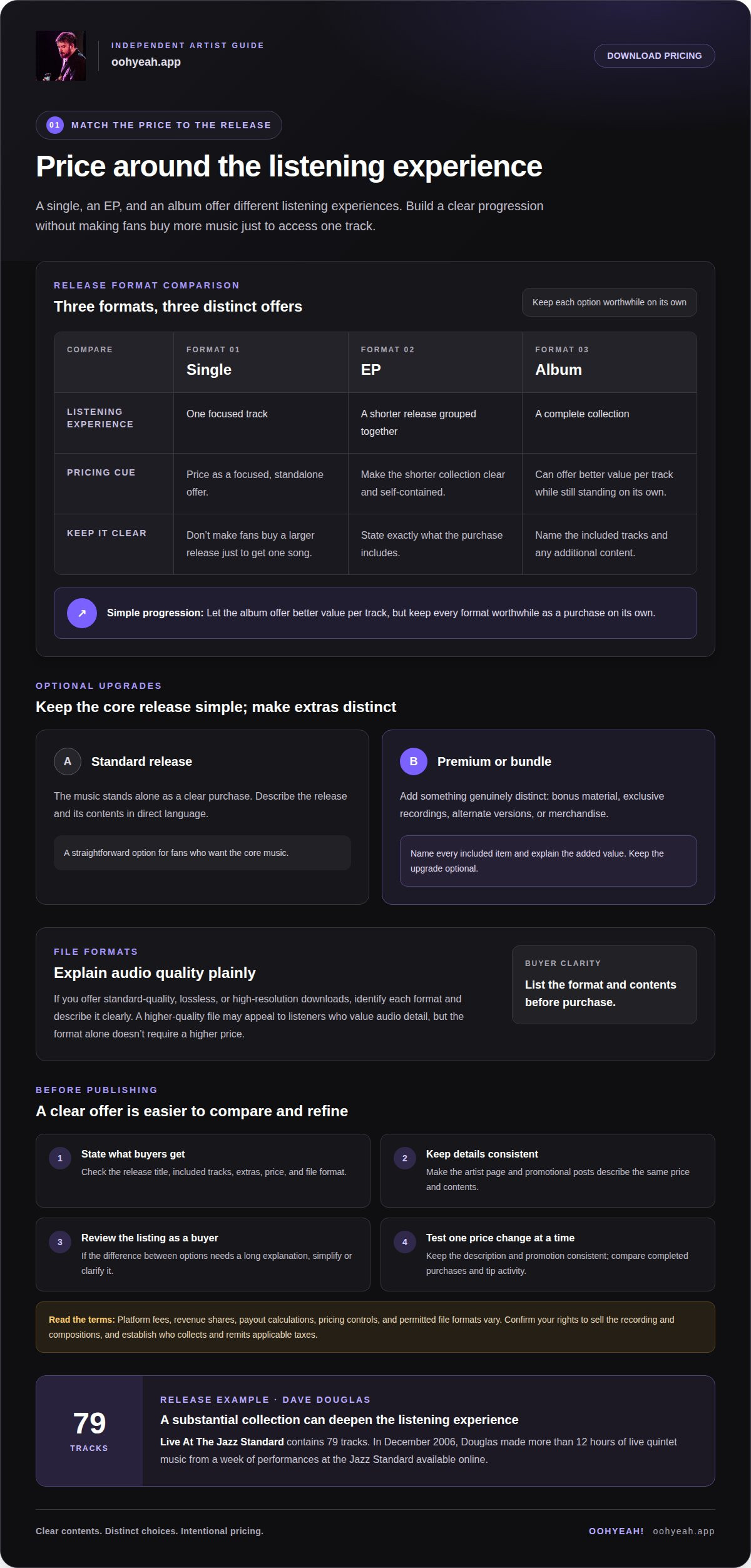
Price singles, EPs, and albums as distinct listening experiences. A single offers one focused track, an EP groups a shorter release, and an album presents a complete collection. Set a clear progression: an album can offer better value per track, while each format remains worthwhile on its own. Don’t make fans buy a larger release just to access one song.
For bundles, combine items that make sense together, such as a digital album with merchandise or bonus material. Name every included item and explain why the combination adds value. Dave Douglas’s Live At The Jazz Standard contains 79 tracks, showing how a substantial release can offer a deeper listening experience. In December 2006, Douglas made more than 12 hours of live quintet music from a week of performances at the Jazz Standard available online.
Premium offers work best when the extra is genuinely distinct. A standard album can stand alone, while a premium option adds exclusive recordings, alternate versions, or other clearly described content. Keep the core release easy to buy, make the upgrade optional, and spell out what it includes before purchase so fans can judge its added value.
Explain standard-quality, lossless, and high-resolution downloads in plain language. A higher-quality file may appeal to listeners who value audio detail, but the format alone doesn’t require a higher price. Consider whether the release offers a meaningful listening or content benefit, and describe each option clearly. Don’t imply that one format is essential to enjoy the music.
Make the offer easy to compare: identify the release, list its tracks or extras, and state the file format. Review the full package from a buyer’s perspective. If a bundle includes merchandise, exclusive content, and several download formats, list each component separately. A clear breakdown helps fans choose what suits their interests and level of support.
4. Communicating value to buyers
A price makes more sense when fans can see what they’re supporting. Give each release a short, specific description: name the recording, explain its creative focus, and tell buyers what’s included. For example, describe an album as a live session recorded in an intimate venue, then list the tracks and file format. Concrete details help fans judge the offer without relying on hype.
Use the release story to show the work behind the music. Mention a distinctive element, such as a guest vocalist, unusual arrangement, or independent recording process, when it genuinely applies. Credit collaborators and artwork clearly. A concise note on how the release came together can help supporters connect their purchase to the people and choices behind it.
Make the purchase page easy to scan. Put the release title, contents, format, and price where buyers can find them quickly. Add a short preview or track description if available. Replace broad claims like “the best album yet” with specific details, such as “This release pairs acoustic arrangements with new vocal performances.” Concrete language gives fans a reason to care.
Discounts can shape how fans perceive value. A limited sale may encourage a purchase, but repeated markdowns can make the regular price seem arbitrary. If you run a promotion, explain its purpose, such as celebrating a release date, and state when it ends. Compare buyer response during and after the offer. Look beyond clicks to completed purchases and fan support.
Before publishing, read the offer as a new listener. Can they tell what they’ll receive, why it matters, and how it differs from a streaming listen? If an exclusive extra is part of the value, describe it plainly rather than hiding it in promotional copy. Shape a direct offer for your fans with clear details that make the value easy to understand.
OohYeah!: Artist Profile Hosting
OohYeah! gives independent artists a place to bring music and fan support together. Artist Profile Hosting gives your music a home, and Digital Music Downloads let fans buy your releases directly. You can also list merchandise in the Merchandise Marketplace and share bonus material through Exclusive Content Access.
Use these options to make your offer clear: present a download for listeners who want to own a release, then add merchandise or exclusive content for fans seeking more. OohYeah! enables artists to retain 100% of sales revenue from music and merchandise, helping keep direct fan support connected to your work.
Ready to explore a direct way to share your music with fans? Contact OohYeah!.
Make your next release a direct connection
Put your values into practice with your next release. Choose a price that feels fair for your work, then make the buying experience reflect the relationship you want with listeners. A clear, consistent offer can support an ongoing connection, especially when fans understand how they can support future music.
Treat pricing digital music downloads for independent artists as part of your creative strategy, not a decision you make once and forget. As your sound and audience evolve, revisit how you present each release. Make choices with purpose, listen to fan responses, and use what you learn to shape your next offer.
Ready to build a direct home for your music and connect with the people who support it? Contact OohYeah! about your music. Your next release is a chance to make that connection stronger.
Frequently Asked Questions
Should you offer discounts and sales?
Use a sale when it gives fans a clear reason to act, such as revisiting your back catalog during a new-release campaign. Keep the regular price visible and clarify the promotion’s scope. Discounting every release by default can teach buyers to wait, while a focused offer can draw attention to music that might otherwise be overlooked.
How do download prices compare with streaming royalties and physical music sales?
A download provides a one-time sale, while streaming revenue accumulates through listening. Physical music gives fans a tangible item, but production and fulfillment affect its economics. Compare what each format offers and what costs it brings. Digital downloads avoid physical manufacturing, while vinyl or CDs may appeal to collectors who value ownership.
What discount, bundle, and promotional pricing strategies work for digital music downloads?
Give each promotion a specific purpose, such as drawing attention to an older release when new music arrives. Keep the offer simple: name the eligible release, say what buyers receive, and set a clear end point. For a bundle, pair items that appeal to the same fan, such as an album and related merchandise. Review sales afterward before repeating the offer.
What do digital music downloads typically cost on iTunes and other US stores?
Prices vary across iTunes and other US stores, and options may differ for singles and albums.