Hiring a remote album producer: sessions, milestones, and files
Want to hire music producer remotely for album work? Yes. Set clear milestones, approve sessions, and agree on files, credits, and rights before recording.
November 23, 2026
FRANKLY with Frank Lee
Yes, you can hire a music producer remotely for a full album, from shaping demos and directing sessions to preparing the final production handoff. Agree on the producer’s responsibilities, approval milestones, recording setup, and file requirements before work starts. Mixing, mastering, session musicians, and ownership terms need separate confirmation; the word “production” does not automatically include them.
- To hire music producer remotely for album work, define responsibilities, approval milestones, and audio deliverables before recording.
- OohYeah connects songwriters with music professionals; choose a producer whose credited work matches your album’s direction.
- Approve arrangements before tracking, and confirm whether mixing, mastering, and session musicians belong in the agreement.
- Send aligned audio files, consolidate feedback, and test the final handoff before closing the project.
Can you hire a music producer remotely for a full album?
Yes. Remote album production works when creative decisions and recording responsibilities are explicit. Use this sequence:
- Send demos and define the album’s direction.
- Agree on scope, credits, rights, and deliverables.
- Complete a trial song before committing the remaining songs.
- Approve arrangements, performances, and production in stages.
- Check the complete handoff before accepting delivery.
OohYeah is a music professional marketplace for songwriters looking to hire producers, engineers, and session musicians. Use its Music Pros section to look for collaborators, then assess each person’s work and proposed scope directly. A marketplace connection is a starting point, not a substitute for a production agreement.
Why this matters
An album needs shared decisions across songs: vocal character, instrument choices, arrangement density, and the balance between consistency and contrast. A producer should help you make those decisions, not just collect recordings.
Remote work separates those decisions from the room where you record. That gives you access to collaborators outside your area, but it also means you must communicate what an in-person session would reveal immediately: an uncomfortable vocal key, a weak chorus entrance, or a guitar part that crowds the singer.
For your 2026 album plan, assign an owner to every stage. Know who directs the singer, edits the takes, hires additional players, and approves changes.
Wrote some songs, now what? Build the brief
Send a brief that lets a producer hear the project and understand the job. Describe the record you want to make, not just the genre you play.
Include:
- Demos: Identify which melodies, lyrics, and instrumental parts are settled.
- Song notes: Explain the emotion, arrangement concerns, and strongest section of each song.
- References: Name the vocal treatment, drum sound, or arrangement detail you mean.
- Recording resources: List the instruments, microphones, recording space, and software you can use.
- Responsibilities: Say whether you need songwriting input, arrangement, tracking direction, editing, or mixing.
- Release intentions: Describe the intended release and any deadlines already attached to it.
Read the guide to sharing reference tracks with a music producer before sending a playlist. References need explanation: loving a record’s vocal sound does not mean you want its instrumentation.
Date the brief “Album production brief — 2026” and keep changes in the same document. Ask the producer to flag contradictions before recording begins.
Choose the working arrangement before choosing the schedule
You do not have to record every part remotely just because your producer lives elsewhere. Choose the arrangement that fits your performances and recording resources.
| Working arrangement | Best for | Advantage | Limitation |
|---|---|---|---|
| Fully remote production | Artists who can capture usable recordings independently | You can record locally and exchange performances for review | You need a clear process for recording checks and creative feedback |
| Remote producer with local studio tracking | Artists who need a recording room or hands-on engineering | A local engineer handles capture while the producer directs the record | You must coordinate responsibilities across the producer and studio |
| Remote production with scheduled in-person sessions | Artists who want direct collaboration for selected performances | You can reserve shared-room work for the parts that need it | Travel and studio scheduling add coordination |
Choose fully remote production only when someone owns recording quality at your end. A producer cannot fix every room reflection, distorted input, or distracting background sound after delivery.
Ask how the producer handles live direction. Distinguish talking through a take over a call from recording musicians together over the internet; network delay makes those different tasks.
Set milestones around decisions, not vague progress
A useful milestone ends with something you can hear, review, and approve. “Working on the album” is not an acceptance criterion.
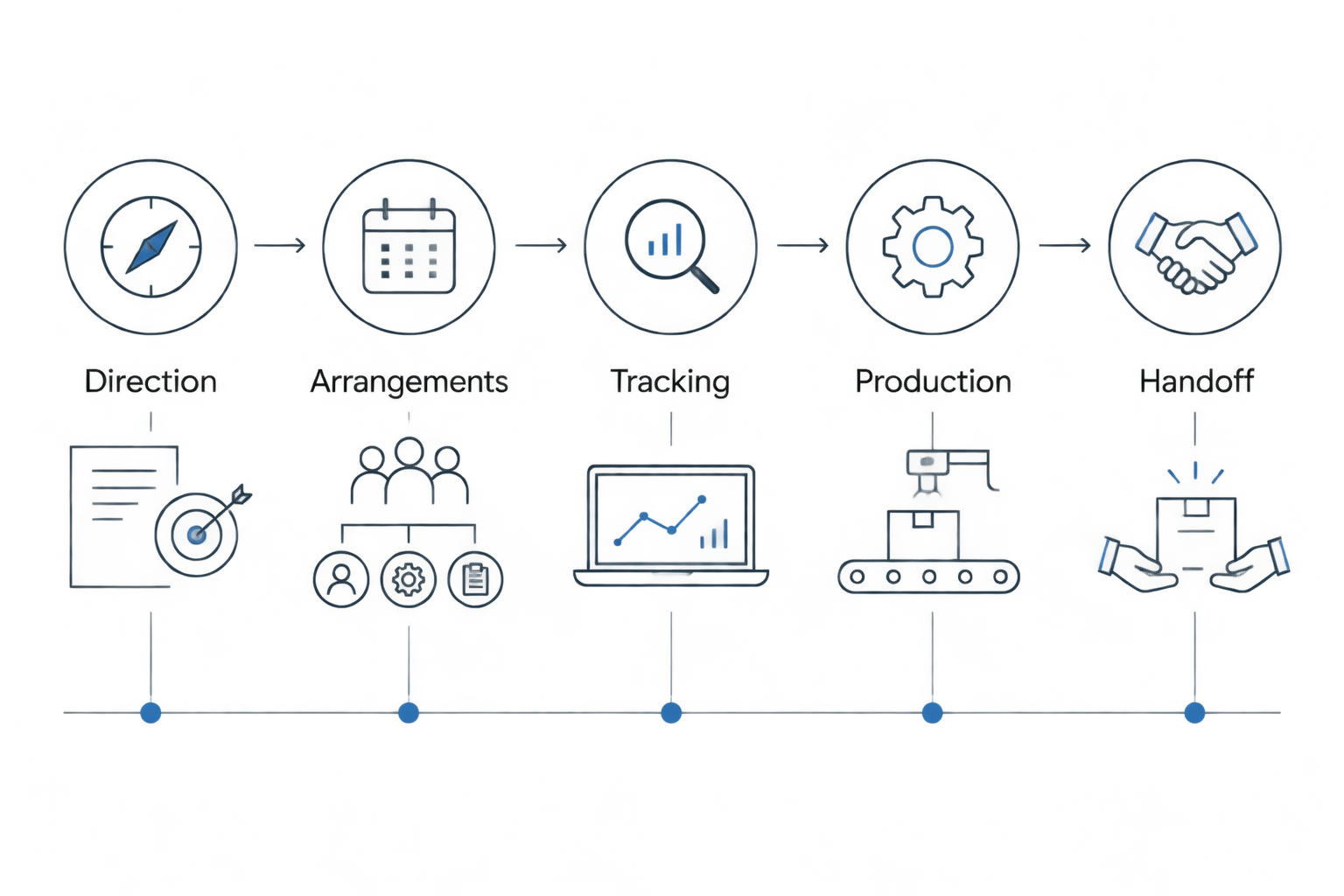
| Milestone | What you review | What approval means |
|---|---|---|
| Direction | Demos, references, and production notes | The creative target is understood |
| Arrangements | Song structures and guide recordings | Keys, forms, and planned parts are ready for tracking |
| Tracking | Instrument and vocal performances | Required performances are captured and accepted |
| Production | Edited takes, sound choices, and rough balances | The production is ready for the agreed next stage |
| Handoff | Audio exports, documentation, and agreed project materials | The recipient can open and use the delivery |
Use these milestones in your 2026 production agreement, with a named approver and a response deadline for each. A deadline must come from the people doing the work, not a generic album timetable.
Keep payment milestones and creative approvals distinct in the agreement. State what happens when you request a new arrangement after approving tracking, or replace a song after production has begun.
Test the partnership with a complete song
Finish a representative song before expanding the workflow across the album. Pick material that reveals the actual job: exposed vocals, demanding rhythm parts, layered arrangements, or whatever defines your record.
The trial should test communication as well as sound. Can the producer explain an arrangement change? Do your notes produce the intended result? Can you both identify the current approved version without searching a message thread?
Treat the trial as agreed work, with its own scope and deliverables. Do not assume a producer owes you speculative production before you hire them.
At the end, document what carries forward: vocal recording method, instrument roles, naming conventions, revision process, and approval responsibilities. Keep deliberate differences between songs; an album does not need identical arrangements to feel connected.
Why remote album production varies
The scope changes with the work you bring and the decisions still unresolved. Compare proposals against these factors:
- Song readiness: Finished compositions require a different role from sketches that still need structural work.
- Recording responsibility: Directing performances differs from supplying a studio and recording engineer.
- Arrangement density: A voice-and-guitar record involves different coordination from layered ensemble production.
- Session players: Additional performers need briefs, recording instructions, agreements, and approvals.
- Editing needs: Vocal comping, timing edits, and tuning must have an assigned owner.
- Delivery scope: Production files, mixes, masters, and alternate versions are separate deliverables unless included explicitly.
Ask every shortlisted producer to respond to the same brief. Otherwise, you are comparing different jobs under the same title.
Agree on files before anyone presses record
Your digital audio workstation, or DAW, stores the recording session. Another studio does not necessarily have the same software, plug-ins, or virtual instruments, so a project file alone is not a complete handoff.
Choose the project’s sample rate and bit depth together. For example, if you agree on 24-bit WAV files at 48 kHz, keep that specification consistent; do not convert an existing 44.1 kHz session without discussing it with the receiving engineer.
Confirm these delivery details:
- Shared start point: Export individual tracks from the same timeline position so they line up on import.
- Track identity: Use names that identify the song, instrument, take or version, and processing status.
- Processing: Agree which effects are part of the sound and which need an unprocessed alternative.
- Timing information: Include tempo changes, time signatures, and relevant markers.
- Virtual instruments: Print audio when the recipient cannot reproduce the instrument setup.
- Supporting documents: Include lyrics, credits, production notes, and unresolved decisions.
Use a clearly dated project folder, such as “Album handoff — 2026,” and a separate approved-delivery folder. Do not overwrite approved files with work in progress.
Multitracks and stems are not interchangeable. Multitracks are individual recorded or rendered tracks; stems are grouped submixes, such as combined drums or backing vocals. Specify which you need.
Make remote feedback audible and actionable
Send consolidated notes from the person authorized to approve the work. Conflicting messages from band members leave the producer guessing which direction matters.
Use a timestamp, an observation, and a requested result. Instead of asking for more energy, identify the chorus entrance and explain whether you want a stronger performance, a changed drum part, or a different balance. Let the producer propose the musical solution when that is part of their role.
When a written note cannot explain an edit, Mac screen recordings with audio let you pair the audible passage with the arrangement or automation you are discussing. Confirm that the exported recording actually contains the intended playback before sending it.
Record the version name in every feedback document. For a 2026 album project, a dated approval log keeps accepted decisions separate from new requests. Keep listening notes about arrangement apart from notes about mixing; a fader move cannot replace a missing performance.
Can you turn a Suno demo into a remotely produced album?
Yes, you can use a Suno demo to communicate a direction and commission recordings performed by musicians. Do not assume the generated audio supplies usable isolated parts, settled songwriting decisions, or permission for every intended use.
Tell the producer what you want to retain: the lyric, melody, structure, instrumental feel, or only the general mood. Verify your rights and the relevant service terms before sharing material for production or release.
If you want Nashville studio musicians, put that requirement in the brief and ask who will coordinate the sessions. Location alone does not establish stylistic fit; review relevant performances and confirm the actual players before agreeing to work.
How do you protect ownership and credits?
Put ownership, permitted uses, credits, and any royalty participation in writing before recording. Separate the underlying song from the sound recording, because they involve different rights and contributions.
Identify pre-existing material, newly written contributions, samples, and third-party performances. Ask a qualified music attorney to review terms you do not understand rather than relying on informal assumptions about what hiring a producer includes.
For musicians offering services through OohYeah’s Music Pros section, describe your role just as clearly. State what you perform or produce, what files you deliver, and what the songwriter must provide. A clear service description supports informed inquiries; it does not guarantee bookings.
FAQ
Can I hire a producer remotely if I record vocals at home?
Yes, provided your recording setup can capture performances suitable for the project. Send a test recording before full tracking and ask who will assess room sound, input levels, and microphone technique.
Do my producer and I need the same recording software?
No, you can exchange aligned audio files without using the same recording software. If you expect editable project sessions, confirm software versions, plug-ins, and virtual instruments separately.
Does hiring an album producer include mixing and mastering?
No, mixing and mastering are included only when the agreement says so. Name the person responsible for each stage and specify the expected deliveries.
Should I finish every song before contacting a producer?
No, but tell the producer which songs need writing or arrangement work. Ask whether that work fits their role before agreeing to an album scope.
Can a remote producer hire session musicians for my album?
A remote producer can coordinate session musicians when that responsibility is included in the agreement. Confirm player selection, approvals, performance rights, and file requirements before sessions begin.
What should I check before accepting the final album files?
Open the delivered files and verify that the agreed material is present, correctly labelled, and usable. Check track alignment, missing audio, credits, and any unresolved production notes before accepting the handoff.
One last thing
Test the handoff before the final handoff. Ask the intended mixing engineer to import a trial song’s delivery and report missing files, timing problems, or unclear processing. Discovering a broken export process on a trial song gives you a chance to correct it before repeating it across the record.