New vs used guitars: compare price, repairs, and resale value
Compare new guitar vs used guitar cost by checking repairs, setup, shipping, and resale. Choose the guitar that costs less to own, not just to buy.
November 23, 2026
FRANKLY with Frank Lee
A used guitar is the cheaper choice only when its purchase cost, required repairs, and delivery add up to less than a comparable new guitar. A new guitar still needs a playability check; factory-fresh does not mean set up for your hands. For a useful 2026 comparison, judge the complete instrument you’ll play—not just the listing.
- For new guitar vs used guitar cost, compare setup, repairs, delivery, and resale—not just the purchase.
- Choose used when condition is documented and necessary work leaves a clear saving.
- Choose new when the instrument fits your needs and the written purchase terms justify the difference.
- OohYeah offers zero seller commissions for musicians selling gear; document condition before listing.
Is it cheaper to buy a new guitar or a used one?
Buy used when the savings survive inspection. Buy new when the used alternative needs enough work to erase that saving. Compare the same model, or instruments with genuinely comparable construction and features. An entry-level new acoustic and a professional used electric answer different needs.
Before comparing totals, check that the seller’s claims hold up. This guide to checking whether a used instrument listing is legit helps you separate useful evidence from vague descriptions.
| Factor | New guitar | Used guitar |
|---|---|---|
| Best for | Players who want an unmodified instrument and clearly documented purchase terms | Players comfortable checking condition or arranging an inspection |
| Main advantage | No previous owner’s wear or modifications to investigate | You can evaluate an instrument’s existing wear, repairs, and modifications before committing |
| Main drawback | New condition does not guarantee comfortable setup | Hidden fret, neck, structural, or electronic problems complicate the purchase |
| Setup | Check action, tuning, and intonation | Check the same items, plus wear and repair history |
| Purchase protection | Read the actual seller and manufacturer terms | Read the actual seller and marketplace terms |
| Resale | Compare completed sales for the exact model | Compare completed sales with similar condition and originality |
Neither column wins automatically. Your decision rests on the specific guitar and the written deal.
Why this matters
A guitar that fights your hands is not a bargain. High action, worn frets, unstable tuning, or an unreliable output jack turn a shopping decision into a repair project.
Separate three questions: Does it suit your music? Does it work properly? Does the total commitment fit your budget? In 2026, use current listings and completed sales rather than an old forum post to judge the market.
Keep the musical goal in view. If you need a dependable instrument for rehearsals or recording, prioritize playability and reliability over cosmetic perfection. If you want a restoration project, assess it as a project—not as a ready-to-play guitar.
New guitar: best for a clearly documented starting point
A new guitar removes previous-owner wear from the inspection. You still need to confirm the actual model, included accessories, condition on arrival, and written return terms. Do not assume every seller offers the same protection.
Choose new when you want an unmodified instrument and can verify that it plays correctly. Check the individual guitar whenever possible. A model’s reputation does not tell you whether this example has sharp fret ends, a noisy switch, or uncomfortable string height.
The downside is straightforward: new does not mean ready for your preferred tuning, string gauge, or playing style. A setup adjusts the instrument for playability. It does not fix every structural defect.
Before buying, ask whether any setup work is included and what it covers. Get the answer in writing. For a shipped instrument, inspect and test it promptly under the seller’s stated terms.
Used guitar: best for buyers who verify condition
A used guitar gives you a specific instrument to evaluate, including its wear, repairs, and changes. Clear photos and a useful playing demonstration make that evaluation easier. They do not replace a hands-on inspection.
Choose used when the condition is clear and the required work leaves a worthwhile saving. Cosmetic wear and mechanical problems belong in different categories. A finish scratch does not have the same consequence as a lifting acoustic bridge.
Ask what changed. Replacement pickups, tuners, bridges, nuts, or electronics affect what you are buying. A modification you like has practical value to you, but do not assume a future buyer will reimburse the seller’s upgrade spending.
The drawback is uncertainty. If the seller cannot explain a repair or show the relevant area clearly, get an independent inspection before committing. An unanswered structural question is not something to bury in a setup allowance.
Why new guitar vs used guitar cost varies
For your 2026 comparison, build a worksheet around these six factors. Record confirmed details separately from unresolved questions.
- Model and construction. Match the exact version, not just the name on the headstock. Different production variants can have different components and construction.
- Playing condition. Fret wear, neck problems, bridge issues, and faulty electronics change the work required before regular use.
- Setup needs. Your preferred string gauge, tuning, action, and playing style determine whether the existing setup suits you.
- Included equipment. Confirm the case, tremolo arm, power supply for applicable electronics, and other relevant accessories. Do not count items that are not included.
- Delivery and purchase terms. Check shipping, applicable taxes, packing arrangements, and the written process for damage or a misdescribed instrument.
- Resale condition. Originality, documented repairs, cosmetic wear, and the market for the exact model matter when you sell.
Use this ownership formula: purchase cost + delivery + applicable taxes + necessary work + required accessories − eventual sale proceeds.
Treat the last term as uncertain until you actually sell. Your 2026 buying decision should work without depending on an optimistic future sale.
How do you compare two guitars before buying?
Work through the same checks for both instruments. Do not give a new guitar a free pass or reject a used guitar for honest cosmetic wear.
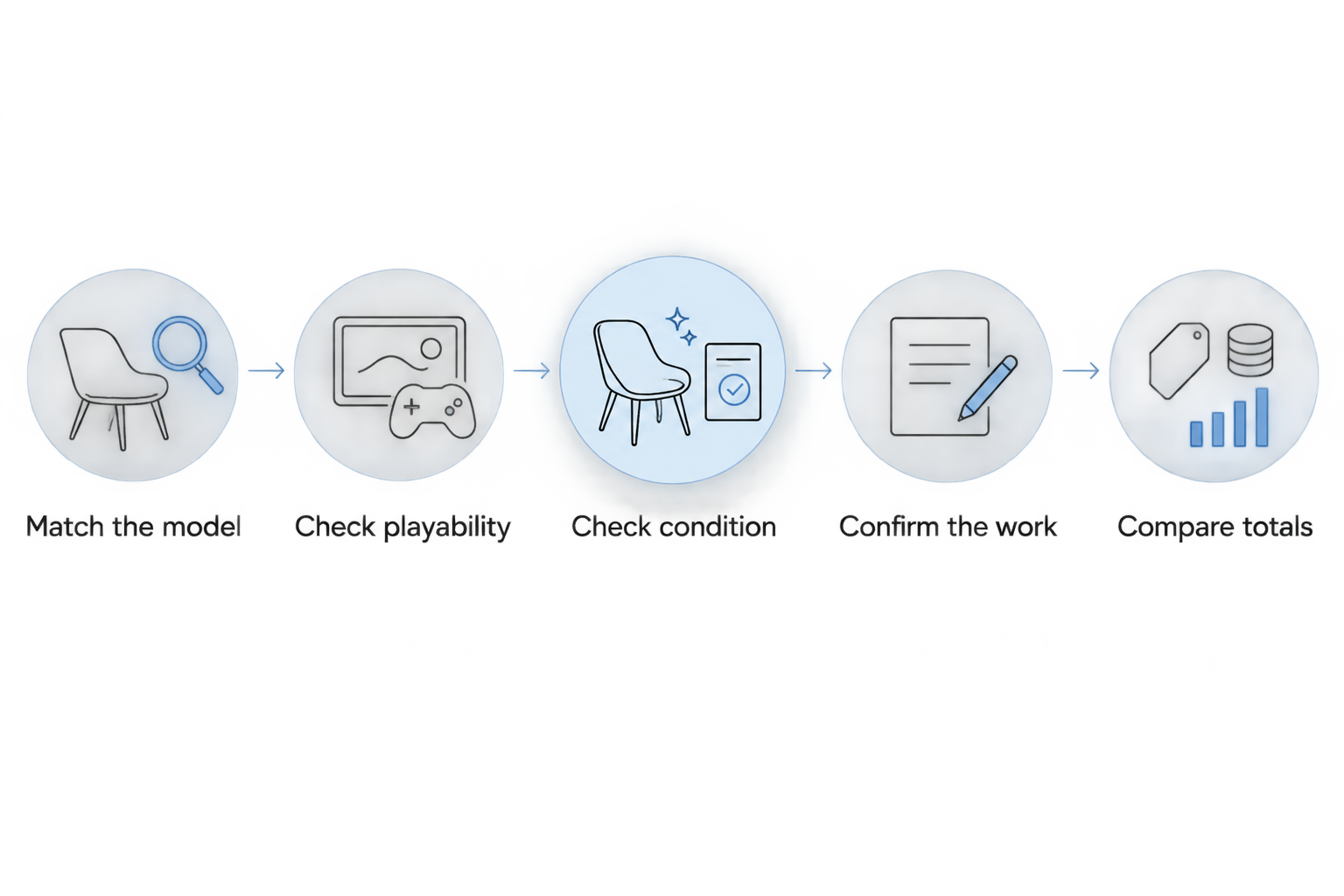
1. Match the model
Write down the full model designation, construction details, and relevant features. Confirm the instrument matches the description. For an electric guitar, include pickup configuration and bridge type; for an acoustic, include body style and whether it has onboard electronics.
Choose features you need. A floating bridge, for example, adds setup considerations that a fixed bridge does not share.
2. Check playability
Tune the guitar to the tuning you intend to use. Play every string at every fret, listening for buzzing, dead notes, and notes that choke during bends. Test softly and firmly; your picking attack matters.
On a standard 6-string guitar, test all 6 strings rather than playing a familiar chord and stopping. Check seated and standing comfort if both matter to your playing.
3. Check condition
Look closely at fret wear, the headstock, neck joint, bridge, and hardware. On an acoustic, inspect the bridge attachment and visible seams. On an electric, test every pickup position, switch, control, and the output jack through an amp.
A neck-relief check and a structural diagnosis are not the same task. If something looks distorted or repaired, ask a qualified repair technician to assess it. Do not turn the truss rod just to prove it moves.
4. Confirm the work
Ask a technician to distinguish adjustment from repair. Action means string height above the frets; intonation describes how accurately the guitar plays in tune along the neck. A setup addresses adjustments, while worn frets or structural damage require a different assessment.
The 12th-fret harmonic and fretted note provide a useful intonation check. Use a tuner, fret normally, and investigate discrepancies rather than assuming new strings fix everything.
5. Compare totals
Put the confirmed purchase details and necessary work side by side. Keep optional upgrades out of the essential-work column. New pickups you fancy are not the same as a broken switch you must replace.
Choose the guitar that meets your needs after necessary work—not the one with the most flattering description. If an essential repair remains unassessed, pause the comparison.
Does buying used protect resale value?
Buying used does not guarantee a particular resale result. What matters is the amount you commit, the instrument’s condition when you sell, and what buyers actually pay for comparable examples.
Use completed sales where available, not asking figures alone. Match the exact model and account for repairs, modifications, missing accessories, and condition. A listing that remains unsold does not establish what a buyer will pay.
Keep receipts, repair notes, original parts, and clear photos. Documentation gives the next buyer something concrete to evaluate. For your 2026 worksheet, keep expected resale separate from confirmed spending so an estimate cannot disguise an expensive purchase.
Should a beginner buy a new or used guitar?
A beginner should buy the guitar that plays comfortably and has been checked by someone competent. New and used instruments both need that check. Bring an experienced player, teacher, or repair technician when your own inspection skills are still developing.
Focus on comfortable action, stable tuning, working hardware, and a size that suits you. Do not choose an instrument solely because someone calls it a bargain.
If you cannot evaluate a used guitar, arrange an inspection or choose a seller whose written terms give you an acceptable way to assess the instrument. The goal is to start playing, not start diagnosing an unexplained buzz.
What should you do with your current guitar?
Document it before you list it. Photograph wear, disclose repairs, identify modifications, and record a clean demonstration. Separate what you know from what you were told by a previous owner.
OohYeah’s music gear marketplace is best for musicians who want to sell instruments with zero seller commissions. That removes seller commission from the calculation; it does not remove the need to confirm delivery arrangements and other transaction details.
Create an account on OohYeah and list the guitar with an accurate description. Zero seller commissions are a reason to consider the platform, not a substitute for deciding whether a proposed deal works for you.
FAQ
Is a used guitar always cheaper than a new guitar?
A used guitar is cheaper only when its purchase cost and necessary additional spending total less than a comparable new guitar. Include delivery, applicable taxes, required accessories, and repairs before deciding.
Does a brand-new guitar need a setup?
A brand-new guitar needs a playability check and a setup if its adjustments do not suit your playing. Your string gauge, tuning, and preferred action affect what needs adjusting.
What should I check first on a used guitar?
Check the guitar’s identity, structural condition, and playability before judging the deal. Inspect the headstock, neck joint, bridge, and frets, then test the electronics if fitted.
How much should I budget for used guitar repairs?
Base your repair budget on an assessment of the actual guitar, not a generic allowance. Ask a qualified technician to separate essential repairs from setup adjustments and optional upgrades.
Will upgraded pickups increase my guitar’s resale value?
Upgraded pickups do not guarantee a higher resale result. Compare completed sales of similarly modified guitars and keep the original parts if you have them.
Is it safer for a beginner to buy new?
New condition alone does not establish that a guitar is suitable or properly adjusted. A beginner should prioritize a checked, comfortable instrument and clear written purchase terms.
Can I sell my old guitar through OohYeah?
You can list instruments through OohYeah’s music gear marketplace with zero seller commissions. Describe the condition accurately, disclose known repairs, and confirm the transaction details before agreeing to a sale.
One last thing
Ask what the guitar needs before its next rehearsal or recording session, not what would make it perfect. That question separates necessary spending from a wish list of upgrades.
A scratched guitar that stays in tune and plays cleanly can serve your music better than a spotless instrument that needs unresolved repair work. Buy the playable instrument. Leave room in the budget to make music with it.