How to sell handmade instruments: specs, demos, and lead times
Sell handmade custom instruments online with clear specs, honest demos, and written build milestones. Learn what to document before you list or ship.
November 25, 2026
FRANKLY with Frank Lee
Yes, you can sell handmade custom instruments online: document the build, show how the instrument sounds, and separate build completion from shipping time. For commissioned work, agree on specifications, approval points, and change requests in writing before you start cutting wood or ordering parts.
- Sell handmade custom instruments online with measured specs, representative audio demos, and written build milestones.
- OohYeah suits instrument makers seeking a music gear marketplace with zero seller commissions.
- Separate build completion, dispatch, and delivery instead of promising one arrival date.
- Document what you make yourself, which parts you source, and what the buyer approves.
Why this matters
A player cannot feel your neck carve, check a bearing edge, or hear an acoustic instrument across the room through a listing. Your measurements, photos, and recordings have to carry that information.
OohYeah is best for instrument makers seeking a music gear marketplace with zero seller commissions. Create an account on OohYeah and prepare your gear listing, but keep your build documentation separate from the sales pitch. A marketplace listing does not replace a specification sheet or a written commission agreement.
For your 2026 listings, replace broad claims such as professional quality with evidence a musician can evaluate: construction details, measured setup, visible workmanship, and a clearly explained recording chain.
How do you sell handmade custom instruments online?
Start by deciding exactly what the buyer is purchasing. An individually built instrument and an agreement to build an instrument need different documentation.
| Sale format | Best for | What to document | Advantage | Trade-off |
|---|---|---|---|---|
| Completed handmade instrument | Buyers choosing a specific build | Actual measurements, condition, photos, and audio | Buyer evaluates the exact instrument | Customization can require additional work |
| Made-to-order design | Players choosing defined options | Base specifications, permitted choices, approval milestones | Keeps the build scope clear | Choices remain limited to the agreed design |
| Bespoke commission | Players needing an individual specification | Drawings, measurements, responsibilities, and change rules | Lets builder and player define the instrument together | Requires more decisions before construction |
These are selling formats, not claims about marketplace ordering features. Check the platform's current rules before accepting a commission through it.
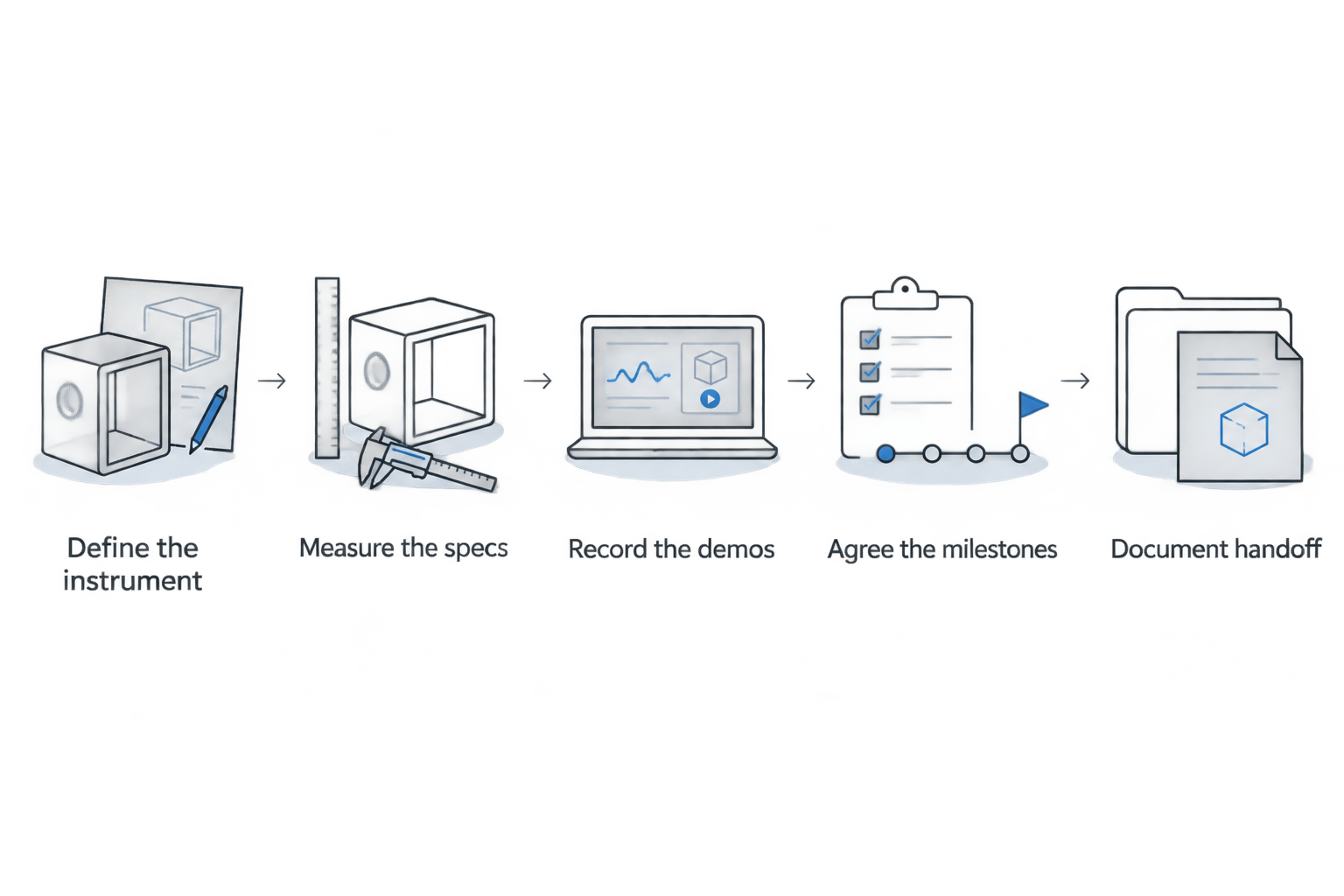
Use this sequence:
- Define the instrument. Identify the build and distinguish completed work from proposed work.
- Measure the specs. Record dimensions, materials, hardware, and setup details relevant to that instrument.
- Record the demos. Show representative playing without hiding the recording chain.
- Agree the milestones. Establish approvals and explain what starts the build schedule.
- Document handoff. Preserve final photos, setup notes, packing evidence, and the agreed delivery arrangements.
Keep those records together. A buyer should not need to search separate conversations to work out which pickup, finish, or neck measurement you agreed to use.
Completed handmade instruments: document the actual build
Photograph and measure the instrument you are selling, not a similar example from your workshop. If a recording features a different build, identify it as a reference rather than evidence of this instrument's sound.
Make 1 specification sheet for each instrument. Give it a build identifier so your listing, photos, and handoff notes refer to the same object.
For a fretted instrument, document scale length, nut width, string spacing, neck profile, fret material, fingerboard material, hardware, and electronics where applicable. Scale length describes the vibrating string length; neck profile describes the shape behind the fingerboard, not its width.
For drums, list shell dimensions, shell construction, bearing-edge description, hoops, heads, tension hardware, and included mounting components. For other instrument families, choose the measurements that define fit, tuning, range, and playing technique.
Do not copy a generic guitar checklist onto a handmade flute or percussion instrument. Record what a player of that instrument actually needs to know.
Show the measurement method
State units beside every measurement. For setup measurements, describe where and how you measured: string action without the fret location and tuning context is incomplete.
Date setup notes recorded in 2026. A dated measurement describes the instrument at inspection; it is not a promise that setup remains unchanged through travel, weather, and a player's adjustments.
Made-to-order instruments: define the available choices
Separate fixed construction details from buyer-selected options. A finish choice should not quietly become permission to change the body shape, scale length, or electronics layout.
Use clear categories in your written specification:
- Fixed design: Construction details that remain unchanged.
- Buyer selections: Choices you have agreed to offer for this build.
- Approval evidence: A drawing, sample, photograph, or written description showing the selection.
- Change procedure: How you will review a request after approval.
Describe materials accurately. Distinguish solid wood from veneer or laminate, and identify sourced components without implying that you manufactured them.
Handmade does not explain which operations you performed. State whether you built the body, carved the neck, assembled sourced parts, wound pickups, applied the finish, or completed the setup. Credit collaborators where appropriate.
Bespoke commissions: approve the design before construction
A bespoke instrument needs a shared specification, not just an inspiration photo. Record the player's intended use, tuning, ergonomic needs, and essential controls before finalizing the design.
Ask the buyer to rank requirements as essential or optional. A familiar neck feel, reduced reach, and a particular control layout can involve different design decisions; settle conflicts before construction.
Keep design approval separate from completion approval. Design approval confirms what you will build. Completion approval checks the finished instrument against that agreement.
For a commission agreed in 2026, put the approval date and specification version on the document. When a buyer requests a change, record what changes and whether the schedule needs revision; do not overwrite the original agreement without preserving the history.
Avoid promising that you can reproduce another maker's protected branding or distinctive work. Use your own maker identity and seek qualified advice when a design raises intellectual-property questions.
Record demos that reveal the instrument
Plan 3 demo clips: a clear overview, a playing example, and a detail check. This is a practical recording plan, not a required platform format.
The overview shows the whole instrument and identifies the build. The playing example demonstrates its musical use. The detail check focuses on controls, articulation, tuning behavior, or another feature a buyer needs to assess.
For an electric instrument, explain whether the buyer hears a direct signal, an amplifier, or a processed sound. For an acoustic instrument, identify the microphone position and room conditions without claiming the recording reproduces an in-person listening experience.
Use these checks before publishing:
- Identify effects, amp simulation, equalization, compression, and noise reduction used in the demo.
- Include a minimally processed example when practical.
- Keep camera views useful: hands, controls, and the instrument should be visible.
- Show relevant playing techniques rather than only your most flattering phrase.
- Label any audio replacement or reference-instrument footage.
A demo should answer a buyer's question, not just showcase your playing. The guide to filming a music gear demo provides a focused next step for planning the shoot.
Why custom instrument lead times vary
A handmade build moves through design, materials, construction, finishing, setup, and handoff. Give buyers a schedule based on your actual workshop plan rather than an unsupported category average.
Explain the factors relevant to your build:
- Design approval: Unresolved dimensions or drawings leave construction decisions open.
- Materials and components: Your schedule depends on the parts specified for the instrument.
- Construction scope: A modification and a new design involve different work.
- Finishing process: Follow the requirements of the finish system you use before assembly and packing.
- Testing and setup: Allow for inspection, adjustment, and correction before handoff.
- Buyer changes: An approved change needs a revised scope and schedule where affected.
Track 2 dates separately: estimated build completion and planned dispatch. Treat delivery as a separate carrier-dependent stage rather than folding it into either date.
In every 2026 schedule update, name the current stage, the outstanding decision, and the next milestone. If a date changes, explain which dependency changed and provide a revised estimate based on the remaining work.
Do not turn a workshop target into a guaranteed arrival date for a tour, session, or gift deadline.
What should your listing say about shipping and returns?
Write your own terms clearly, then check that they match the marketplace's rules and applicable law. Do not assume that calling an instrument custom removes obligations when the delivered item differs from the agreement.
Explain what accompanies the instrument: case, tools, accessories, setup notes, and care instructions, where included. Avoid showing accessories in photos without clarifying whether they are part of the sale.
Before dispatch, photograph the instrument's condition, identifying details, and packing stages. Check the carrier's current requirements for packaging, declared value, coverage, and claims documentation.
For cross-border shipments, verify material restrictions and required documentation with the relevant authorities. Do not promise unrestricted international shipping simply because a carrier serves the destination.
Can you sell a custom instrument before building it?
Yes, you can agree to build an instrument before construction, subject to the selling platform's rules and applicable requirements. Describe the transaction as commissioned work, and distinguish reference images from the instrument the buyer will receive.
Put the scope, approvals, change process, and cancellation terms in writing. Do not present a design rendering as a photograph of a finished instrument.
Do you need professional recordings to sell handmade instruments?
No, you do not need a polished production to explain an instrument's sound. You need intelligible audio, representative playing, and an honest account of the recording chain.
A heavily processed performance and a minimally processed demonstration serve different purposes. Label them so buyers can judge the instrument rather than guess what the effects are doing.
How do you handle a buyer's change request?
Pause the affected work and document the requested change before proceeding. Confirm whether it changes materials, construction, approvals, or the completion estimate.
Keep the original specification and the revised agreement. A casual message asking whether something is possible is not the same as approval to alter the build.
List the instrument without overselling it
Lead with the instrument type, maker identity, and the feature that distinguishes the build. Follow with measured specs, construction details, demos, condition, included items, and agreed handoff terms.
OohYeah's music gear marketplace has zero seller commissions. That is a selling-channel benefit, not a substitute for explaining your instrument or checking current transaction terms.
Create an account and list your gear when your evidence is ready. For commissioned work, check the platform's rules first and keep the build agreement explicit.
List your handmade instrument
Create an account and prepare a gear listing backed by specs, photos, and demos.
FAQ
Can I sell handmade custom instruments online without a physical shop?
Yes, you can sell handmade custom instruments online without operating a physical shop. Check the business, tax, and consumer requirements that apply to your location and sales.
What specs should I include in a handmade guitar listing?
Include scale length, nut width, string spacing, neck profile, construction materials, hardware, electronics where applicable, and measured setup details. State units and explain how you measured setup.
Should I show the exact instrument in my demo?
Yes, show the exact instrument when demonstrating a completed build. Label recordings of another instrument as references, especially when selling commissioned work.
What should I tell buyers about custom build lead times?
Separate estimated build completion, planned dispatch, and delivery. Explain approvals, parts, finishing, testing, and changes that affect your schedule.
Can I say a custom instrument is nonreturnable?
Do not assume that custom work makes every return restriction enforceable. Check applicable law and marketplace rules, and distinguish a change-of-mind request from an instrument that does not match the agreement.
Is OohYeah a place to sell handmade instruments?
OohYeah is a music gear marketplace with zero seller commissions. Prepare your instrument listing and check current platform rules before arranging commissioned work.
One last thing
Keep the final setup sheet with the instrument, not just in your messages. Include the tuning, string or head details, measurement method, inspection date, and care guidance relevant to that build.
A measurement is more useful when another musician can repeat it. Give the buyer a clear starting point for future setup work.