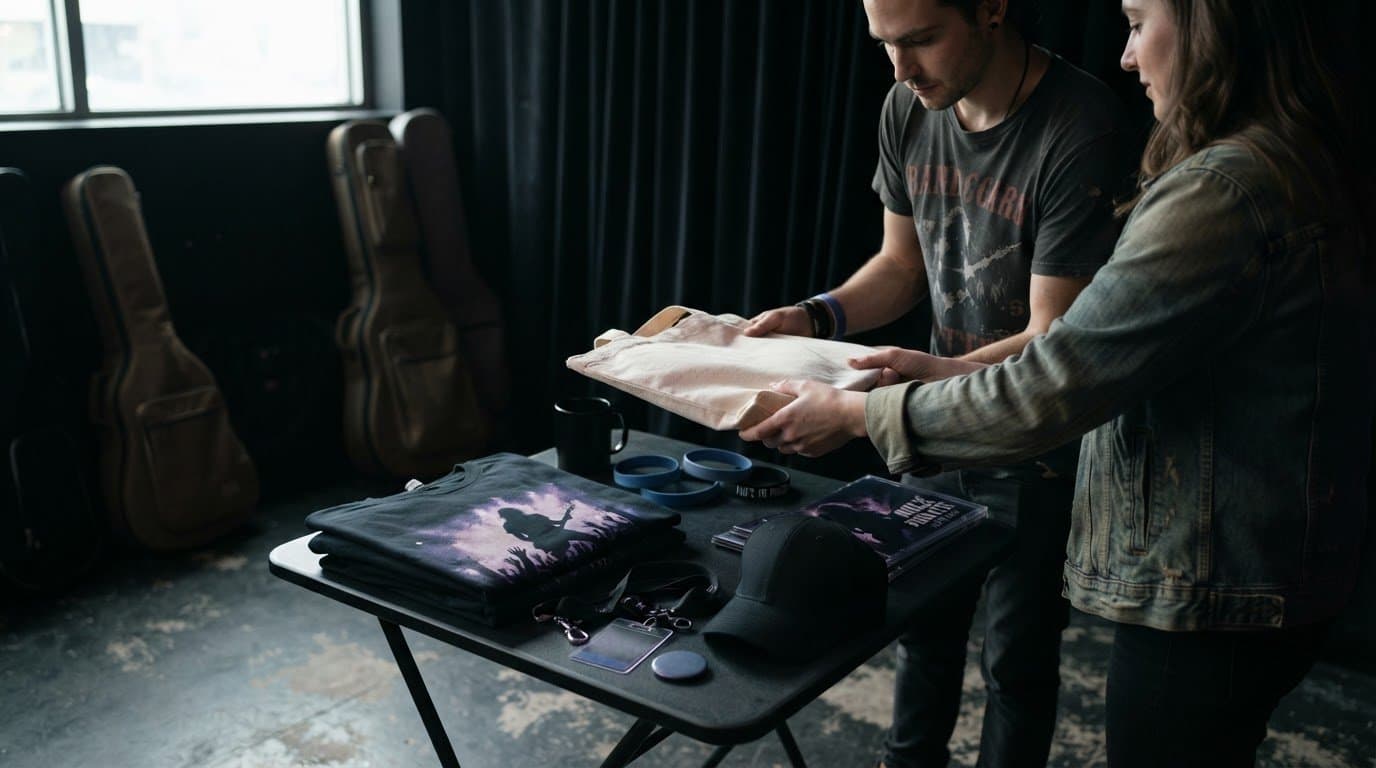
Do you need a business license to sell used instruments online?
Can you sell instruments without business license requirements? Local rules decide. Learn what to check for personal gear sales, resale, and taxes.
November 18, 2026
FRANKLY with Frank Lee
Selling your own used instrument does not automatically require a business license in the U.S.; the answer depends on state and local rules and whether you are operating a resale business. Selling online does not exempt you from licensing, sales-tax, or income-tax obligations that apply to your activity.
- Can you sell instruments without business license requirements? Check your location and whether you are selling personal gear or resale inventory.
- A business license, seller’s permit, LLC, and tax return serve different purposes; none automatically replaces another.
- OohYeah offers zero seller commissions for used music gear; sellers still handle their own legal obligations.
- Keep purchase records, sale records, and expense receipts before listing your instrument.
Do you need a business license to sell used instruments online?
There is no single nationwide business-license rule for selling used instruments online. The U.S. Small Business Administration’s licensing guidance identifies business activity and location as factors that determine licensing requirements. Apply that distinction to your 2026 selling plans before assuming an occasional sale and a resale operation follow identical rules.
| Selling situation | Best for | Practical advantage | Limitation or obligation to check |
|---|---|---|---|
| Selling an instrument you bought for personal use | Musicians clearing unused gear | You are disposing of personal property rather than buying inventory | Local rules and tax treatment still need separate checks |
| Buying instruments specifically to resell | Sellers building a gear business | You can organize sourcing, repairs, and sales as an ongoing operation | Business licensing, tax registration, and secondhand-dealer rules need review |
| Selling gear from an existing studio or music business | Studios replacing equipment | You can document the disposal through existing business records | Prior depreciation and business use affect tax treatment |
Why this matters
A marketplace account is not a license. You can create a listing on OohYeah, but account access does not establish whether your city, county, or state requires registration for your selling activity.
Keep the questions separate: permission to operate, responsibility for sales tax, and treatment of sale proceeds on your tax return. Answering one does not settle the others. That distinction matters whether you are moving an unused bass or building an inventory of repaired keyboards.
Selling personal gear: start with the occasional-sale rules
Selling a guitar you played at gigs is different from buying guitars specifically to flip. When contacting your local licensing office, describe what you actually do: sell your own belongings, purchase inventory, repair instruments for resale, or sell on someone else’s behalf.
Ask whether your jurisdiction has an occasional-sale or casual-sale exemption, and which requirement that exemption covers. A sales-tax exemption is not automatically a business-license exemption. Do not treat either as permission to ignore unrelated rules.
A large personal collection can also require explanation. Keep evidence showing where the instruments came from and how you used them; a collection sell-off and an ongoing inventory business are different factual situations.
Do not invent a safe transaction count. There is no universal rule that selling a particular number of guitars makes you a business everywhere in the U.S.
Buying gear to resell: check business requirements first
If you source underpriced instruments, repair them, and repeatedly list them for profit, describe that activity accurately when asking about registration. Calling yourself a hobby seller does not settle how a licensing office or tax authority classifies the operation.
Ask specifically about general business licensing and secondhand-dealer requirements. Depending on the jurisdiction and activity covered, secondhand-dealer rules can involve identification, purchase records, reporting, or holding requirements. Verify whether those rules cover your instruments and online sales before accepting inventory.
Selling from home adds another question. A home-occupation or zoning rule concerns how you use the property, including storage and customer visits; it is not the same thing as forming a company.
For a 2026 resale launch, finish this check before buying stock. Finding out afterward that your storage or pickup arrangement conflicts with local requirements creates avoidable work.
Why licensing requirements vary
The same instrument can raise different questions depending on the seller’s activity. Use these factors to make your inquiry specific:
- Your operating location. Check the city or county where you run the activity, plus applicable state requirements.
- Why you acquired the gear. Explain whether you bought it to play, use in a studio, or resell.
- How you operate. Describe recurring sourcing, repairs, advertising, consignment, and inventory storage.
- Whether customers visit. Home pickups and demonstrations introduce premises-related questions beyond an online listing.
- Which goods you handle. Ask whether the local definition of a secondhand dealer includes musical instruments or related equipment.
- Whether the asset belonged to a business. Previously deducted or depreciated studio equipment needs different tax analysis from personal belongings.
These factors guide the conversation. They are not a substitute for the rule that applies at your address.
What is the difference between a license, seller’s permit, and LLC?
A business license, tax registration, and legal entity solve different problems. Your 2026 checklist should name the document you need instead of treating every registration as a business license.
| Document or registration | What it addresses | What it does not establish |
|---|---|---|
| General business license | Permission to conduct covered business activity in a jurisdiction | That every tax or secondhand-dealer requirement is satisfied |
| Seller’s permit or sales-tax registration | Sales-tax responsibilities under the applicable state system | Permission to ignore local business licensing |
| LLC formation | Creation of a legal entity under state law | Automatic permission to operate or exemption from taxes |
| DBA or assumed-name filing | Use of a business name where registration is required | Creation of an LLC or replacement of a business license |
| EIN | Federal tax identification for an entity or activity when needed | A general license to sell instruments |
Names vary by jurisdiction. Ask the issuing office what the document authorizes, who needs it, and whether another agency handles related requirements.
How do you check the rules before listing an instrument?
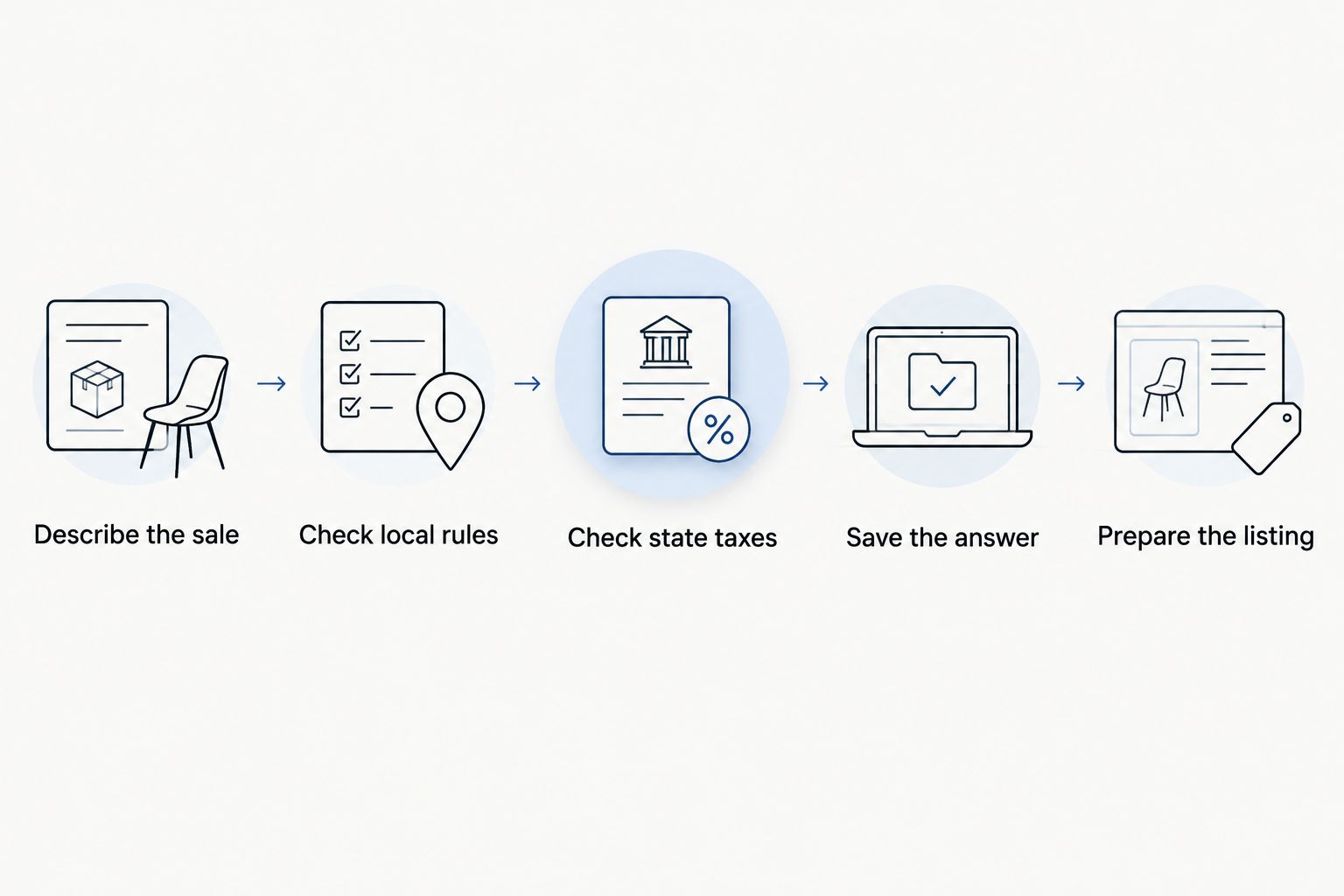
Use this sequence for a 2026 sale. Start with your activity, not a company-formation checkout page.
- Describe the sale. Write down whether the instrument is personal property, resale inventory, or equipment used in your business. Include whether more sales are planned.
- Check local rules. Contact the city or county licensing office responsible for your operating address. Ask about online sales, occasional sales, secondhand dealing, and home-based activity.
- Check state taxes. Ask the state revenue department about seller registration, occasional-sale treatment, and marketplace-facilitator rules for your situation.
- Save the answer. Keep the official guidance, agency correspondence, and any issued documents with your sale records. Note which activity your question described.
- Prepare the listing. Record condition, repairs, included accessories, and ownership details. Publish only after resolving requirements that apply before selling.
Accurate condition evidence belongs in that final step. A demo video of used music gear can show the controls, outputs, and known faults you describe; it does not replace an honest written description.
Do you need an LLC to sell used instruments?
An LLC is not automatically required just because you sell an instrument online. Operating as a sole proprietor and forming an LLC are different organizational choices; neither choice removes applicable licensing or tax obligations.
For an ongoing resale business, compare administration, recordkeeping, liability considerations, and state filing obligations before choosing a structure. An LLC is not a blanket shield against your own conduct, and personal guarantees or poor separation between personal and business finances create additional issues.
Comparing LLC formation services for online sellers addresses how to organize an ongoing operation, not whether your local licensing office requires a permit. Settle that distinction before paying for formation paperwork you have not established you need.
If you are simply clearing personal gear, begin with the rules for that activity. Do not form an entity solely because a marketplace asks you to identify yourself as a seller.
Does a marketplace handle your sales tax and income tax?
Marketplace-facilitator laws can require a marketplace to collect and remit sales tax on covered transactions. That does not automatically eliminate every seller registration, filing, or tax obligation. Check the platform’s actual tax handling and your state’s requirements rather than assuming all marketplaces work identically.
Income tax is a separate question. Under IRS guidance on personal-item sales, a gain is generally taxable, while a loss on the sale of personal-use property generally is not deductible. Business inventory and depreciated business equipment require different treatment.
A payment-reporting form does not decide whether a sale produced taxable profit. Keep the original acquisition information and sale documentation so you can establish what happened. Do not use a payment platform’s reporting threshold as a business-license threshold.
For your 2026 records, keep 3 document groups: acquisition evidence, sale evidence, and related expense receipts. These are organizational categories, not a legal filing threshold.
What records should you keep for a used instrument sale?
Build a folder for each instrument. Make it possible to connect the item you owned with the item you sold, especially when similar models or replacement parts are involved.
- Acquisition evidence: purchase receipt, bill of sale, payment record, or available documentation of an inheritance or gift.
- Item identity: make, model, serial number where present, and clear photographs.
- Condition evidence: known defects, modifications, repair invoices, and the description shown to the buyer.
- Sale evidence: transaction confirmation, buyer correspondence, payment details, and any cancellation or refund record.
- Fulfillment evidence: packing photographs, shipping receipt, tracking, or written pickup acknowledgment.
Keep sensitive identity and payment information out of public listing photos. A buyer needs enough detail to assess the instrument, not access to your personal documents.
Ask a tax professional how long to retain records for your circumstances, particularly for business assets, gifts, or inherited instruments. Do not discard acquisition documents just because the sale is complete.
Where does OohYeah fit once you are ready to sell?
OohYeah is best for musicians seeking a used music gear marketplace with zero seller commissions. That commission policy addresses marketplace selling costs; it does not remove taxes, shipping expenses, or legal obligations that apply to your transaction.
Once you have checked your requirements, create an account and list the gear. Use the exact model, photograph wear, disclose repairs, and state what comes with the instrument. Avoid burying a noisy jack or missing power supply below a wall of sales copy.
An online listing gives you a way to present the instrument, but you still own the work of documenting condition and answering buyer questions. OohYeah does not replace the licensing office or a tax adviser.
List your unused music gear
Create an account and prepare a clear gear listing with zero seller commissions.
FAQ
Can I sell my personal guitar online without a business license?
A personal guitar sale does not automatically require a business license, but applicable state and local rules control. Ask whether occasional-sale treatment applies to your activity and which requirements it covers.
How many instruments can I sell before I need a business license?
There is no universal U.S. instrument-count threshold for business licensing. Your location, sourcing activity, and applicable local definitions determine what to check.
Do I need a seller’s permit if I only sell through a marketplace?
Marketplace-only selling does not automatically settle whether you need a seller’s permit or registration. Check your state revenue department’s rules and the marketplace’s actual sales-tax handling.
Does getting an LLC mean I have a business license?
Forming an LLC does not give you a general business license. Entity formation, local licensing, and tax registration are separate requirements.
Do I owe income tax if I sell an instrument for less than I paid?
A loss on personal-use property generally is not deductible under federal income-tax rules. Business equipment, resale inventory, gifts, and inherited instruments need separate analysis.
Does receiving a payment-reporting form make me a business?
Receiving a payment-reporting form does not by itself determine whether you operate a business or need a license. Keep records that establish the nature of the sale and your acquisition basis.
Do zero seller commissions mean I keep the entire sale amount?
Zero seller commissions mean no seller commission is deducted under that policy, not that every transaction expense disappears. Taxes, shipping, and other applicable costs remain separate considerations.
One last thing
A gear sale can look like a personal clear-out while involving a business asset. Before listing an interface or microphone you used in paid studio work, check whether it was previously expensed or depreciated. How you treated the instrument before selling matters—not just where you list it.