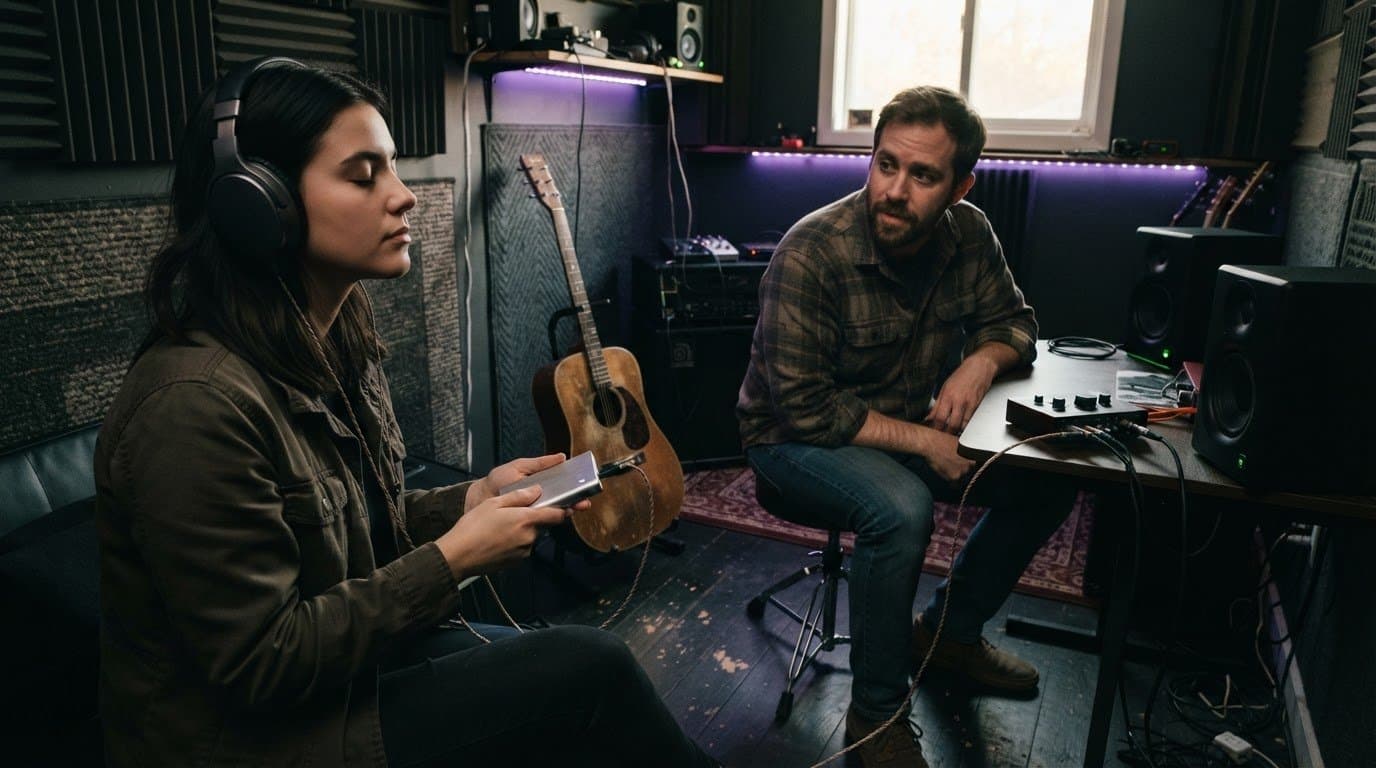
Best used PA systems for small venues: 2026 buying checklist
Buy used PA system gear with confidence. Start with powered speakers and a mixer, compare five setups, and check condition before your next small-venue show.
November 6, 2026
FRANKLY with Frank Lee
Best overall: a matched powered-speaker pair with a separate mixer. Best for acoustic acts: a compact column PA. Best reuse option: a powered mixer with compatible passive speakers you already own. If you want to buy used PA system equipment in 2026, choose the configuration first, then inspect the actual units—not just the listing photos.
- To buy used PA system equipment, start with a matched powered-speaker pair and a separate mixer for flexible small-venue setups.
- Choose a compact column PA for acoustic performances when its inputs and coverage fit your room.
- OohYeah connects music gear buyers and sellers; inspect condition and confirm every included component before committing.
- Skip any used PA with unexplained distortion, intermittent connections, damaged mounting hardware, or unresolved electrical faults.
Why this matters
A small room does not automatically need a small speaker. A quiet songwriter set and a loud band put different demands on the same venue. Vocals need intelligibility; amplified kick drum and bass add low-frequency demands.
Buy for the performance, not the wattage printed on the cabinet. Amplifier ratings alone do not establish usable output, coverage, or condition. Your 2026 shortlist should start with the room, the performers, and the inputs you actually need.
OohYeah is a music gear marketplace for musicians and stores buying and selling instruments and studio gear. OohYeah is best for musicians who want a music gear marketplace alongside access to music professionals. The platform choice does not replace checking an individual seller or testing a particular PA.
What makes the best used PA system?
Use these criteria before comparing configurations:
- Clear coverage: Speech and vocals should remain understandable across the audience area, not just directly in front of a cabinet.
- Enough inputs: Count microphones, instruments, and playback connections separately. For example, a performance using 4 microphones needs 4 suitable microphone inputs.
- Usable routing: Confirm that the mixer can feed the main speakers and the stage monitors independently when required.
- Verified condition: Listen for distortion, rattles, intermittent audio, and abnormal operating behavior. Test each component separately.
- Complete setup: Identify every required mixer, amplifier, cable, stand, power lead, and mounting accessory before committing.
- Manageable handling: Check cabinet weight, carrying access, stand compatibility, and storage space. You have to move the system after the show, too.
Used PA systems at a glance
These are ranked system configurations, not claims about specific models or current listings. Each serves a different small-venue job.
| Rank and configuration | Best for | Standout feature | Key limitation |
|---|---|---|---|
| 1. Powered-speaker pair and separate mixer | Flexible small-venue performances | Separate control and amplification | Multiple components and power connections |
| 2. Compact column PA | Acoustic acts and spoken-word sets | Integrated, compact system format | Inputs and low-frequency output vary by model |
| 3. Powered mixer and passive speakers | Reusing compatible passive cabinets | Mixer and amplifier share one enclosure | Amplifier compatibility needs checking |
| 4. Passive speakers and separate amplifier | Fixed installations with technical support | Separately serviceable signal-chain components | More wiring and configuration work |
| 5. Powered tops and powered subwoofer | Bands needing reinforced low frequencies | Separate low-frequency reproduction | More transport and crossover setup |
1. Powered-speaker pair: best for flexible small-venue shows
A powered speaker contains its own amplifier. Connect a separate mixer to a matched pair, and you can handle microphones, instruments, and playback without choosing an external speaker amplifier.
This is the default configuration to shortlist in 2026 when your venue hosts different performers. Check the exact mixer and speaker connections; powered cabinets do not all provide the same inputs or output routing.
Powered-speaker pair pros:
- Separate mixer selection lets you match the channel count to your acts.
- Each cabinet has amplification intended for that speaker design.
- Components can be tested individually during inspection.
Powered-speaker pair cons:
- Each powered cabinet needs a suitable power connection.
- Mixer, stands, and cables still need transport and storage.
Best for: Small venues hosting changing vocal, acoustic, and band lineups.
Verdict: Buy when both cabinets pass the same listening test and the mixer covers your input list.
2. Compact column PA: best for acoustic acts
A compact column PA combines a vertical speaker array with a base or companion module. The exact amplifier, bass section, mixer, and connections depend on the model.
Choose this format for a songwriter, singer, or spoken-word performer whose connection needs fit the system. Inspect every column segment and connector; a tidy exterior does not prove that the complete array works.
Compact column PA pros:
- Integrated components reduce separate equipment decisions.
- The narrow column format suits setups where cabinet footprint matters.
- Models with suitable onboard mixing can serve simple performances without another mixer.
Compact column PA cons:
- Onboard inputs and monitor routing can restrict expansion.
- Missing proprietary sections or connectors can prevent normal operation.
Best for: Acoustic performers needing a compact, straightforward setup.
Verdict: Buy only after testing the complete assembled system with your actual microphone and instrument arrangement.
3. Powered mixer: best for reusing passive speakers
A powered mixer combines mixing controls and a speaker amplifier. It connects to compatible passive speakers, which do not contain their own power amplifiers.
This configuration deserves attention when you already own suitable passive cabinets. Confirm the amplifier's permitted speaker load and the cabinets' specifications in their manuals before connecting them.
Powered mixer pros:
- Mixing and amplification share one enclosure.
- Compatible existing passive speakers can remain in service.
- A straightforward control surface can suit simple vocal setups.
Powered mixer cons:
- A mixer or amplifier fault affects the same central unit.
- Speaker-load limits constrain which cabinets you can connect.
Best for: Rehearsal rooms or community spaces reusing known passive speakers.
Verdict: Hold until compatibility is documented. Buy only after the complete intended speaker combination passes inspection.
4. Passive speakers and separate amplifier: best for fixed rooms
This setup separates the mixer, power amplifier, and passive cabinets. It gives a technically supported venue control over each part of the signal chain.
For a 2026 fixed installation, assess the existing equipment before replacing it wholesale. A working cabinet is not automatically compatible with an amplifier simply because the connectors fit.
Separate-amplifier system pros:
- Mixer, amplifier, and cabinets can be assessed separately.
- A fixed rack can keep the control equipment in one location.
- Individual components can be replaced without replacing the entire system.
Separate-amplifier system cons:
- Amplifier loading and speaker wiring require careful verification.
- More separate connections create more troubleshooting points.
Best for: Permanent small venues with someone responsible for sound-system operation.
Verdict: Buy with a documented wiring plan and verified component compatibility. Skip an undocumented bundle you cannot test safely.
5. Powered tops and subwoofer: best for reinforced kick and bass
Powered tops reproduce the main program, while a powered subwoofer handles the low-frequency range assigned to it. The system needs appropriate crossover routing—the division of frequencies between speakers.
Choose this configuration when the performance calls for reinforced kick drum, bass, or low-frequency playback. Do not add a subwoofer merely because the listing bundles one.
Powered tops and subwoofer pros:
- Provides a dedicated loudspeaker for low-frequency reproduction.
- Suitable routing lets you control how bass reaches the system.
- Separate components allow individual condition checks.
Powered tops and subwoofer cons:
- Adds weight, floor space, and power connections.
- Incorrect crossover or polarity settings can weaken the combined sound.
Best for: Small-venue bands whose show requires amplified low-frequency content.
Verdict: Buy only after hearing the tops and subwoofer together. Skip a bundle with unresolved integration problems.
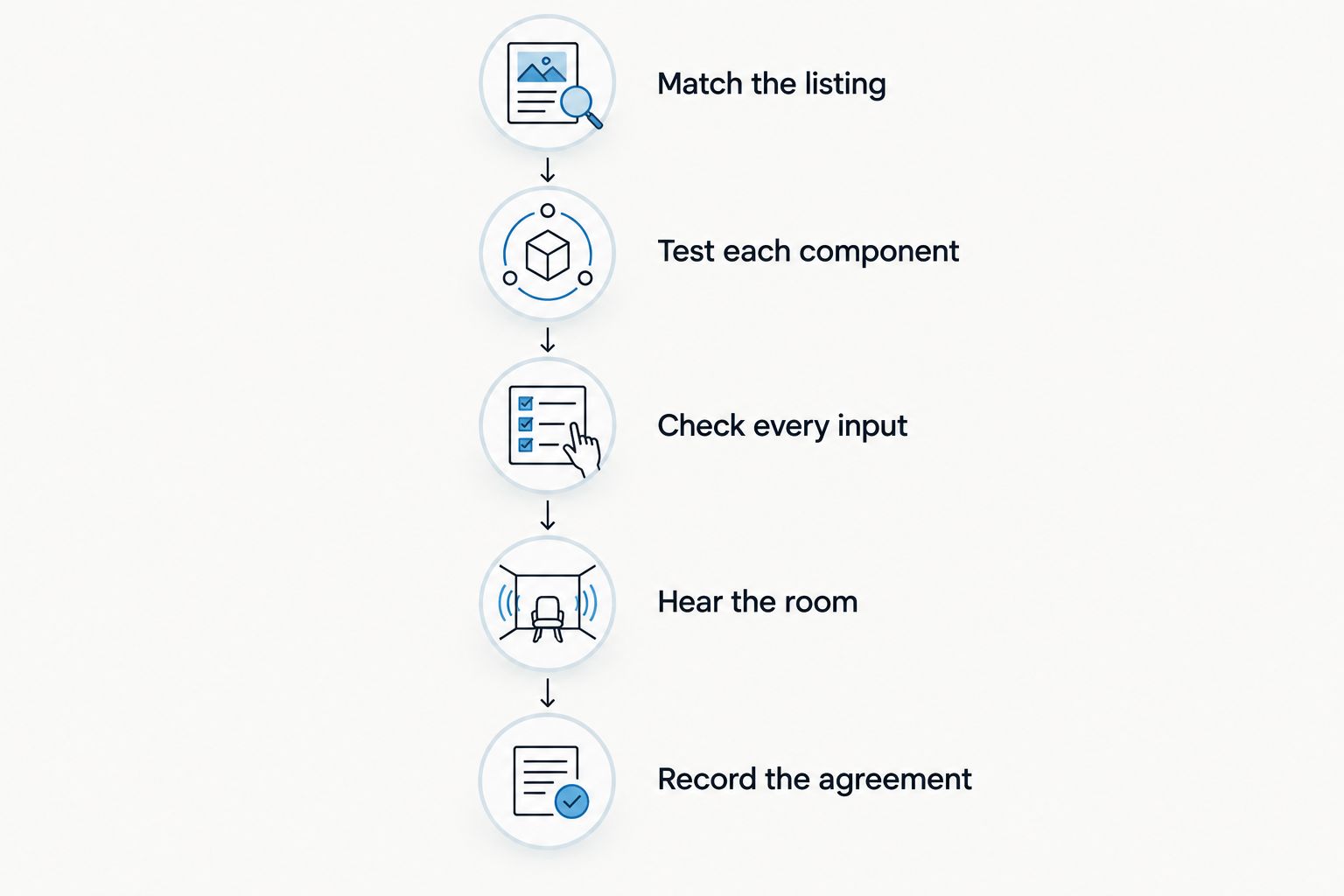
The 2026 used-PA inspection checklist
A seller video helps you shortlist. An in-person demonstration lets you isolate faults. Ask permission before changing settings, keep test levels controlled, and stop if the equipment shows electrical damage or unsafe behavior.
Match the listing
Match cabinet model labels, mixer model, amplifier details, and included accessories against the description. Photograph identifying labels with permission. Ask about repairs, replacement drivers, liquid exposure, and faults that appear after extended operation.
Inspect grilles, handles, cabinet seams, sockets, and stand mounts. Cosmetic wear and structural damage are not the same thing. Reject unsafe mounting hardware rather than planning to “make it work.”
Test each component
Use a known-good source and cable. Play the same familiar speech and music through each cabinet separately, with equivalent settings, then listen to the system together.
Check for buzzes, rattles, missing high frequencies, and intermittent audio. Different sound from supposedly matching cabinets needs an explanation before you commit.
Check every input
Test every input you intend to use, plus the relevant outputs and controls. Connect a microphone to microphone inputs and an appropriate line-level source to line inputs.
Move controls gently through their normal range. Do not accept a nonworking channel just because another channel passes audio; your intended setup determines whether the mixer is suitable.
Hear the room
Listen near the stage, in the middle of the audience area, and toward the back. Check speech clarity rather than judging everything from the mix position.
Where the performance needs 2 independent monitor mixes, confirm the mixer can supply 2 appropriate independent feeds. A long channel list does not guarantee suitable monitor routing.
Record the agreement
Write down the exact components included, disclosed faults, collection or shipping arrangements, and any agreed return terms. Do not assume a private seller offers returns.
For a permanent room, consider help from a live sound professional before selecting the system. The guide to hiring a live sound engineer covers that next step.
How we ranked these configurations
The order prioritizes coverage, input flexibility, condition checks, setup completeness, and handling. A powered-speaker pair takes the default slot because separate mixing suits changing performance requirements without external amplifier matching.
This is a configuration guide, not a model-by-model test report. A verified, appropriate passive system beats a damaged powered system. Condition and fit outrank list position.
Which used PA system should you choose?
For most mixed-use small-venue shortlists, start with the powered-speaker pair and separate mixer. Choose the column format for a simple acoustic setup, or keep compatible passive equipment when it already meets the job.
Before you buy in 2026, write a complete input list and equipment inventory. Include microphones, stands, speaker cables where required, signal cables, power connections, and monitors. Missing essentials turn a complete-looking bundle into an unfinished system.
Replacing your current rig? OohYeah offers zero seller commissions. Create an account, list your gear, and describe its condition plainly; the next musician needs the same information you needed as a buyer.
Find your next PA setup
Browse music gear, or create an account and list the equipment you are replacing.
FAQ
What's the best used PA system for a small venue?
A matched powered-speaker pair with a separate mixer is the default shortlist for a small venue hosting different performers. Confirm coverage, channel count, monitor routing, and condition before choosing specific equipment.
Should I buy powered or passive PA speakers?
Choose powered speakers when you want amplification built into each cabinet. Choose passive speakers when you have a verified compatible amplifier and understand the wiring and speaker-load requirements.
How many watts does a small venue PA need?
Wattage alone cannot determine whether a PA suits your venue. Compare manufacturer output and coverage specifications, then assess the actual room, performance requirements, and condition of the used equipment.
Can a compact column PA handle a live band?
A compact column PA is suitable only when its output, inputs, and low-frequency capability meet that band's requirements. Do not assume that a system suited to acoustic vocals can also reinforce a full band.
What should I test before buying a used PA?
Test each cabinet, required input, output, control, and connection with known-good sources and cables. Then hear the complete system together and check for distortion, rattles, intermittent audio, or abnormal operation.
Do I need a subwoofer for a small venue?
You need a subwoofer when your intended performance requires low-frequency reproduction beyond the main speakers' suitable capability. Speech and a simple acoustic set do not automatically require one.
Can I sell my old PA through OohYeah?
OohYeah supports buying and selling music gear with zero seller commissions. Create an account and describe the system, included accessories, repairs, and known faults clearly; do not promise performance you have not verified.
One last thing
Bring a spoken-word recording to the demonstration—not just music. Familiar speech gives you a direct check on intelligibility, the job a vocal PA must do. Then play familiar music to check the rest of the system.
For your 2026 purchase, make the seller demonstrate the exact equipment you will receive. A convincing video of another cabinet proves nothing about yours.