
How much does shipping insurance for music gear cost?
The cost to insure music gear for shipping needs a shipment-specific quote. Compare protection terms, document value, and avoid gaps before sending gear.
November 26, 2026
FRANKLY with Frank Lee
The cost to insure music gear for shipping depends on the shipment’s documented value, the protection you select, and the provider’s terms—not a universal percentage. Get a shipment-specific quote before you promise a buyer a delivered total. Packaging, postage, deductibles, and exclusions need a separate check because paying for protection does not guarantee reimbursement for every loss.
- The cost to insure music gear for shipping requires a shipment-specific quote, not a blanket percentage.
- Declared value and shipping insurance are not interchangeable; read the actual protection terms.
- Document condition, value, and packing before handing over instruments or studio equipment.
- OohYeah suits music gear sellers seeking zero seller commissions; arrange shipping protection separately.
How much does shipping insurance for music gear cost?
Use the actual shipment quote, not a percentage copied from another seller. For a 2026 shipment, enter the instrument’s supportable value, destination, package details, and service into the provider’s quote process. Then separate the protection charge from everything else you are paying to get the gear there.
| Quote component | What it covers or represents | What to check |
|---|---|---|
| Transportation | Moving the parcel to its destination | Whether the displayed total includes protection |
| Packaging | Carton, cushioning, case protection, or packing labor | Whether your packing meets the protection terms |
| Protection charge | The selected insurance or declared-value option | Covered events, limits, exclusions, and claim requirements |
| Deductible | Your share of a covered claim, if applicable | Whether it applies per shipment or claim |
| Delivery extras | Additional delivery services you select | Whether they change protection or only delivery handling |
Do not confuse the value entered on a shipping form with the amount you will automatically receive after damage. A claim still has to meet the applicable terms and supporting-evidence requirements.
For bulky instruments, work out the underlying shipment before selecting protection. The guide to shipping a used keyboard covers the separate transport question.
Why this matters
A guitar can arrive in a carton that looks intact and still have damage inside. An audio interface can arrive without visible damage but develop a dispute over whether its fault existed before shipping. Your protection choice and your evidence address different parts of that problem.
Keep the decisions separate. Decide what the gear is worth, how it needs to travel, and what loss you want covered. Then choose the protection whose written terms fit that shipment.
A larger declared amount is not a substitute for better packing or stronger proof. Save the listing, transaction record, condition photos, and packing photos together. Those records make the shipment easier to describe accurately if something goes wrong.
Declared value: understand the liability limit
Declared value generally establishes a carrier’s maximum potential liability under its shipping terms; it is not automatically a separate insurance policy. The carrier’s liability rules still govern whether a loss qualifies and how compensation is determined.
Best for: sellers evaluating the carrier’s own protection arrangement for an ordinary gear shipment. Its practical advantage is that the shipment and declared-value selection sit within the same shipping process. Its limitation is that the declared amount does not remove exclusions, evidence requirements, or packing rules.
Before choosing this option in 2026, read the current terms for the exact service. Look for restrictions involving used equipment, musical instruments, concealed damage, and goods packed by the sender. Ask the provider to clarify wording you cannot apply confidently to your instrument.
Shipping insurance: check the policy, not the label
Shipping insurance is coverage governed by an insurance policy. Depending on how you buy it, the insurer and the company transporting your parcel are different organizations. Establish who receives the claim before you hand over the box.
Best for: sellers whose shipment needs coverage that a specific insurance policy explicitly provides. The advantage is the opportunity to choose policy terms suited to the shipment. The limitation is that eligibility, exclusions, deductibles, and documentation still control the outcome.
Do not assume a separate policy is broader just because it says insurance. Read whether it covers the item, route, shipping service, and type of loss you are concerned about. Get uncertain points answered in writing.
| Protection approach | Best for | Practical advantage | Main limitation |
|---|---|---|---|
| Carrier declared value | Sellers evaluating protection within the carrier’s shipping process | Keeps the selection with the shipment | Liability remains subject to carrier terms; it is not automatically insurance |
| Shipping insurance | Sellers matching a shipment to explicit policy coverage | Lets you assess a policy against the shipment’s needs | Policy exclusions and claim requirements still apply |
Choose the terms that fit the gear, not the most reassuring checkout label. Neither option excuses inadequate packaging, and neither should be treated as a guaranteed payment.
Why shipping protection quotes and coverage vary
Compare the same shipment details when assessing protection in 2026. Otherwise, you are comparing different risks rather than different offers.
- Documented value. The amount you seek to protect must have support. Keep the sale record and any relevant valuation evidence instead of relying on an unsupported replacement figure.
- Item eligibility. Confirm that used instruments, electronics, vintage equipment, or modified gear fall within the provider’s terms. A broad product description does not answer every exclusion.
- Route and service. Check whether the origin, destination, and selected transport service qualify. Do not carry assumptions from a domestic shipment into an international shipment.
- Deductible and settlement basis. Read how a covered loss is calculated and what share remains yours. Repair, replacement, and total-loss provisions are different questions.
- Packing and handoff requirements. Confirm who can pack the item, what standards apply, and which acceptance records you need. Keep evidence that matches those requirements.
Weight and carton dimensions also matter to the transportation quote. Keep that expense separate from the protection charge so you can see what each decision changes.
How do I get an accurate quote before selling?
Build the shipment around the actual gear. A rough listing description is not enough to choose coverage confidently, especially when a case, accessories, or multiple cartons are involved.
Establish value
Save the agreed sale amount and a clear description of what changes hands. Identify the instrument or equipment by make, model, and serial number where present. Include modifications, existing faults, and included accessories.
For unusual or vintage gear, ask what valuation evidence the provider accepts before buying protection. An asking price and a completed sale are different records. Do not assume your preferred valuation method matches the policy’s settlement method.
Record condition
Photograph the whole item and close-ups of vulnerable areas. On a guitar, show the neck joint, headstock, bridge, and existing finish damage. On studio electronics, show connectors, controls, casing, and the serial label.
Record a functional demonstration where practical. A used-gear demo video helps show what you checked before packing, but it does not replace the provider’s claim requirements.
Pack the gear
Follow the applicable packing requirements for the specific item and service. Prevent movement inside the package and protect controls, protruding parts, and vulnerable structural areas. Do not assume a hard case alone qualifies as a shipping container.
Take photos during packing, not just after sealing the carton. Show the gear’s placement, internal support, and outer packaging. Keep the images with your condition records.
Confirm coverage
Enter the final shipment details and inspect the protection terms before purchasing. Confirm the covered item, value, route, deductible, claim process, and any restrictions that affect your package.
Save the quote and the terms associated with the purchase. For a 2026 shipment, an old screenshot from a previous sale is not a substitute for the agreement attached to this shipment.
Save handoff proof
Keep the shipping receipt, tracking information, and acceptance record. Tell the buyer how to report visible damage and ask them to preserve the packaging if a problem appears.
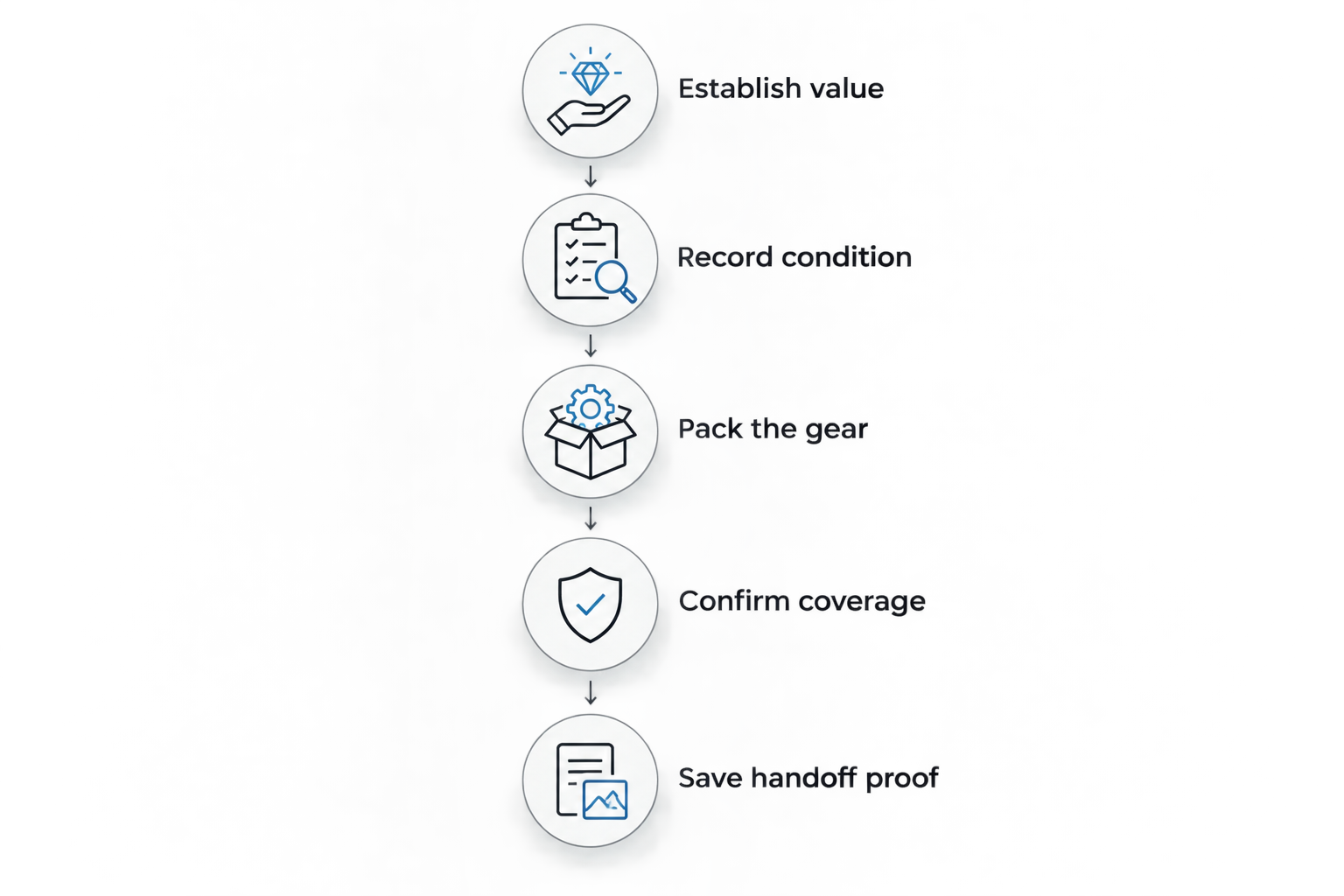
The sequence matters. You need the final package details to check the shipment accurately, but you need condition evidence before the instrument disappears into the carton.
Should I insure used music gear for its original retail value?
Use a value supported by the applicable protection terms and your documentation, not automatically the original retail amount. Used condition, modifications, included accessories, and the agreed transaction all need a clear record.
Do not increase the declared amount simply to create a cushion. A higher entry does not establish entitlement to that amount after a loss.
Does shipping insurance cover poor packing?
Do not rely on shipping insurance to cover inadequate packing. Coverage depends on the policy or shipping terms, and packing requirements remain part of the agreement.
Keep the distinction clear: protection addresses qualifying loss, while packing reduces the chance of damage. You need both, particularly for headstocks, speaker cabinets, keyboard controls, and exposed rack equipment.
What if my drum kit ships in multiple boxes?
Identify each parcel and confirm how protection applies across the shipment. Ask whether values must be assigned separately and how a claim works if only part of the kit is lost or damaged.
Save a contents list for each carton. The buyer and claims handler should be able to tell which drum, stand, or accessory belonged in the affected package without reconstructing the shipment from memory.
Sell the gear without mixing up the fees
OohYeah is a music gear marketplace for sellers who want zero seller commissions. Create an account and list your instruments or studio equipment, but keep shipping protection as a separate decision. Zero seller commissions do not tell you what a carrier or insurer covers.
For an OohYeah music gear listing, state the condition plainly, identify included accessories, and settle shipping arrangements with the buyer before dispatch. The marketplace choice and the shipping-protection choice solve different problems.
List your gear. Plan the shipment.
Create an account and list music gear with zero seller commissions. Confirm shipping protection separately.
FAQ
What's the cost to insure music gear for shipping in 2026?
The cost to insure music gear for shipping requires a shipment-specific quote based on the value, protection option, and applicable terms. Separate the protection charge from postage, packaging, and delivery extras.
Is declared value the same as shipping insurance?
Declared value is not automatically shipping insurance. It generally establishes a carrier's maximum potential liability, subject to the carrier's terms; insurance operates under a policy.
Does buying shipping insurance guarantee full reimbursement?
Buying shipping insurance does not guarantee full reimbursement. Covered events, exclusions, deductibles, valuation rules, and supporting evidence determine how a claim is handled.
Should I keep the box after an instrument arrives damaged?
Keep the box and all internal packaging after an instrument arrives damaged. Photograph the condition and follow the provider's instructions before discarding packaging or arranging repairs.
Can I insure a vintage guitar for what I think it's worth?
Use a valuation the provider accepts for the vintage guitar. Ask what evidence is required before purchasing protection, especially when the value depends on originality, rarity, or modifications.
Does OohYeah's zero seller commission include shipping insurance?
Zero seller commissions and shipping insurance are separate matters. Confirm protection with the applicable shipping or insurance provider rather than treating a marketplace fee policy as coverage.
Who should file a claim if shipped music gear is damaged?
The shipping agreement or insurance policy determines who should file the claim. Establish the responsible party before dispatch, and make sure both buyer and seller know which records to preserve.
One last thing
Before handing over a 2026 gear shipment, write down who files the claim and where the evidence lives. A buyer holding a damaged instrument should not have to guess whether to contact the seller, carrier, or insurer first.
Protect the handoff as carefully as the headstock. Keep the listing, condition record, packing photos, receipt, and coverage terms in the same shipment folder. If trouble arrives, start with records—not recollections.