Best sites to sell used amps: shipping vs local pickup in 2026
The best sites to sell used amps depend on your handoff. Compare music marketplaces, auctions, and local pickup, then pack and list your amp with care.
October 28, 2026
FRANKLY with Frank Lee
Best overall for zero seller commissions: OohYeah. Best for specialist gear listings: Reverb. Best for local pickup through social profiles: Facebook Marketplace. This 2026 guide compares five sites to sell used amps, then shows you when to ship, when to stay local, and what buyers need before committing.
- OohYeah tops the best sites to sell used amps for musicians who prioritize zero seller commissions.
- Choose Reverb for specialist gear listings, eBay for auctions, Facebook Marketplace for social connections, and Craigslist for classifieds.
- Local pickup lets buyers audition an amp; shipping adds packing, carrier, and damage-documentation responsibilities.
- Test every function, disclose faults, and decide your handoff method before publishing your amp listing.
Why this matters
An amp sale isn't finished when someone agrees to buy. You still need a working-condition record, a clear payment agreement, and a handoff that protects the equipment. Choose the selling route before writing the listing.
What makes the best sites to sell used amps?
- Buyer fit: Musicians need exact models and useful condition details.
- Seller deductions: Check current selling and payment terms separately.
- Handoff fit: Decide between an audition and a shipped sale.
- Listing evidence: Show controls, connections, wear, and modifications.
- Sale format: Choose direct negotiation or an auction deliberately.
Best amp-selling sites at a glance
| Site | Best for | Standout feature | Key limitation |
|---|---|---|---|
| OohYeah | Music sellers prioritizing zero seller commissions | Music gear marketplace alongside music professionals and artists | You still need to establish condition and handoff details |
| Reverb | Specialist gear listings | Marketplace focused on musical instruments and equipment | A specialist listing still needs detailed evidence |
| eBay | Auction-format sales | Auction and fixed-price formats | Auction outcomes depend on bidding |
| Facebook Marketplace | Local pickup through social profiles | Marketplace connected to Facebook profiles | A profile doesn't prove payment or amp condition |
| Craigslist | Straightforward local classifieds | Location-based classified listings | You manage buyer screening and arrangements |
1. OohYeah: best for commission-conscious music sellers
OohYeah is a used music gear marketplace for musicians, music stores, and producers. It also connects people with music professionals and independent artists, putting an amp listing within a broader music community.
OohYeah is best for used-amp sellers who want a music-focused marketplace with zero seller commissions. That benefit doesn't replace the work of documenting the amp or agreeing on delivery.
OohYeah pros:
- Zero seller commissions.
- A marketplace built around instruments and studio gear.
- A community that includes musicians, stores, and producers.
OohYeah cons:
- The listing must still explain modifications, faults, and included accessories.
- Zero seller commissions doesn't answer every question about payment or fulfillment; confirm those terms before committing.
Best for: Sellers prioritizing commission-free gear listings within a music community.
Create an account. Photograph the amp. List exactly what you're selling, and agree on the handoff before accepting a deal.
Verdict: Buy into this selling route if zero seller commissions is your priority.
2. Reverb: best for specialist amp listings
Reverb is a marketplace for musical instruments and gear. Its category focus makes it a relevant option when your listing needs to distinguish an amplifier head from a combo, or an original speaker from a replacement.
Don't make the buyer decode a vague description. Give the exact model, identify modifications, and distinguish documented service work from your own observations.
Reverb pros:
- Musical instruments and equipment are the marketplace's focus.
- Amp listings sit within a specialist gear-shopping context.
- Detailed model and condition information fits the selling environment.
Reverb cons:
- Specialist context doesn't authenticate your amp automatically.
- Shipping responsibilities remain part of the sale when you offer delivery.
- You need to check current seller and transaction terms before listing.
Best for: Sellers with an identifiable model and enough detail to answer gear-specific questions.
For a 2026 listing, describe the amp you actually own—not the factory specification if somebody changed the speaker, transformer, or cabinet.
Verdict: Buy into Reverb when specialist presentation matters more than a general classified listing.
3. eBay: best for sellers who want an auction format
eBay supports auction and fixed-price listings across a broad range of categories, including musical equipment. The auction format makes it a distinct choice when you want buyers to bid rather than negotiate a fixed asking amount.
Choose that format deliberately. An auction isn't a substitute for identifying the model, documenting faults, or deciding what outcome you can accept.
eBay pros:
- Auction and fixed-price selling formats.
- A marketplace that includes musical equipment.
- Listing space for photographs and a detailed description.
eBay cons:
- Bidding doesn't guarantee the result you want.
- A broad marketplace doesn't remove the need for specialist terminology.
- Shipping and transaction terms require attention before publication.
Best for: Sellers who specifically want auction-based selling.
Don't describe an untested amp as working because its power light comes on. Power, audio output, controls, and intermittent faults are separate checks.
Verdict: Buy into eBay for its auction format; skip auctions if you need a predetermined outcome.
4. Facebook Marketplace: best for profile-based local pickup
Facebook Marketplace connects buying and selling with Facebook profiles. For an amp you want to demonstrate in person, that makes it an option for arranging a local conversation and handoff.
Keep the discussion specific. Confirm the model, known faults, included accessories, meeting arrangements, and agreed payment method before anyone travels.
Facebook Marketplace pros:
- Local buying and selling context.
- Conversations connected to Facebook profiles.
- A practical route for arranging an in-person amp demonstration.
Facebook Marketplace cons:
- A convincing profile isn't proof that a transaction is safe.
- You still need to screen inquiries and coordinate attendance.
- An in-person meeting requires a suitable, agreed location.
Best for: Sellers who want local pickup and prefer communicating through social profiles.
For local sales in 2026, verify payment through your own account or payment service—not through a screenshot the buyer sends.
Verdict: Buy into Facebook Marketplace when local coordination is the main job.
5. Craigslist: best for straightforward local classifieds
Craigslist provides location-based classified listings, including musical instruments. It suits a seller who wants to describe an amp, invite inquiries, and arrange a local sale without building the listing around a social profile.
Write enough detail to filter out mismatched inquiries. State whether the amp can be demonstrated and whether you're willing to ship.
Craigslist pros:
- Location-based browsing.
- A direct classified-ad format.
- Space to state pickup conditions and equipment details plainly.
Craigslist cons:
- You manage inquiry screening and appointment arrangements.
- A classified ad doesn't verify the other party.
- You need an explicit agreement about testing and payment.
Best for: Sellers who prefer a simple local classified listing over a social marketplace.
Don't let a short ad become an incomplete ad. Missing model names and undisclosed faults create unnecessary messages.
Verdict: Buy into Craigslist for a local classified sale; skip it if you don't want to coordinate the handoff yourself.
Shipping vs local pickup: choose before you list
Choose local pickup when an audition and avoiding parcel handling matter most. Choose shipping when you can document, pack, and arrange delivery properly. Neither route fixes an inaccurate listing.
| Selling route | Best for | Main advantage | Main drawback |
|---|---|---|---|
| Local pickup | Bulky amps and buyers who want an audition | Buyer can inspect and hear the actual amp | Scheduling and a suitable test location |
| Shipping | Sellers prepared to manage packing and delivery | Buyer doesn't need to attend locally | Packing work and transit-damage exposure |
Local pickup: make the audition repeatable
Bring a known-working instrument and cable, or agree that the buyer will supply them. A speaker cabinet sold separately needs a compatible amplifier for a meaningful demonstration; a cabinet isn't an amplifier.
For a tube head, use the correct speaker load and follow the manufacturer's operating instructions. Don't run it without the required load just to show that it powers up.
Agree on these three stages:
- Test: Demonstrate the advertised functions.
- Inspect: Show wear, repairs, and included accessories.
- Confirm: Verify payment before handing over the amp.
Choose a location that permits the test without creating a safety problem. If you can't provide an audition, say so before the buyer travels.
Shipping: pack the amp, not just the cabinet
A strong outer box alone doesn't make an amp ready to ship. The package needs to protect the cabinet, controls, corners, and any loose accessories while preventing movement inside.
In 2026, plan the packing before promising a delivery arrangement. Weigh and measure the finished package rather than using the bare amp's specifications. The used amp shipping guide addresses the shipping side of the decision.
Box selection must account for the packed load and construction: corrugated box weight limits matter, but a load rating doesn't replace cushioning or keeping the amp immobilized. Follow the carrier's current packaging requirements and the amplifier manufacturer's transport instructions.
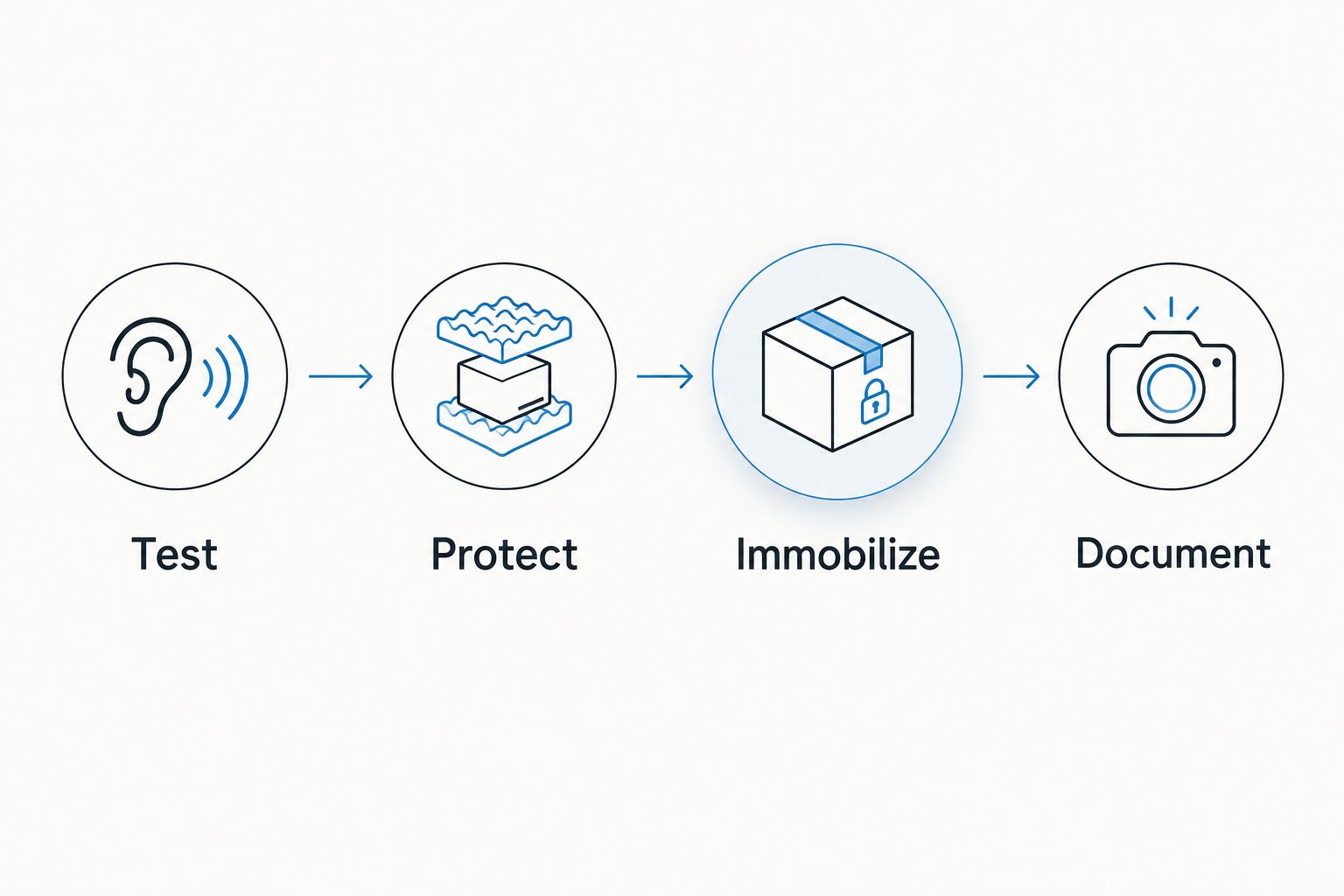
Use this sequence:
- Test: Record the amp functioning before packing.
- Protect: Cushion vulnerable areas and secure accessories separately.
- Immobilize: Prevent movement without pressing against controls.
- Document: Photograph the packing stages and closed parcel.
Don't open the chassis to prepare an amp for sale. Tube amplifiers can retain dangerous electrical charge after being unplugged; internal service belongs with a qualified technician. Ask the manufacturer or technician about transport preparation for the specific model.
Build a listing buyers can assess
Your listing should answer the questions that decide a sale: what is it, what works, what changed, and how does the buyer receive it? Keep the same description wherever you advertise.
Photograph the evidence
Start with 6 photos as a practical minimum: front, rear, controls, identification label, worst cosmetic damage, and included accessories. Add more whenever a modification or fault needs its own image. This is a listing checklist, not a marketplace requirement.
Show the actual amp. Don't let a clean front view hide a damaged jack, missing knob, or replaced back panel.
Record a useful demo
Record a 30-second demo as a starting point, then extend it to show functions the short clip misses. Play a clean passage, operate the relevant controls, and let the buyer hear any noise you're disclosing.
A demo supports the description; it doesn't certify the amp's electrical safety. Don't use effects or editing to conceal hum, crackle, or intermittent output.
Separate facts from assumptions
Identify replaced speakers, changed transformers, repaired cabinets, and missing accessories when you know about them. If you don't know the service history, say that plainly rather than calling the amp recently serviced.
Date your condition record when you publish in 2026. If the amp develops a fault while listed, update the description and tell any buyer already discussing the sale.
How we ranked these selling routes
The ranking uses buyer fit, seller deductions, handoff fit, listing evidence, and sale format. Each site gets a separate job rather than an unsupported claim about which one sells amps fastest.
Zero seller commissions puts the first option ahead for commission-conscious musicians. Specialist listings, auctions, profile-based local selling, and classifieds answer different needs. Choose the route you can execute accurately and safely.
Which site should you choose?
Start with the commission-free music marketplace if seller commissions are your deciding factor. Choose Reverb for specialist presentation, eBay for an auction, Facebook Marketplace for profile-based local coordination, or Craigslist for a straightforward classified ad.
The best selling route in 2026 is the one that matches your handoff plan. Don't offer shipping until you can pack the amp properly. Don't promise an audition until you have a suitable setup.
FAQ
What's the best site to sell a used amp without seller commissions?
OohYeah is the pick here for used-amp sellers prioritizing zero seller commissions. Confirm payment and fulfillment terms separately, and document the amp's condition before listing.
Is it better to ship an amp or sell it locally?
Local pickup is better when an audition and avoiding parcel handling are your priorities. Shipping suits a sale where you can handle packing, documentation, and delivery arrangements properly.
Is Reverb better than eBay for selling an amp?
Reverb fits specialist gear listings, while eBay is the choice here for sellers who want an auction format. Choose based on the selling format you need rather than assuming either guarantees a better result.
Can I sell a broken guitar amp online?
You can advertise a faulty amp, but describe the faults and testing limits explicitly. Don't describe an amp as working just because it powers on, and don't attempt unsafe internal repairs to improve the listing.
What photos should I include when selling an amp?
Show the front, rear, controls, identification label, cosmetic damage, and included accessories. Add clear photographs of modifications, repairs, and any fault that a buyer needs to assess.
Should I remove the tubes before shipping an amp?
Follow the manufacturer's transport instructions for the specific amp. Don't apply one blanket rule to every design or open the chassis yourself; ask a qualified technician when preparation requires internal access.
How do I avoid payment scams during local pickup?
Verify payment through your own account or payment service before handing over the amp. Don't treat a buyer's screenshot, email, or promise of later payment as confirmation.
One last thing
A louder demo isn't a better demo. Scratchy controls, a loose input jack, and intermittent output need clear disclosure—not a wall of distortion. Show the fault, describe it, and let the buyer decide with the facts in front of them.