What is Direct to Consumer Sales? Your Complete Guide
Learn what is direct to consumer sales, its benefits, challenges, and how to build a successful D2C strategy. Get started today!
October 6, 2025
Music Marketplace Advisor
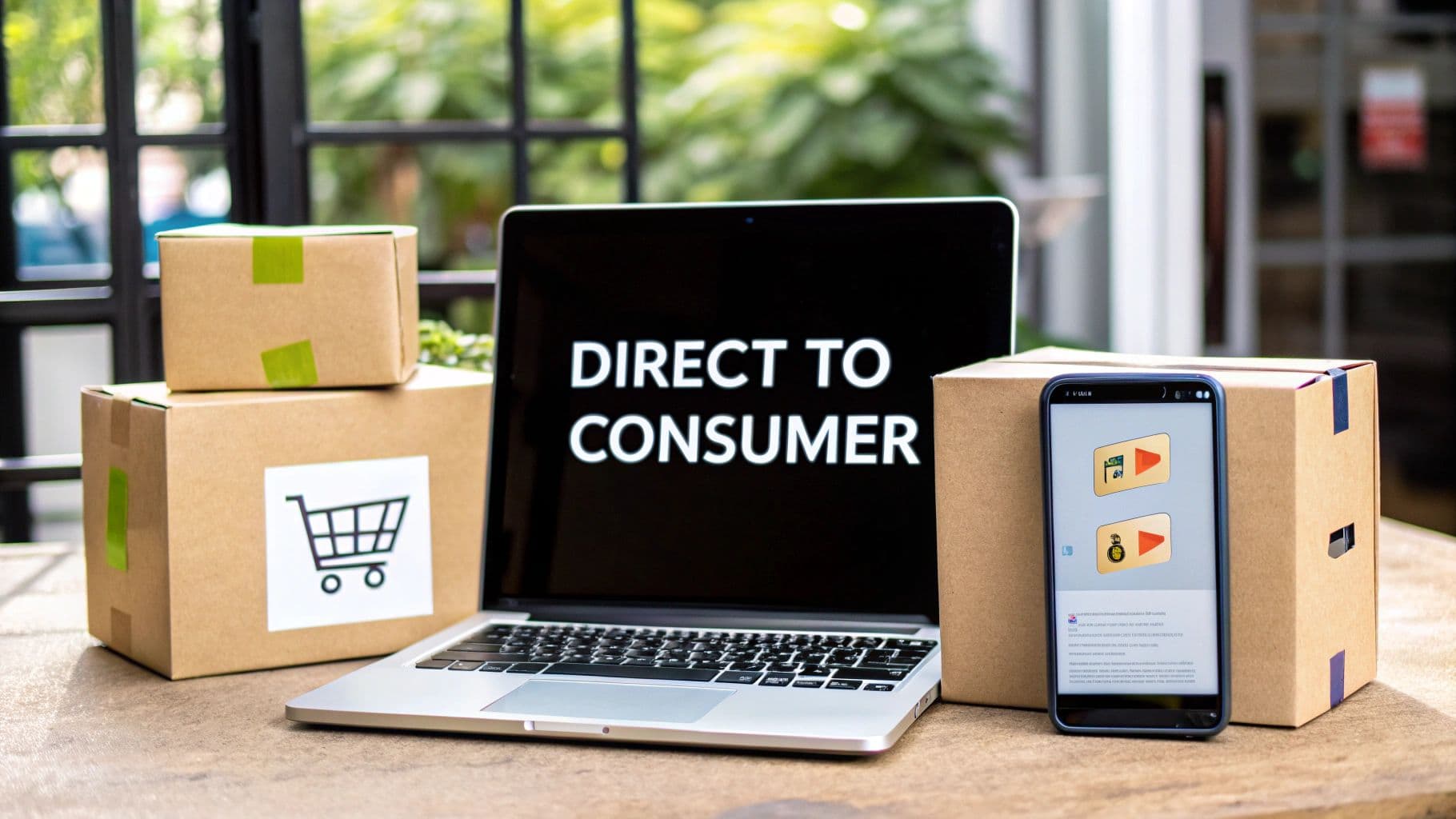
Buying & SellingSo, what exactly is direct-to-consumer sales? In a nutshell, it's a business model where a brand sells its products right to the final customer, completely cutting out the traditional middlemen like wholesalers and retailers.
Think of it this way: instead of a painter selling their work through a gallery (which takes a cut), they sell it directly from their own website or studio. That's D2C in action.
The Core Idea Behind D2C
At its heart, the D2C model is about forging a direct, unfiltered connection with your audience. It's a complete departure from the old way of doing things, where a product had to jump through multiple hoops—from the manufacturer to a wholesaler, then a retailer, and finally to the customer.
D2C simplifies that entire chain into one clean transaction.
For artists and creators, this is a game-changer. You're no longer at the mercy of distributors, galleries, or other gatekeepers. You get to control the entire experience, from the moment someone discovers your work to the final purchase. If you want to dive a bit deeper into the basics, this overview of Direct to Consumer (DTC) Brands is a great starting point.
The infographic below really paints a clear picture of how much simpler the D2C path is compared to the traditional model.
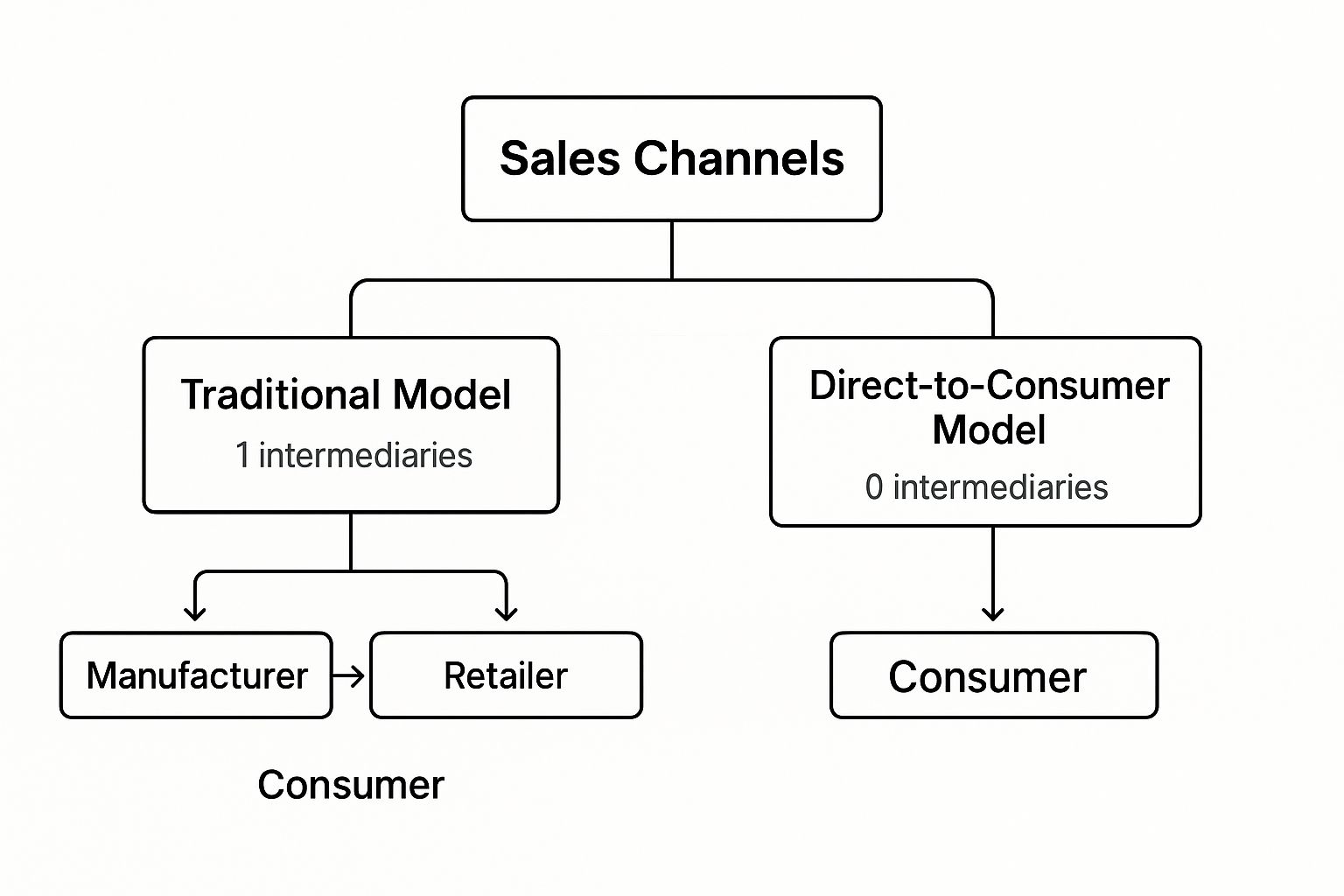
As you can see, D2C creates a straight line from you to your customer. This lean structure is precisely why D2C brands often have more pricing flexibility, stronger brand integrity, and much closer relationships with their buyers.
To truly understand the shift, let's compare the two models side-by-side.
Traditional Retail vs Direct to Consumer Sales
The table below breaks down the key differences between the old-school retail supply chain and the modern D2C approach.
| Aspect | Traditional Retail | Direct to Consumer (D2C) |
|---|---|---|
| Sales Channel | Multi-layered: manufacturer -> wholesaler -> retailer -> customer | Single layer: brand/creator -> customer |
| Customer Relationship | Indirect; managed by retailers | Direct and personal; owned by the brand |
| Brand Control | Limited; influenced by retail partners | Complete control over branding and messaging |
| Pricing | Higher markups to account for multiple middlemen | More competitive; higher profit margins for the creator |
| Customer Data | Owned by the retailer | Owned and collected directly by the brand |
This comparison highlights a fundamental change in who owns the customer relationship. With D2C, that ownership—and all the valuable insight that comes with it—is firmly in your hands.
The impact here is huge. It's not just about saving money by cutting out intermediaries. It’s about owning your narrative, setting your own prices, and learning directly from your biggest fans.
This direct-to-fan connection isn't just a niche trend; it's a massive market force. The D2C e-commerce space was valued at a staggering $142.1 billion in 2022 and is expected to explode to nearly $591.3 billion by 2032.
This model is especially powerful for creators, a topic we explore more in our guide on why independent artists should sell music without middlemen.
Why Top Brands Are Going Direct
Going direct-to-consumer is about so much more than just opening up a new sales channel. It's a fundamental shift in strategy, one that gives brands the power to build a more resilient and profitable business from the inside out.
The most obvious win? Higher profit margins. When you cut out the middlemen—the wholesalers and retailers who all take a piece of the pie—you get to keep a much larger slice of every sale. That extra cash can be funneled right back into what matters most: innovating your products, amplifying your marketing, or simply offering more value to your community.

Taking Full Control of the Brand and Customer Experience
Beyond the numbers, going D2C means you finally get to own your story. In a traditional retail store, your product is just one of many on a crowded shelf, and its narrative is in someone else's hands. When you sell directly, you control every single interaction.
From the look and feel of your website to the way a customer unboxes their purchase, every detail becomes an opportunity to reinforce who you are and what you stand for. This creates a cohesive, unforgettable brand experience.
This approach also builds a powerful, direct connection with your customers. You're no longer just moving units; you're building a genuine community. That relationship is built on a foundation of first-party data—priceless information about what your customers love, what they want next, and how they behave.
This isn't a niche trend, either. Major CPG brands are making the move, and in rapidly growing markets, the D2C space is on track to hit $100 billion by 2025, according to insights from Emarsys.
Gaining Unmatched Business Agility
Finally, the D2C model makes you incredibly nimble. Forget the long, drawn-out timelines of working with retail partners. You can launch a new product, test a creative marketing idea, or pivot based on customer feedback in a matter of weeks, not months.
For artists and creators, that kind of speed is a game-changer. To see how this plays out specifically for musicians, take a look at our guide on the benefits of selling music directly to fans.
Getting Real About D2C Operations
The direct-to-consumer model puts you in the driver's seat, which is fantastic. But it also means you’re suddenly responsible for the entire car—the engine, the navigation, the whole nine yards. When you go D2C, you're not just the creator anymore; you're also the manufacturer, the marketer, and the shop owner. That's a lot of hats to wear, and it comes with some serious operational hurdles.

This new freedom brings a new weight of responsibility. Without a retail partner, the entire supply chain lands squarely on your shoulders. We're talking about everything from stocking inventory and packing boxes to dealing with the inevitable returns. For a creator used to focusing on their craft, it can be a jarring transition.
The High Cost of Getting Noticed
One of the first brick walls many creators hit is simply getting people in the door. Retailers come with a built-in customer base. When you sell direct, you start from zero.
You have to build that audience from the ground up, fighting for every single click in a very loud, very crowded digital world. There are a few well-trodden paths to attract customers, but none of them are a walk in the park:
- Organic Search (SEO): Getting your work to show up on Google is powerful, but it requires a ton of consistent effort and a bit of technical know-how.
- Social Media Marketing: Building a following is a fantastic way to connect, but it’s a hungry beast that demands constant content and engagement just to stay visible.
- Paid Advertising: Running ads on Google or Instagram can bring in people fast, but the costs can spiral out of control and chew right through your profits if you're not careful.
The hard truth is that attracting customers is almost always tougher and more expensive than you think. You’re not just up against other artists; you’re competing with every other D2C brand out there for a slice of your audience’s attention.
This is why having a clear-eyed marketing plan and a realistic budget is non-negotiable from day one.
Mastering the Art of Getting It There
Beyond finding customers, you also have to manage the physical journey of your product from your studio to their doorstep. This is the operational side of what is direct to consumer sales, and it's the part that catches most people by surprise.
You're in charge of every single step. That means finding a place to store your products, accurately picking and packing every order, and navigating the complexities of shipping. It gets even trickier when you factor in returns and exchanges, which demand a solid customer service process to keep people happy and protect your reputation.
Building Your D2C Strategy from the Ground Up
Taking the leap into direct-to-consumer sales is a huge step, but it’s not something you can just wing. It requires a solid game plan. Think of it like building a setlist for a huge show; every piece has to be in the right place to create an unforgettable experience. A great D2C strategy is built the same way, with clear, deliberate steps.
First things first: you have to figure out what makes you you. What’s unique about your art, your music, or the merch you’re creating? This is your value proposition—the core reason a fan should buy directly from you instead of anywhere else. It's more than just the product; it's the story, the connection, and the experience you wrap around it.
Choosing Your Stage and Crafting Your Identity
Once you’ve nailed down your unique angle, you need a place to sell. This is your digital storefront, your virtual stage. Platforms like Shopify or OohYeah are built specifically for creators, giving you the tools to create a space that truly feels like an extension of your artistic identity.
And that brand identity is everything. It's not just a cool logo. It’s the entire vibe—the colors, the tone of your emails, the way you talk to your audience on social media. A powerful brand creates a magnetic pull, making your work instantly recognizable and building a real connection with the right people. For any creator, fostering that connection is the endgame. You can dive deeper into this in our article about why building a fanbase is essential for selling music.
With your brand dialed in, it's time to get the word out. Your marketing plan is your roadmap for finding and engaging your audience, whether that’s through Instagram stories, a monthly newsletter, or teaming up with other artists.
Nailing the Behind-the-Scenes Operations
The final piece of this puzzle is logistics. This is all the unglamorous backstage work that makes the magic happen, ensuring every fan has a smooth experience from the second they click "buy" to the moment their package arrives.
A seamless checkout, clear communication about shipping, and genuinely helpful customer service aren't just nice-to-haves. They’re essential. These details are what turn a casual buyer into a die-hard supporter who feels seen and appreciated.
To make this manageable, especially when you're just starting, many creators opt for a lean operational model. If you're selling physical merch, you'll want to explore ways to avoid sinking a ton of cash into inventory upfront. A smart starting point for many D2C brands is an agile model like print-on-demand. For a great walkthrough, check out this guide on launching a print-on-demand business. Getting these systems right from the start means your business can grow without the growing pains.
Lessons from Successful D2C Pioneers
It’s one thing to talk theory, but seeing how real brands pulled it off is where the magic happens. By looking at the playbooks of some iconic D2C companies, we can pull out real, actionable lessons that work for any creator, no matter how big or small. These brands didn't just move inventory; they started movements.
Take Warby Parker, for instance. They spotted a huge problem everyone hated: absurdly expensive glasses. Their entire D2C model was built to fix that. Their home try-on program wasn't just a gimmick; it was a brilliant move that dismantled the single biggest fear of buying glasses online. It made the whole experience fun, risk-free, and all about the customer.
Then you have Glossier, a beauty brand that quite literally grew out of a blog. This proves a vital point: community isn't just a buzzword, it’s a business model. They treated their audience like co-conspirators, using their direct feedback to decide what products to make next. This strategy transformed customers into evangelists, sparking the kind of word-of-mouth marketing you simply can't buy.
Core Strategies of D2C Success
When you dig into these success stories, a few common threads start to appear. These aren't secrets, but they are non-negotiable pillars of a strong D2C strategy.
- Solve a Real Problem: They weren't trying to boil the ocean. Warby Parker zeroed in on cost and convenience. Glossier spoke to a need for authentic, community-driven beauty products.
- Control the Story: Selling directly means you own the narrative. From the first ad a customer sees to the unboxing experience, every single touchpoint is a chance to reinforce who you are.
- Build a Tribe, Not a List: They didn't just hunt for sales; they cultivated a following. They used blogs, social media, and direct conversations to make people feel like they were part of something bigger.
The big lesson here is that the best D2C brands are obsessed with the relationship, not just the transaction. They use that direct line to their audience to listen, learn, and build an experience that feels genuinely personal.
Let's look at a few more examples to see how different brands put their own spin on these core strategies.
D2C Success Strategy Breakdown
| D2C Brand Example | Core Product | Key D2C Strategy | Result |
|---|---|---|---|
| Allbirds | Sustainable Footwear | Focused on a single hero product with a powerful sustainability narrative. They built a cult following by owning their niche. | Dominated the casual footwear market with a strong brand identity and loyal customer base. |
| Dollar Shave Club | Razors & Grooming | Used viral video marketing and a subscription model to disrupt a legacy industry. Their humor and directness created a strong brand voice. | Acquired by Unilever for $1 billion, proving the power of a simple, direct value proposition. |
| Casper | Mattresses | Revolutionized a clunky buying process with a "bed-in-a-box" concept, a 100-night trial, and a hassle-free return policy. | Transformed an entire industry by removing consumer risk and simplifying a major purchase. |
These brands show that D2C isn't one-size-fits-all. It's about finding a unique way to connect with a specific audience and solve their problems better than anyone else.
For artists and independent creators, this same thinking applies. Platforms like Bandcamp and Patreon are D2C engines, giving you the tools to offer exclusive work and build a tight-knit community around what you do. The scale might be different, but the principle is exactly the same: cut through the static and forge a direct link with the people who believe in your work. That, in a nutshell, is what direct to consumer sales looks like when it's done right.
What's Next for Direct-to-Consumer Commerce?
The move toward selling directly to your audience isn't just a passing trend—it's a fundamental shift in how businesses, especially for creators, are being built for the long haul. The future of D2C is tangled up in the very fabric of how people find new things and decide what to buy online.
Think about social commerce. It's completely erasing the line between scrolling through content and actually shopping. Platforms like TikTok and Instagram aren't just places where people discover your work anymore; they’re becoming full-blown storefronts. A fan can go from seeing something they love to buying it in a single, seamless moment of inspiration.
Consumer Expectations Are Changing the Game
It’s not just about making things easy to buy, though. Two massive forces are shaping the D2C world: personalization and sustainability. People today don't just want products; they want to feel understood by the brands they support and see their own values reflected back at them.
Because you have that direct line to your audience, you're in the perfect spot to deliver. You can use what you learn from your customers to create more tailored experiences and be upfront about how you're making your products and business more sustainable.
At the end of the day, selling directly to your fans does more than just create a new way to make money. It helps you forge a resilient, authentic brand that can thrive because it’s built on a real, human connection with its audience.
This is all part of a much bigger picture. Global e-commerce sales are on track to hit a staggering $7.5 trillion by 2025, with social commerce expected to make up $1.2 trillion of that. If you want to see just how massive this shift is, you can explore more digital commerce statistics.
By building that direct bridge to your community, you’re not just selling something—you’re cementing your place in a world that’s changing faster than ever.
Got Questions About D2C? Let's Break It Down
Diving into the world of direct-to-consumer sales can feel a little confusing at first, especially with all the jargon floating around. Let's clear up a few of the most common questions artists and creators have.
D2C vs. B2C: What's the Real Difference?
This is a big one, but it’s actually pretty simple. Think of it like this: B2C (Business-to-Consumer) is the big picture—it's any time a business sells something to a regular person. That could be you buying a t-shirt from a huge department store or grabbing a coffee from a local shop.
D2C, on the other hand, is a specific kind of B2C. It’s when the maker of that t-shirt sells it to you straight from their own website, with no department store in between. So, every D2C sale is technically a B2C sale, but not all B2C sales are D2C.
Is D2C Just Another Word for Ecommerce?
Not quite, though they're closely related. Ecommerce is the how—it's the digital storefront, the website, or the app you use to sell your stuff online. D2C is the what—it's the business model of selling directly to your audience.
A D2C brand almost always uses ecommerce as its primary sales channel. But a massive online marketplace like Amazon, which sells products from thousands of different brands, is an ecommerce giant but not a D2C business.
Do I Need to Sell a Physical Product?
Absolutely not. That’s the beauty of the D2C model—it’s incredibly flexible. It works just as well for digital goods and services as it does for merch.
You can sell anything directly to your fans:
- Digital downloads of your new album
- Exclusive access to behind-the-scenes video content
- Tickets to a livestream concert
- Online music lessons or production courses
The core idea is the same: you’re building a direct connection and transaction with your audience.
Ready to take control and start selling directly to your fans? OohYeah gives you all the tools you need to build your own D2C music business. Sell tracks, merch, and subscriptions—all commission-free—and start building your career on your own terms. Get started at https://oohyeah.app.