Indie Music Streaming Service Showdown: How to Choose
Compare the best indie music streaming service options in 2026. See how artist pay, distribution control, and community features stack up, and where OohYeah

October 4, 2026
Music Marketplace Advisor
Buying & SellingThe indie music economy is growing, but audience attention isn't keeping pace. In 2025, streaming services hosted more than 253 million tracks, while about 106,000 new songs were uploaded every day. At the same time, 88% of tracks received fewer than 1,000 streams, and nearly half received fewer than 10 lifetime streams, according to recent analysis of the independent artist discovery crisis.
That changes the question. You shouldn't choose an indie music streaming service because it claims to have the biggest catalog. You should choose the platform that gives your current audience the clearest path from listening to buying, subscribing, sharing, or returning.
| Artist priority | Platform type that fits | What to protect |
|---|---|---|
| Reach and first listeners | SoundCloud, Audiomack, or a major DSP | Discoverability |
| Digital sales and merchandise | Bandcamp or a direct-to-fan marketplace | Pricing control |
| Distribution across major services | A distributor such as DistroKid-adjacent services | Master ownership and metadata |
| Loyal-fan monetization | A creator-owned storefront or subscription platform | Fan access and recurring income |
| Full-stack strategy | Discovery platform plus direct platform | Income independence |
The strongest setup is usually a stack, not a single app. Use broad streaming services to be found, then give serious listeners a direct place to support your work.
The Indie Streaming Market in 2026
Independent music now operates at major-market scale. A 2025 industry summary reported that independent artists and labels outside the three major label groups held 38% of global recorded music share, while paid music streaming subscribers crossed 770 million in Q1 2026. The same summary reported that independents account for more than 70% of new releases worldwide. For artists, the implication is direct: streaming offers access to a large audience, but catalog size alone will not create income. Review the 2026 state of the indie music industry for that market overview.
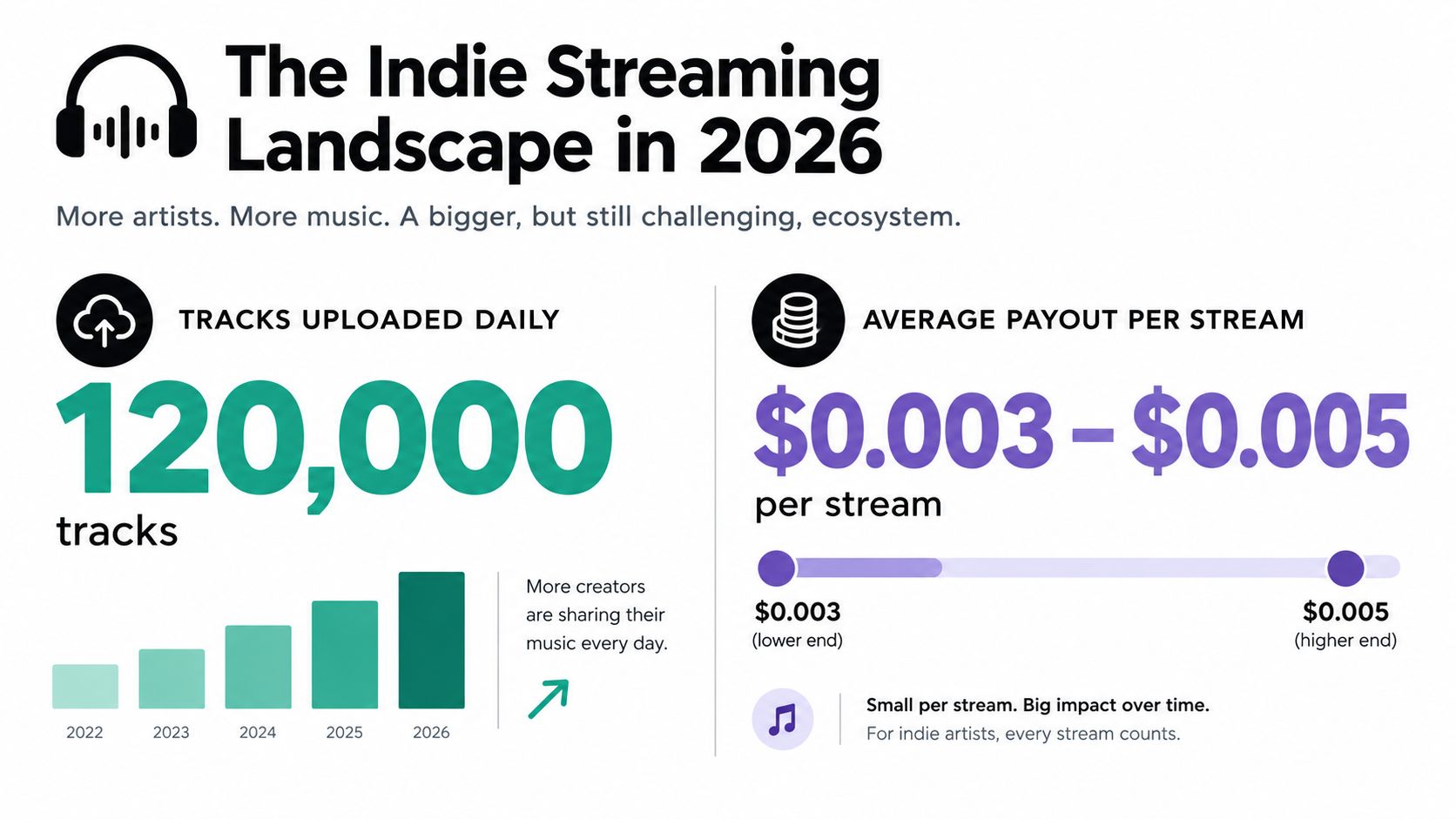
The business problem is oversupply. Independent artists can release music without a traditional label gatekeeper, yet every upload competes for limited listener attention. Distribution makes a track available. It does not create discovery, trust, direct sales, or a durable fan relationship.
Streaming is the doorway, not the business
Streaming is the main recorded-music revenue channel, but it is not a complete business model for most independent artists. One industry summary reported $18.4 billion in independent music revenue in 2022, with streaming contributing 42% of indie earnings. Another reported that streaming represented 82.4% of indie music revenue in 2023, with estimated indie streaming revenue of $7.7 billion that year. These figures demonstrate streaming's scale, not a predictable payout for an individual artist. The figures are collected in independent music industry statistics.
Choose a service according to the money and control you need:
- Catalog aggregators place music on major DSPs and suit artists prioritizing reach and established listening habits.
- Direct-to-fan marketplaces turn releases into products through downloads, merchandise, and fan payments.
- Hybrid platforms combine discovery with paid downloads, subscriptions, community tools, and analytics.
Judge an indie music streaming service by four questions: How does money reach the artist? Who controls the price? Can the artist access the fan relationship? Does the platform help listeners discover the right music? Those answers matter more than raw track count.
OohYeah's platform overview shows the direct-to-fan model, where streaming can support sales, subscriptions, and artist communication. For artists with a committed niche audience, that direct-monetization role can matter more than another undifferentiated catalog listing.
How Indie Streaming Services Actually Make Money
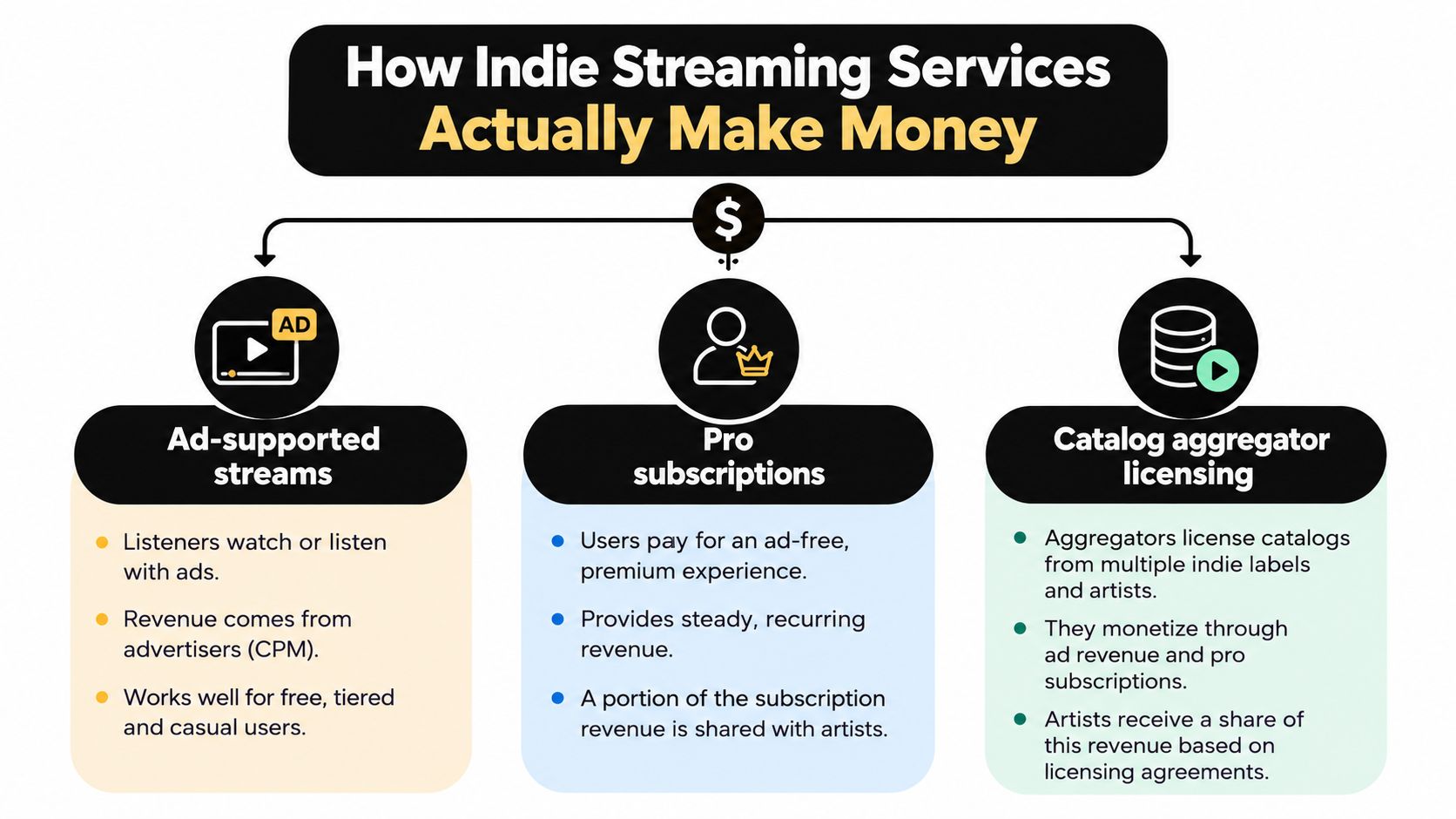
Every platform has an incentive structure. Before you upload a catalog, identify what the service needs from listeners and what it sells to advertisers, subscribers, or rights holders.
Catalog aggregators
Major streaming services generally monetize through paid subscriptions, advertising, and licensing arrangements. Artists receive a share of the resulting rights revenue through the platform and, often, a distributor. The service earns by keeping listeners inside its ecosystem for as long as possible. That model favors volume, retention, playlists, and repeat listening.
For an unsigned artist, this creates a familiar trap. The platform can provide reach without providing a direct customer relationship. You may learn how many people listened, but you usually don't control the listener's next action, pricing experience, or contact details.
Direct-to-fan marketplaces
A direct-to-fan service makes money when fans buy something. That might be a digital download, physical merchandise, a ticket, or a subscription. The platform generally takes a stated transaction share or charges for access to its tools, while the artist sets the offer and controls the product.
This model changes the artist's job. Instead of asking only how to produce more plays, you ask what a committed listener can buy, join, or receive. A release becomes a storefront entry, a limited bundle, a subscription benefit, or a reason to return.
Hybrid marketplaces
Hybrid services combine a free listening layer with paid actions. Fans can discover tracks without committing money first, then purchase downloads, subscribe to an artist, or access exclusive material when the connection becomes stronger.
Practical rule: If a platform earns mainly from keeping the listener inside its app, expect less pricing power. If it earns when your fan buys from you, the incentives are closer to your own.
The important distinction isn't whether a service has ads. It's whether the platform gives you a clear route to owned income. Ads and subscriptions can support discovery, but they don't replace a direct offer. Downloads, memberships, and merchandise let you decide what your work is worth and what a supporter receives.
Platform Comparison Across Revenue and Control
This isn't a leaderboard. Bandcamp, SoundCloud, Audiomack, distributor-tied services, and OohYeah serve different jobs. The right choice depends on whether you need listeners, transactions, or a durable relationship with existing fans.
| Platform | Pay Rate / Revenue Split | Master Ownership | Downloads & Merch | Community Features |
|---|---|---|---|---|
| Bandcamp | Artist receives income from direct sales under the platform's stated terms | Review the current artist agreement before release | Strong direct-sales and merchandise model | Fan collections, messaging, and artist pages |
| SoundCloud | Streaming and distribution terms vary by plan and territory | Artist should verify rights and distribution terms | Downloads and distribution tools vary by account | Strong listening and sharing culture |
| Audiomack | Ad-supported and subscription-related terms vary | Artist should confirm current upload terms | More limited direct-commerce emphasis | Free discovery, playlists, and listener reach |
| DistroKid-adjacent services | Usually distributor revenue collection under the selected plan | Distribution generally doesn't replace ownership, but contracts control the details | Sends releases to major DSPs, with limited native commerce | Limited direct fan relationship layer |
| OohYeah | Direct download and subscription economics are separate from per-stream royalties | Creator retains control over pricing and distribution according to the publisher overview | Commission-free downloads, merchandise, and subscriptions | Following, playlists, direct interaction, community posts, and analytics |
Where each platform wins
SoundCloud and Audiomack are sensible discovery layers for artists who need free or low-friction listening access. They can help a bedroom producer collect feedback, build a profile, and test songs before investing heavily in a release campaign. Their weakness is that discovery does not automatically create pricing power.
Bandcamp remains a strong choice for artists with listeners who already want to buy music, physical products, or bundles. It makes the commercial action obvious. Its limitation is strategic rather than functional: it shouldn't be treated as a substitute for every discovery channel.
DistroKid-adjacent distribution services solve a different problem. They deliver tracks to Spotify, Apple Music, and other DSPs, but they don't usually create a direct fan relationship layer. That leaves artists reliant on playlists, search, recommendations, and off-platform marketing to turn listeners into supporters.
OohYeah belongs in the direct-income category. Its stated model combines streaming and discovery with commission-free downloads, merchandise, subscriptions, direct communication, and analytics. That makes it relevant when the artist already has a reason for fans to support the work, not when the only goal is to maximize passive plays.
Independent service comparisons increasingly evaluate audio quality, offline access, recommendations, social sharing, pricing, and device compatibility rather than catalog size alone. Music service feature comparisons support that shift. For an indie music streaming service, the practical lesson is simple: a smaller catalog can still be useful if its discovery and transaction experience is better aligned with the artist's needs.
What Indie Artists Really Earn on Each Platform
Streaming income is easy to misunderstand because the visible metric is plays, while the actual payment depends on the platform's pool, territory, subscription type, rights ownership, distributor terms, and reporting period. A single universal per-stream rate doesn't exist, so don't build a financial plan around a headline payout figure.
The verified data gives us a more useful view at the market level. Streaming generated $22 billion and 69.6% of global recorded-music revenue in 2025, while an academic study of independent artists found that none of the interviewed artists could rely on streaming as a sole livelihood. Most used streaming primarily as promotion and directed fans toward direct sales, subscriptions, or patronage. The study and its findings are available in the academic research on independent artist streaming income.
A transparent earnings matrix
The table below deliberately avoids invented payout rates. The available verified brief doesn't provide a universal current rate for each named service, so any precise earnings figure would mislead you.
| Platform | Model | Per-Play/Per-Sale Rate | 10,000 Units Earned | Artist Share |
|---|---|---|---|---|
| Spotify and comparable major DSPs | Pooled streaming royalties | Varies by territory, listener plan, rights, and agreement | Cannot be calculated from the verified data | Depends on rights holders and distributor terms |
| SoundCloud | Streaming, fan-powered models, and distribution options | Varies by account, listener activity, and agreement | Cannot be calculated from the verified data | Check the current platform terms |
| Audiomack | Ad-supported and subscription listening | Varies by monetization eligibility and platform terms | Cannot be calculated from the verified data | Check the current platform terms |
| Bandcamp | Direct digital, physical, and merchandise sales | Depends on the sale price and current platform share | Cannot be calculated without a product price | Artist controls the offer, subject to platform terms |
| Direct-download or subscription marketplace | Fan purchase or recurring support | Depends on the artist's chosen price and subscription design | Depends on the chosen offer | Usually clearer than pooled streaming, but verify fees |
The practical comparison is between attention income and transaction income. A stream may introduce a listener, strengthen an algorithmic signal, or lead to a playlist. A download or subscription gives you a defined commercial event. That doesn't make every direct sale easy, but it makes the economics legible.
Use streaming to create repeated exposure. Use direct sales, fan clubs, tips, merchandise, and paid access to capture value from listeners who have already chosen you. That is why a commission-free download and subscription model belongs in a different category from a per-stream royalty comparison.
Distribution Control and Direct Fan Access
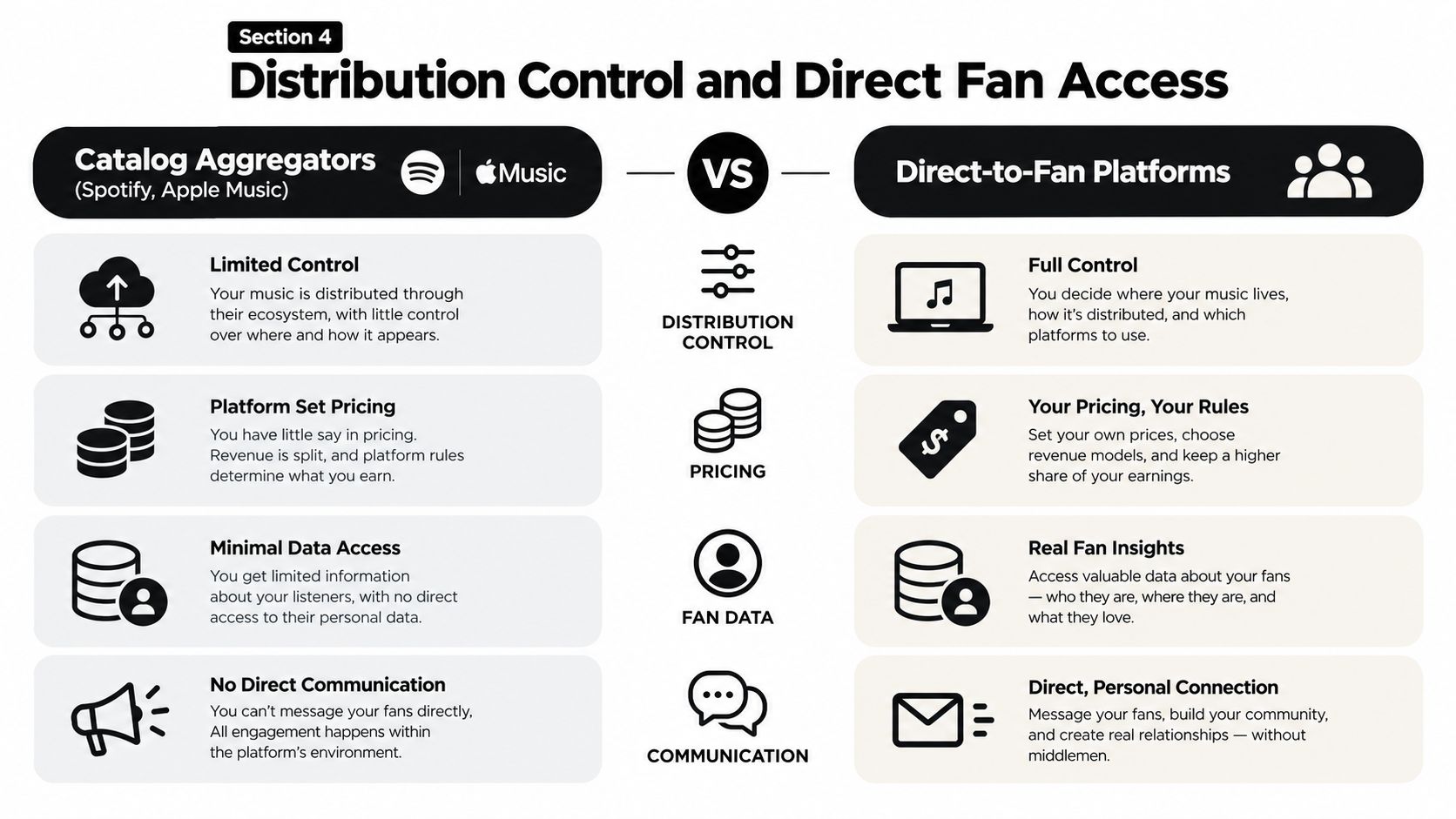
Distribution answers, “Where can people hear this?” Control answers harder questions: Who sets the price? Who owns the customer relationship? Who can communicate with the fan? Who can export the data?
Catalog aggregators such as Spotify and Apple Music are built for scale and convenience. They license or host music for listeners, recommend it through their own systems, and report performance through artist dashboards. They are essential reach channels for many artists, but they aren't designed to function as personal storefronts.
SoundCloud and Audiomack give artists more direct upload and profile access than a pure distributor, yet their commercial controls still depend on platform rules. You can publish, share, and build a listening audience, but the path from a play to a purchase is less central than it is on a marketplace.
The control-first checklist
Assess every service against these four areas:
- Distribution control: Can you upload, edit, replace, or remove releases without creating avoidable complications?
- Pricing control: Can you set a download price, create bundles, or offer paid access on your terms?
- Fan access: Can you communicate directly, understand supporter behavior, and build a repeat relationship?
- Commercial flexibility: Can the platform support downloads, merchandise, subscriptions, or events rather than only streams?
Bandcamp is strong when the artist wants a recognizable store and direct purchases. A direct-to-fan service such as OohYeah is designed around the same ownership principle, with creator-set download pricing, subscriptions, fan interaction, and analytics described in its publisher overview. The benefit is not a promise of automatic sales. The benefit is that the artist can create the offer instead of waiting for a stream count to become meaningful.
Don't abandon major DSPs just because their economics frustrate you. Keep them as discovery and legitimacy channels, but send high-intent fans somewhere you can present a clear purchase or subscription. That two-layer approach protects reach without making reach your only source of income.
Choosing the Right Platform by Artist Stage
Your platform choice should follow your current bottleneck. A new producer needs listeners and feedback. A touring band needs a reliable way to turn attention into merchandise and ticket revenue. An established creator needs a repeatable system for serving people who already care.
The bedroom producer
Start with a discovery-first service such as SoundCloud or Audiomack if your immediate goal is feedback, uploads, reposts, playlists, and first fans. Keep the profile simple, publish consistently, and use the response to identify which tracks deserve a more deliberate release.
Don't open a subscription before you have a reason for someone to join. Offer it when you can provide demos, production notes, sample packs, alternate mixes, or regular private communication.
The mid-career touring act
Keep a major DSP presence for listeners who discover you through playlists, search, and concert research. Pair it with Bandcamp or a direct-to-fan marketplace for digital bundles, signed items, tour editions, and post-show offers.
A touring act shouldn't make fans choose between a stream and an expensive physical product. Give them a low-friction digital purchase, then use merchandise and tickets for deeper support.
The established independent creator
Make the direct platform the commercial home when your audience already asks for unreleased tracks, private material, collectibles, or regular access. Keep one discovery service active, but stop treating every channel as equally important.
Your stack should mirror the fan journey: discovery first, trust second, purchase or subscription third.
No single service handles discovery, commerce, communication, and analytics equally well. Artists, managers, and labels comparing options can also use this guide to creator marketplaces for labels to evaluate how platform relationships fit wider creator operations.
For artist-focused platform information, review OohYeah for artists alongside the other services you already use. The choice isn't about replacing every channel. It's about assigning each channel one clear job.
Where OohYeah Fits in Your Stack
OohYeah fits artists who have something more valuable than a passive listener count: a fan willing to buy, subscribe, follow closely, or return for exclusive material. That includes bedroom producers selling direct, touring acts replacing merch-table bundles with digital offers, and creators serving a focused community through recurring support.
Its relevant levers are straightforward:
- Commission-free downloads give artists a direct sales option rather than another pooled-play royalty stream.
- Recurring subscriptions create a structure for ongoing access, exclusive releases, or community benefits.
- Built-in analytics help creators understand how supporters interact with their catalog and offers.
Bandcamp is a natural comparison because it also centers direct purchases and artist pages. SoundCloud Pro is more useful when the priority is expanded listening, distribution, and fan-insight tools. Audiomack is more useful when free discovery and ad-supported reach matter most. Those services aren't interchangeable, and choosing one doesn't invalidate the others.
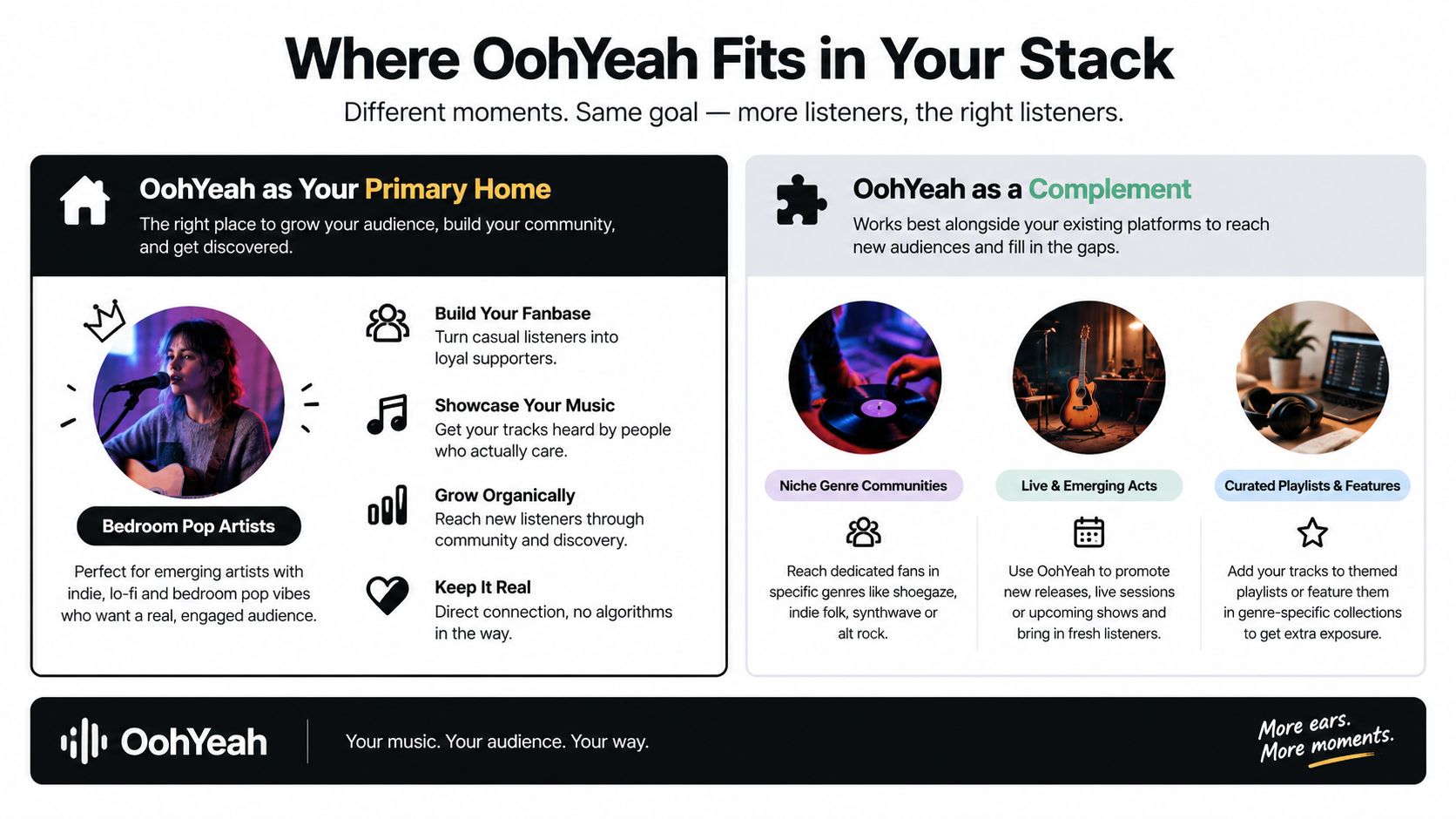
The trade-off is reach. A smaller direct platform won't replace Spotify or Apple Music as a broad discovery destination, and it shouldn't be judged by that standard. Its role is to become the income and ownership layer in a two-platform stack, while a larger DSP or discovery service handles exposure.
Use it as the primary home when your fans already show purchase intent or you can consistently provide subscription value. Use it as a complement when discovery remains your main challenge. The clearest rule is this: if streaming alone isn't producing dependable income and your audience will pay for downloads or access, establish the direct channel before chasing more passive plays.
Next Steps and Common Questions
Start with an audit, not a migration. Export your current catalog information, review your actual streaming income, identify the releases that attract the strongest engagement, and choose one direct-to-fan home before adding more tools.
A practical migration checklist
- Audit income: Separate streaming royalties, downloads, merchandise, subscriptions, and live revenue.
- Preserve assets: Keep original audio files, artwork, metadata, songwriter information, and release identifiers in an organized archive.
- Choose the commercial home: Pick the platform that gives your current audience the clearest purchase or subscription action.
- Keep discovery active: Maintain a presence on at least one major aggregator or discovery service so new listeners can still find you.
- Create one offer: Start with a specific download, bundle, or subscription benefit instead of uploading everything without a conversion path.
Common questions
Can I move an existing Bandcamp catalog?
Yes, you can recreate the catalog on another platform, but migration isn't just an upload task. Export your master files, artwork, descriptions, prices, subscriber information where permitted, and product details first. Keep Bandcamp active until the replacement storefront works and your existing fans know where to go.
Will stacking OohYeah with Spotify cannibalize streams?
It shouldn't if each service has a distinct role. Use Spotify for broad listening and discovery, then direct high-intent fans to downloads, subscriptions, exclusive material, or community interaction. Cannibalization happens when you publish the same offer everywhere without explaining why a fan should choose one destination.
What analytics does OohYeah expose compared with Spotify for Artists?
Spotify for Artists is built around listening performance inside Spotify. A direct platform can provide a closer view of supporter behavior around downloads, subscriptions, and community activity. Compare the actual dashboards before committing, and decide which questions matter to your business, not just which service displays more charts.
How should subscription pricing compare with Patreon or Bandcamp's subscription options?
Don't copy another platform's price automatically. Set the subscription around the time, access, and exclusives you can deliver consistently, then compare the fees, payment terms, audience expectations, and content tools of each service. A lower price with no reliable benefit will perform worse than a clearly defined offer at a price your committed fans understand.
Review the OohYeah FAQ before moving paying supporters, and begin with one release and one paid offer. That small test will tell you more about your audience's willingness to support you than another month spent watching a stream counter.
OohYeah gives independent artists a direct layer for streaming, commission-free downloads, subscriptions, merchandise, fan interaction, and analytics. Use it to turn your most engaged listeners into supporters while keeping a broader discovery service in your stack. Visit OohYeah and set up one clear offer around your next release.