What Is Direct to Consumer Marketing? A Complete Guide
Discover what is direct to consumer marketing and learn the proven strategies D2C brands use to build customer relationships and grow online.
September 26, 2025
Music Marketplace Advisor
Buying & SellingDirect to Consumer (D2C) marketing is a pretty simple concept at its core. It’s when a brand makes, markets, sells, and ships its products directly to the end customer. This model bypasses all the traditional middlemen—think wholesalers, distributors, and brick-and-mortar retailers—creating a straight shot from the brand's warehouse to the consumer's front door.
Understanding the Direct to Consumer Shift
Think of it like buying produce from a local farmer's market versus a big supermarket. At the market, you get a direct connection to the person who grew the food, the product is often fresher, and the price is usually better. That’s the exact spirit of D2C in the digital age.
It's a huge departure from the old-school retail playbook where brands sold their inventory in bulk to other businesses, who then sold it to the public. Today, e-commerce and social media give companies the tools to manage the entire customer relationship themselves. Platforms like Shopify are a great example of what makes this possible; for more on that, check out this guide on What is Shopify and How Does It Work.
When a brand takes this direct approach, they gain complete control over some of the most critical parts of their business:
- Brand Messaging: The story is told exactly as intended, with no risk of being diluted or changed by a retailer.
- Customer Experience: Every single touchpoint, from the first ad a customer sees to the moment they unbox their order, is crafted by the brand.
- Pricing Strategy: With no wholesale markups to worry about, brands can offer more competitive pricing or simply enjoy healthier profit margins.
- Customer Data: This might be the biggest win. They get unfiltered, first-party data directly from their audience, offering priceless insights into who is buying and why.
This isn't just a niche trend; it's a massive shift in how business is done. The global D2C e-commerce market was already valued at $142.1 billion in 2022. It’s projected to explode to roughly $591.3 billion by 2032, which tells you everything you need to know about where consumer habits are heading.
To really grasp the differences, it helps to see the two models side-by-side.
D2C Marketing vs Traditional Retail at a Glance
This table breaks down the core distinctions between selling directly and going through the conventional retail supply chain.
| Aspect | Direct to Consumer (D2C) | Traditional Retail |
|---|---|---|
| Sales Channel | Brand's own website, social media, or physical stores. | Third-party retailers (e.g., Target, Walmart, Amazon). |
| Customer Relationship | Direct, personal, and ongoing communication. | Indirect, often managed by the retailer. |
| Customer Data | Full access to first-party data (emails, purchase history). | Limited or no access to customer data. |
| Profit Margins | Higher, as there are no intermediary markups. | Lower, due to wholesale pricing and retailer fees. |
| Brand Control | Complete control over branding, messaging, and experience. | Limited control; brand is subject to retailer's rules. |
| Inventory Management | Centralized control over stock and forecasting. | Complex, involves managing stock across multiple retailers. |
Ultimately, the choice between D2C and traditional retail depends on a brand's goals, but the direct model offers a level of control and insight that is hard to ignore.
D2C vs Traditional Retail Visualized
Looking at a visual comparison often makes the advantages even clearer. This infographic highlights the key differences in profitability, data ownership, and overall complexity.
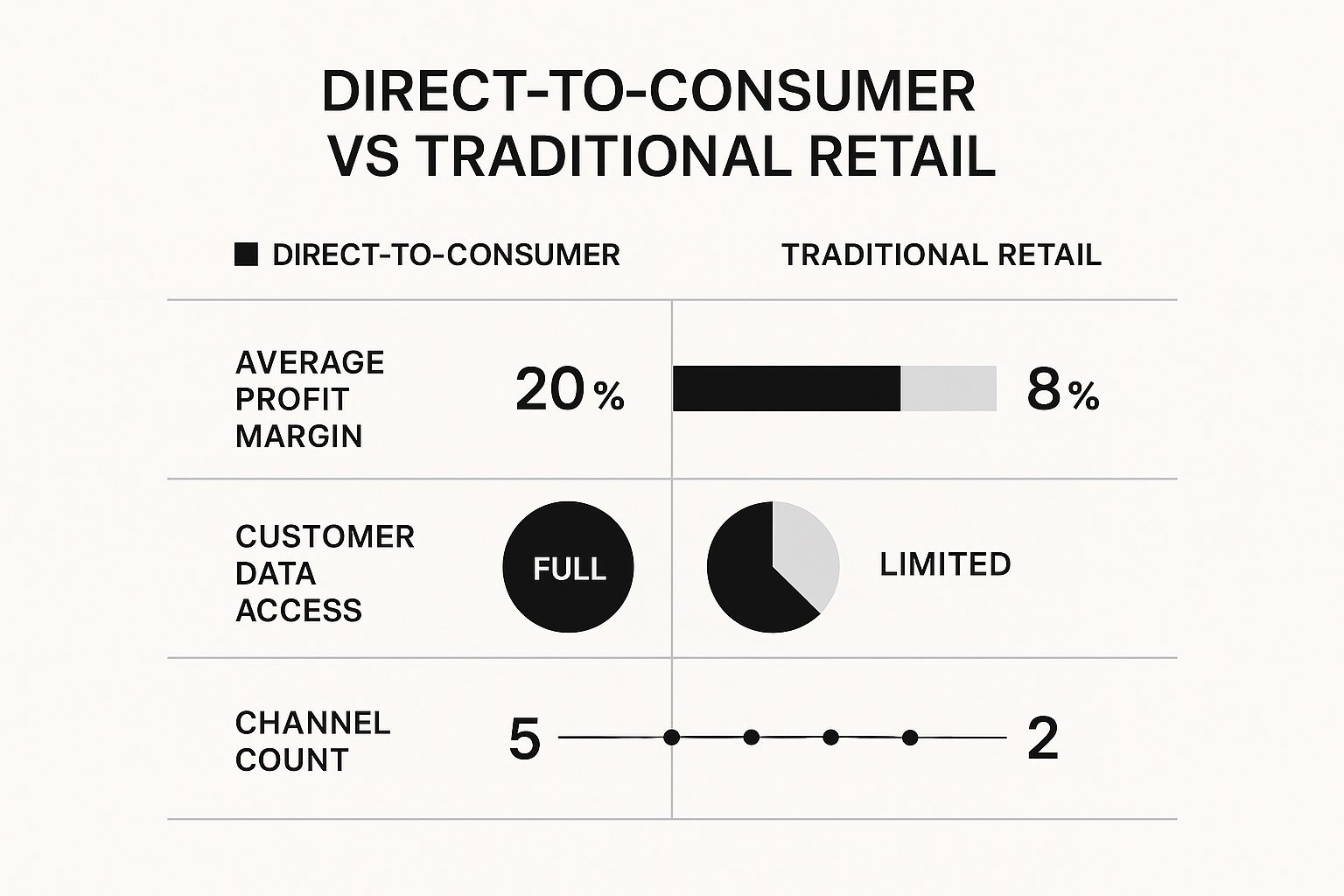
As you can see, the numbers don’t lie. The D2C model not only offers much stronger profit potential but also provides complete access to customer data—a massive competitive advantage in today's market.
Why Top Brands Are Embracing the D2C Model

It’s no accident that so many brands are shifting to a direct-to-consumer model. This isn’t just a passing trend—it's a smart, strategic move rooted in some very compelling advantages. When a company takes charge of its entire journey, from production to the customer's doorstep, it unlocks a new level of command.
There are three main benefits here, and they all work together. Each one feeds into the next, creating a powerful cycle that helps D2C brands not just survive, but thrive.
Total Brand Control
Think about the traditional retail setup. Your product is just one of many on a crowded shelf, and its story gets filtered through the store selling it. With a direct-to-consumer approach, you are the storyteller. You have complete control over your narrative, from the look and feel of your website to the way your product is packaged.
This lets you build a consistent and authentic world around your brand. Every touchpoint, every email, and every social media post is a chance to reinforce what you stand for, ensuring your message is never watered down by a third party.
By cutting out the middlemen, D2C brands can communicate their value directly to consumers. This gives them far greater command over their supply chain, customer data, and brand identity.
Direct Customer Relationships
This might be the biggest win of all: having a direct line to your audience. When you sell straight to customers, you gather incredibly valuable first-party data. We're talking about email addresses, what they buy, and how they interact with your site. This is pure gold.
You can use these insights to tailor marketing, suggest products they'll actually love, and even create new offerings based on real feedback. Imagine a skincare brand getting DMs asking for a specific serum and then launching it a few months later. That's how you build a loyal community, not just a customer list. For musicians, this connection is everything, which is why there are so many benefits of selling music directly to fans.
Higher Profit Margins
Let's talk money. When you get rid of intermediaries like distributors and retailers, you get to keep more of it. Every middleman in the traditional supply chain takes a slice of the pie, which eats into your profits.
Going D2C means you capture a much larger piece of the revenue from every sale. These higher profit margins do more than just boost your bank account; they fuel real growth. That extra cash can be reinvested right back into the business.
- Product Development: Finance the R&D for your next great idea.
- Marketing: Run bigger, better campaigns to find new fans.
- Customer Experience: Invest in a smoother website or top-notch support.
This financial independence gives D2C brands the agility to invest where it counts, building a strong, sustainable business on their own terms.
Actionable D2C Marketing Strategies That Work

Knowing why you should sell directly to your audience is the easy part. The real challenge—and where most brands either sink or swim—is figuring out how to do it effectively. A winning D2C playbook is all about blending a rock-solid digital presence with genuine community building.
Let's start with the absolute must-have: a fast, intuitive, and mobile-friendly e-commerce website. Think of this as your digital flagship store. It's the central hub where your story lives and sales happen. If the user experience is clunky, you’ll lose people before they ever get to checkout, no matter how great your product is.
Mastering Your Digital Channels
Once your online store is set up for success, it's time to go where your customers are. That means getting good at social commerce on platforms like Instagram and TikTok, turning casual scrolling into a shopping experience.
Brands are leaning heavily into these digital tactics to get results. A recent look at D2C trends showed brands are focusing on social commerce (53%), social media influencers (47%), and even streaming TV ads (35%). Influencer marketing, in particular, isn't slowing down; 70% of brands expect it to be a major factor in the coming years.
Of course, targeted digital ads can help you zero in on your ideal customer with incredible precision. But ads alone don't build relationships. You have to build trust.
An effective D2C strategy is an omnichannel experience. It’s about creating a cohesive brand world where digital efforts, like social media, and physical touchpoints, like pop-up shops, work together to build a powerful and memorable customer journey.
This is where authentic influencer partnerships shine. When a creator genuinely loves what you do, their endorsement feels less like an ad and more like a trusted recommendation from a friend. A well-thought-out content plan is another great way to build that direct connection. You can find some great examples of content marketing strategies for small businesses to get started.
Creating an Omnichannel Experience
Ultimately, you want to create a seamless experience everywhere your brand shows up. Your online shop, social media accounts, email newsletters, and any in-person events need to tell the same story and feel connected. For artists, this unified front is everything, which is why https://oohyeah.app/posts/why-engaging-with-fans-directly-is-crucial-for-music-artists.
When you bring all these strategies together, you’re not just acquiring customers—you're building a loyal community. That’s the real magic of D2C marketing: forging a direct, meaningful, and lasting connection with the people who believe in your work.
Of course, going direct isn't all smooth sailing. While the upsides are huge, the path is loaded with its own set of challenges. When you decide to sell directly, you're signing up for more than just creating a great product; you're taking ownership of the entire customer experience, and that brings a whole new level of complexity to the table.
The first wall most brands hit is logistics and fulfillment. Suddenly, you're the one responsible for everything that happens after the "buy" button is clicked. Warehousing, packing, shipping, and even handling returns—it all lands squarely on your shoulders. It's a massive operational leap from just shipping a big pallet of products to a retailer.
The High Cost of Getting Noticed
Then there’s the reality of customer acquisition costs. Without a big-box retailer's foot traffic or an online marketplace's built-in audience, you're on the hook for finding every single customer. This means you have to pour real money into marketing and advertising just to cut through the noise and get your brand on people's radar.
Building that initial traction is tough work, but keeping those customers around can be even tougher. With so many options out there and a shaky economy, creating genuine connections is a real struggle. In fact, a staggering 72% of consumer products marketers say that engaging with customers is getting more difficult. You can dive deeper into the numbers in this research on D2C marketing from Emarsys.
The freedom of the D2C model comes with the full weight of responsibility. You have to become a master of logistics, marketing, and customer service all at once to build a business that lasts.
So, how do you tackle these hurdles? It’s not about doing everything yourself, but about being smart with your strategy and partnerships. Here are a few proven ways to navigate these challenges:
- Lean on 3PL Partners: Don't try to become a shipping expert overnight. Partnering with a third-party logistics (3PL) company lets you offload the headaches of warehousing, shipping, and returns so you can focus on your product and brand.
- Double Down on Retention: Finding new customers is expensive, so treat the ones you have like gold. Smart loyalty programs and personalized communication can make a huge difference in keeping them coming back.
- Build a Real Community: Create a brand that people feel a part of. A passionate community doesn't just buy from you repeatedly; they become your best marketers through authentic word-of-mouth.
How Artists Can Thrive with a D2C Approach
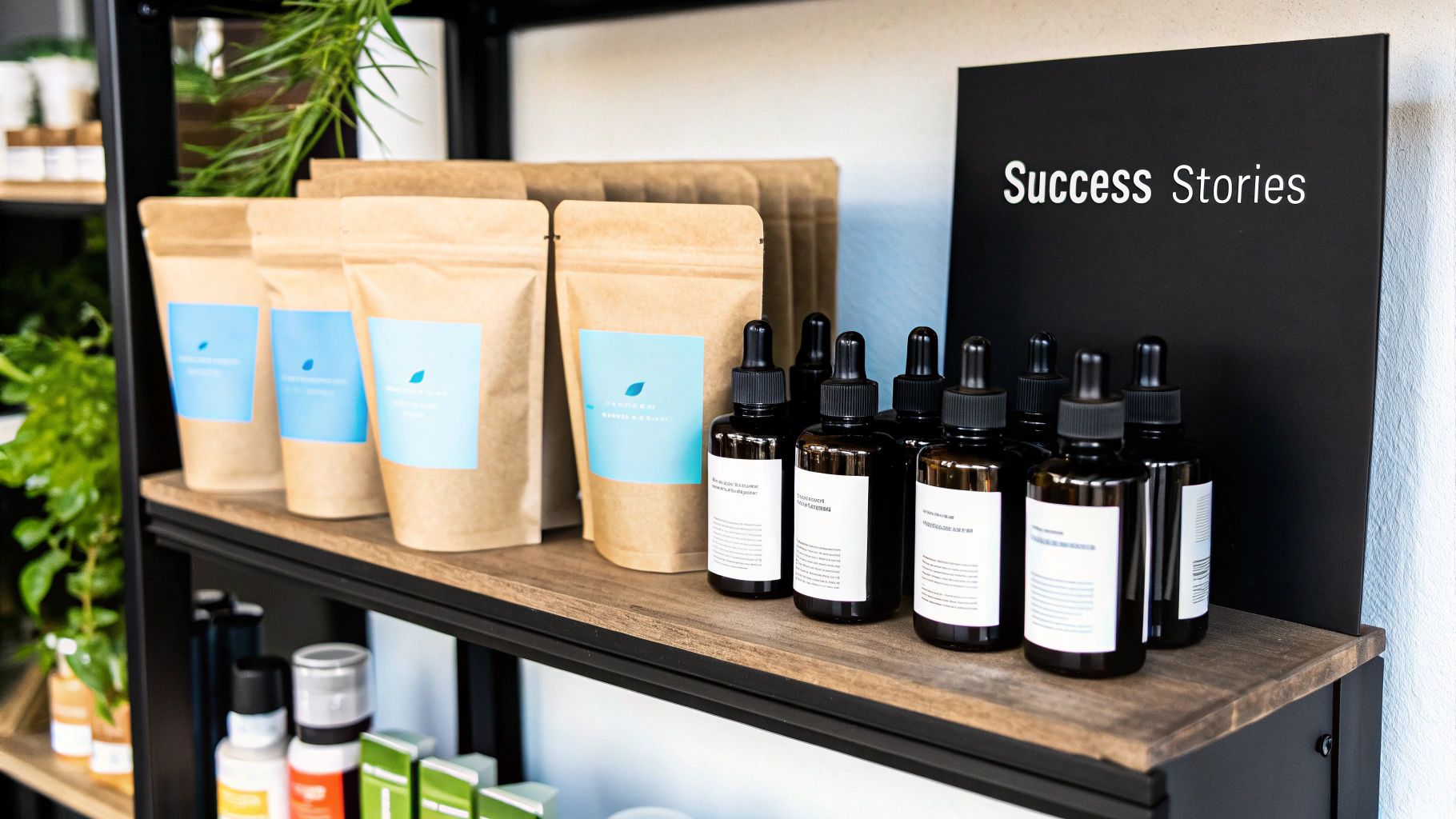
For independent artists, the direct-to-consumer model is more than just a marketing tactic—it’s a declaration of independence. It's a clear path away from the traditional industry gatekeepers who used to hold all the cards for distribution and revenue.
When you go D2C, you're not just making art; you're building a sustainable business where you're in charge. Forget waiting for a label or distributor. You can sell your own merchandise, offer exclusive digital downloads, and create unique experiences directly for the people who appreciate your work the most.
Taking Full Creative and Financial Control
Creator-focused platforms like OohYeah essentially hand you the keys to becoming a D2C entrepreneur. They manage the heavy lifting—building a storefront, processing payments, and nurturing a community—so you can stay focused on what you do best: creating.
The real power of the D2C model for artists is empowerment. It provides the tools to build a career on your own terms, maintain full creative control, and keep the revenue you rightfully earn.
This direct line to your audience does more than just fill your bank account. It creates an invaluable feedback loop, giving you raw, unfiltered opinions straight from your listeners. You can float new song ideas, ask for input on t-shirt designs, and truly grasp what connects with your audience.
Building a Community, Not Just a Customer List
At the end of the day, that direct pipeline is how you build a tribe. You're not just pushing products; you’re building a genuine community around your music and your brand. If you want to dive deeper into this, check out our guide on how to build a loyal fan base as an independent artist.
When someone buys directly from you, they feel a real connection to your journey. That personal investment is the bedrock of a long and rewarding career—one that you’ve built entirely on your own terms.
Diving into D2C Marketing: Your Questions Answered
So, you're looking at the direct-to-consumer model and probably have a few questions buzzing around. It's a big shift, and it’s smart to get the fundamentals down before diving in. Let's tackle some of the most common questions head-on to clear things up.
Think of this as a quick FAQ session to solidify what we've covered. We'll look at who's doing it well and whether this whole thing is just for the new kids on the block.
What Are Some D2C Brands I'd Recognize?
You've probably seen more D2C success stories than you realize. Many of the brands that feel like they came out of nowhere are masters of this model. Take Warby Parker—they completely flipped the script on the eyewear industry. Instead of going through traditional retailers, they sold stylish, affordable glasses directly to people online, sidestepping the massive markups everyone used to just accept.
Then there's Casper, the company that pioneered the whole "bed-in-a-box" idea. They took a clunky, awkward buying process and made it simple and direct. In the clothing world, brands like Allbirds and Everlane built huge, loyal followings by talking directly to customers about things that mattered, like sustainability and transparent pricing. These brands didn't just sell a product; they identified a problem with the old way of doing things and built a compelling story around the solution.
Is D2C Just for New Online Startups?
Not at all. This is one of the biggest misconceptions. While D2C gave rise to a new generation of digital-first brands, some of the oldest, most established companies are now jumping in with both feet. Just look at giants like Nike and PepsiCo, who are pouring millions into their own e-commerce channels.
They aren't abandoning their retail partners, but they're building a direct line to their customers. Why? Because it gives them priceless first-party data, a way to test new ideas quickly, and a channel to control their brand message completely. They’re running a hybrid model that gives them the best of both worlds: the huge scale of retail and the deep customer relationships of D2C.
"Starting a D2C business involves more than just a product; it requires building an entire ecosystem around your customer, from the first click on your website to the final unboxing experience."
How Do I Actually Get Started with D2C?
Jumping into D2C is a process, but it boils down to a few core steps. It’s all about careful planning and putting the customer at the absolute center of every decision you make.
- Find Your Niche: First things first, get specific. What exactly are you selling, and who is it for? You need to solve a real problem for a clearly defined group of people.
- Build Your Home Base: Next, you need a place to live online. This means creating a strong brand identity and setting up a smooth, easy-to-use e-commerce store on a platform like Shopify or BigCommerce.
- Create Your Marketing Playbook: You have to get the word out. Your plan should focus on where your audience spends their time—think social media, engaging content, and smart digital ads.
- Nail the Logistics: This is the behind-the-scenes work that makes or breaks the experience. You have to figure out everything from sourcing your products and managing inventory to shipping orders and handling customer questions.
The trick is to start small. Obsess over making every single customer feel valued, and pour your energy into building a genuine community that believes in what you're doing.
Ready to take control of your career and connect directly with your fans? With OohYeah, artists get the tools they need to sell music, merchandise, and exclusive content commission-free. Build your D2C business today at https://oohyeah.app.