What Is Content Strategy: A Complete Guide for Musicians
What Is Content Strategy. Discover what content strategy is and why it matters for musicians. Learn core components, musician-specific examples, and a free

September 27, 2026
Music Marketplace Advisor
Buying & SellingContent strategy for musicians is the systematic approach to planning, creating, and distributing valuable content that builds audience relationships and drives revenue across every platform where fans discover and engage with music. It treats content as a managed business capability, not a stream of disconnected posts.
You release a single on Friday, upload a short video before lunch, share the cover art twice, and promise yourself you'll plan the rest later. By Monday, you're answering comments between rehearsals, trying to remember which platform received the acoustic version, and wondering why one post performed well while everything else disappeared. Meanwhile, another artist seems to turn every rehearsal, lyric, and live appearance into a steady flow of attention without looking exhausted.
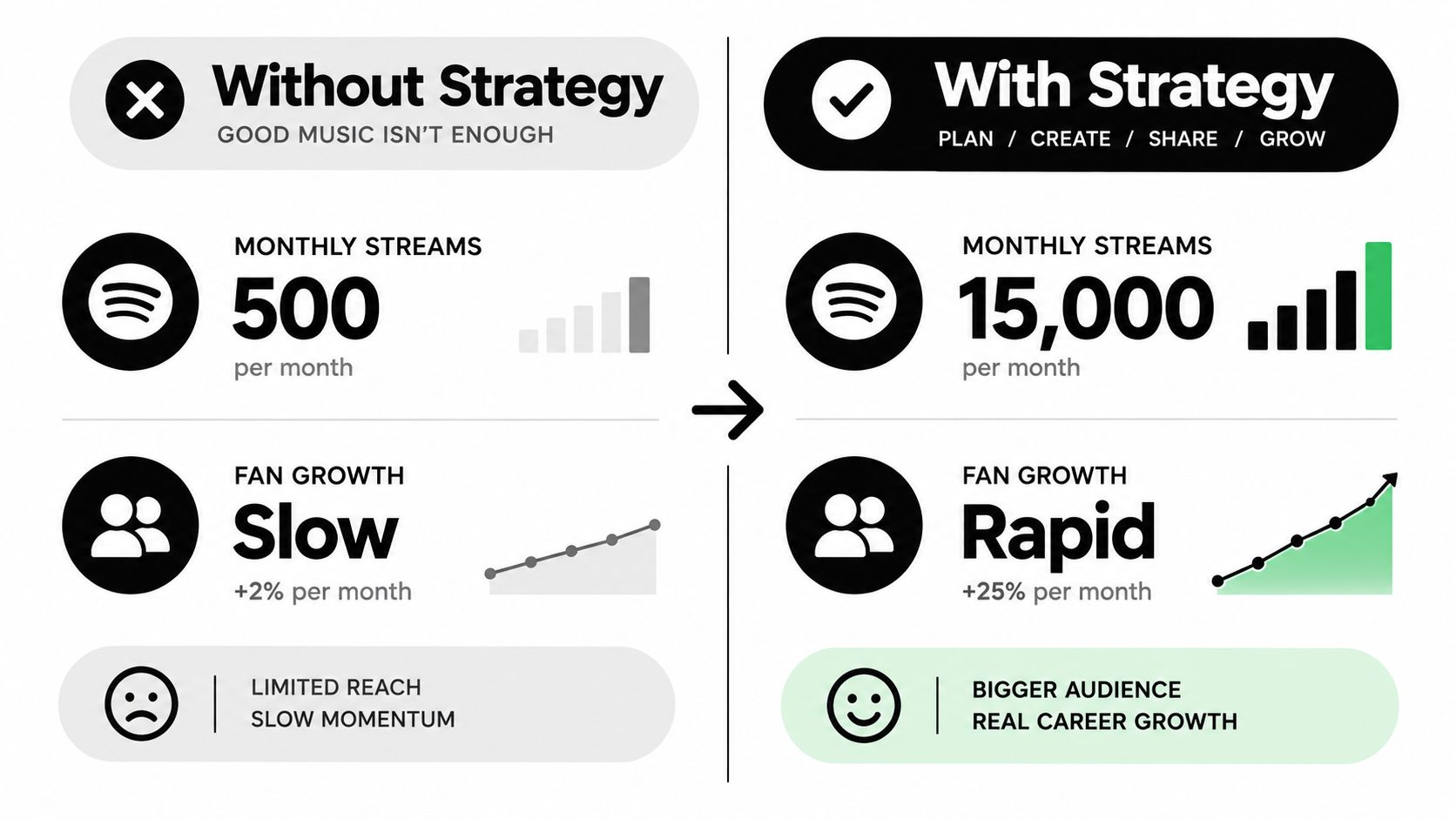
The difference usually isn't talent or effort. It's the presence of a system.
Why Musicians Need Content Strategy
An independent musician can spend hours creating content and still fail to give fans a clear next step. A listener discovers a song through a short video, visits a profile with no context, misses the release announcement, and never learns that the artist also sells merchandise, plays shows, or offers a direct way to stay connected. Random posting creates activity, but it rarely creates a reliable path from casual listener to paying supporter.
Content strategy solves that problem by connecting audience needs with business goals. The Nielsen Norman Group's explanation of content strategy describes Kristina Halvorson's foundational definition as the ongoing practice of planning for the creation, delivery, and governance of useful, usable, and effective content. Halvorson formalized the discipline in her 2009 book Content Strategy for the Web, a milestone that helped move content from a collection of marketing assets into a managed capability with ownership and governance.

Posting isn't the same as building demand
Content marketing is often a campaign, such as promoting a new single or announcing a tour. Content strategy is the operating system behind those campaigns. It determines what should exist, why it matters, who owns it, where it appears, and how the artist maintains it after publication.
For a musician, that system might connect:
- Discovery: A performance clip introduces a new listener to the artist.
- Trust: Studio notes, songwriting context, and live footage reveal the person behind the track.
- Participation: A community post invites fans to vote on artwork or request a song.
- Conversion: A direct offer leads supporters to a ticket, physical release, membership, or exclusive download.
- Retention: An owned fan channel keeps the relationship active between releases.
The OohYeah fan experience fits into this wider thinking because a sustainable music career depends on more than attracting attention. It depends on giving fans a useful place to continue the relationship.
Practical rule: Every important piece of content should have a job, even if that job is simply helping a fan understand the artist more deeply.
A posting schedule tells you when to publish. A strategy tells you what the post is meant to accomplish and how it connects to everything else. That distinction matters during release cycles, when a musician has limited time and can't afford to create five unrelated ideas for five platforms.
Core Components of Music Content Strategy
A complete music content strategy combines audience understanding, channel decisions, content design, workflow, and measurement. The Canva guide to content strategy defines it broadly as a framework for planning, creating, distributing, managing, and governing valuable, relevant, and consistent content. The Interaction Design Foundation's lifecycle perspective adds an important operational point: strategy extends from conception through publishing, distribution, and maintenance.
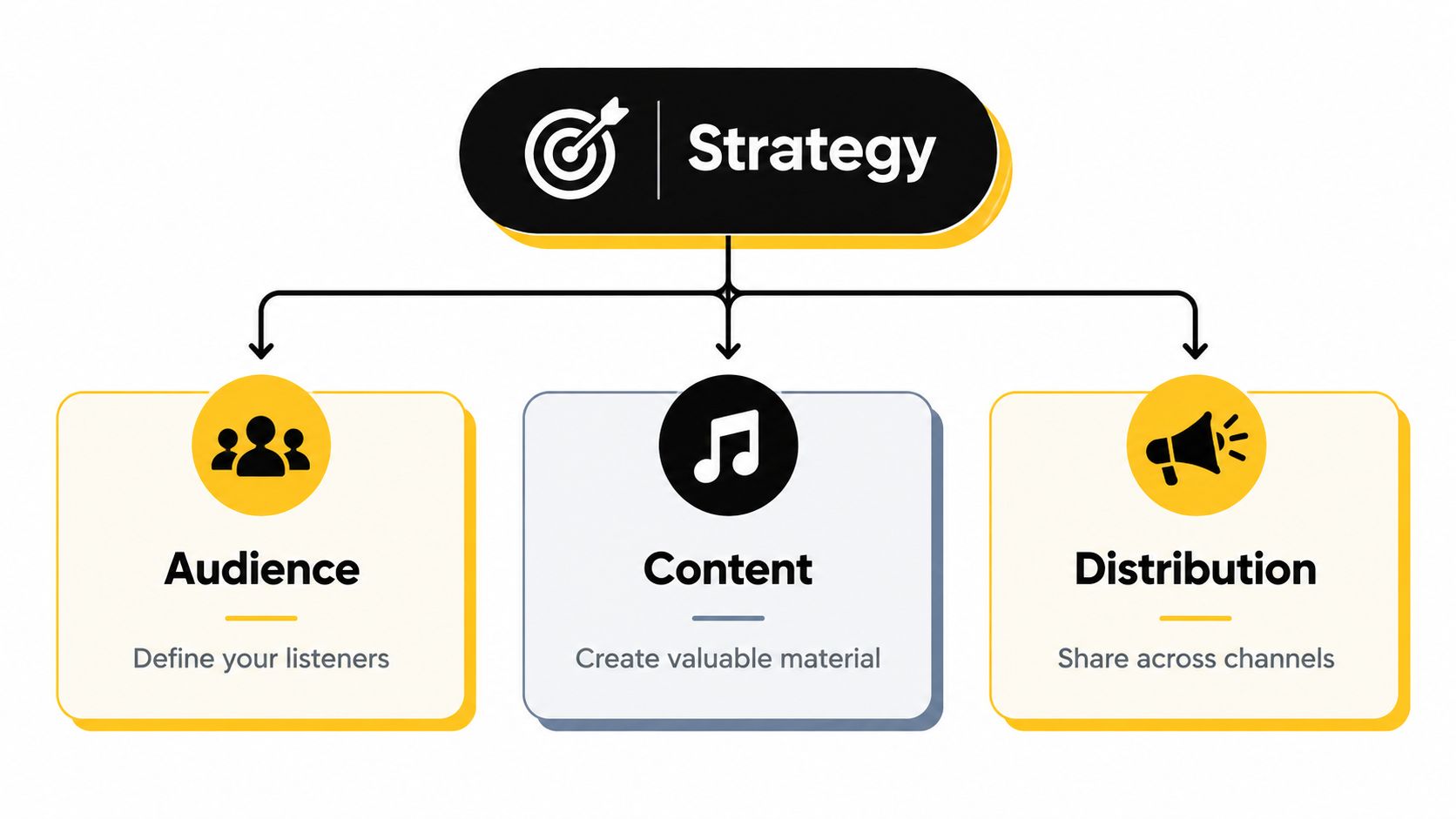
Audience
Start with a specific listener, not “everyone who likes music.” Describe the person you want to serve, the moment in which they discover your work, and the reason they might care enough to return. A jazz artist might focus on listeners who value intimate live recordings and musician commentary. A dance producer might prioritize club-goers who want production breakdowns, unreleased edits, and event updates.
Ask:
- What does this listener already watch, read, or share?
- What emotional need does the music meet?
- What would make them follow, subscribe, attend, or buy?
- Which fan questions keep appearing in comments and messages?
Channels
Choose channels by role, not popularity. Short-form video may support discovery, YouTube may hold deeper performances or tutorials, email may support direct retention, and a storefront or artist hub may handle transactions. You don't need to maintain every channel at the same intensity.
A useful rule is to select one primary discovery channel, one deeper storytelling channel, and one direct relationship channel. Repackage ideas for each environment rather than copying the same post everywhere.
Content
Your library should include more than release announcements. Build recurring formats around the artist's actual work:
- Process content: Demos, rehearsals, production choices, songwriting notes.
- Story content: The experience, place, or conflict behind a song.
- Participation content: Questions, polls, requests, and fan responses.
- Proof content: Live reactions, testimonials, press mentions, and audience moments.
- Exclusive content: Early access, alternate versions, private updates, or limited merchandise.
For a practical guide to building a video content strategy, focus on repeatable formats rather than chasing a new concept for every upload.
Calendar and workflow
Map content around the artist's real calendar, including recording sessions, rehearsals, release dates, shows, travel, and recovery time. Assign each item a format, channel, owner, deadline, approval step, and destination. A calendar should reduce decisions, not create another source of pressure.
Distribution and measurement
Distribution includes publication, repurposing, community interaction, direct outreach, and paid support where appropriate. Measurement then connects the content to meaningful actions, such as profile visits, saves, email signups, ticket clicks, merchandise orders, or direct fan replies.
Use the same core idea across channels, but give each version a reason to exist. A studio clip can attract attention, a longer breakdown can deepen interest, and a direct message can invite the most engaged listeners into an owned relationship.
Measuring Content Strategy Impact
Musicians often judge content by views because views are visible and emotionally immediate. A better system follows the listener's movement through the relationship. Did the person discover the track, save it, return to the artist, join a direct channel, attend a show, or purchase something?
The business case becomes clearer when you separate attention metrics from relationship and revenue metrics. A clip can attract a large audience while creating little lasting value. A smaller post may produce meaningful replies, direct signups, or ticket interest because it reached people with stronger intent.
A practical measurement ladder
| Level | What to examine | What it tells you |
|---|---|---|
| Attention | Reach, views, impressions | Whether the idea earns initial exposure |
| Interest | Watch time, saves, comments, profile visits | Whether people want more |
| Relationship | Follows, email signups, direct replies, community participation | Whether attention is becoming connection |
| Conversion | Ticket clicks, merchandise orders, subscriptions, downloads | Whether the relationship supports a business goal |
| Retention | Repeat engagement, returning buyers, ongoing participation | Whether the artist is building durable support |
The important comparison isn't always one post against another. Compare content by purpose. A discovery video should be judged differently from a fan update or a product announcement.
Authenticity and commercial intent
Strategic content doesn't require musicians to turn every personal moment into an advertisement. It gives commercial moments a more natural place in the audience journey. An artist can share the story behind a track, invite fans to hear the release, then offer a limited physical edition to people who want a deeper connection.
The mistake is hiding the business goal until the final post. Fans respond better when the relationship has already earned attention and trust. Content becomes a revenue asset when it helps the right listener take a relevant next step.
Musician Case Studies in Content Strategy
The supplied brief doesn't include verified performance records for named musicians, so the examples below are practical scenarios rather than factual case studies. They show how a strategy can be designed without claiming invented results.

The folk songwriter with a release problem
A folk artist has strong songs, a small but engaged audience, and limited time during recording and touring. Previously, she posted finished artwork and a streaming link, then moved on to the next task. The content created no continuing narrative.
Her revised system begins before release. She records short songwriting notes during the writing process, captures rehearsal fragments, shares a live version, and asks listeners which lyric resonates most. The campaign then leads to the finished song, a direct fan update, and a physical or live experience for people who want to support the work even more.
The lesson isn't to publish constantly. It's to capture material already being created and give each piece a clear role.
The electronic producer with scattered attention
A producer has technical expertise and an active audience across several platforms, but followers don't know where to find the complete work. One platform contains short production tips, another holds event updates, and unreleased material lives in private conversations.
The producer creates a simple content architecture. Public clips demonstrate one technique, longer videos explain the creative decision, and a direct channel offers early edits, project files, or listening sessions where appropriate. Each channel points toward a central destination, while the artist keeps the most valuable material reserved for committed supporters.
For artists building that destination, OohYeah Magazine offers a relevant example of how music guidance and artist-facing content can support a broader ecosystem.
The strategy should make the artist easier to understand, easier to follow, and easier to support.
Adaptable Content Strategy Template for Musicians
Use this template as a working document, not a permanent brand manifesto. Complete it quickly, test it in public, and revise it when audience behavior or your release schedule changes.
Step 1 Define the audience promise
Complete this sentence:
“I make [type of music] for [specific listener] who wants [emotional or practical outcome]. My content helps them [experience, learn, participate, or belong].”
Then list three audience questions. Examples include “How was this sound made?”, “When is the next show?”, and “Can I hear more versions of this song?” Those questions become content prompts.
Step 2 Assign channel jobs
Create three columns:
- Discovery: Where new listeners encounter the music.
- Depth: Where they spend time with the artist's process, ideas, or performances.
- Direct relationship: Where the artist can communicate without relying entirely on an algorithm.
Choose only the channels you can maintain around rehearsals, recording, and touring. Consistency across a smaller system is more useful than a broad presence you can't update.
Step 3 Build four content lanes
Select one recurring idea for each lane:
- Music: Performances, previews, alternate versions, release context.
- Process: Writing, production, rehearsal, equipment, collaboration.
- Personality: Opinions, routines, influences, humor, or personal perspective.
- Participation: Questions, fan responses, live prompts, polls, and community features.
Step 4 Plan the release cycle
For each release, write down the pre-release story, launch-day action, post-release follow-up, and long-tail material. Store raw footage, captions, artwork, links, credits, and approval notes in one shared folder or workspace.
Step 5 Review every month
Keep a simple dashboard with the content item, purpose, channel, audience response, and next action. Remove formats that drain time without supporting a useful outcome. Expand formats that create strong conversations, repeat visits, or commercial intent.
“I don't have time” usually means the workflow asks for original production every day. Batch recording around existing creative work instead. “My music speaks for itself” can be true artistically, but fans still need context, access, and a clear way to continue the relationship.
Key Performance Indicators for Musicians
A musician's KPI system should reflect the current business priority. An emerging artist may care most about meaningful interaction and direct audience growth, while an established act may focus on ticket conversion, merchandise performance, or retention.
| KPI group | Examples | Interpretation |
|---|---|---|
| Engagement | Saves, comments, shares, watch time | Whether the content earns attention and interest |
| Audience growth | Follows, subscribers, email signups | Whether the audience is expanding or becoming reachable |
| Conversion | Link clicks, ticket interest, product-page visits | Whether content moves people toward an action |
| Revenue | Merchandise orders, subscriptions, paid downloads | Whether the system supports income |
| Retention | Repeat purchases, returning viewers, ongoing replies | Whether the relationship lasts beyond one campaign |
Don't optimize every metric at once. Choose a primary KPI for the current campaign and supporting signals that explain movement. If a release gets attention but produces few profile visits, the creative may attract the wrong audience or lack a clear next step. If profile visits rise but direct signups remain weak, improve the destination and offer.
Platform analytics, website analytics, email reporting, and a basic spreadsheet can support this process. The tool matters less than recording decisions consistently and reviewing them often enough to change course.
Common Content Strategy Mistakes to Avoid
Mistaking a calendar for a strategy is the most common error. A calendar records dates, but it doesn't define audience needs, ownership, content purpose, or conversion paths.
Copying another artist's format also creates problems. Borrow the structure if it fits, but adapt the voice, genre, production reality, and fan relationship. A dance producer and a chamber musician may both share process content, but their useful formats won't look identical.
Ignoring audience feedback turns content into a broadcast. Comments, replies, questions, and ticket conversations reveal what fans want explained or experienced next.
Maintaining too many platforms spreads the artist's attention thin. Give each active channel a clear job, and pause channels that consume effort without serving that job.
Chasing viral moments as the only measure of success encourages disconnected content. A quieter post that generates direct supporters can be more valuable than a large spike with no continuing relationship.
Red flags include repeated last-minute publishing, unclear ownership, links that lead nowhere useful, and content that promotes an offer before giving fans a reason to care. Fix the system before adding more output.
Your Next Steps in Content Strategy
Start with a short audit. List your current channels, recurring formats, important links, upcoming releases, live dates, and offers. Mark each item as discovery, relationship, or conversion, then identify where the listener journey breaks.
Next, write your audience promise and select your channel roles. Build a small library of reusable formats, such as a performance clip, a studio note, a lyric explanation, a fan question, and a direct update. Record several pieces during one rehearsal or production session instead of treating content as a separate daily performance.
Use a release worksheet for every project:
- Purpose: What business or audience goal does this release support?
- Story: What context will make the music more meaningful?
- Assets: What footage, images, audio, copy, and links already exist?
- Distribution: Which channel receives each version?
- Action: What should an interested fan do next?
- Review: Which signal will determine whether you repeat or revise the format?
A solo artist can manage this in a spreadsheet and a cloud folder. A growing team may need Notion, Trello, Airtable, a scheduling tool, and clear approval responsibilities. For help with artist-facing services, including content, branding, and social media support, review OohYeah for artists.
Don't wait for a perfect brand system. Publish one intentional content cycle, review the response, and improve the next one. Content strategy becomes sustainable when it fits the artist's creative life rather than competing with it.
OohYeah gives artists a music-first place to share tracks, merchandise, subscriptions, and exclusive content while supporting direct fan interaction and artist-controlled offers. Visit OohYeah to explore how a central fan relationship can support the content strategy behind your next release.