Starting a Recording Company: A Modern Guide
Learn starting a recording company with practical steps for setup, licensing tips, branding strategies, and growth ideas for the digital era.
November 5, 2025
Music Marketplace Advisor
Buying & SellingA love for music is the spark, but it takes a solid business plan and a clear vision to turn that passion into a successful recording company. Launching a label today is about blending that creative drive with smart, entrepreneurial thinking to build a business that can actually discover, develop, and champion new talent.
Your Blueprint For a Modern Recording Company
The game has completely changed. If you’re picturing a massive studio complex and million-dollar artist advances, you’re thinking of a bygone era. Today's successful record labels are lean, agile, and laser-focused on a specific niche. The old gatekeepers are gone, and the market now rewards companies that build authentic communities around a particular sound or culture.
This new reality means your initial groundwork rests on three essential pillars: your brand identity, your artistic vision, and your business model. These aren't separate tasks; they're intertwined and will inform every decision you make. To get this right from day one, you’ll need to create strong brand guidelines that act as your company's North Star.
Defining Your Core Pillars
Your brand is your story. What do you stand for? Are you building a home for experimental electronic producers, a platform for raw, gritty Americana, or a launchpad for the next wave of conscious hip-hop? This identity is everything—it dictates your A&R choices, your marketing voice, and the visual language of your cover art and social media.
This infographic breaks down the foundational flow, from locking in your identity to executing a smart business plan.
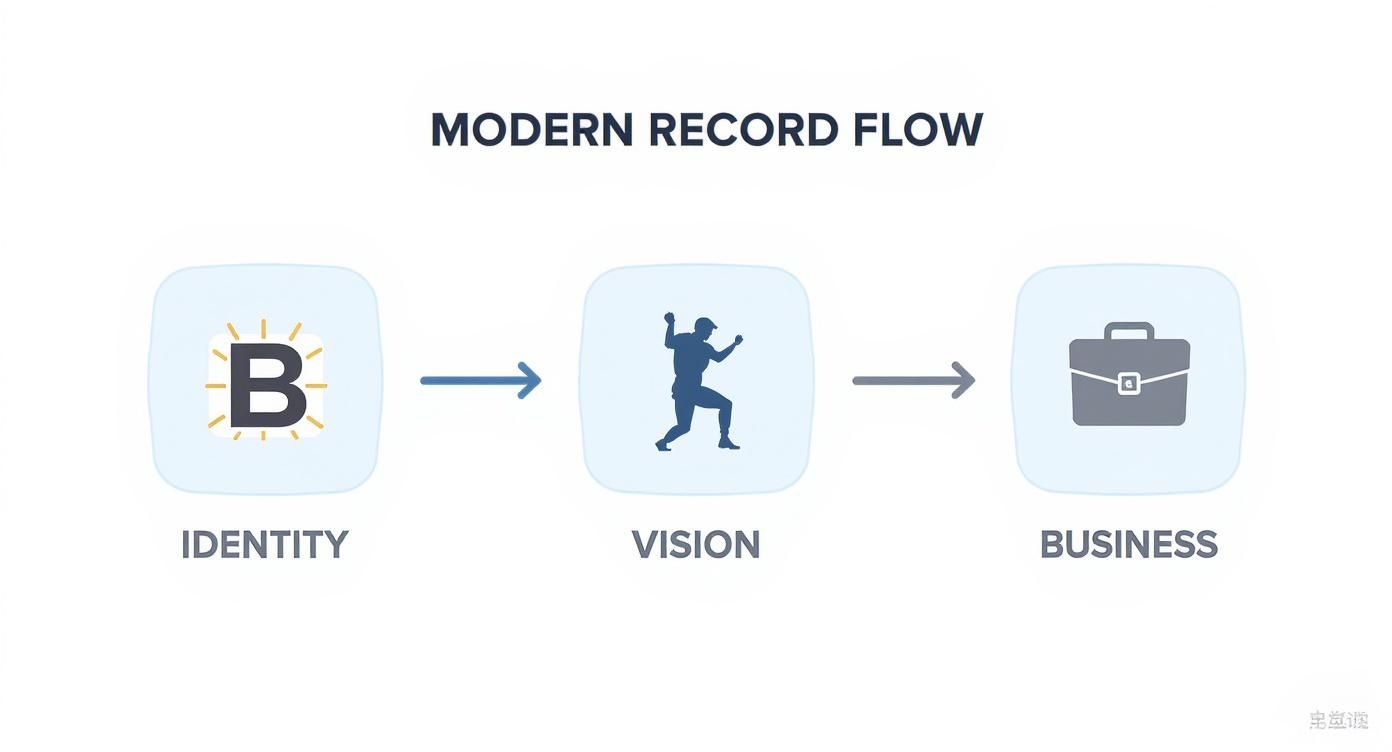
As you can see, a strong identity and a clear vision aren't just creative exercises; they're the essential first steps to building a viable business in the music world.
Of course, the numbers have to work. The good news is you’re entering a booming market. Global recorded music revenues recently hit $29.6 billion, marking a tenth straight year of growth. Streaming platforms drove the majority of that, pulling in over $20 billion. This wave of growth creates incredible opportunities, but it also demands meticulous financial planning. Your budget needs to be airtight, covering everything from legal fees and distribution costs to artist advances and marketing campaigns.
The best modern labels aren't just putting out records; they're building culture. They create a world where artists and their fans feel like they belong to something real, which is far more powerful and sustainable than a one-off hit.
To help you get started, here's a quick checklist that organizes these foundational steps into a clear, actionable framework.
Recording Company Launch Checklist
| Phase | Key Action | Primary Goal |
|---|---|---|
| 1. Foundation | Define brand, niche, and artistic vision. | Establish a clear and compelling identity for your label. |
| 2. Legal & Financial | Choose a business structure and create a budget. | Ensure your company is legally sound and financially viable. |
| 3. A&R | Scout and sign your first artist(s). | Build a roster that aligns with your brand's vision. |
| 4. Operations | Secure distribution and set up marketing channels. | Create the infrastructure to release and promote music effectively. |
This table serves as a high-level roadmap. Each of these phases involves multiple smaller steps, but organizing your thinking this way keeps you focused on what matters most at each stage.
Ultimately, your blueprint needs to be both inspiring and incredibly practical. It's a constant balancing act between the passion that got you here and the strategic planning needed to thrive. To get a better handle on the industry's moving parts, our guide on how the music industry works is a great place to start. It will give you the context needed to make smarter decisions as you bring your recording company to life.
Getting Your Legal and Financial House in Order

It’s easy to get caught up in the creative vision for your new label, but the real work that turns a passion project into a business happens here. Building a solid legal and financial framework from day one is non-negotiable. It protects you, your artists, and your future, saving you from massive headaches down the road.
Choosing Your Business Structure
The first big decision is how to structure your company legally. For most indie labels just starting, it really boils down to two main options: a Limited Liability Company (LLC) or an S Corporation.
An LLC is the go-to for a reason. It gives you personal liability protection, which is huge—it means your personal assets like your car or house are shielded if the business runs into debt or legal trouble. They’re also fairly flexible and don't have the heavy administrative load that comes with a corporation.
An S Corp also protects your personal assets but brings more formal rules, like issuing stock and holding board meetings. The main perk can be tax savings on self-employment taxes, but that really only kicks in when your label is pulling in significant profits. Honestly, for a brand new company, the simplicity of an LLC is almost always the smarter move.
My Advice: Start with an LLC. It delivers the liability protection you absolutely need without the corporate red tape. It's the perfect setup for a new recording company that's still finding its footing.
Once you’ve picked a structure and registered your business name, it's time to get right with the government. You'll need to get an Employer Identification Number (EIN) from the IRS, which is basically a Social Security Number for your business. Don't forget to check for any local or state business licenses you might need to operate legally.
Nailing Down a Realistic Startup Budget
Passion is great, but it won’t pay the bills. A detailed budget is your financial roadmap, and you need to be brutally honest about every single anticipated cost. Don't just pull numbers out of thin air; do the research and build a budget that reflects the real capital you need.
Make sure your startup budget accounts for everything:
- Legal & Admin Fees: This covers business registration, trademarking your name, and having a lawyer look over contracts.
- Studio & Production: Think studio rental time, paying for mixing and mastering engineers, and producer fees.
- Artist Advances: The upfront payment an artist gets upon signing, which you'll recoup from their future royalties.
- Marketing & Promotion: Set aside funds for digital ads, PR campaigns, music video production, and services that pitch your tracks to playlist curators.
- Distribution Fees: The cost to get your music onto Spotify, Apple Music, and other major platforms.
This level of detail is critical. The U.S. recorded music industry is a beast, generating $5.59 billion in wholesale revenue in just the first half of a recent year. Within that, subscription revenues grew by 6.3% to $2.89 billion, which shows you just how essential streaming is for a new label's survival and growth.
How to Fund Your Vision
With a solid budget in hand, you can figure out where the money will come from. Many founders bootstrap their labels, using personal savings to keep 100% control. It’s a respectable path, but it requires serious discipline and a lean operation.
Another route is a small business loan from a bank or credit union. For this, you’ll need a polished business plan and a solid credit history. As your label grows, learning how to start business credit and build a strong profile will be a game-changer for securing better financing options later on.
Finally, and this is a big one: separate your finances immediately. Open a dedicated business bank account and credit card from the very beginning. Mixing personal and business funds is an accounting nightmare and, more importantly, it can shatter the liability protection your LLC gives you. This simple step is fundamental to running a professional operation and sets you up for clean, scalable growth. As you map out your finances, it's also smart to explore all potential income streams; you can get a head start by understanding music licensing and how it can boost your revenue.
Designing Your Studio and Production Workflow
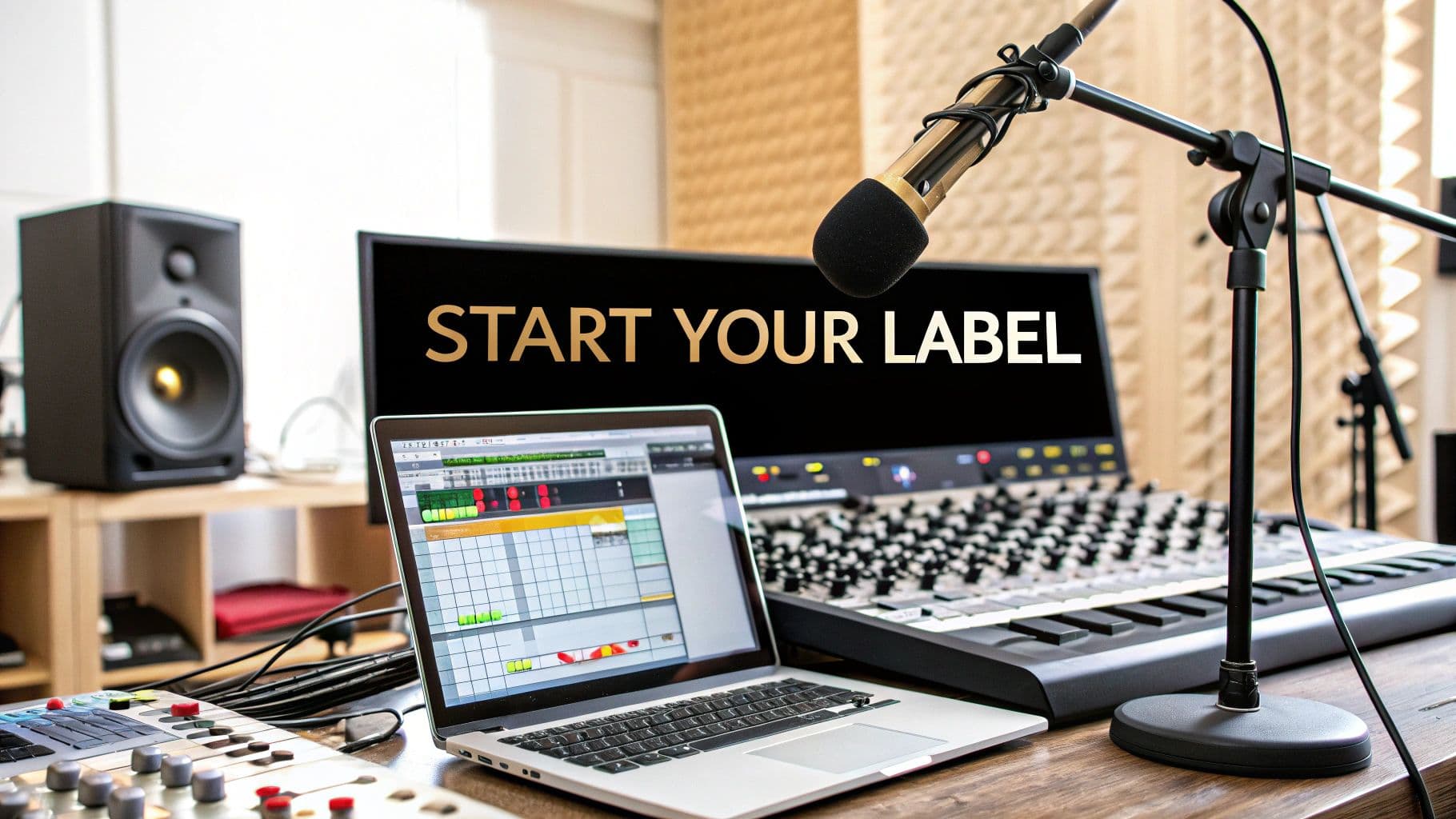
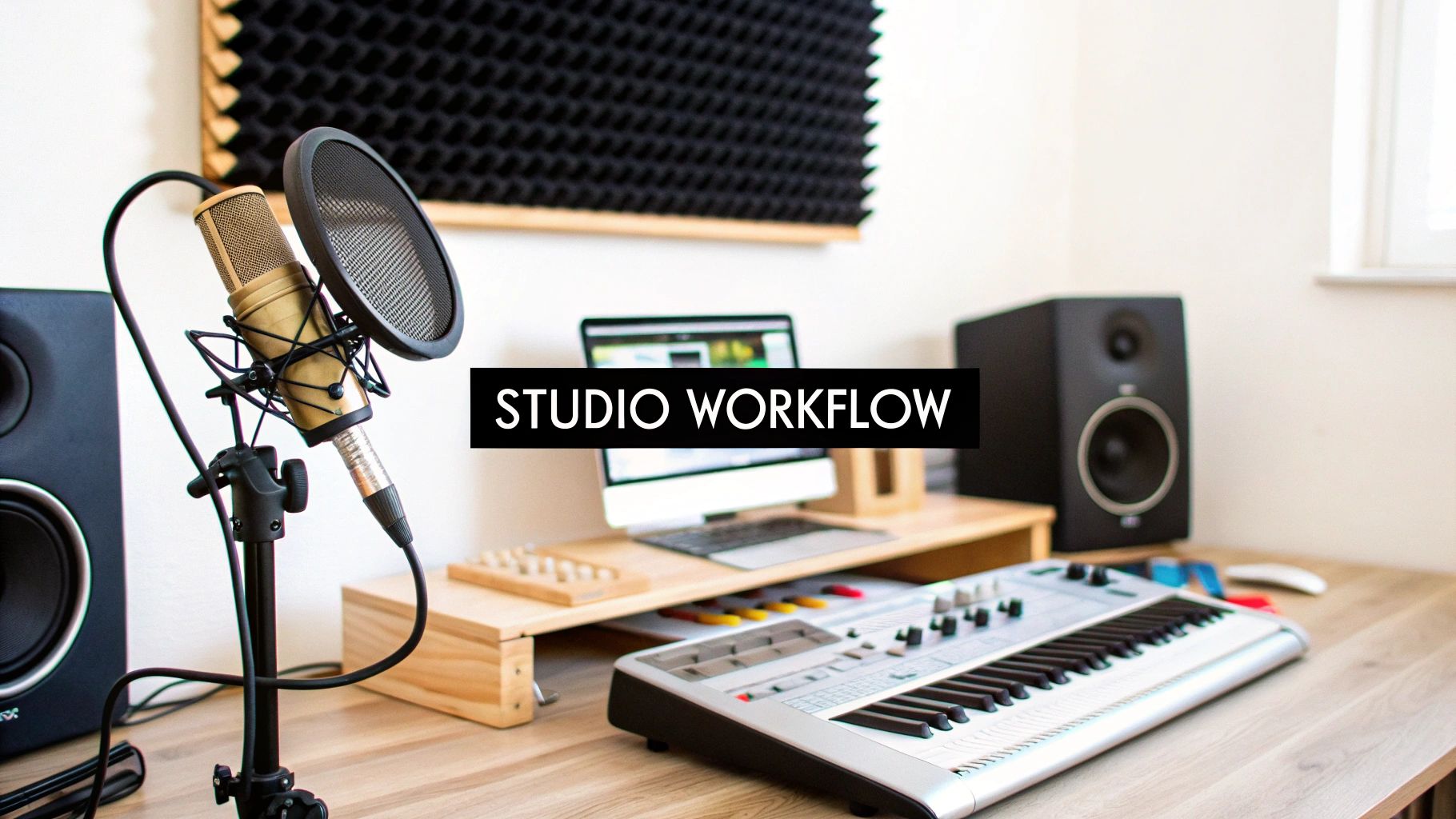
Let’s talk about the heart and soul of your recording company: the studio. This is the creative engine, the space where raw ideas are forged into polished records. Whether you’re building a state-of-the-art commercial facility or converting a spare bedroom, this is where the magic happens. Honestly, this is one of the most exciting parts of the whole venture.
Your first major decision is where to build. Leasing a dedicated commercial space lends instant credibility and provides a professionally designed acoustic environment, but the overhead can be crippling for a new label. On the other hand, a well-put-together home studio can drastically slash your startup costs, freeing up capital to invest where it really counts—in your artists and your marketing.
I’ve seen countless new label owners make the same mistake: they pour every dime into high-end gear before they've even signed their first artist. Start with a solid, reliable setup that gets the job done. You can always rent specialized equipment or upgrade down the line as projects demand it.
No matter the location, the goal is the same: create a space that’s both technically precise and creatively inspiring.
Assembling Your Essential Gear
Building out a studio can feel like you’re staring at an endless shopping list. The key is to avoid that trap and focus on the fundamentals first. Smart, strategic investments here will pay you back tenfold in sound quality and a smoother workflow. Your priority should be establishing a clean, clear signal path from the microphone all the way to the final mix.
Here's a breakdown of the gear you absolutely can't skimp on:
- Audio Interface: This is the central nervous system of your studio, turning analog sound into digital data. Look for an interface with clean preamps and the right number of inputs for your projects. A simple 2-channel unit works for a solo artist, but a growing label should be looking at something with at least 4-8 inputs to handle bands.
- Microphones: You don't need a massive mic locker to get started. Seriously. A versatile large-diaphragm condenser for vocals and a workhorse dynamic mic (like the industry-standard Shure SM57) will cover 80% of what you need to record.
- Digital Audio Workstation (DAW): This is the software where all the recording, editing, and mixing takes place. The big names are Pro Tools, Logic Pro X, and Ableton Live. The "best" one is simply the one you or your engineer knows inside and out.
This is what a DAW looks like in action—it's the modern canvas for music production, where you can see and manipulate every layer of a song.
Beyond that core trio, you'll need quality studio monitors (so you can actually hear what you’re doing), good headphones for tracking, and all the necessary cables and stands. And please, don't overlook acoustic treatment. Even some basic foam panels and bass traps can make a night-and-day difference in a less-than-perfect room.
Crafting an Efficient Production Workflow
Having great gear is only half the battle. A chaotic, disorganized production process will torpedo creativity and blow past every deadline. Your production workflow is the roadmap you follow to guide a song from a rough demo to a master file ready for release.
A clearly defined workflow brings consistency to your label's sound. It should cover everything: pre-production meetings, tracking sessions, editing and vocal comping, mixing, and mastering. It sounds tedious, but establishing a strict file-naming system and folder structure from day one will save you from pulling your hair out trying to find a lost take or the wrong mix version months later.
Think of it as an assembly line for art. Each stage has a clear goal and quality benchmarks. This structure doesn't kill creativity; it builds a reliable framework that frees up your artists and engineers to focus on what matters most—the performance.
Building Your Technical Team
Unless you’re a seasoned audio engineer yourself, you're going to need a technical team to bring your artists' visions to life. When you're just starting your recording company, that doesn't mean hiring a full-time staff right away. Building a go-to list of trusted freelancers is a much smarter, more flexible approach.
Your roster of talent should include:
- Audio Engineers: The experts who know how to place a mic, dial in a sound, and run a session without a hitch.
- Mixing Engineers: The specialists who take all the recorded tracks and meticulously balance them into a powerful, cohesive song.
- Mastering Engineers: The final set of ears. They add that last bit of polish and ensure the music translates perfectly on everything from earbuds to club speakers.
- Producers: The creative visionaries who help artists shape their sound, arrange the music, and coach them to deliver their best possible performance.
How do you find these people? Get out there. Go to local shows, visit other studios in your area, and ask for recommendations. Forging strong relationships with a handful of reliable freelance engineers and producers gives you the agility to pair the right expert with the right project. This network will quickly become one of your label’s most valuable assets.
Finding and Developing Your Artist Roster
Let's be blunt: your recording company is just an empty building without artists. They're the creative engine, the very pulse of your label, and probably the reason you got into this business in the first place. Finding the right talent isn't just a box to check—it’s the heart of your A&R (Artists and Repertoire) strategy and the single biggest factor in whether you’ll be around in five years.
This all starts with knowing who you are. What sound defines your label? Who is your audience? Nailing this down turns your talent search from a shot in the dark into a focused, strategic mission.
Defining Your A&R Scouting Strategy
You can't just sit back and wait for the next superstar to land in your inbox. A real A&R strategy means getting your hands dirty. You have to live and breathe the music scene, becoming a trusted name for a particular sound. The goal is to unearth artists who not only have raw talent but also fit your label’s identity like a glove.
Effective scouting isn't a one-trick pony. It’s a mix of old-school shoe leather and new-school digital sleuthing. You’re looking for artists who are already putting in the work and building a buzz.
Here’s how you actually find them:
- Become a Fixture in Your Local Scene: Get out there. Go to the open mic nights, the battle of the bands, the genre-specific showcases at dive bars. When you build real relationships with venue owners, promoters, and other musicians, you get plugged into the grapevine where real talent is first discovered.
- Use Social Media and Streaming Data: Platforms like TikTok, Instagram, and SoundCloud are modern A&R goldmines. I'm not just talking about vanity metrics; look for genuine engagement, a unique brand, and a fanbase that's actively growing. If you can get a peek at an artist's Spotify for Artists data, a steady climb in monthly listeners is a huge green flag.
- Network with Industry Pros: Connect with the people who are already in the trenches—artist managers, booking agents, and music bloggers who live in your niche. They often have their finger on the pulse and can make the introductions that matter.
This proactive approach ensures you find artists who are not just talented, but also hungry and committed to their own success.
Demystifying the Artist Contract
So, you've found an artist you're ready to go to bat for. Now comes the contract. This is where a lot of new label owners freeze up, but it doesn’t have to be intimidating. Think of it as the blueprint for a partnership, not a power play.
A fair contract is the bedrock of a healthy artist-label relationship. It’s a tool for mutual success, laying out exactly how both parties will invest in the artist’s career and share in the rewards.
Let's pull back the curtain on the key terms you’ll need to understand.
Key Contract Components
| Term | What It Really Means | A Fair Approach |
|---|---|---|
| Advance | An upfront, recoupable payment for living and recording costs. It's essentially a loan against the artist's future earnings. | Offer a modest but practical advance. The goal is to cover realistic expenses without burying the artist in debt from day one. |
| Royalty Rate | The percentage of revenue the artist gets after the label has recouped its expenses (including that advance). | A 50/50 net profit split is fast becoming the indie standard. It positions you as a true partner, not a bank. |
| Term | How long the contract lasts. This is usually defined by a number of albums or a specific timeframe. | Start with a shorter term, like one album with an option for a second. It lowers the risk for everyone and helps build trust. |
| IP Rights | This is the big one: who owns the master recordings. The old model was that the label owned them forever. Things are different now. | Consider a licensing deal where the artist retains ownership of their masters and the label has exclusive rights for the term. |
When you structure a deal that feels fair and equitable, you get more than just a signature. You get a committed partner who is just as invested in growing your label as they are in building their own career.
Modern Artist Development: More Than Just the Music
In today’s industry, a great song is just the price of entry. Real artist development is about nurturing the whole package. You're building a sustainable brand, not just chasing a one-hit-wonder. This holistic approach prepares artists for the long haul and gives them the tools to forge a real connection with their audience.
Your development program should be a complete support system.
- Branding and Image Consulting: Help them define their visual identity. This covers everything from album art and press photos to their vibe on social media.
- Media Training: Teach them how to nail an interview, tell their story, and handle the press with confidence.
- Performance Coaching: Work with them to elevate their live show from good to unforgettable. This is where die-hard fans are made.
- Financial Literacy: Offer basic guidance on budgeting, taxes, and managing money as a creative entrepreneur. It’s a skill they’ll need for life.
By investing in the artist as a whole person, you're not just creating a product; you're building loyalty and empowering them for a career that lasts. That’s the mark of a truly modern recording company.
Mastering Digital Distribution and Promotion
Making a killer record is a huge accomplishment, but let's be real—it's only half the job done. If nobody ever hears the music your artists pour their souls into, it's like it never happened. This is where a smart, modern approach to distribution and promotion becomes the most important part of your role as a label founder.
Think of your distribution strategy as the plumbing that carries your music to the world. Today, that means getting your catalog onto every major streaming platform and digital store, from Spotify and Apple Music to TIDAL and Amazon Music. This is how most people will find and fall in love with your releases.
The global recorded music market is on track to hit $25.06 billion, and that growth is almost entirely driven by streaming. This digital-first reality has leveled the playing field, making it possible for new indie labels to compete on a global scale. You can dig deeper into these numbers over at MIDiA Research.
Choosing Your Digital Distribution Partner
You can't just upload songs to Spotify yourself. You'll need to work with a digital aggregator—a service that acts as the middleman, delivering your music and all its metadata to hundreds of platforms worldwide. The two heavyweights you'll hear about most are DistroKid and TuneCore, and picking the right one comes down to how your label operates.
Here’s a quick look at how they stack up:
| Feature | DistroKid | TuneCore |
|---|---|---|
| Fee Structure | An annual subscription gets you unlimited uploads. | You pay a yearly fee for each single or album. |
| Royalty Split | You keep 100% of your royalties. | You keep 100% of your royalties. |
| Best For | Labels planning to release a lot of music. It’s incredibly cost-effective at scale. | Labels with a smaller, more curated release schedule. |
| Key Perk | Known for its simplicity and speed. Music is often live in just a few days. | Offers detailed sales analytics and publishing admin services. |
If you're a new label aiming for a steady stream of releases, DistroKid's subscription model is a no-brainer. But if you value deep analytics and extra services from day one, TuneCore might be the better fit. Our complete guide on the best strategies for independent music distribution can help you dig even deeper into this decision.
Don't Sleep on Physical Media
While streaming absolutely dominates, it would be a mistake to write off physical formats. For certain genres and fanbases, vinyl records and even CDs are so much more than a way to listen—they're collectibles that forge a tangible connection between an artist and their most dedicated fans.
You should seriously consider a physical run if:
- Your genre has a collector's scene: Indie rock, punk, metal, and electronic music all have passionate communities that value owning a physical copy.
- Your artist is a road warrior: The merch table is a huge source of income for touring artists, and vinyl and CDs are top sellers.
- You want to create a premium product: A limited-edition colored vinyl pressing isn't just a record; it's a high-margin marketing piece.
The smartest release strategies don't treat this as an either/or choice. They use digital for mass reach and physical for deep fan engagement and better profit margins.
Building a Killer Promotion Strategy
Distribution puts the music on the shelves. Promotion is what gets people to actually listen. A great release campaign is a well-timed attack that starts months before a track ever hits the public. It's all about building anticipation and firing on all cylinders.
Your promotional playbook should be built on a few core pillars.
The Pre-Release Buzz
The weeks before release day are your chance to build a groundswell of excitement.
- Launch a Pre-Save Campaign: Use a service like Feature.fm or Hypeddit to create a landing page where fans can pre-save a song. When the track drops, it automatically appears in their library—a huge signal to Spotify's algorithms that people are interested.
- Tease Relentlessly on Socials: Don't just post "new music soon" and call it a day. Share behind-the-scenes clips from the studio, short video snippets, and audio teasers. Build a story around the release that draws people in.
The Art of the Playlist Pitch
These days, playlists are the new radio. Landing a song on a major editorial playlist like Spotify's "New Music Friday" can change an artist's career overnight.
Your first move should always be pitching through your Spotify for Artists dashboard. You have to submit your track at least a week before release day, so don't miss that window. When you write your pitch, get specific. Talk about the song's mood, genre, and instrumentation to help editors find the perfect home for it.
Beyond that, start researching independent curators and music bloggers in your niche. Build real relationships with them long before you ever ask for a feature.
Common Questions About Starting a Record Label

Diving into the world of music ownership will naturally bring up a lot of questions. The road to launching a recording company can feel uncertain, but getting clear answers to the most common concerns can make a huge difference. Let's tackle the big ones.
How Much Money Do I Actually Need to Start?
This is the question on everyone's mind. The honest answer? There's no magic number. A lean, digital-only label can get off the ground for a surprisingly modest amount, while a bigger operation with a physical studio and large artist advances will demand some serious capital.
For a realistic, bootstrapped start focusing on digital distribution and a couple of initial artists, you could get going in the $5,000 to $15,000 range. This isn't a shoestring budget, but it’s manageable, and it covers the essentials:
- Legal Setup: Getting your LLC registered and having basic contracts drafted.
- Initial Marketing: A solid starting budget for digital ads and promotion.
- Distribution Fees: The cost to get your music onto all the major platforms.
- Basic Production: Covering professional mixing and mastering for your first release.
The real key is to build your budget from the ground up based on your specific goals. Start small, prove the concept, and you can always seek more investment once you have some traction.
Do I Need a Physical Recording Studio?
Definitely not. In fact, for most new labels, locking yourself into a commercial lease is one of the worst financial moves you can make. The overhead is immense and can easily sink your business before it has a chance to swim.
Today, many of the sharpest indie labels operate on a hybrid model. They'll build a professional-grade home setup for demos, writing sessions, and some light production work. Then, when it's time for the final tracking, they'll book a few days at a top-tier commercial studio.
This approach keeps your fixed costs incredibly low, freeing up capital for the things that actually drive growth: artist development and marketing. It’s all about being smart with where your money goes.
What Is the Single Biggest Mistake to Avoid?
I’ve seen this one trip up more new labels than anything else: a complete failure to prioritize marketing and distribution. So many founders get tunnel vision on making the "perfect" record, and they completely forget to build a plan—or a budget—to make sure people actually hear it.
Great music is the price of entry, but it's not a marketing plan. A successful release needs a detailed promotional strategy that starts months before the drop date. We're talking about everything from pre-save campaigns and social media content to building real relationships with playlist curators and music bloggers.
Ignoring this phase is the fastest way to ensure your artists' incredible work goes unheard. Your job as a label isn't just to fund the art; it's to build the bridge that connects that art to an audience.
Ready to build an ecosystem where your artists can thrive? OohYeah provides the tools you need to sell music, merchandise, and subscriptions directly to fans, all in one place. Take control of your artists' careers and maximize their revenue at https://oohyeah.app.