10 Best Practices for Content Marketing
Explore 10 best practices for content marketing, from planning and creation to distribution and measurement, with practical ideas for independent artists.

October 3, 2026
Music Marketplace Advisor
Buying & SellingMore posts don't automatically create stronger marketing. A crowded publishing schedule can leave an artist with plenty of activity and little momentum. Coordinated content that earns attention, deepens fan relationships, and supports a clear business goal does more useful work than volume for its own sake.
The best practices for content marketing therefore need to cover the whole lifecycle. An artist has to plan around releases, create material that feels authentic, invite fans to participate, distribute discovery content across relevant channels, present clear offers, and review the resulting engagement and sales signals. Content should support discovery, but it should also give committed fans a reason to stay close.
That matters because independent artists can't build a durable business by depending entirely on algorithm-driven platforms. Social channels are useful for reach, but the artist needs a direct relationship hub where fans can access music, subscriptions, merchandise, messages, and community updates. OohYeah! can serve that role while external platforms continue to introduce new listeners.
The following ten practices turn content from a stream of disconnected posts into an artist-first operating system.
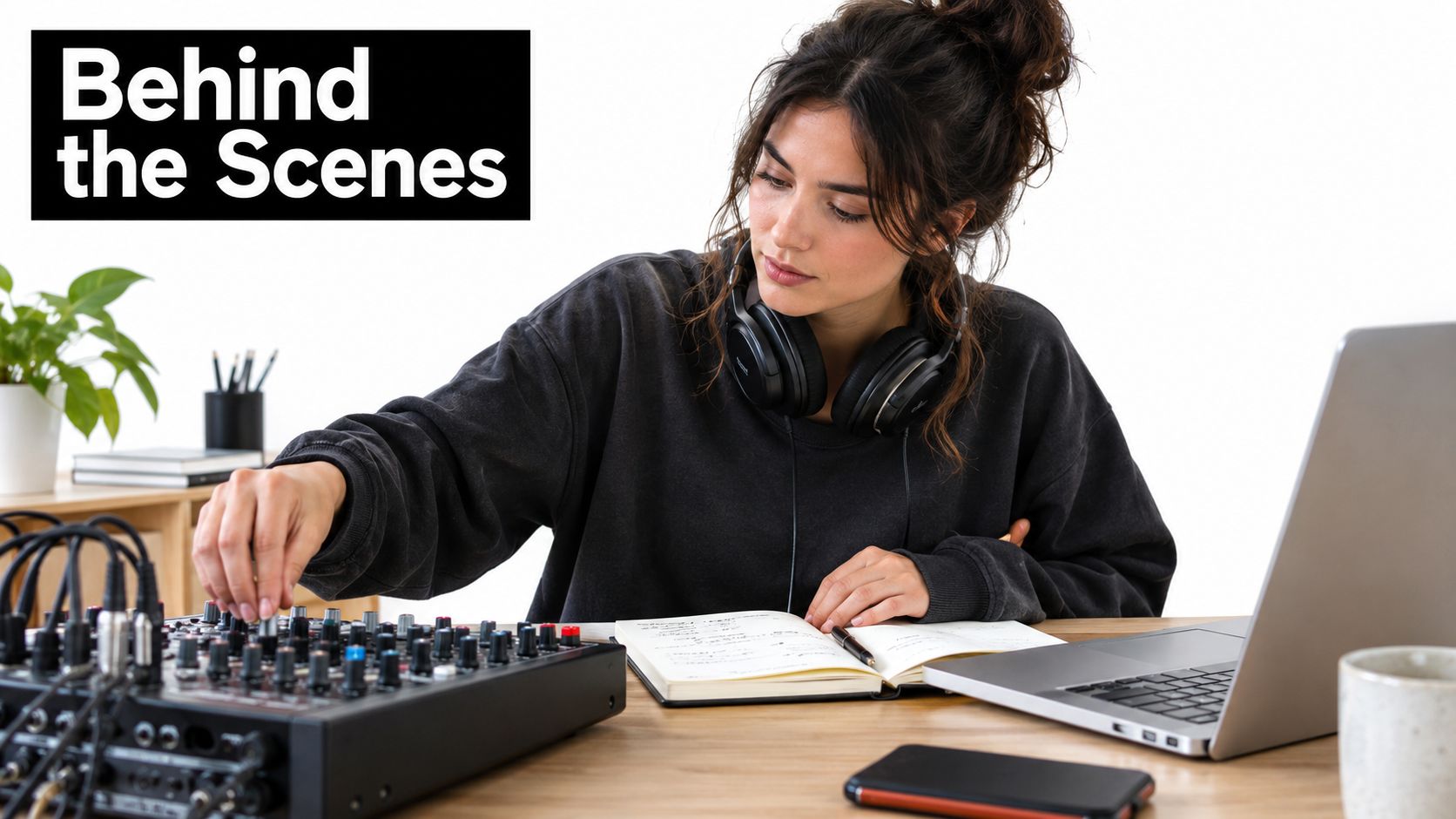
1. Build an Artist Story Through Behind-the-Scenes Content
A polished release tells fans what the finished song sounds like. Behind-the-scenes content tells them why it exists. That distinction gives people more ways to connect with the artist, especially when the story includes creative decisions, setbacks, experiments, and moments that never appear in the final recording.
A producer might share the first rough arrangement, explain why a particular texture survived the mix, or record a voice note after abandoning a chorus. A singer-songwriter could document a lyric changing over several drafts. The point isn't to manufacture intimacy. It's to let fans see the work behind the public result.
Use OohYeah!’s community posts for regular studio updates, then reserve more personal material for direct messages, voice notes, or a subscription tier. A production diary can begin as a short public post and develop into a longer audio update for committed supporters. The artist's magazine content can also provide a more permanent home for essays about creative process, influences, and release milestones.
Make access feel earned, not artificial
Share the imperfect moments that carry meaning, not every trivial update. Fans usually respond better to a specific creative problem and its solution than to a generic announcement that work is continuing.
Practical rule: Every behind-the-scenes post should answer one question, reveal one decision, or invite one useful response.
Ask fans which arrangement they prefer, respond to questions through voice, and document the path from first idea to final release. That process can support exclusive “studio access” benefits without making public followers feel excluded.
2. Design Exclusive Content Tiers With Clear Value
Subscriptions work when fans understand what they're paying for before they join. A vague promise of “exclusive content” creates uncertainty. A useful tier explains the access, frequency, format, and relationship the supporter will receive.
Start with a small number of options. One accessible tier might include early demos, subscriber-only posts, and voice updates. A higher tier could add monthly studio sessions, direct questions, early merchandise access, or deeper production breakdowns. Keep the difference between tiers obvious. If every level contains the same material with slightly different wording, supporters won't know why they should upgrade.
OohYeah!’s subscription tools can connect exclusive content to the rest of the artist's business. A track preview can lead into an early-release offer. A personal voice note can accompany a merchandise announcement. A monthly community post can ask subscribers what they want more of, giving the artist evidence for future programming rather than guessing.
Sell a dependable experience
The strongest subscription promise isn't unlimited content. It's reliable access to something fans value. That might be a regular creative update, a first listen, a private discussion, or a closer look at the artist's process.
State the benefits in plain language:
- Early access: Let supporters hear selected releases before the wider audience.
- Personal connection: Use voice notes or messages for occasional direct updates.
- Useful extras: Include demos, stems, lyric notes, production files, or educational material when they fit the artist's work.
- Physical value: Pair selected tiers with merchandise access or bundle opportunities.
Review feedback regularly and adjust benefits when the workload becomes unsustainable. A tier that requires daily production can damage trust if the artist can't maintain it. A smaller, dependable promise usually works better than an ambitious schedule that disappears after launch.
3. Use a Content Calendar Around Releases
A release calendar should do more than record a song's launch date. It should show how the story develops before release, how attention is sustained afterward, and where fans can take the next step. Include music, merchandise, educational material, community prompts, live appearances, and direct offers in one working view.
A practical campaign might begin with a creative note, move into a short studio clip, reveal artwork, invite fans to react to a preview, and then open an early-access window. After release, the artist can share a production breakdown, fan interpretations, performance footage, and a related merchandise offer. Each piece should have a role instead of repeating the same announcement.
Documented planning is now standard practice among marketers. Research cited by UseCarly's content marketing statistics overview says 97% of B2B marketers reported having a content strategy in 2026, while 45% identified AI-powered marketing tools among their top three investment areas. The same source says 33% named measuring content effectiveness as a leading challenge, and only 13.9% said their blog delivered strong results. For artists, the lesson is straightforward: publishing more won't compensate for weak sequencing or unclear measurement.
Leave room for real life
A calendar should create consistency without turning creativity into a factory. Batch-record evergreen material during focused sessions, but leave space for spontaneous posts after a show, an unexpected collaboration, or a breakthrough in the studio.
Use Google Calendar, Notion, or Asana for the master schedule, then translate the approved items into OohYeah! posts and community prompts. Mark each asset by purpose, such as discovery, relationship, participation, access, or conversion. That label makes it easier to spot a campaign that promotes constantly but never deepens the fan relationship.
4. Teach Through Educational Artist and Producer Content
Educational content gives fans a reason to return even when the artist isn't promoting a new release. Production walkthroughs, songwriting notes, gear explanations, music-business lessons, and career reflections can attract people who care about the craft as much as the finished track.
The best tutorials don't pretend to be detached from the artist's work. Explain how a creative decision shaped a real song. Show the arrangement before and after a change. Discuss why a particular microphone, plugin, workflow, or writing constraint mattered. This keeps the lesson credible and gives listeners a path back to the music.
Build a series rather than publishing isolated tips. A producer could create episodes about drums, arrangement, vocal treatment, and final mix decisions. An independent artist could develop a sequence about writing, recording, releasing, and promoting one song. OohYeah!’s academy courses can support deeper educational material, while public posts can introduce each subject and direct interested fans toward more complete resources.
Turn one lesson into several assets
Record a long explanation once, then adapt it into a short video, an audio post, a written summary, and a subscriber-only deep dive. The formats should be edited for their destinations, not copied mechanically.
Educational content also creates natural collaboration opportunities. Invite another producer to compare workflows, ask an artist to discuss a creative problem, or let fans submit questions for a future session. The artist earns authority by being useful, not by claiming expertise without demonstrating it.
5. Turn Fans Into Contributors Through Collaboration
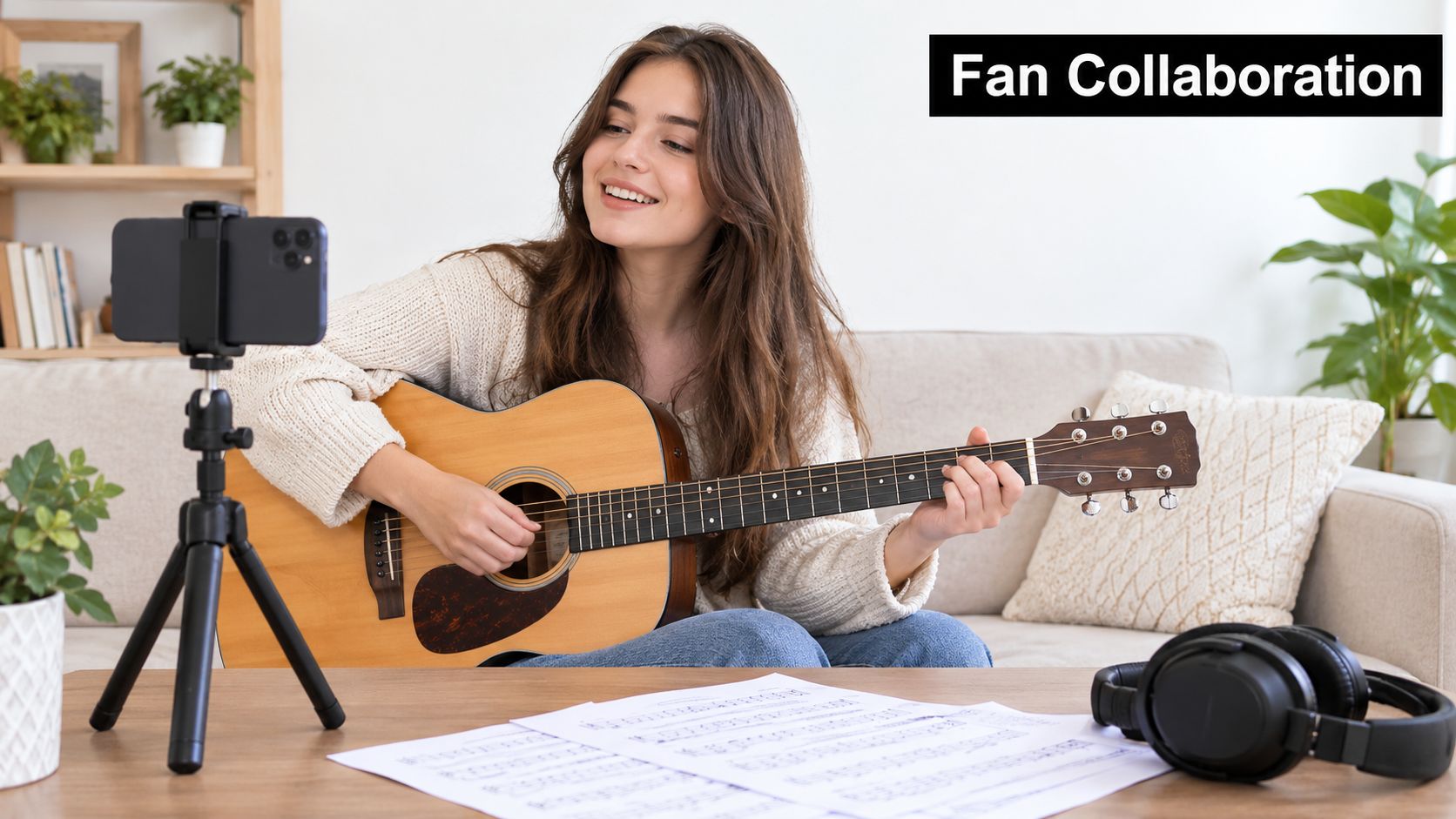
User-generated content changes the role of the audience. A listener who submits a cover, remix, dance interpretation, illustration, or live performance has moved from passive consumption into creative participation. That contribution can become a meaningful part of the artist's community, provided the artist handles credit and permission properly.
Give fans a clear brief. Explain the format, submission process, deadlines, rights expectations, and how selected work may be featured. An OohYeah! community post can announce a remix prompt, while direct messaging can handle questions and permissions. Feature submissions in a recurring “Fan Spotlight” rather than mentioning them only when the artist needs promotion.
Tools such as ShortGenius AI's UGC advertising platform can help teams think about how fan-made material may be adapted for promotional use, but automation shouldn't replace consent or human review. A fan's creative work deserves accurate credit and a clear understanding of where it will appear.
Reward participation without reducing it to a contest
Not every contribution needs a cash prize. A thoughtful response, profile feature, voice message, merchandise access, or invitation to a private session can carry real meaning. The reward should match the effort and the artist's resources.
- Set a creative prompt: Ask for a cover in a particular mood, a remix using provided stems, or artwork inspired by a lyric.
- Create a repeatable feature: Publish selected work on a predictable schedule so contributors know their effort won't disappear.
- Credit every creator: Include the artist's name and link wherever the work appears.
- Invite deeper collaboration: Offer standout contributors a joint post, remix exchange, or private conversation.
The artist's role is curator and host. Don't take over the fan's interpretation. The most compelling submissions often reveal a side of the song the original creator hadn't considered.
6. Build Community Through Direct Fan Engagement
Audience size and community strength aren't the same thing. A large number of followers may never speak, return, or buy. A smaller group that receives thoughtful responses can create more useful feedback and stronger advocacy over time.
Set an engagement rhythm the artist can maintain. A weekly question might ask which song should receive a live version. A post-show voice note can thank attendees and invite them to share a favorite moment. A monthly community session can gather questions about writing, touring, production, or upcoming releases.
OohYeah! supports this direct relationship through community posts, messaging, and voice notes. Use those formats differently. Public posts help fans see and respond to one another. Messages handle personal replies. Voice notes add warmth when text would feel too formal or impersonal.
Make participation specific
“Tell me what you think” is an easy prompt to ignore. Ask a question with a decision attached: which chorus should open the live set, which artwork better reflects the track, or what topic should the next production lesson cover. Then show the community how its input affected a real choice.
Remember previous conversations where possible. A producer who follows up on a fan's setup question or an artist who acknowledges a returning supporter demonstrates attention that scheduled content can't imitate.
“Community isn't a comment count. It's the habit of making people feel recognized.”
Celebrate useful comments, fan milestones, and thoughtful interpretations. You don't need to answer every message instantly, but you do need to make the relationship feel intentional rather than accidental.
7. Expand Reach Through Artist Partnerships
Collaboration works best when it creates something neither artist would have made alone. A feature, remix, joint tutorial, producer exchange, live conversation, or limited merchandise project can introduce each participant to a relevant audience without turning the relationship into a simple cross-promotion swap.
Look for complementary artists rather than identical ones. A beatmaker might work with a vocalist from a different scene. A folk artist could partner with a visual creator or independent filmmaker. A DJ might collaborate with a producer whose audience is interested in the same sound but follows different channels.
Agree on practical details before publishing. Decide who owns the recording, how credits appear, where the content will be distributed, how revenue is handled, and which assets each person must deliver. Written clarity protects the relationship when a project performs differently than expected.
Give the collaboration a content life
Don't limit the partnership to one announcement. Record the creative discussion, publish a short making-of clip, share alternate versions, host a joint community session, and offer an exclusive track or studio conversation to OohYeah! subscribers. Cross-promote from both artist profiles so fans can move naturally between the two communities.
A joint merchandise drop should support the creative idea rather than add a logo to a generic product. Let both artists contribute to the design, story, or packaging. The audience should understand why the partnership exists and what makes the result distinct.
Before release: Confirm credits, permissions, delivery dates, distribution plans, and the single action you want each audience to take.
8. Connect Merchandise to the Content Story
Merchandise performs better as part of a narrative than as an isolated product announcement. A shirt, physical release, poster, or digital bundle should relate to the song, tour, visual identity, or creative moment that fans already care about.
Build the offer into the campaign early. Show the design process, ask the community to choose between concepts, reveal packaging, and explain what makes the item meaningful. Then connect the finished product to the release through OohYeah! posts, voice updates, and subscriber access.
OohYeah!’s Printful print-on-demand workflow can support artists who want to develop merchandise without managing every production step themselves. The artist still needs to review product quality, images, descriptions, delivery expectations, and customer communication before promoting the item.
Make the purchase feel coherent
A music and merchandise bundle should offer a clear reason to buy together. It might combine a physical release with artwork, a limited shirt with early access, or a digital package with a supporter-only recording. Avoid adding unrelated products just to increase the number of items in the store.
Use honest scarcity. If a design is available for a limited run, explain the actual constraint. Don't create artificial urgency that damages trust. Give subscribers early access when that benefit is part of their tier, and make the public launch easy to understand.
Promotional content should show the product in use, not only display a mockup. A rehearsal clip, unboxing voice note, or studio photo can make the merchandise part of the artist's world rather than a disconnected sales message.
9. Distribute Across Platforms Without Losing the Hub
External platforms are discovery channels, not automatically the center of the artist's business. A short video can introduce a song, a YouTube tutorial can demonstrate expertise, and an Instagram post can reveal artwork. The deeper relationship should have somewhere stable to continue.
Create a platform-specific version of each asset. A short-form video needs an immediate opening. A longer YouTube explanation can include context. An OohYeah! post can provide the full story, direct access, a community question, or a subscription offer. Copying the same caption and link everywhere usually produces a weaker experience.
Format diversity matters. A Contentful benchmark report says that in 2025, short-form video was the most popular content format among marketers at 60%, followed by long-form video and blog posts at 38% each. The same source reports that 75% of teams tracked engagement, 67% tracked brand awareness, 59% measured direct conversions, and 54% tracked pipeline influenced by content. For artists, that supports a mix of discovery formats and direct response measurement rather than treating views as the only outcome.
Give every channel a job
Use external posts to create curiosity, then make the next step obvious. A teaser can lead to an OohYeah! listening page. A tutorial can lead to a deeper course or community discussion. A live clip can lead to tickets, subscriptions, or merchandise.
Track clicks from profile links and campaign posts where the platform allows it. Keep the destination focused. If a fan arrives after watching a song teaser, don't send them to a page with unrelated options and no clear action.
The hub should contain the material that justifies the move: full releases, direct interaction, exclusive content, subscriptions, or artist-owned offers. Reach gets attention. A useful destination gives that attention somewhere to go.
10. Optimize Content With Analytics and Human Judgment
Analytics should guide creative decisions without forcing every song into one formula. Review which formats prompt meaningful replies, bring fans to artist profiles, attract subscribers, and contribute to merchandise or music sales. This connects planning, creation, community, distribution, monetization, and measurement around the artist's relationship hub in OohYeah!.
Build a monthly dashboard with a small set of connected signals: content published, meaningful engagement, visits to OohYeah!, subscription activity, direct sales, and merchandise performance. Compare similar assets rather than judging a short teaser, personal essay, and product announcement by the same standard. For teams managing content on WordPress, these WordPress content optimization tips provide a practical checklist for editorial quality and technical SEO.
An analytics overview from ZoomInfo identifies analytics tools as the leading technology B2B marketers use to manage content marketing, at 87%, followed by email marketing technology at 70%, content management systems at 63%, marketing automation at 55%, and webinar or online presentation platforms at 43%. The same source lists median benchmarks of 3.39K sessions, a 44.04% bounce rate, a 56.21% engagement rate, and a 1.56% CTR across industries. Those figures are reference points, not artist targets. They show why tracking actions beyond impressions matters.
Test one variable at a time
Change one element, such as the opening line, thumbnail, format, timing, or call to action, then compare the result with a similar piece. A weak post does not prove the topic failed. The presentation, audience segment, channel, or offer may need adjustment. Record the change and result so future release planning uses evidence rather than memory.
AI can speed up editing, repurposing, and idea development, but artists still need clear review rules. Research summarized by Siege Media's content marketing trends analysis says 95% of B2B marketers use AI-powered applications, while only 52% describe their AI governance as established, advanced, or leading. Review generated copy, protect the artist's voice, verify facts, and keep sensitive fan or unreleased music data out of tools without permission. Human judgment decides what deserves publication and what strengthens the direct fan relationship.
Content Marketing: 10 Best Practices Compared
| Strategy | Implementation Complexity 🔄 | Resource Requirements ⚡ | Expected Outcomes ⭐ / 📊 | Ideal Use Cases 💡 | Key Advantages 📊 |
|---|---|---|---|---|---|
| Artist Story and Behind-the-Scenes Content | Moderate 🔄, ongoing cadence and authenticity required | Low–Medium ⚡, phones/camera, regular time investment | ⭐⭐⭐, stronger fan loyalty, higher engagement 📊 | Building emotional connection, differentiation in crowded markets | Deep fan bonds, higher perceived exclusive value 📊 |
| Exclusive Content Tiers and Subscription Strategy | Medium–High 🔄, tier design and recurring delivery | Medium ⚡, content production, membership management | ⭐⭐⭐, predictable recurring revenue, higher CLV 📊 | Monetization-focused artists with core fanbase | Recurring revenue, clear fan incentives, retention 📊 |
| Content Calendars and Strategic Release Planning | High 🔄, annual/quarterly coordination and sequencing | Medium ⚡, planning tools, time for batching | ⭐⭐⭐, consistent engagement, maximized release impact 📊 | Coordinated releases, tours, merch drops | Reduced last-minute work, better resource allocation 📊 |
| Educational Content and Producer/Artist Guides | High 🔄, expertise and structured curriculum needed | High ⚡, quality video/written production, prep time | ⭐⭐, authority building, evergreen reach 📊 | Artists positioning as educators or thought leaders | Establishes credibility, attracts aspiring creators 📊 |
| User-Generated Content and Fan Collaboration | Moderate 🔄, moderation and rights management | Low ⚡, fan-driven content; management time for curation | ⭐⭐⭐, viral reach, abundant authentic content 📊 | Community activation campaigns, remix/cover drives | Low production cost, strong community-led amplification 📊 |
| Community Building and Direct Fan Engagement | High 🔄, continuous personalized interaction | Medium–High ⚡, time for messaging, voice replies, events | ⭐⭐⭐⭐, unbreakable loyalty, organic advocacy 📊 | Long-term retention, deep fan relationships | High lifetime value, direct market feedback 📊 |
| Collaborative Content and Artist Partnerships | Medium–High 🔄, agreements, scheduling, crediting | Medium ⚡, shared production and promotion resources | ⭐⭐⭐, audience expansion and credibility gains 📊 | Cross-pollination, reaching complementary audiences | Exponential reach, shared costs, network effects 📊 |
| Merchandise Integration and Cross-Promotion | Medium 🔄, inventory, fulfillment, bundling logistics | Medium–High ⚡, production, storage/shipping, design | ⭐⭐⭐, increased ARPU and tangible fan touchpoints 📊 | Tours, limited drops, bundling releases with merch | Tangible revenue streams, improved fan loyalty 📊 |
| Cross-Platform Promotion and Content Syndication | Medium–High 🔄, platform-specific adaptations and timing | Medium ⚡, repurposing content, tracking links | ⭐⭐⭐, wider discovery, drives traffic to core hub 📊 | Discovery-first campaigns, multi-channel funnels | Maximized reach while retaining direct monetization hub 📊 |
| Analytics-Driven Content Optimization | Medium 🔄, data collection, interpretation, testing | Low–Medium ⚡, analytics tools, reporting time | ⭐⭐⭐, better ROI, optimized content strategy 📊 | Scaling strategies, iterative improvement, A/B testing | Removes guesswork, focuses resources on high-impact tactics 📊 |
Turn Best Practices Into a Repeatable System
The ten practices work best as one operating loop rather than ten unrelated tactics. Start with a release, a tour date, a course, a merchandise idea, or a community milestone. Define the audience you want to reach and the business result the campaign should support. Then decide which content will tell the story, provide utility, invite participation, grant access, or present an offer.
A release campaign might begin with a studio note and a short discovery clip. It can continue with an educational explanation of the production, a fan remix prompt, a community question, and a collaboration with another artist. Committed listeners can move to OohYeah! for the full track, direct interaction, a subscription, or a related merchandise bundle. Each asset earns its place because it advances the relationship.
Document the workflow before production begins. Record the campaign goal, audience, key message, content formats, owners, publication dates, destination links, and measurement plan. Content teams with written systems are more likely to maintain consistency. Vidico's content marketing statistics reports that 78% of companies describing their content marketing as very successful have a documented strategy. It also says that among B2B marketers, 37% have a documented strategy and 38% have a strategy that isn't formally documented. For an independent artist, documentation can be as simple as one campaign page in Notion, provided it captures the decisions that matter.
Don't try to launch every format and platform at once. Choose one campaign and give it a complete path from discovery to relationship to purchase or participation. A focused system will reveal where the audience loses interest, where the offer is unclear, and which content deserves more investment.
Review the campaign after it ends. Look at comments as well as clicks, subscriber behavior as well as reach, and sales context as well as individual product performance. Ask which post created a meaningful conversation, which asset brought people to OohYeah!, which offer made sense to fans, and which production task consumed time without supporting the goal.
Then adjust the next cycle. Keep the formats that helped people move forward, revise the weak handoffs, and remove work that only created activity. The content marketing guidance from Flyp is useful as a reminder that content needs an operating process, not just a list of ideas.
Trends will change, platforms will alter their feeds, and new creation tools will appear. An artist with a documented plan, authentic material, a direct fan hub, and a measurement habit can respond without rebuilding the business every time a channel changes. OohYeah! can bring streaming, selling, subscriptions, community interaction, and artist-focused promotion into that workflow, while external channels continue doing what they do best, introducing new people to the work.
Start with the next campaign. Write down its audience and business goal, schedule the supporting content, publish one clear path to OohYeah!, and review the evidence before planning the following release. That discipline will do more for sustainable content marketing than chasing every new format.
OohYeah! gives independent artists a music-first place to stream and sell work, offer subscriptions, publish community content, and communicate directly with fans. Use it to connect your next release story, exclusive access, merchandise offer, and performance signals in one workflow, then visit OohYeah to build your artist-first content system.