Independent Music Platform: The Artist's Guide
Discover how an independent music platform empowers creators. Compare models, explore direct-to-fan monetization, and learn to choose the right ecosystem.

September 28, 2026
Music Marketplace Advisor
Buying & SellingThe independent recorded music sector now generates $11.4 billion in annual revenue and represents 38.2% of the global music industry, while self-releasing artists account for $2.35 billion and more than 10.4 million independent artists actively release music worldwide, according to the 2026 independent artist market summary. That scale changes the question. An independent music platform isn't a backup plan for artists who couldn't get signed. It's becoming the operating infrastructure for artists who want to distribute, sell, communicate, and build a business without surrendering the customer relationship.
Streaming still matters, but it won't build that business by itself. The artists who last will use streaming for reach, then move engaged listeners toward owned commerce, direct communication, and repeat purchases.
Understanding the Independent Music Platform Ecosystem
An independent music platform combines functions that labels traditionally managed: distribution, storefronts, fan communication, audience data, and promotion. Distribution is now widely available. The commercial advantage comes from connecting those functions so an artist can turn attention into a relationship, a purchase, and a reason to return.
Because uploading music has become a commodity, the platform should do more than place tracks on streaming services. It should provide a storefront, capture useful fan information with consent, support direct messaging, and show which actions lead to revenue. Those tools let an artist act on attention instead of merely recording it.
Distribution is the easy part
An artist can release a track, create profiles, and reach major services with relatively little friction. The harder work begins after publication:
- Who listened: Can the artist recognize people showing repeated interest?
- What did they do next: Did they save the track, join a mailing list, buy a download, or return for another release?
- Where does the money go: Does the platform support higher-value purchases, or only collect streaming activity?
- Who owns the relationship: Can the artist contact fans without relying entirely on a feed or recommendation system?
A distribution-first service answers only the first question. An artist-first ecosystem connects listening with fan data, direct offers, and repeat purchases. That distinction matters because fractional streaming royalties rarely provide enough value on their own. The platform should help an artist move a listener toward a download, limited release, membership, ticket, or merchandise offer.
Discovery creates a serious bottleneck
The volume of available music makes passive discovery an unreliable business strategy. A 2026 analysis of the independent artist discovery crisis reported 253 million tracks on streaming services, with 88% receiving fewer than 1,000 streams during 2025. The same analysis found that major labels represented only 3.8% of daily track uploads, while independent, DIY, and non-label sources accounted for about 96.2% of roughly 106,000 daily uploads.
These figures do not call for abandoning streaming. They show why publishing music is only an entry point. In a market with this much supply, an artist needs a platform that captures intent when a listener takes action, then makes that person reachable after the stream ends.
Strategic rule: Use public streaming platforms to create entry points. Use your independent music platform to build the asset that remains after the stream ends.
Core Benefits for Artists and Engaged Fans
A useful music platform serves two customers at once. It gives artists control over their commercial system, and it gives fans a better reason to participate than passive listening alone.
For artists, control starts with pricing and presentation. A musician should be able to decide whether a release is sold as a download, bundled with merchandise, offered as a subscription, or made available as exclusive content. Those choices turn a catalog into a product range rather than a collection of files waiting for streams.
Control also means keeping the fan relationship in one place. An artist who uses separate services for audio, merchandise, email, memberships, and messaging often gets fragmented information and inconsistent experiences. A unified platform can connect a listener's actions, making it easier to understand which releases attract attention and which offers create actual support.
Fans want participation, not just access
Fans don't join an artist ecosystem because another audio player exists. They join when the platform offers something that feels closer to the artist.
- Exclusive material: Demos, alternate versions, private updates, and early access give committed listeners a reason to return.
- Direct interaction: Community posts, messages, and voice notes create a more personal channel than a public comment feed.
- Useful purchasing: Downloads, merchandise, bundles, and subscriptions let fans support the artist through choices that match their interests.
- A coherent home: A single destination reduces the friction of moving between scattered links and disconnected services.
The emotional benefit matters. A fan who buys a release or subscribes isn't just consuming content. They're helping shape the artist's ability to record, tour, and continue creating. The platform should make that exchange visible and easy without turning every interaction into a sales pitch.
The artist gets better commercial visibility
Analytics become valuable when they explain behavior rather than inflate reach. An artist needs to know which listeners return, which content prompts a purchase, and which audience segments respond to a new offer. That knowledge supports better decisions about release timing, bundles, communication, and live activity.
The result is a healthier relationship on both sides. Artists gain more control over income and communication, while fans receive access, context, and participation. The platform succeeds when it helps both groups do more than stream.
Exploring Monetization and Distribution Models
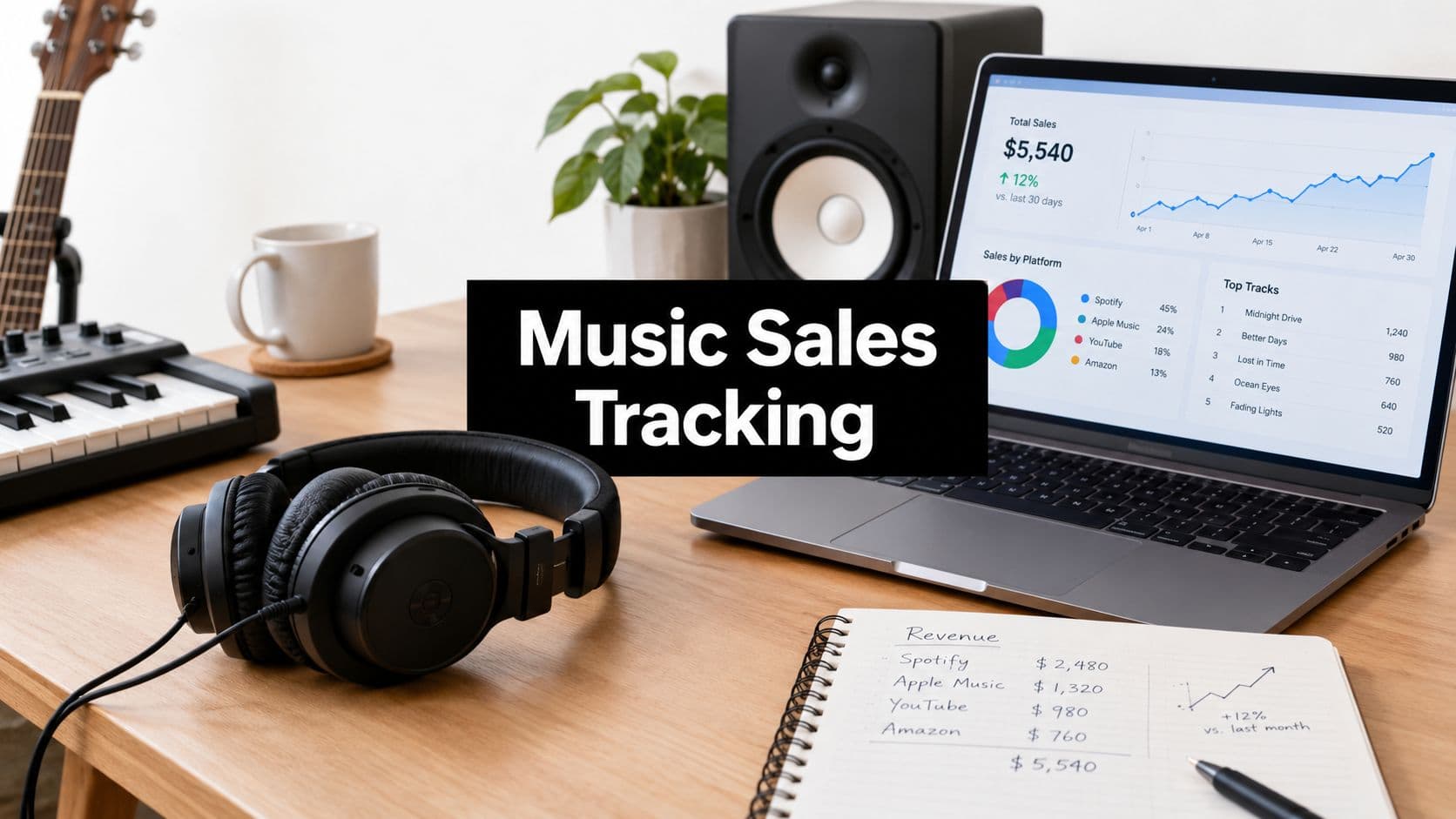
Streaming is useful for exposure, but its payout structure makes it a weak foundation for an independent artist's entire business. Duetti's 2024 report put the average return for independent artists and other master owners at $3.41 per 1,000 streams, with per-stream rates falling by an average of 7% annually since 2021, as reported in the independent artist market economics summary.
The same source shows meaningful differences between services. It reports approximately $4.8 per 1,000 streams on YouTube, $6.2 on Apple Music, and $8.8 on Amazon Music. Territory, catalog mix, subscription behavior, and listener activity all affect the result, but the underlying lesson is simple. Streaming revenue arrives in tiny fractions, and artists need enormous listening volume before those fractions become dependable income.
Direct commerce uses a different mechanism. Instead of receiving a fractional royalty for each play, the artist sells a product or membership and keeps roughly 82% to 85% of regular direct-sale revenue, according to the direct-to-fan and music economics reporting. Luminate's 2024 year-end data also indicated that direct-to-consumer physical album sales represented 63% of first-week sales, reinforcing the commercial value of owned purchasing channels.
Streaming versus direct commerce economics
| Revenue Model | Artist Retention Rate | Primary Value Driver |
|---|---|---|
| Streaming royalties | $3.41 per 1,000 streams on average | Reach, listening frequency, and catalog discovery |
| Direct downloads and merchandise | Roughly 82% to 85% | Pricing control, product value, and fan intent |
| Direct-to-consumer physical albums | Roughly 82% to 85% on regular direct sales | Ownership, release demand, and collector behavior |
A practical platform should support both sides without pretending they're interchangeable. Streaming can introduce an artist to a listener. A download, shirt, vinyl release, bundle, or subscription can convert that listener into a customer with a much higher economic value.
Artists should therefore evaluate a direct music marketplace by asking whether it handles the full transaction, not just the product listing. Can the artist set prices, package products, communicate with buyers, and understand repeat behavior? If not, the platform may provide a storefront while leaving the most important commercial work elsewhere.
Streaming measures attention. Direct commerce measures commitment.
The strongest monetization model uses streaming as the top of the funnel and owned commerce as the engine underneath. Artists shouldn't stop promoting streams, but they should stop treating stream totals as the final destination.
Comparing Common Types of Music Platforms
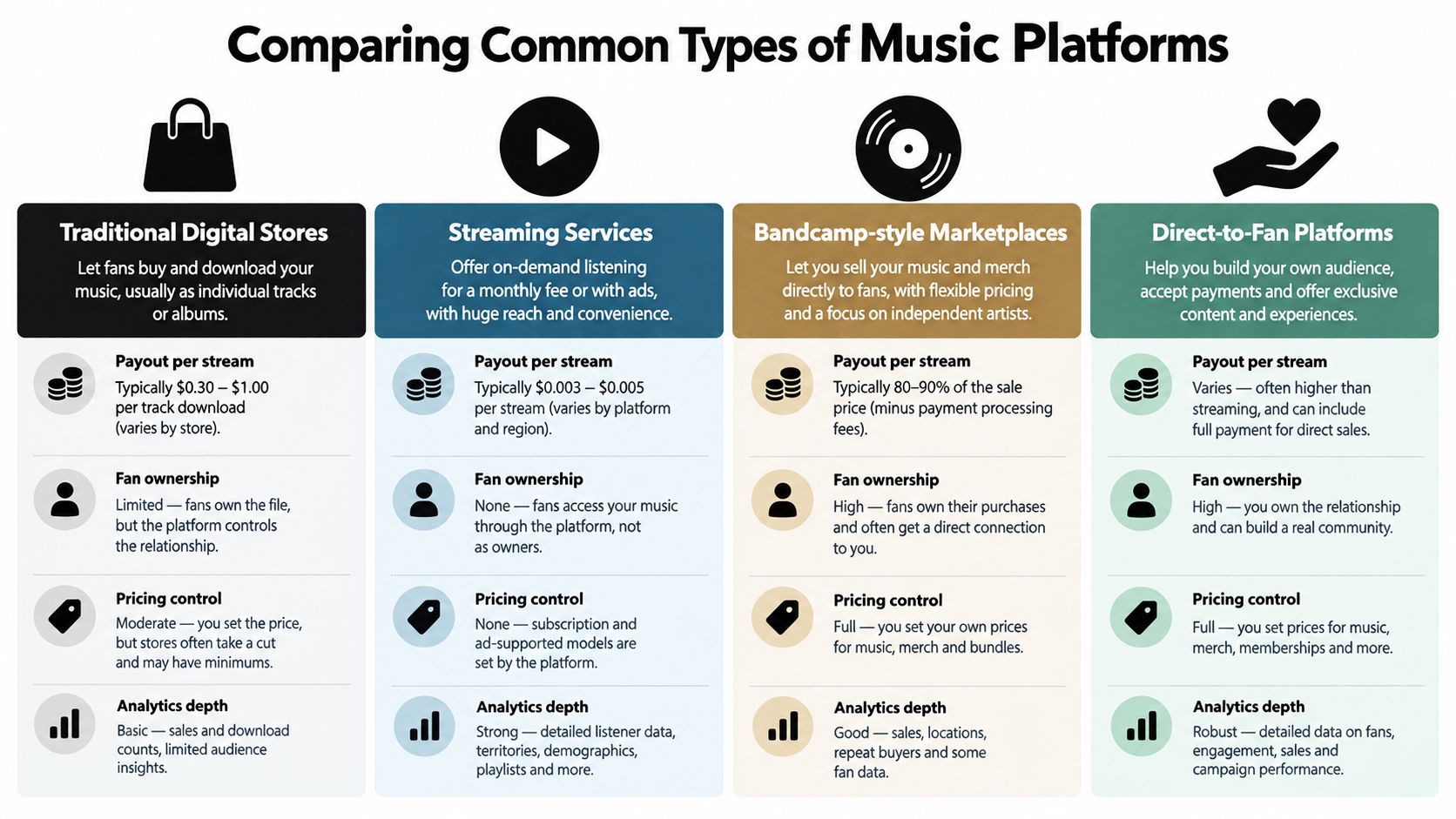
Platform categories serve different jobs. Choose them by the outcome they create: distribution, discovery, project funding, or direct-to-fan revenue. A reach-focused service will not give you ownership of customer relationships, while a commerce platform will not automatically generate mass attention.
Traditional digital distributors
Distributors deliver releases to stores and streaming services. They handle delivery and release administration, but the listener relationship usually stays with the destination service. The artist gets a published release, not a complete commercial environment for communication, sales, and repeat support.
That arrangement works for availability. It becomes restrictive when an artist wants to sell a bundle, offer a membership, or identify listeners most likely to purchase. Use a distributor for delivery, then add a separate channel for transactions and customer relationships.
Streaming services
Streaming services provide reach, playlists, recommendations, and listening data. They belong in a release plan, but the vast majority of catalog receives negligible streams, so algorithmic exposure cannot be planned as a predictable acquisition channel.
Streaming can introduce an artist to a listener. It rarely gives the artist control over the next commercial step. Treat it as an entry point, then direct interested listeners toward an owned profile, mailing list, store, or membership.
Crowdfunding platforms
Crowdfunding finances a defined project, such as recording, a physical release, or a tour. Its strength is concentrated support around a clear campaign and deadline. Its weakness is continuity. After the campaign closes, the artist still needs a place for regular releases, communication, purchases, and memberships.
Crowdfunding is a project-financing tool, not a complete operating system.
Unified music-first ecosystems
A unified independent music platform brings media hosting, discovery, commerce, subscriptions, messaging, and analytics into one environment. Fewer handoffs make it easier to move an interested listener toward a purchase or recurring support.
| Platform type | Main strength | Main weakness |
|---|---|---|
| Digital distributor | Broad release delivery | Limited fan ownership |
| Streaming service | Listening reach and discovery | Low control over monetization |
| Crowdfunding site | Project-based financing | Weak ongoing utility |
| Direct-to-fan ecosystem | Relationship and commerce | Requires the artist to drive engagement |
Use these categories together. Keep distribution where it performs well, use social channels to create awareness, and build a dedicated place where interested listeners can buy, subscribe, and remain connected. Sustainable revenue comes from that progression, not from treating every stream as a customer.
Evaluating Features to Choose the Right Platform
Artists should judge an independent music platform by the number of commercial decisions it puts in their hands. A polished interface isn't enough. The platform must help an artist move from attention to action without adding unnecessary fees, fragmented tools, or restrictive terms.
Start with the transaction. Ask whether the service supports downloads, physical products, bundles, and subscriptions. Check the take rate, payout timing, refund process, and pricing controls before uploading a catalog. A platform that hides its economics behind vague language will create problems once sales begin.
Use a practical evaluation checklist
Commerce must be native. Artists shouldn't need to send a fan to a separate store to buy a download after discovering a song. The shorter the path from interest to purchase, the fewer opportunities the artist creates for abandonment.
Content should live together. Tracks, merchandise, memberships, and exclusive media should appear within a coherent artist profile. Fans understand the offer faster when they don't have to assemble the experience from separate links.
Analytics must describe behavior. Look for information about repeat listening, saves, purchases, subscriptions, and audience response. Raw follower totals won't tell you which release or offer deserves another campaign.
Communication should be direct. Messaging, community posts, and voice notes give artists ways to maintain attention outside algorithmic feeds. The platform should support communication that feels useful, not constant broadcast promotion.
Terms should preserve flexibility. Read the contract for exclusivity, catalog removal, account access, payment conditions, and ownership of customer information. Artists need the freedom to test offers and adjust their business as their audience changes.
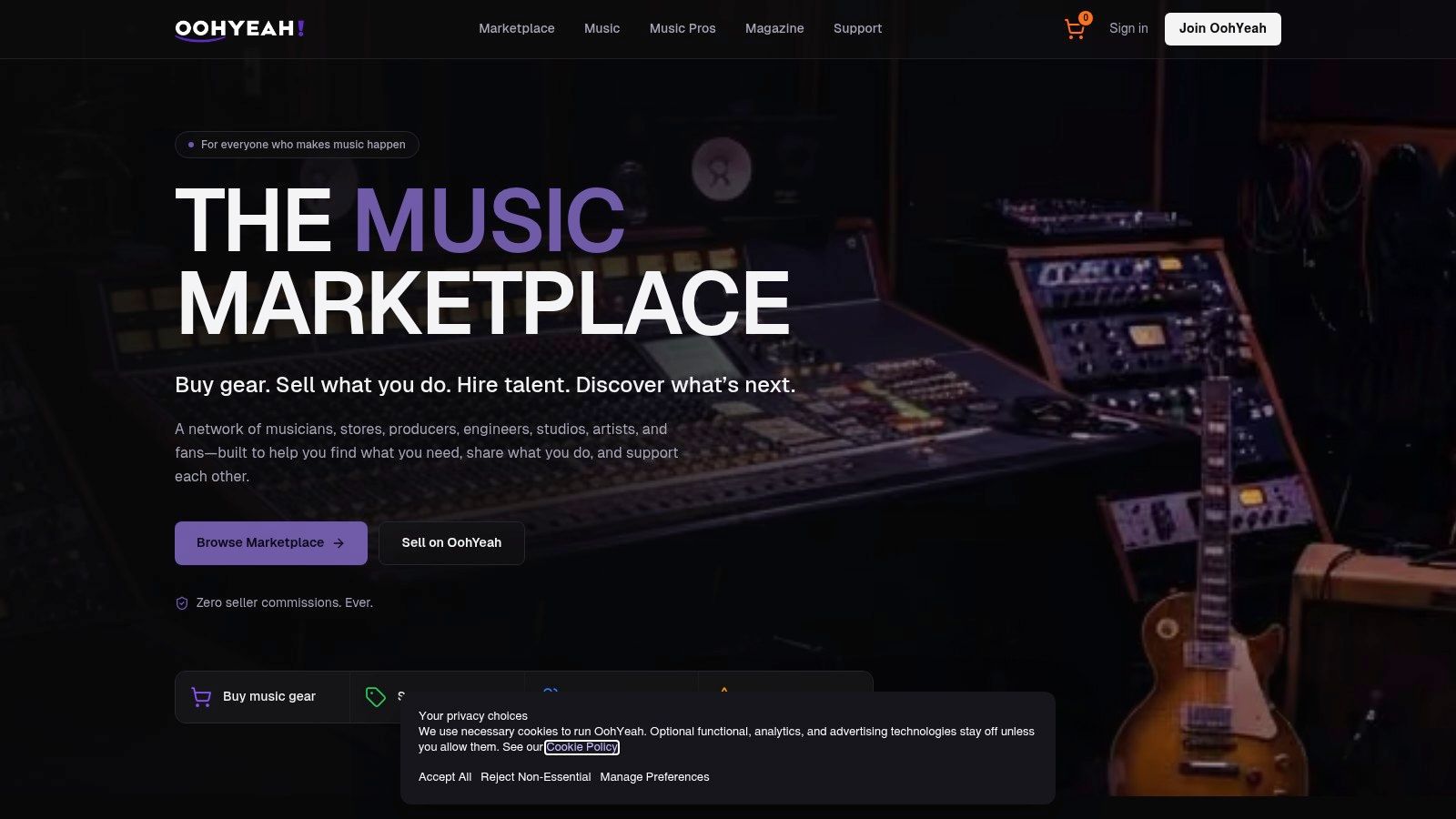
OohYeah provides a unified environment for artists to upload tracks, merchandise, and subscription services, with pricing and distribution controls alongside direct fan interaction. Its artist platform tools illustrate the product architecture artists should look for, regardless of which service they ultimately choose.
Buyer's test: If a platform helps you count listeners but not identify buyers, it isn't giving you enough commercial visibility.
Turning Casual Listeners Into Paying Supporters
Follower counts and monthly listeners measure reach, not income. Track behaviors that show commitment: repeat listening, saves, playlist adds, email signups, purchases, and subscriptions. Those actions reveal who may support the next offer.
A fan journey develops through increasingly deliberate choices. A casual listener hears a track. An engaged listener returns, saves it, follows the artist, or joins a mailing list. A buyer pays for a product, while a member chooses an ongoing relationship. The commercial goal is to move people from borrowed attention into an owned connection.
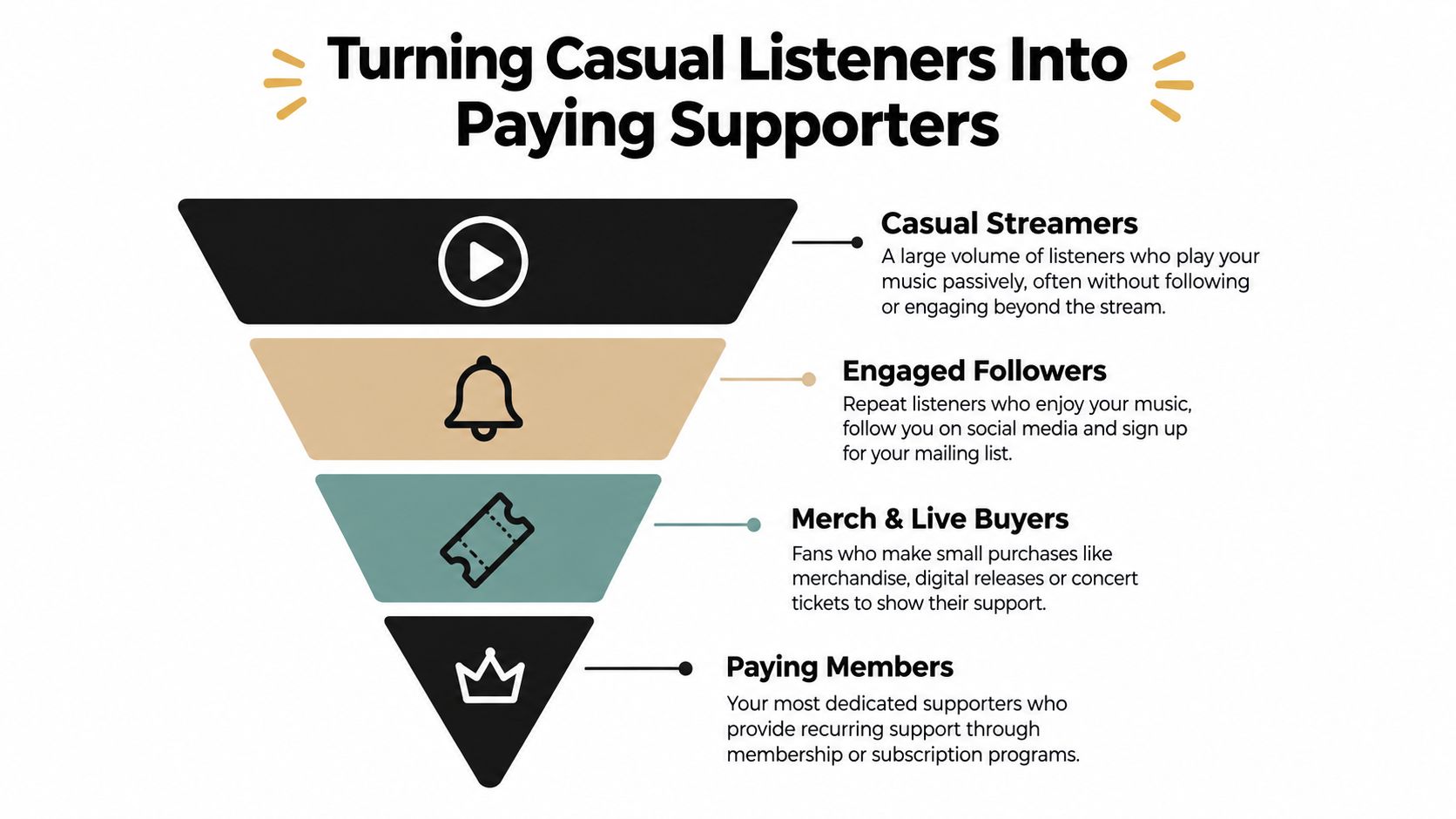
Your platform should make those stages visible. Group listeners who repeatedly engage with a release, buyers who purchase multiple products, and subscribers who respond to exclusive content. Send each group a relevant next offer instead of the same announcement to everyone.
Build an engagement cycle
Treat each release as a sequence of reasons to return, not a single launch day. Offer an early preview, behind-the-scenes material, a limited bundle, a live session, or a follow-up invitation tied to the next release.
Email gives artists a direct channel that does not depend on an algorithm. Use it for useful access and clear offers, not generic announcements. A first-time listener needs different communication from a repeat buyer.
Industry coverage cited by the 2025 fan journey analysis estimates that roughly 20% of U.S. music listeners qualify as superfans across five or more engagement channels. These listeners already show commitment through their actions. Recognize that behavior, reward it, and make the next purchase an obvious continuation of the relationship.
A talk embedded below explains how artists can convert passive listeners into members, giving the fan-journey strategy a practical focus on participation and retention:
Do not pursue every listener equally. Identify the people who return, participate, and buy, then build a clear route toward deeper support. Artist profiles and fan platform features should make discovery, participation, and purchase easy to follow.
Building a Sustainable Music Career
Sustainable careers don't come from abandoning streaming. They come from assigning each channel a clear job.
Use streaming services and social platforms to attract attention. Use your independent music platform to collect engagement, present offers, and maintain communication. Offer something specific, such as an exclusive download, a physical release, a merch bundle, or a subscription, then learn which listeners respond and build the next campaign around that evidence.
Start with an audit. List every place where fans currently find your music, buy products, receive updates, and contact you. Identify where fees are deducted, where customer information remains inaccessible, and where a fan must click through several unrelated services before completing a purchase.
Then consolidate the relationship. Send your most engaged listeners to one artist destination, publish a clear offer, and follow up with content that earns another visit. Treat every release as part of a longer commercial cycle rather than a one-time attempt to win the algorithm.
The central shift is from renting attention to building ownership. You don't need to control every platform where your music appears. You do need a reliable place where listeners can become supporters and supporters can remain connected.
OohYeah offers artists a music-first space for streaming, direct sales, subscriptions, merchandise, and fan communication in one ecosystem. Visit OohYeah to evaluate how an owned commerce and engagement layer can support your next release beyond fractional streaming royalties.