How to Leverage Social Media for Musicians in 2026
Learn how to leverage social media as a musician with this practical guide to platform selection, content strategy, fan engagement, and direct monetization.
October 18, 2026
Music Marketplace Advisor
Buying & SellingSocial media reached 5.24 billion user identities worldwide, yet that scale isn't a business plan for your music, according to DataReportal's Digital 2025 global overview. If you're figuring out how to use social media in 2026, start with a tougher question than how to get noticed: what can an interested listener do next? Use social platforms to introduce the music, then give people a clear route to listening, connecting, and buying without letting content production consume your recording time.
Why Follower Counts Are Lying to You
A follow isn't a commitment to your catalog. A viewer can enjoy a chorus, tap your profile, and never think about your music again.
A 2025 MIDiA Research analysis reported that almost half of consumers who heard music on social media didn't stream it during the following month, fewer than one-third became fans, and only 19% of 16–24-year-olds who discovered an artist they liked subsequently listened to more of that artist's music, according to coverage of MIDiA's discovery-to-fandom findings. That's the distinction musicians need to make: exposure, listening, fandom, and purchasing aren't interchangeable.
Count commitments, not spectators
Treat follower growth as a distribution signal, not your final score. Your useful audience consists of people who return, give you permission to contact them, or spend money on something you've made.
The funnel below illustrates the narrowing path from social attention to support. Its purchase implication needs a correction: the youth-listening figure above measures further listening, not conversion into paying fans.
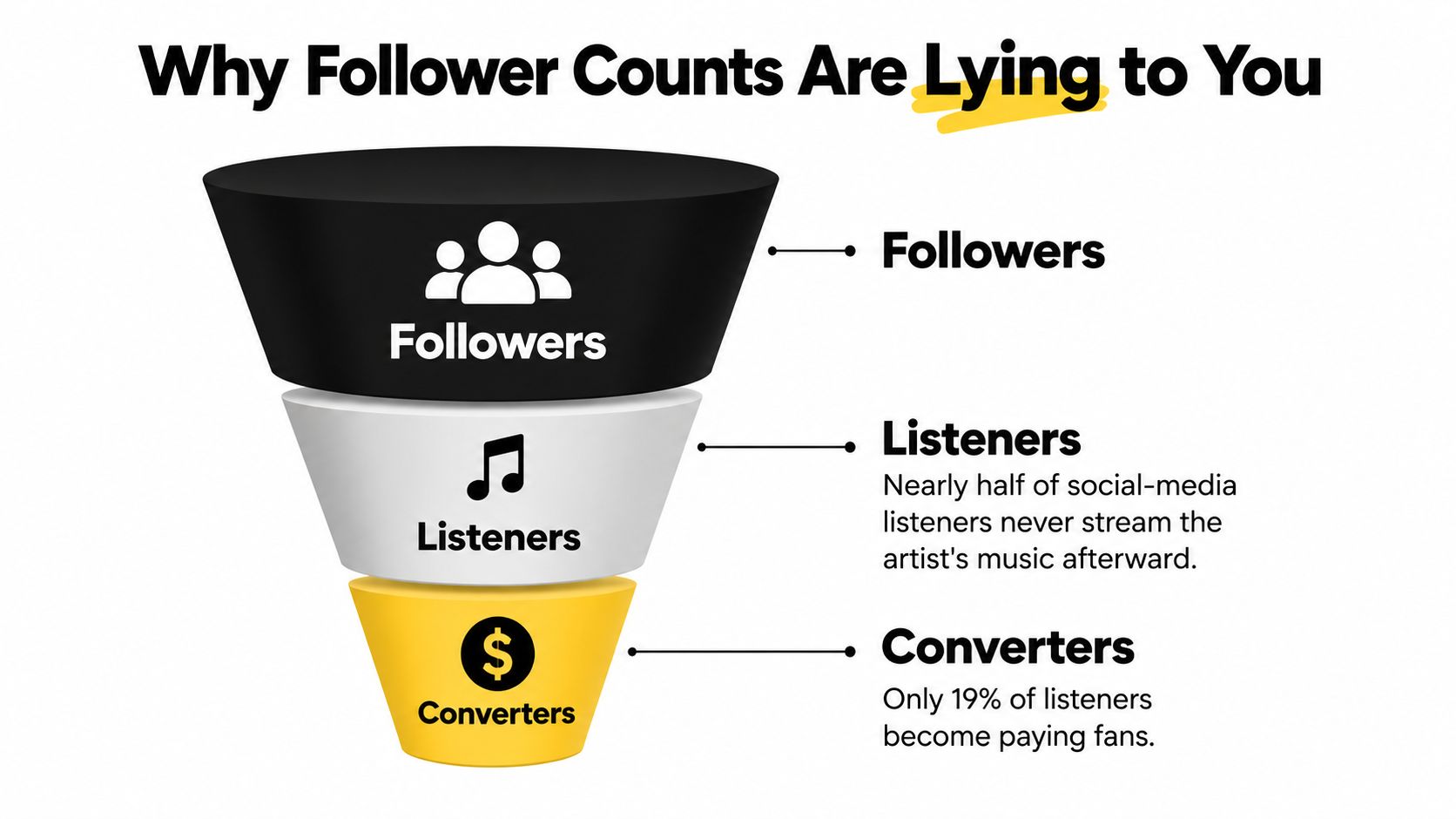
Build around discovery-to-ownership: attract someone on a social platform, invite a direct connection, then earn repeat engagement. Email permissions, community memberships, and purchase histories give you something more durable than access to a feed.
Don't confuse permission to appear in someone's feed with permission to build a relationship.
For organizing your assessment across networks, consider Narrareach cross-platform growth tactics alongside your own campaign records. Keep the question practical: which channel brings people who take the next step?
Stop evaluating posts only by their public popularity. A quieter clip that attracts engaged listeners deserves attention, while a widely shared joke unrelated to your music may deserve none. Decide what commitment you want before deciding what content to publish.
Picking the Platforms That Actually Move the Needle
Choose platforms by the job you need them to perform. Don't build separate publishing obligations everywhere just because other artists have accounts there.
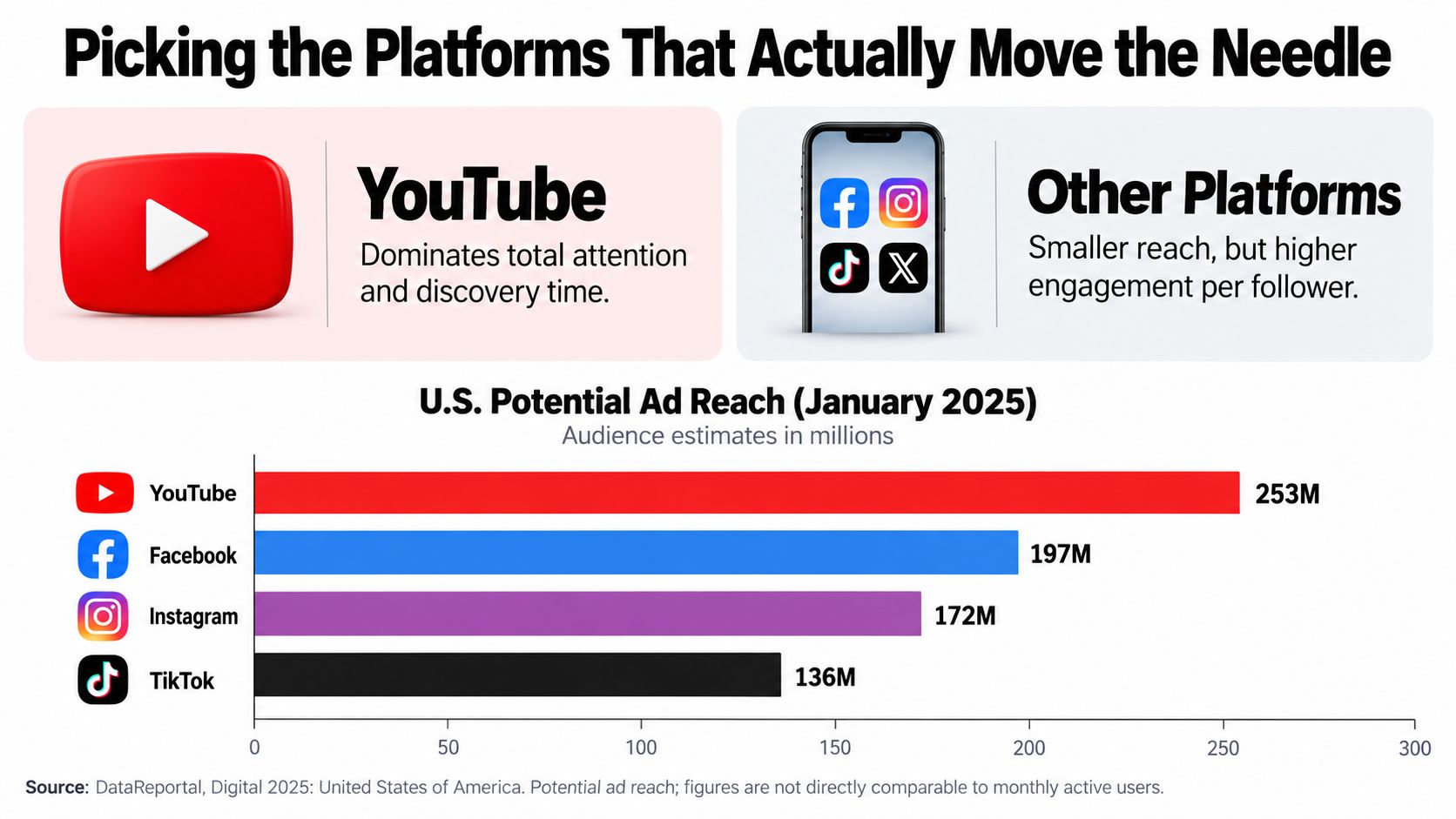
YouTube captured the largest share of worldwide social-media time, with users spending almost twice as much time there as on TikTok; TikTok's Android users worldwide spent almost 35 hours in the app and opened it an average of 360 times during November 2024, according to DataReportal's platform attention analysis. The same analysis reported nearly 45 hours of TikTok use in Indonesia that month. Geographic differences matter, so global popularity shouldn't replace evidence about your listeners.
Assign a role before opening an account
Use this comparison as a planning framework, not a universal ranking.
Platform roles in a musician's social funnel
| Platform | Primary role | Best content | Metric to watch |
|---|---|---|---|
| TikTok | Repeated discovery | Musical hooks, remixes, performance moments | Qualified profile visits |
| Discovery and conversation | Reels, studio footage, Stories, fan replies | Saves and meaningful responses | |
| YouTube | Deeper catalog exploration | Full performances, production breakdowns, release stories | Watch time and destination clicks |
My recommendation: pick a primary discovery channel you can maintain, a channel for conversation, and an evergreen video library. Those roles don't require separate platforms if your audience already responds well in the same environment.
The visual below compares potential advertising reach. Ad reach isn't organic reach or buyer intent, so don't use it alone to choose where you'll spend your working week.
- Choose TikTok when your strongest material is an immediately understandable musical moment.
- Choose Instagram when you can support visual discovery with genuine conversation and recognizable imagery.
- Prioritize YouTube when your live work, production knowledge, or storytelling warrants sustained attention.
Keep secondary accounts lightweight. Repurpose suitable material, but don't promise a publishing schedule you can't maintain. Your platform choice should reflect your audience, your content strengths, and your available creative time.
A Four-Pillar Content System You Can Batch in One Afternoon
“Post consistently” isn't useful advice until you've defined what you're posting. Build a repeatable system around performance, behind-the-scenes, story, and community, then capture those materials during work you'd already be doing.
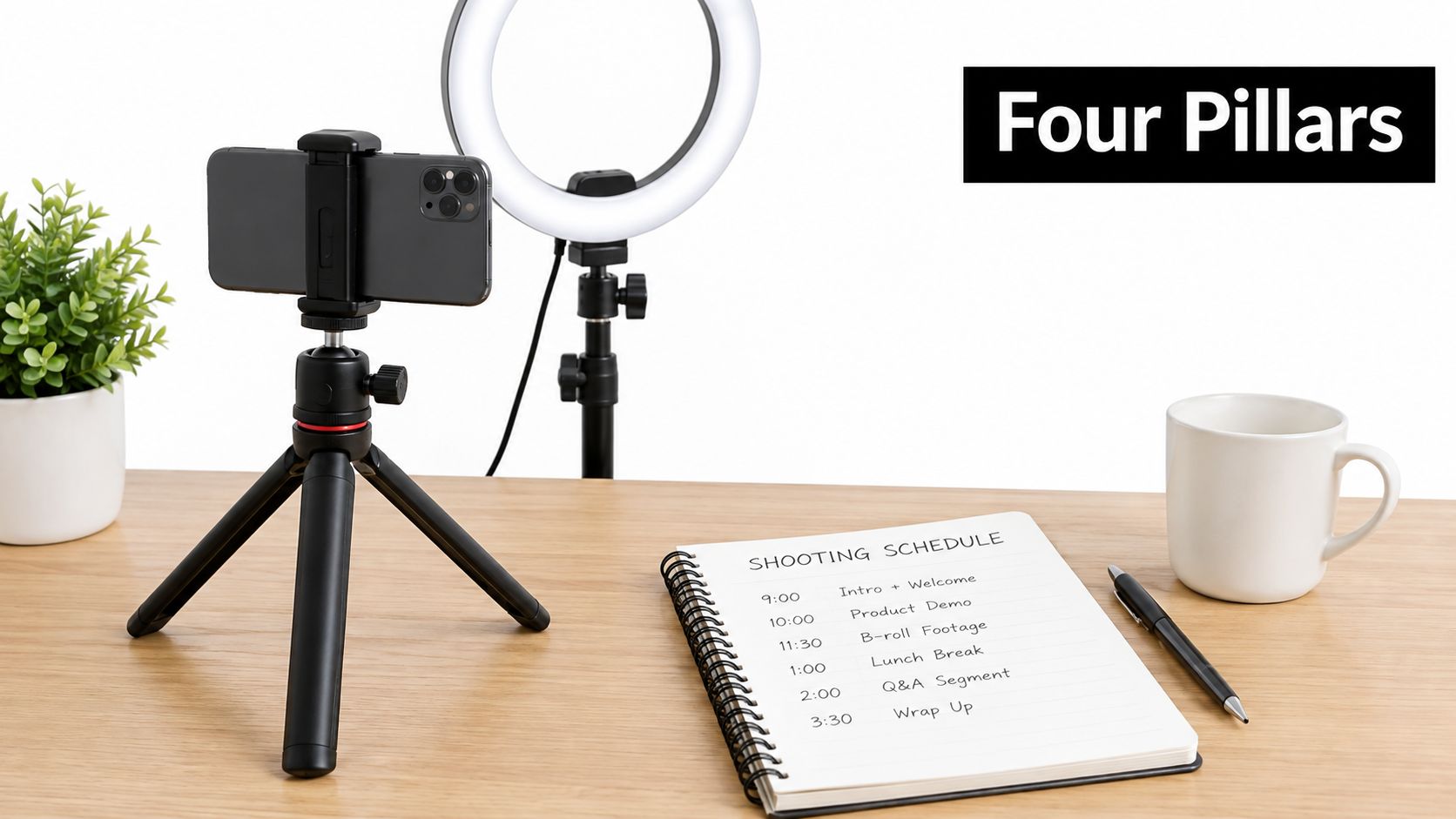
A simple recording setup is enough to begin documenting a rehearsal or studio session.
Capture the music before the marketing
Performance should carry discovery. Record the chorus, a live vocal, a distinctive music phrase, or a producer demonstrating the sound that makes the track recognizable. Start with the musical payoff rather than an explanation of why viewers should care.
For behind-the-scenes, document a decision: changing a lyric, rejecting a drum sound, or rebuilding a difficult harmony. The point isn't to prove you're busy. Give listeners something specific to understand about your craft.
Story connects those decisions to an identity. Explain what the song means, what you were trying to express, or how the arrangement developed. Keep a fuller version for YouTube and extract a self-contained moment for short-form use.
Community rewards people who already care. Answer a listener's question, invite feedback on artwork, or share a subscriber-only rehearsal take. Don't make existing supporters sit through another generic introduction.
Turn the session into a publishing queue
A proposed weekly batch can come from the same rehearsal: a hook-led performance clip, a studio decision, a song-origin story, and a response to a fan question. These are production assignments, not promises about engagement.
- Prepare before recording: Write the destination beside each idea, such as track preview, community discussion, full video, or subscriber release.
- Edit for the platform: Adjust framing, opening text, captions, and pacing rather than uploading an identical export everywhere.
- Finish the batch: Save the media, caption, destination, and publishing status together so posting doesn't become another editing session.
Use the revid.ai social media strategy guide as an additional planning resource if you need help organizing formats. Keep the system anchored to your actual music, not a template that could belong to any creator.
For additional video-planning inspiration, use the embedded resource below.
Designing a Discovery-to-Conversion Funnel
Consider a viewer who encounters your rehearsal clip without knowing your name. Asking that person to buy a subscription immediately is a different proposition from inviting an existing listener to access an exclusive session.
A 2024 International Journal of Communication study of 25 participants found that Instagram and TikTok were the main music-discovery platforms, while all participants used YouTube and Spotify for streaming; discovery was often incidental, according to the study of music discovery across platforms. This small qualitative study isn't a universal audience map, but it supports a useful design principle: your content must make sense to someone who wasn't looking for you.
Match the invitation to the viewer
Separate discovery from conversion, with intent signals between them. The image below represents that progression, not a performance benchmark for your campaign.
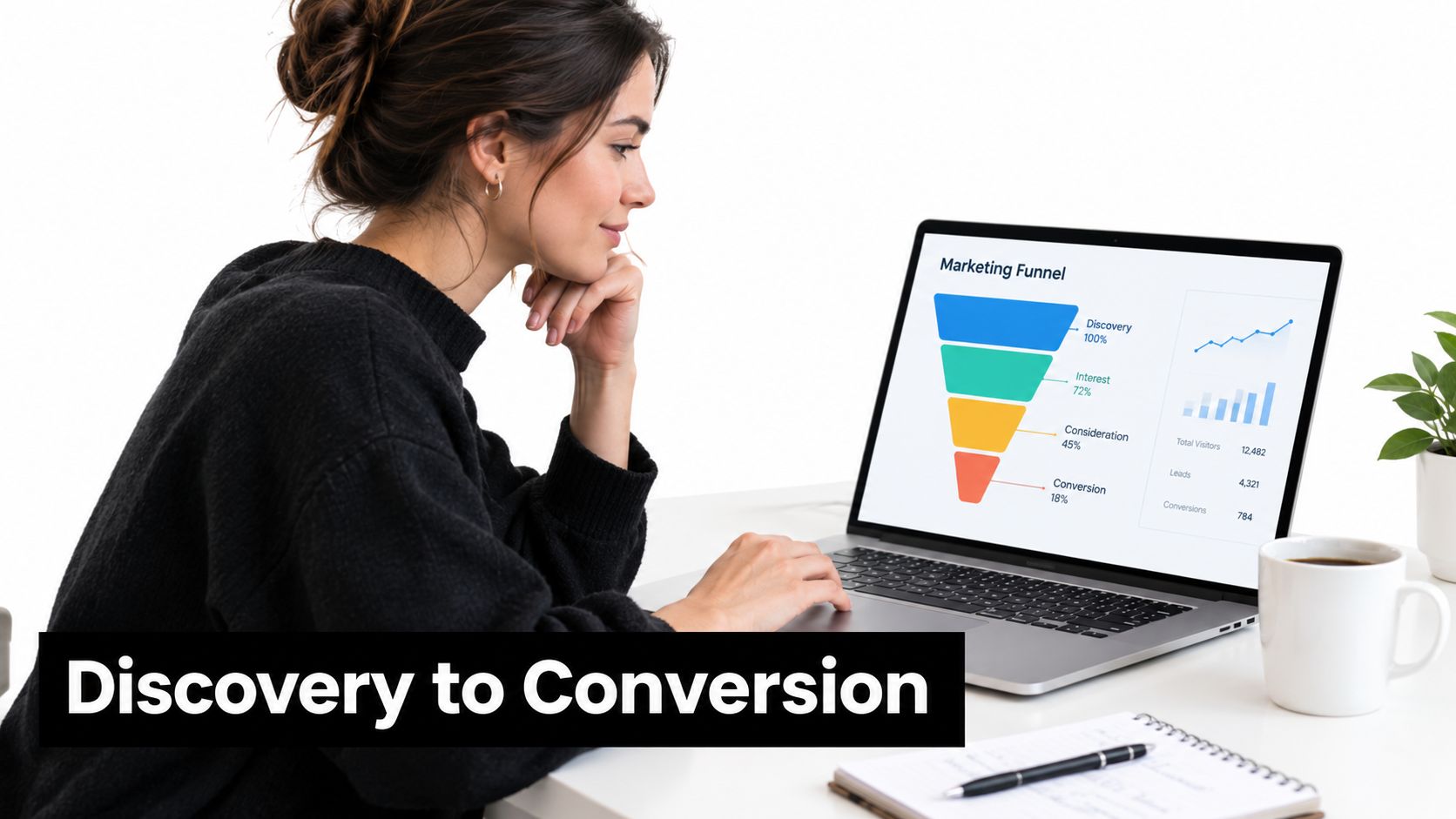
| Stage | What to measure | What to diagnose |
|---|---|---|
| Awareness | Reach and three-second views | Whether the opening attracts attention |
| Intent | Watch time, completion, saves, shares, profile visits, clicks | Whether viewers want more |
| Relationship | Fan registrations and repeat engagement | Whether people choose ongoing contact |
| Revenue | Paid downloads, merchandise purchases, subscription starts | Whether the offer produces transactions |
A registration isn't revenue, and a free download isn't a sale. Keep those actions separate so you can distinguish audience-building from monetization.
For a performance clip, invite viewers to hear the full track. For behind-the-scenes footage, offer a community discussion; for an established release story, present the relevant download or merchandise. Each invitation should describe what happens after the click.
Remove the gaps after attention
Route purchase-ready listeners to a relevant track or product in the commission-free music and merchandise marketplace. Don't send someone interested in a specific release to a page that makes them hunt for it.
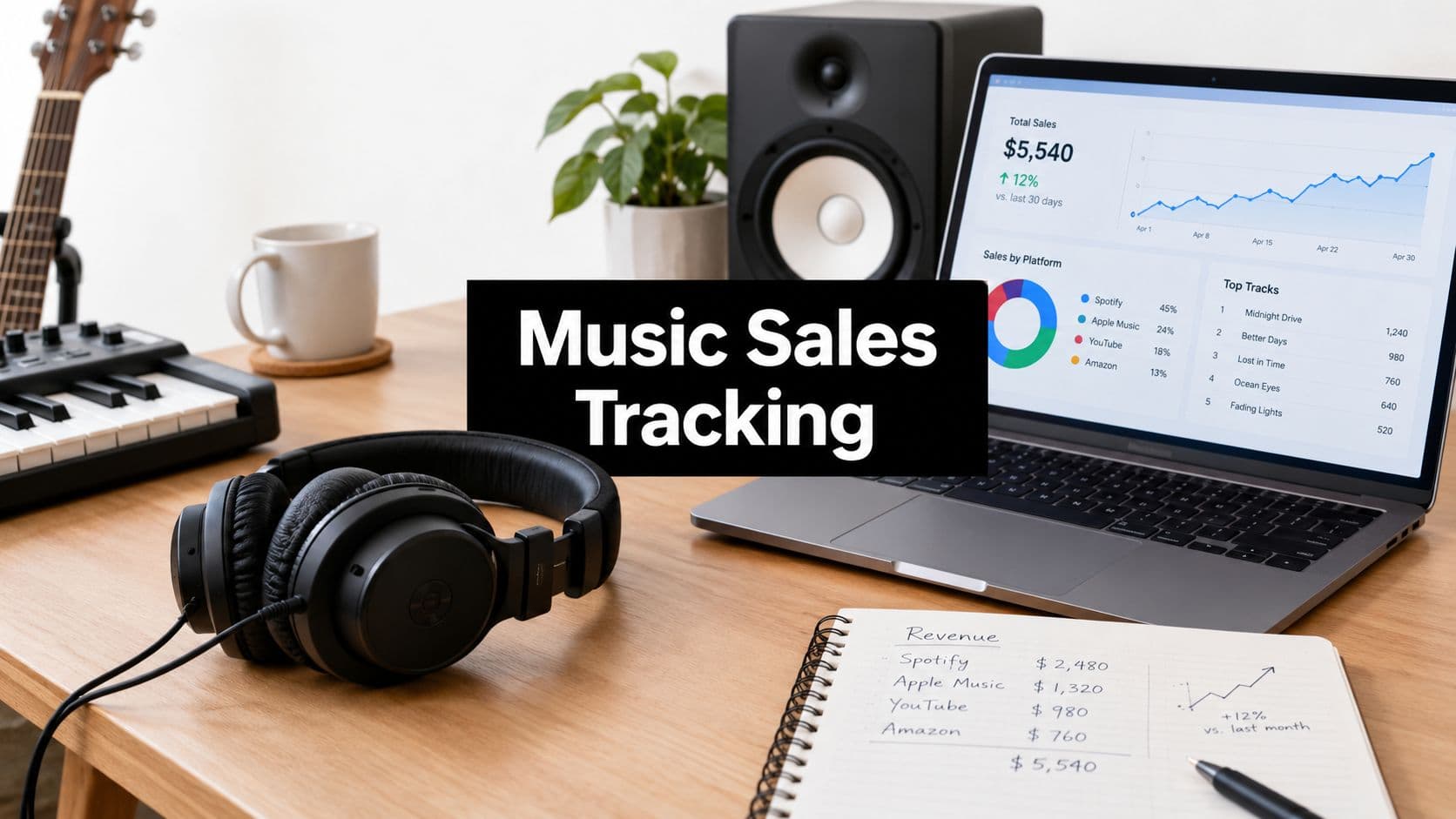
Attach unique tracking links or campaign codes to platforms and content themes. Preserve campaign labels in your sales records where possible, and recognize that attribution won't capture every indirect discovery.
Conversion check: If the clip promises a full performance, the destination should deliver that performance before presenting unrelated offers.
When clicks arrive but transactions don't, inspect the page, price clarity, preview, and checkout. More posting won't fix a confusing buying experience.
Testing Posts Without Burning Out
Don't rebuild your strategy because a single upload disappointed you. Change a defined variable, record the result, and repeat the comparison before drawing a conclusion.
Test a decision you can act on
Use engagement by reach, calculated as total interactions divided by reach, while treating published benchmarks cautiously: industry summaries report Instagram engagement around 2.5%–6% and TikTok around 4%–10% for accounts with 5,000–25,000 followers, according to the engagement measurement methodology and directional ranges. Definitions and samples differ, so these ranges aren't universal targets or necessarily equivalent reach-based measures.
Directional engagement ranges by platform tier
| Platform | Account tier (followers) | Engagement rate range | How to calculate |
|---|---|---|---|
| Tier identified above | Published Instagram range above | For your reach-based test, divide total interactions by reach | |
| TikTok | Tier identified above | Published TikTok range above | Use the same interaction definition across comparable posts |
Track the metric consistently rather than adjusting the denominator to make a result look stronger. Define what a successful test would change in your next production session.
- Opening frame: Compare an immediate performance with a brief explanatory opening, keeping the musical excerpt and offer unchanged.
- Musical hook: Compare chorus and verse excerpts while holding framing, caption style, and destination steady.
- Caption: Test a concise invitation against a more contextual version without changing the video.
- Destination: Keep the invitation consistent while comparing a focused release page with your general artist profile.
Give each comparison enough evidence
My recommendation is to repeat comparable tests before replacing a format. Record early results and later results separately, then compare patterns rather than selecting whichever snapshot flatters the post.
You won't perfectly control organic distribution. You can control avoidable confusion: don't change the opening, thumbnail, offer, and destination simultaneously, then declare the hook responsible.
A winning creative test helps you make a repeatable decision. A lucky upload only gives you a screenshot.
Don't compare Reels with Stories as though viewers encounter them in identical circumstances. Keep saves and shares visible instead of collapsing everything into likes, and include fan registrations or purchases when judging the outcome.
Set a stop rule before testing: archive formats that repeatedly fail to produce the action you're seeking. Preserve your strongest variants in a reusable folder, and spend the recovered time making music.
Routing Every Post Toward an Owned Fan Home
Your artist identity shouldn't depend on what you think a recommendation system wants this week. Use audience feedback to improve presentation, not to outsource your taste.
A 2025 peer-reviewed study found that musicians more invested in their art were less likely to base creative decisions on what was trending, according to research into musicians' views of digital platforms. Take that distinction seriously: packaging your work effectively doesn't require changing the work into something you don't believe in.
Make the destination worth returning to
An owned fan home is a working relationship model, not a claim that you own another company's infrastructure. Maintain permission-based email contacts alongside your storefront and community, and understand what each service lets you access or export.
The destination needs a recognizable artist profile, accessible music, clear offers, and a reason to return. Fans shouldn't have to piece together your identity from unrelated social accounts.
Use the free fan community and direct artist interaction options as a possible relationship destination alongside email and your own website. Direct messages, voice notes, and community posts can support conversations beyond a public comment thread.
- TikTok teaser: End with an invitation to hear the full track on your artist page, then make that release easy to find.
- Behind-the-scenes Reel: Invite listeners into a discussion about the recording and continue it with a voice note.
- YouTube performance: Point interested viewers toward relevant merchandise, explaining exactly what they're buying.
- Subscriber preview: Describe the exclusive content and delivery commitment before asking someone to subscribe.
Protect the time you came to this career for
Direct monetization doesn't automatically solve workload. A subscription creates obligations, merchandise requires fulfillment, and community members expect attention. Choose offers you can deliver without sacrificing recording or rehearsal.
Measure revenue and meaningful fan actions per hour invested. Include editing, posting, replies, administration, and fulfillment in your time assessment, rather than counting only the recording session.
If a format takes substantial effort and produces neither relationships nor sales, simplify it or retire it. Your aim isn't to become a full-time promoter who occasionally finishes a song. Build a manageable business around the music.
Your 90-Day Social-to-Fan Rollout
Treat this as an execution schedule, not a growth forecast. The milestones are decisions and deliverables you control, not promised follower counts or earnings.
Days 1–30 establish the foundation
Choose your primary discovery platform and put the batch workflow on your calendar. Publish a clear artist destination with a track, a merchandise item if you're ready to fulfill orders, and a subscription only if you can sustain its content.
Explore the artist publishing and monetization options while assembling those offers. Complete the path from social profile to release page before increasing your posting workload.
Days 31–60 repair the funnel
Add campaign tracking and run controlled comparisons of your opening, invitation, and destination. Review where viewers stop progressing, then fix that specific gap rather than producing more material indiscriminately.
If editing is the bottleneck, evaluate AI video tools for new releases. Judge them by usable output, permissions, and whether they preserve your visual identity, not by the volume of clips you can generate.
Days 61–90 scale selectively
Give more production time to the content that attracts qualified listeners. Launch a community-informed release, fulfill the offers you've made, and assess whether the return justifies your hours.
- Weekly: Batch content, answer substantive fan messages, and check destination pages.
- Monthly: Review registrations, purchases, repeat engagement, and production time.
- Quarterly: Retire weak formats, reassess offers, and protect the next recording block.
Finish the rollout with a smaller, clearer system you can maintain. Expansion is optional; keeping your promises isn't.
OohYeah offers track uploads, merchandise sales, subscriptions, and direct fan interaction with commission-free purchases. Visit OohYeah, set up a release destination, and connect your next social post to a specific listening, community, or purchase invitation.