8 Direct Distribution Examples for Musicians
Explore 8 direct distribution examples for musicians, with revenue mechanics, trade-offs, implementation steps, and practical templates.
August 22, 2026
Music Marketplace Advisor
Buying & SellingDirect distribution is no longer a niche workaround for musicians. Luminate's mid-year reporting found that direct-to-consumer music sales rose 20% to 4.4 million units in the first half of the year compared with the same period in 2022, with vinyl reaching 3.6 million units and CDs reaching 1.7 million units. Vinyl made up 60.3% of those D2C product sales, and one in nine U.S. vinyl purchases happened directly through artists or their shops. Luminate's mid-year coverage shows why direct distribution deserves strategic attention.
Direct distribution means owning more of the path between artist and fan, from discovery and communication to payment and fulfillment. The eight models below connect streaming, merchandise, memberships, email, live events, downloads, communities, and crowdfunding into a revenue system rather than a random collection of sales channels. No single channel replaces every intermediary. The right mix depends on your catalog, audience relationship, operational capacity, and immediate revenue objective.
Platforms such as OohYeah! illustrate the unified approach, combining streaming, sales, subscriptions, messaging, and community features in one artist-first environment. Even physical execution matters. For example, artists selling apparel should assess production standards before launching, including the kind of DTF print quality shown in this example.
1. Artist-Direct Streaming Platforms
Artist-direct streaming works when the platform does more than host audio. The useful transaction flow is discovery, account creation, listening, data capture, and a next action such as a download, subscription, message, or merchandise purchase. That turns a play into a relationship instead of leaving the listener entirely inside an intermediary's ecosystem.
OohYeah! represents this model by combining direct streaming and sales while giving artists control over pricing, release access, and the way fans interact with their work. Bandcamp provides an artist-friendly marketplace, while services such as DistroKid and CD Baby offer artist dashboards and direct-to-fan features alongside broader distribution infrastructure. These tools serve different needs. A platform built around fan commerce can support deeper ownership, while a distribution service can help artists reach listeners across established outlets.
A useful example is Grouper's hybrid approach. Recent releases are often reserved for Bandcamp listeners, while older catalog remains available on mainstream digital service providers. This case study on Grouper's distribution strategy shows how windowing can make direct access feel valuable without abandoning discovery elsewhere.
Make listening lead somewhere
Use analytics to identify which releases attract repeat attention, then connect those listening moments to an offer. Exclusive previews, early releases, themed collections, and curated playlists can give direct-platform followers a reason to return.
- Create a release path: Move fans from a social post to a track, then to an owned action.
- Test access instead of guessing: Compare early access, bonus material, and standard availability.
- Keep communication active: Use platform messaging to explain what fans can expect next.
The operational burden is catalog management, metadata accuracy, customer support, and consistent promotion. This model fits artists who already have a dedicated audience and want direct listening behavior to support broader commerce.

2. Direct-to-Fan Merchandise Sales
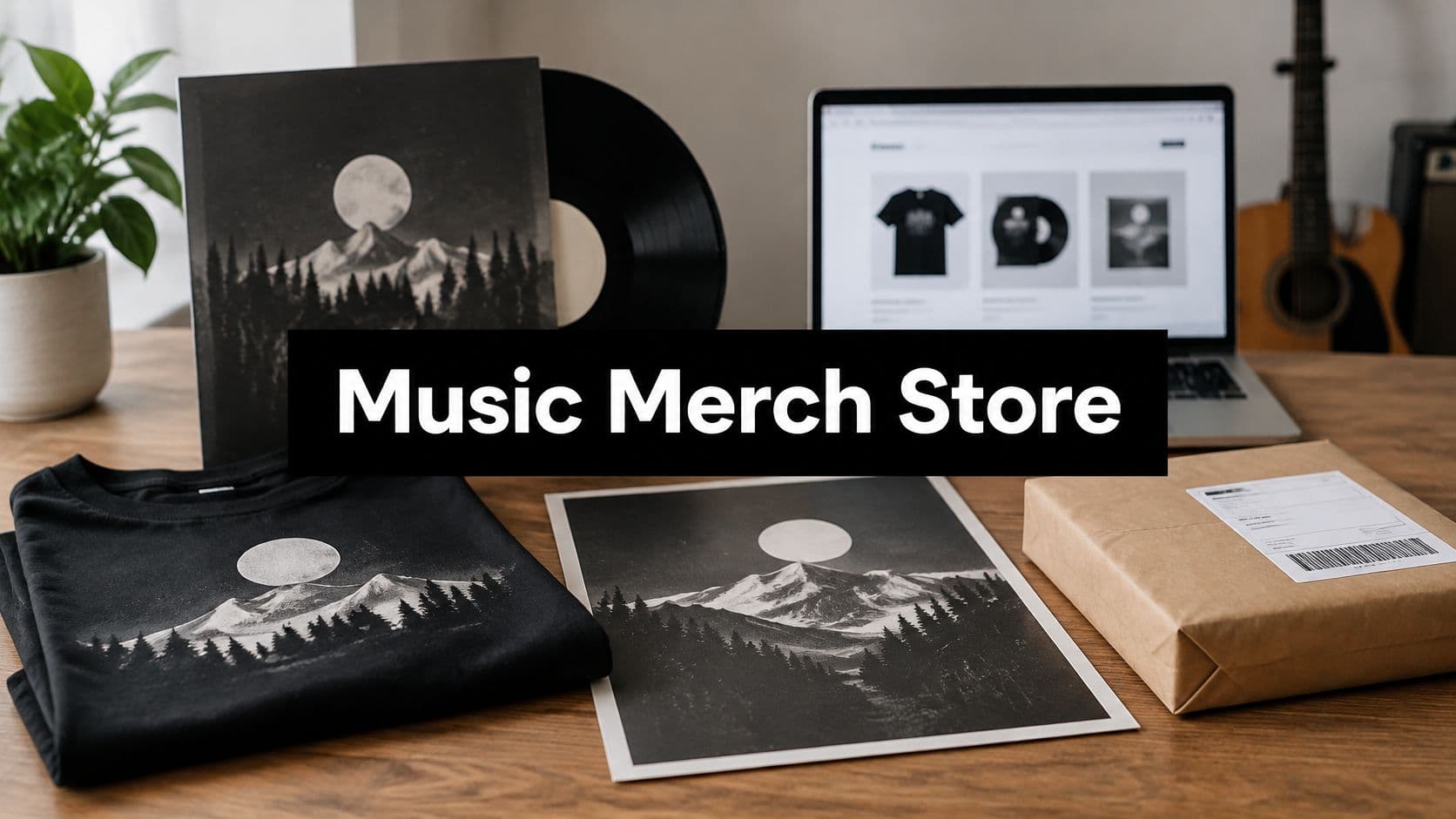
Merchandise works best when it is treated as part of the release system, not as a separate shop. The transaction flow is clear: the artist develops an offer, a fan discovers it, the storefront collects payment, and the artist or fulfillment partner ships the order. That purchase can also identify a high-intent supporter for future releases, ticket offers, and direct communication.
Artists can sell apparel, vinyl, digital bundles, collectibles, and signed products through branded storefronts or integrated marketplaces. OohYeah!’s commission-free merchandise marketplace keeps music and merchandise in one environment, shortening the path from listening to purchase. Spring, Printful, Shopify, and direct vinyl services address different parts of production and fulfillment. None removes the need to choose products, set expectations, monitor orders, and handle customer problems.
Direct physical sales have become commercially meaningful. Luminate reported that D2C music sales reached 4.4 million units in the first half of the year, and current releases represented more than 60% of total D2C product sales. As noted earlier, the practical implication is clear: physical products perform best when tied to a release, tour, or other moment when fan intent is already high.
Sell the story, not just the object
A limited pressing, signed insert, tour design, or release-specific bundle gives the item a reason to exist. Pre-orders can test demand before manufacturing, while on-demand printing reduces inventory exposure at the cost of potentially lower margins or less customization.
- Build a clear offer: Pair the product with a download, bonus track, or defined access benefit.
- Collect feedback early: Ask fans which designs, formats, or colors they would purchase.
- Set the operating owner: Assign responsibility for packing, returns, address changes, and support.
- Connect the next action: Add an opt-in update or follow-up offer so the sale contributes to an owned audience.
This model suits artists with visual branding, collector appeal, or a release that naturally produces a physical artifact. It becomes costly when the catalog expands faster than demand, shipping work is underestimated, or fulfillment quality damages trust. Start with one focused product, measure conversion and support volume, then add inventory only when the audience and operating routine can support it.
3. Subscription and Membership Services
Membership changes the commercial question from “Will a fan buy this release?” to “What ongoing value makes a fan stay?” The transaction flow is recurring payment, access to a defined benefit set, continued communication, and renewal. Artists can offer unreleased music, early access, live sessions, private updates, community privileges, or merchandise access.
OohYeah! supports subscription offerings with artist-controlled pricing and tier benefits. Patreon and Substack offer familiar membership structures, but the platform choice matters less than the promise. A vague membership usually creates administrative pressure without creating durable value. A clear membership tells fans exactly what they receive, how often it arrives, and where they can participate.
Design a service you can sustain
Three or four tiers can be easier to explain than a long menu, but the right structure depends on your audience and workload. The entry tier might provide early access and updates. A higher tier could include unreleased material, monthly live Q&A sessions, or priority merchandise access. A premium tier should only exist if you can deliver a scarce benefit, such as intimate sessions or direct feedback.
Practical rule: Never promise a recurring benefit that depends on inspiration arriving on schedule. Build the membership around a repeatable production routine.
- Define the cadence: Tell members when updates, audio, or events will appear.
- Separate benefits clearly: Each tier should add a visible reason to upgrade.
- Protect creative capacity: Reuse suitable studio notes, demos, and progress updates without making the membership feel disposable.
- Invite participation: Use subscriber feedback to guide bonus content and project development.
Membership fits artists with a core audience and a dependable communication habit. It doesn't fit artists who can't maintain delivery or who mistake access to unfinished material for a complete value proposition.

4. Email Marketing and Direct Communication
Email gives artists a controlled route from attention to action. The transaction flow is permission-based signup, audience segmentation, a relevant message, and a measurable response such as a stream, purchase, subscription, or event registration. Social posts depend on changing distribution rules. Email reaches a known audience through a channel the artist manages.
Mailchimp, ConvertKit, Substack, and similar tools support release announcements, creative notes, private discounts, and behind-the-scenes material. OohYeah! also offers direct messaging and voice-note features within a music-focused environment, giving artists another way to make communication more personal than a standard promotional email.
A list becomes valuable when each subscriber's reason for joining is understood. Someone who bought vinyl may need different offers from a listener who joined for a free track. Segment by geography, engagement, purchase history, or stated preference when the platform supports those fields. That segmentation connects email activity to the wider revenue system, directing the right fan toward streaming, merchandise, memberships, or attendance.
Build a communication loop
Give people a concrete reason to subscribe, such as a track, preview, release note, or access announcement. Set a schedule that matches the artist's actual capacity. Active campaigns may support one or two thoughtful emails each week, while quieter periods should focus on meaningful updates rather than manufactured urgency.
- Choose one action: Ask readers to listen, buy, attend, reply, or share.
- Personalize with evidence: Use names and interests only when the available data supports them.
- Test deliberately: Compare subject lines and calls to action, then apply the results.
- Close the loop: Explain what followed a response or purchase, and show subscribers that their action mattered.
Implementation requires a signup offer, consent records, a few useful segments, and a repeatable editorial calendar. Email works across direct-distribution models because it can feed every other channel. Its operational burden is consistent writing, consent management, list hygiene, and response handling. It underperforms when every message reads like a sales announcement.
5. Live Performance and Virtual Concert Revenue
Live events turn attention into a time-bound experience. A fan buys access, attends a performance, interacts with the artist, and may purchase a recording, merchandise, or upgraded experience during or after the event. Virtual concerts extend that model beyond the artist's local geography, while in-person shows add physical atmosphere and community.
OohYeah!, Veeps, StageIt, Mandolin, and BandsInTown support different parts of this transaction. Some focus on streaming and event access, while others help artists promote or sell live experiences. The platform is only one component. Artists still need a compelling program, reliable technical production, audience communication, and post-event follow-up.
A practical virtual event might include a standard ticket, a premium access option, a live request segment, and a recording available afterward. The recording gives the performance a second commercial life, while an exclusive merchandise offer can connect the event to a physical transaction.
Treat the event as a campaign
Start promotion well before the show and use every owned channel. Explain what makes this event different from a normal livestream. A themed set, new material, fan questions, or a post-show conversation gives people a reason to attend at a specific time.
- Rehearse the technology: Test audio, cameras, streaming access, payment flow, and backup connectivity.
- Create interaction: Include requests, dedications, questions, or fan recognition.
- Capture the aftermath: Send attendees a thank-you message and a relevant next offer.
A livestream is not a camera pointed at a rehearsal. It's a product with a promise, a schedule, and a customer experience.
This model suits artists who perform well in real time and can create a distinctive event. It underperforms when the broadcast has weak sound, unclear access instructions, or no reason for fans to choose attendance over passive viewing.
The embedded performance example below can help artists assess the difference between a recorded performance and an event designed for active viewing.
Artists can also connect livestream production with social promotion, including workflows such as StreamGen's auto-posting approach.
6. Digital Downloads and Music Sales
Digital downloads work when the artist gives fans a reason to own a file instead of merely accessing a stream. The transaction flow is product page, format choice, payment, delivery, and a follow-up offer. The product might be an album, EP, single, WAV, FLAC package, alternate mix, artwork bundle, or release accompanied by liner notes.
Bandcamp is a well-known example of direct music sales. Gumroad can support file-based products, while CD Baby and DistroKid provide broader artist distribution infrastructure. OohYeah! combines streaming with direct music sales, allowing an artist to place ownership-oriented offers beside listening access through its music marketplace.
The strongest download offers are differentiated. A fan won't necessarily pay for a file that feels interchangeable with a free stream. They may pay for a higher-quality format, an exclusive version, detailed credits, artwork, lyrics, a personal message, or the confidence that the purchase directly supports the artist.
Package ownership as an experience
Give buyers clear format information and make delivery simple. Lossless options can appeal to listeners who care about audio quality, while smaller files may suit casual buyers. Bundle a digital release with merchandise when the physical product carries the emotional weight and the download adds convenience.
- Explain the offer: State what the buyer receives before payment.
- Make support visible: Tell fans how the purchase helps fund future work.
- Reward repeat buyers: Use loyalty access, bonus material, or release bundles.
- Follow up personally: Send a thank-you note and a relevant next invitation.
This model fits completed releases with strong fan affinity, niche catalog, or collectible value. It's less effective as a standalone strategy for artists whose audience mainly wants passive access and has no compelling ownership incentive.

7. Community Engagement and Fan Content Creation
A community is a distribution engine because fans can create context, conversation, and visibility around the music. The flow is artist-led prompt, fan participation, peer interaction, artist recognition, and a future action such as listening, sharing, buying, or attending. The community can live on OohYeah!, Discord, Reddit, Facebook, TikTok, or another platform, but the commercial value comes from sustained participation rather than member count.
OohYeah! supports community posts, direct messages, and voice notes. Discord can support organized discussion and project-specific groups. Reddit AMAs and artist subreddits can create public discovery, while TikTok challenges can encourage fans to reuse sounds and build new content around them.
Caesar Vibez offers a recent example of platform-native distribution. A 2026 independent media report describes him building more than 500,000 TikTok followers in roughly 18 months, earning about ₦10 million through live gifting, and having original sounds used in hundreds of thousands of user-generated videos without management, paid promotion, or formal brand partnerships. The report on Caesar Vibez illustrates how audience participation can support both discovery and monetization.
Give fans a role
Community prompts should produce something visible. Ask fans to vote on artwork, submit covers, remix a section, suggest titles, or share the setting in which they heard a song. Then credit and celebrate useful contributions. Recognition turns participation into a repeat behavior.
- Set boundaries: Publish clear guidelines and appoint moderators when needed.
- Respond selectively but consistently: Personal replies matter more than trying to answer everything.
- Reuse insight: Let recurring questions and preferences inform products, content, and events.
- Reward contribution: Offer early access or community-only material rather than empty badges.
This model fits artists whose music invites interpretation, participation, or identity-based belonging. It fails when the artist treats the community as a broadcast feed or expects fans to generate promotion without receiving attention in return.
Artists looking to develop that relationship can explore OohYeah's fan-focused environment.
8. Crowdfunding and Pre-Order Campaigns
Crowdfunding turns future demand into present project funding. The flow is concept, campaign page, contribution or pre-order, production, fulfillment, and transparent progress reporting. Instead of waiting until an album is finished, an artist can invite fans to finance a recording, pressing, video, tour, or special edition.
Kickstarter, Indiegogo, Patreon, and other campaign tools support different forms of advance funding. A pre-order campaign can offer the finished album, while a crowdfunding campaign can offer several reward levels. Signed physical editions, private performances, credits, studio updates, and limited merchandise can make the campaign feel like participation in the project rather than a simple retail transaction.
The model demands honest planning. You need a defined production scope, realistic cost assumptions, a delivery owner, and a communication schedule. Backers don't only buy the reward. They buy confidence that you understand the work between payment and fulfillment.
Build the campaign around evidence
Start with the audience you already reach. Your email list, community, previous buyers, and event attendees can provide the initial momentum. The campaign page should explain the artistic purpose, production stages, reward differences, likely delivery sequence, and risks that could affect timing.
- Set a credible goal: Base the target on the project you can deliver.
- Limit reward complexity: Each tier adds inventory, packing, support, and tracking work.
- Show production progress: Share concrete updates rather than repeating promotional language.
- Protect fulfillment capacity: Confirm suppliers, shipping processes, and address collection before launch.
Pre-orders validate demand, but they also create an obligation. Treat every pledge as a customer-service commitment.
This model fits artists with a trusted core audience and a specific project that fans can understand. It underperforms when the campaign funds a vague idea, offers too many physical rewards, or communicates only when problems become unavoidable.
8 Direct Distribution Examples Compared
| Channel | 🔄 Implementation Complexity | ⚡ Resource & Cost | 📊 Expected Outcomes | 💡 Ideal Use Cases | ⭐ Key Advantages |
|---|---|---|---|---|---|
| Artist-Direct Streaming Platforms | Low–Moderate (1–2 weeks; self-managed) | Low fees (0–10%); minimal tech | Higher revenue retention (70–100%); direct analytics | Independent artists with existing fanbase; exclusive releases | ⭐ High revenue retention; data ownership; pricing control |
| Direct-to-Fan Merchandise Sales | Moderate (2–4 weeks design & setup) | Low (POD) to moderate (inventory, shipping) | Higher margins (50–80%); repeat customers when engaged | Artists with strong brand and merch demand | ⭐ Higher profit margins; bundling; direct customer data |
| Subscription & Membership Services | Moderate (3–4 weeks planning; ongoing content) | Low–Moderate (5–10% fees); continuous production time | Predictable recurring revenue; higher LTV; churn risk | Artists with steady content output and superfans | ⭐ Predictable income; deeper fan loyalty; flexible tiers |
| Email Marketing & Direct Communication | Low (1–2 weeks setup; list building ongoing) | Very low to moderate ($0–$100+/mo) | Very high ROI (≈40:1); open 20–30%, CTR 2–5% | All artists for announcements, sales and retention | ⭐ Direct audience ownership; high conversion; cost-effective |
| Live Performance & Virtual Concerts | Moderate–High (2–4 weeks production prep) | Moderate–High ($500–$5,000+ depending on quality) | Direct ticket revenue; global reach; replay sales | Event-driven monetization; artists who can perform live | ⭐ Direct ticketing revenue; interactive fan experiences |
| Digital Downloads & Music Sales | Low (1–2 weeks catalog upload) | Minimal platform fees; storage/bandwidth costs | Higher per-unit revenue ($0.50–$2+); lower volume vs streaming | Fans valuing ownership; album and high-quality format sales | ⭐ Higher per-unit payouts; pricing control; immediate payment |
| Community Engagement & Fan Content Creation | Low–Moderate (1–2 weeks setup; ongoing moderation) | Free to $500+/mo for tools and moderation staff time | Increased loyalty; organic promotion; user-generated content | Artists building long-term communities and advocacy | ⭐ Organic promotion; direct feedback; reduced paid marketing |
| Crowdfunding & Pre-Order Campaigns | Moderate–High (4–6 weeks planning and launch) | Platform fees (5–8%); significant promotion effort | Upfront funding; market validation; typical success ~20–30% | Funding albums, special editions, or production-heavy projects | ⭐ Upfront capital; demand validation; high backer engagement |
Build a Direct-to-Fan Revenue Mix
Direct distribution works best as a connected system. Streaming can introduce the work, email can bring fans back, downloads and merchandise can create transactions, memberships can support recurring value, communities can increase participation, and live events can turn attention into an experience. Crowdfunding can then finance a defined project when the audience has enough trust to support it before completion.
The historical case for this mix comes from the music industry's broader shift. A university-based analysis of RIAA-era revenue trends documented distribution revenue falling from $14.6 billion before the Napster era to $12.6 billion in 2002, then to $6.7 billion in 2014, before recovering to $9.8 billion in 2018 as streaming matured. The Oregon State University analysis captures the larger reset: artists moved from dependence on physical gatekeepers toward digital access and hybrid distribution.
The practical mistake is treating every channel as equally useful. Direct sales are powerful for premium physical products and high-intent release windows, but they don't replace streaming's discovery function. Luminate coverage reported that D2C sales represented 63% of first-week physical album sales in 2024 among U.S. Top 200 albums and 13.6% of all physical albums sold in 2025, with especially strong activity in Pop, R&B/Hip-Hop, Rock, and Country. This analysis of direct-to-fan music sales points toward a focused strategy, not universal channel replacement.
Use a practical launch sequence
Start with a direct home for music and communication. Add one transaction layer, usually downloads or merchandise, once you can explain the offer and fulfill it reliably. Introduce membership when fans already ask for more regular access. Use events or crowdfunding when you have a clear experience or project and enough audience trust to support it.
Before launching any offer, answer six questions:
- Offer: What exactly does the fan receive?
- Price: What value and cost structure support the price?
- Fulfillment owner: Who delivers the product, access, support, and refunds?
- Fan data captured: What permission-based information can you retain?
- Promotion channel: Which audience touchpoint will drive the launch?
- Success metric: Are you measuring purchases, repeat buyers, members, attendance, replies, or project funding?
Direct distribution also carries real infrastructure costs. An economic analysis notes that artists gain more pricing and rights control but must invest in infrastructure and operate without the recommendation tools provided by major digital retailers. This analysis of direct distribution economics reinforces the central operational question: can you acquire customers, interpret data, fulfill orders, and retain attention consistently?
OohYeah! can be considered when you want streaming, music and merchandise sales, subscriptions, messaging, and community tools within one artist-first ecosystem. The best system isn't the one with the most channels. It's the combination you can operate reliably, explain clearly, and improve after every release.
OohYeah! gives artists a unified place to stream music, sell tracks and merchandise, offer subscriptions, message supporters, and build community around their work. Visit OohYeah to explore how a connected direct-distribution setup can support your next release and fan offer.