
How to Set Prices for Limited Edition Digital Albums
Learn how to price limited edition digital album releases with fair tiers, clear edition limits, and meaningful extras that match fan demand and build trust.

November 25, 2026
FRANKLY with Frank Lee
A limited edition isn’t valuable just because it’s rare. To decide how to price limited edition digital album releases, match the price to the value fans can see, your audience’s size and engagement, and what makes this edition distinct. Set clear limits and explain whether you’ll repress it.
It’s natural to want a price that rewards committed fans without shutting out listeners on tighter budgets. The right approach balances scarcity with access, so the edition feels special without relying on artificial urgency. This guide explains how fan budgets, edition limits, repress policies, and deluxe extras can shape your pricing. You’ll come away with a practical way to build a fair offer and communicate its value.
Key Takeaways
- Set a limited edition’s price around real fan demand and the value of its exclusivity, not scarcity alone.
- Offer clear options for different budgets so more fans can support the release in a way that suits them.
- State the edition quantity and repress policy upfront to build trust and set fair expectations.
- Give a higher-priced deluxe version meaningful bonus content that fans can recognize as added value.
1. How scarcity and demand affect collectible value
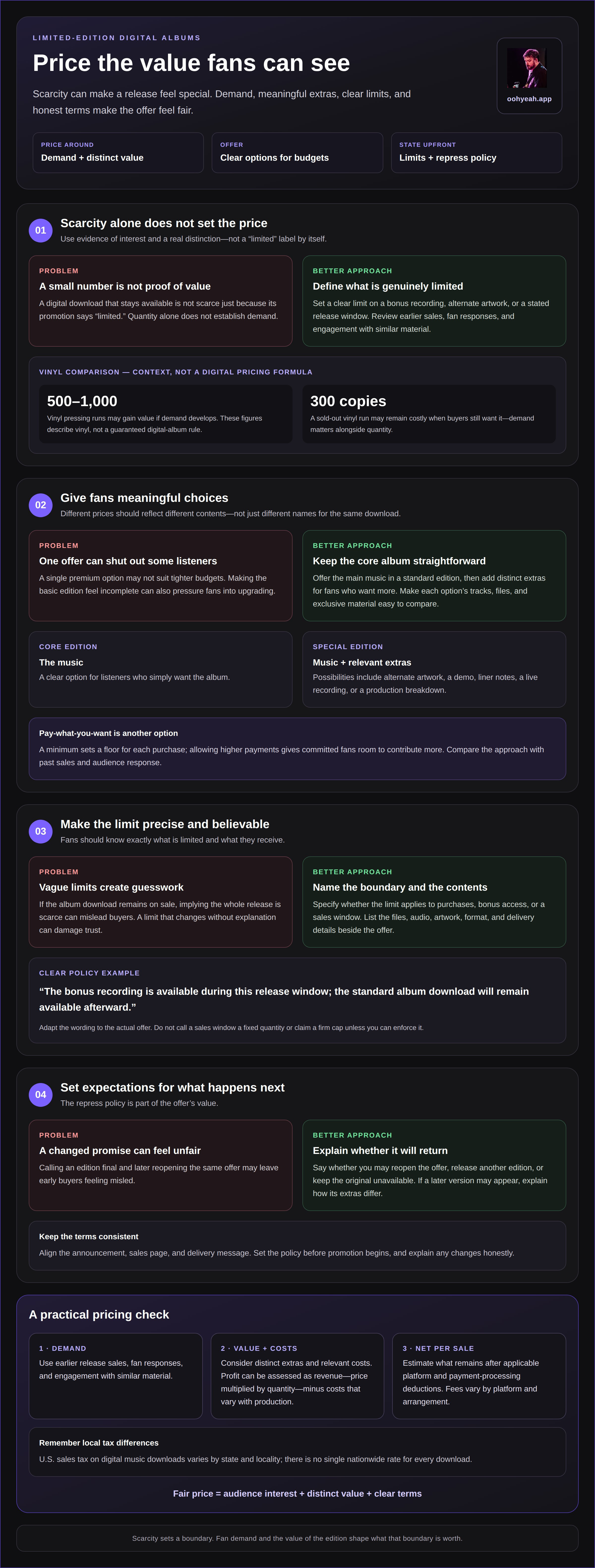
Scarcity can make a release feel special, but a small edition alone doesn’t prove demand. Physical vinyl offers a useful comparison: limited pressings can be collectible, but scarcity alone does not establish their value. Runs of 500-1,000 may gain value if demand develops. Those figures describe vinyl, not a guaranteed formula for digital albums.
For a digital edition, define what is genuinely limited. You might cap access to a bonus recording, alternate artwork, or a particular release window. Make the distinction clear: a download that remains available isn’t scarce simply because its promotion calls it limited. A sold-out vinyl run of 300 copies may remain costly if buyers still want it, showing that demand matters alongside quantity.
Estimate demand by reviewing sales from earlier releases, fan responses, and engagement with similar material. Then choose a price that reflects audience interest and the edition’s distinct value. The U.S. Environmental Protection Agency describes profit as total revenue, price multiplied by quantity, minus costs that vary with production. This framework can help you assess whether expected sales at your chosen price can cover relevant costs.
US sales tax on digital music downloads varies by state and locality. The applicable rules depend on where a sale occurs and how that jurisdiction treats digital products, so there’s no single nationwide rate for every download.
Music-platform fees also vary by platform and payment arrangement. Instead of assuming a standard charge, estimate how much you’ll net from each sale after applicable platform and payment-processing deductions. Comparing that figure across sales channels is more useful than treating another platform’s fee as a universal benchmark.
Pay-what-you-want pricing lets fans choose how much to contribute, while a minimum sets a floor for each purchase. A minimum can protect revenue per sale, and allowing higher payments gives committed fans room to contribute more. Compare the approach with past sales and audience response, then adjust the minimum or offer terms for a future release.
2. Tiered product options for different fan budgets
Build options around what fans receive, not just different labels for the same download. Keep the core album straightforward, then add distinct extras for supporters who want a deeper connection. A standard edition might focus on the music, while a special version could include alternate artwork, a demo, or liner notes. Each higher-priced option should give fans a clear reason to choose it.
Make the differences clear before purchase. Describe which tracks, files, and extras come with each option, and say whether any bonus material is exclusive. Fans on tighter budgets can still enjoy the main release, while committed listeners can choose a richer experience. Don’t make the basic edition feel incomplete just to push an upgrade.
Genre and listening habits can help you choose extras fans will value. A live recording may suit a performance-driven album, while a production breakdown could interest listeners who stream electronic music. Choose additions that deepen the release rather than adding unrelated material. If an extra takes more time or resources to create, factor that effort into your pricing.
Compare each option with your audience’s response to earlier releases. Strong engagement with demos or behind-the-scenes posts can indicate what fans may value in a special edition. Consider the album’s length, the uniqueness of its extras, and the costs of producing each version. Set the final price for the specific release based on its audience, contents, format, and costs.
Keep the offer clear across your artist profile and sales page, so fans can understand their choices without guesswork. Exclusive content access can give artists a way to share release extras with supporters. Use that option for material that adds real value, while keeping the core album accessible to listeners who simply want the music.
3. Transparent edition quantities and repress policies
Before opening sales, define exactly what the limit applies to. A digital release might cap purchases, access to a bonus recording, or availability during a stated sales window. If the album download remains on sale afterward, make clear that the restriction applies only to a particular feature or offer. A precise description gives fans a fair basis for deciding whether the edition suits them.
State the contents, format, and delivery details beside the purchase option. For example, say whether buyers receive an album file, bonus audio, or digital artwork. If you also offer a physical package, list its contents and packaging, and give the expected shipping date. Clear descriptions help buyers understand what they’re paying for before they commit.
A repress policy explains whether you’ll reopen a closed offer, release another edition, or keep the original version unavailable. When deciding how to price limited edition digital album releases, consider that policy alongside the edition’s value. If you may offer the same music later with different extras, explain how the future version will differ.
Scarcity claims can damage trust if a stated limit changes without explanation. Calling an edition final and later reopening sales may leave early buyers feeling misled. Avoid promises you can’t uphold. If circumstances change, explain what changed and how the new offer differs from the original.
Use a short, specific policy statement. For example: “The bonus recording is available during this release window; the standard album download will remain available afterward.” Adapt the wording to the actual offer. Don’t describe a sales window as a fixed quantity or claim a firm cap unless you can enforce it.
Keep the announcement, sales page, and delivery message consistent. A clear policy helps fans understand the offer and gives you a sound basis for deciding how to price limited edition digital album releases. Set the terms before promotion begins, then keep descriptions aligned if the edition changes.
4. Deluxe editions with bonus content
A deluxe edition needs to give fans a clear reason to choose it. Add material that deepens the album, rather than simply increasing the file count. For example, include demos that reveal how a song changed or liner notes that explain a lyric’s origin. A higher-priced album needs meaningful bonus content to support the added cost.
Start by choosing extras that fit the release. A live take can extend a performance-driven record, while a songwriting note can add context to a story-led album. Alternate artwork may suit a visually distinctive project. The best addition depends on what fans value about this music, not on a standard deluxe checklist.
Next, weigh the effort behind each extra against its value to listeners. A long recording session may take more work than written notes, so factor production time into your decision. Consider how fans have responded to demos, live versions, or behind-the-scenes material. Use those signals to build a package that rewards supporters without making the core album feel incomplete.
Make the differences between editions easy to see. List every included track and extra, and explain how buyers access each file. If a bonus is exclusive to the deluxe version, say so clearly. Avoid vague labels such as “more content.” A direct description helps fans understand the offer and compare options fairly.
Finally, keep the offer focused. Three closely related extras can feel more valuable than a pile of unrelated files. For example, pair a demo with a short note about its recording, giving listeners both the audio and its context. Set the higher price only when the added material supports it. Share your deluxe extras with fans as part of a release that makes each edition’s value clear.
OohYeah!: Digital Music Downloads
OohYeah! helps artists share limited releases through Digital Music Downloads and connect directly with supporters. Use Artist Profile Hosting to present your music, then clearly describe each edition and its bonus content so fans know what they’ll receive. Exclusive Content Access can provide a place for extras that add value to a deluxe release.
Artists can retain 100% of sales revenue from music and merchandise on the platform. That can make OohYeah! a natural fit when you want to offer downloads, share exclusive material, and build direct relationships with fans. Set your edition terms first, then present the offer with clear contents and access details.
Contact OohYeah! to explore how the platform can support your release.
Shape Your Next Release With Confidence
Your next edition can build on what you learn from this one. Notice which version fans choose, which extras spark interest, and where listeners hesitate. Use those responses to refine your next offer while keeping each release’s value and limits clear. This ongoing feedback can ground your approach to how to price limited edition digital album releases in what your community supports.
OohYeah! gives artists Artist Profile Hosting, Digital Music Downloads, and a Merchandise Marketplace to share music and connect with fans. Shape your release plans and explore how OohYeah!’s marketplace could support your next step.
Contact OohYeah! about your release and take your next idea forward with confidence.
Frequently Asked Questions
The Price is Right..?
The right price fits the release’s purpose and feels fair to the fans you want to reach. A first release aimed at introducing new listeners may call for a different approach from an edition designed for dedicated supporters. Consider how fans responded to earlier releases, then choose a price that reflects this album’s role, not just its rarity.
What pricing models work for limited-edition digital album releases?
Fixed pricing keeps the offer simple, while pay-what-you-want gives fans room to contribute according to their means. A tiered model can pair the core album with optional extras, and a bundle can combine related releases. Choose the structure that best matches the music and your audience. Make the options easy to compare so fans know what each includes.
How much do independent artists typically charge for digital albums in the US?
Independent artists don’t share one standard US price for digital albums. A new artist building an audience may make different choices from an established artist with dedicated supporters. Album length, production investment, audience engagement, and the release’s exclusive value can all shape the decision. Use your own sales history and release goals to set a price, rather than treating another artist’s approach as a rule.
How should edition size and scarcity affect a digital album’s price?
Let scarcity influence the offer only when the limit is real and meaningful. For example, an album download might stay available while access to a companion recording closes after a stated period. Explain which part is limited and which remains accessible. This helps fans understand what makes the edition distinct without implying that the music itself will disappear.
How should artists communicate edition limits, pricing, and buyer rights?
Use plain language to explain what the purchase includes, how fans receive it, and what uses are permitted. For example, distinguish personal listening from sharing or redistribution, and make sure those terms match the offer. Put this information beside the purchase details, not only in a separate policy. Clear terms help buyers make informed choices and understand what their purchase covers.