Build a loyal superfan community with paid fan support
Learn how converting streaming listeners into paying fan supporters with exclusive perks, memberships, fan clubs, downloads, and merch builds lasting loyalty.

November 1, 2026
FRANKLY with Frank Lee
Streaming plays can introduce listeners to your music, but direct support grows when fans have a reason to take part. Converting streaming listeners into paying fan supporters starts with offering a few benefits they can’t get through free streaming, such as early access to songs, behind-the-scenes content, or a members-only chat. Pair those perks with direct ways to buy your music and merchandise.
Fans already show support by listening, sharing, and showing up for the music they love. A clear invitation to get more involved can turn that connection into an active community. Exclusive content, subscriptions, fan clubs, merchandise, and digital music sales all give supporters meaningful ways to participate. Build an offer that feels valuable to fans and sustainable for you.
Key Takeaways
- Choose a small set of exclusive perks that gives supporters a clear reason to join, such as early music access or behind-the-scenes content.
- Build a straightforward membership offer around benefits you can deliver consistently, then grow it as your fan community develops.
- Use fan clubs to deepen direct relationships instead of relying on streaming and social platforms alone to reach listeners.
- Give fans more ways to support your music by offering digital downloads and merchandise alongside free listening.
1. What kind of exclusive content can I offer to paying music subscribers?
Give subscribers material that feels personal and isn’t available through free streaming. Useful perks include early song releases, behind-the-scenes videos, VIP Q&A sessions, and first access to tour tickets. Choose a few benefits you can deliver consistently, such as a monthly demo and a members-only chat.
In the United States, copyright in an original musical work vests with its creator when the work is fixed. For memberships, describe paid benefits and access terms clearly, keep records of subscription income, and account for tax obligations under applicable rules.
Early access gives casual listeners a simple reason to join. Share a finished track with subscribers before its public release, then tell them when everyone else can hear it. Behind-the-scenes videos can show how you wrote a chorus or built a live arrangement, giving fans a closer look at your process.
Direct communication can make a subscription feel like an ongoing relationship, not just a content feed. Set a clear format, such as a monthly written update or scheduled Q&A. A members-only chat can bring supporters together, while a question form lets you gather topics ahead of each session.
Demos are another way to bring fans into your creative process. Share an early vocal take, an alternate arrangement, or a short note explaining what changed before release. Label each file with its song title and version so subscribers can follow along without mistaking a rough draft for the final master.
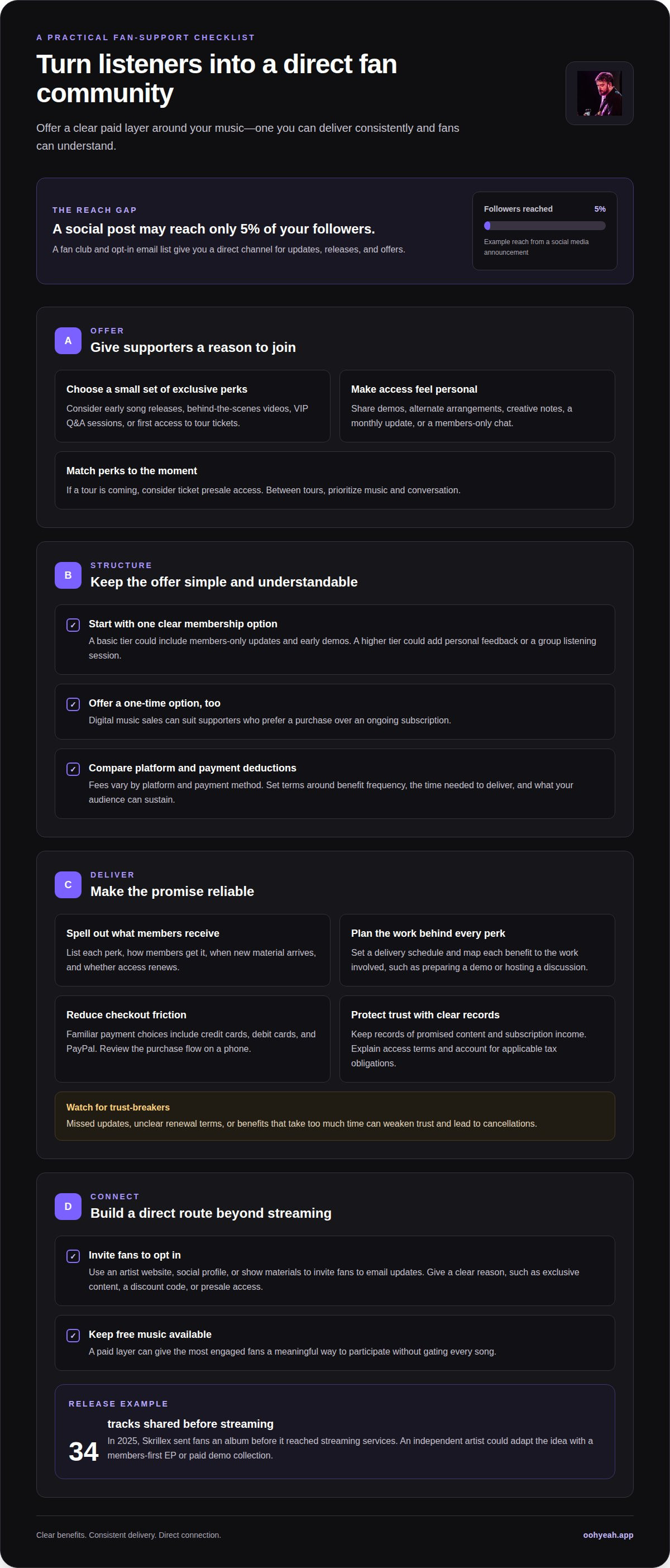
Make the offer easy to understand. List each perk, how members receive it, and when new material arrives. Start with a small set of benefits you can sustain, then note which content fans engage with. If a tour is coming, consider adding ticket presale access. Between tours, prioritize music and conversation.
2. What are common artist subscription models for independent musicians?
Independent artists can build recurring revenue with one membership tier, then add options as their community grows. A basic tier might offer members-only updates and early demos, while a higher tier could include personal feedback or a group listening session. Converting streaming listeners into paying fan supporters starts with a clear benefit fans understand.
For example, a band could share a monthly studio diary and invite subscribers to vote on a set-list choice. This gives members a reason to renew without making every perk labor-intensive. Direct-to-fan income can also come from one-time digital music sales, which suit supporters who prefer a purchase to an ongoing subscription.
Artists can use membership platforms or a direct sales setup to collect recurring support. Fees vary by platform and payment method, so compare deductions before choosing. In practice, converting streaming listeners into paying fan supporters means making the paid option easy to find and its benefits easy to understand. A clear home for your music can help fans find membership details and artist updates together.
Set membership terms around the value and frequency of benefits, the time needed to deliver them, and what your audience can sustain. A simple tier makes the offer easier to explain. Revisit it when the workload or benefits change.
Subscriptions also create obligations. Missed updates, unclear renewal terms, or benefits that take too much time can weaken trust and lead to cancellations. Set a delivery schedule, explain what members receive, and keep a record of promised content. Before launch, map each perk to the work involved, such as preparing a demo or hosting a discussion.
Payment choices matter, too. Familiar options, such as credit cards, debit cards, and PayPal, can reduce checkout friction. Review the purchase flow on a phone, state whether access renews, and make it easy for members to understand what happens after they subscribe.
3. Why are musicians building paid fan clubs instead of relying on streaming alone?
Streaming introduces music to listeners, but it doesn’t give artists a direct way to contact every fan. Subscription and advertising revenue goes into a shared pool, then artists receive allocations based on their share of streams for the month. A paid fan club gives artists a direct channel for sharing updates, releases, and offers.
A social media announcement may reach only 5% of an artist’s followers. Even an artist with 100,000 monthly Spotify listeners may not be able to message those listeners directly. To build a community, invite fans to opt into email updates through an artist website, social profile, or show materials. Offer a clear reason to sign up, such as exclusive content, a discount code, or presale access.
Paid early-access releases can make membership tangible. In 2025, Skrillex sent fans an album with 34 tracks before it reached streaming services. An independent artist can adapt the idea with a smaller release, such as a members-first EP or a paid demo collection. Explain the release timing so supporters know what their access includes.
Starting a fan club doesn’t require a complicated tier system. Launch with one clear membership option and deliver something during its first week. Then promote it where listeners already engage, with a direct call to action on your profile, email, or landing page. Pairing sign-ups with an incentive, drop, or call to action can help strengthen them, according to Laylo.
Keep free music available while offering a paid layer for the most engaged fans. The aim isn’t to gate every song. It’s to give supporters a meaningful way to participate. The idea that 1,000 true fans can matter more than 10 million streams captures this shift: a smaller, connected community can support an artist more directly. A focused fan club gives listeners a clear next step beyond pressing play.
4. Selling merchandise and digital music
Merchandise and downloads give casual listeners direct ways to support an artist. Offer products connected to a track, album, or visual identity. For example, pair a digital release with a shirt featuring the album artwork. Keep each product page focused, with a clear description and one action, such as buying the download.
Digital music sales can complement streaming without replacing free listening. Offer a complete album, a live recording, or selected tracks as downloads. Each purchase gives fans a lasting copy and creates another direct sales opportunity. Make the format and included tracks clear before checkout so supporters know what they’re buying.
Merchandise can turn a fan’s connection into something tangible. Feature a best-selling item, or test a limited offer such as a 20% merchandise discount for a weekend. You could also release 100 signed copies of a new album. Use a specific call to action on each landing page, like “shop the tour shirt” or “get the album download.”
Build a simple sales path. Choose one music release and one merchandise item. Create a separate product page for each, with useful descriptions and clear images. Then share the relevant page through your artist profile, email, or social posts. A sticker included with a merchandise order can make a purchase feel more personal.
Track which products attract clicks and sales, then adjust the offer. If fans visit a download page but leave, clarify the release details or strengthen the call to action. If a shirt sells after a show announcement, connect future merchandise posts to tour news. Aim for a focused storefront, not a long catalogue.
A direct marketplace can simplify access to both music and merchandise. Artists can retain 100% of sales revenue from these sales through the right setup. Set up direct music and merchandise sales to give fans a clear way to support your work.
OohYeah!: Artist Profile Hosting
OohYeah! gives artists a direct place to bring their fan-support strategy together. Artist Profile Hosting helps you present your music, while Digital Music Downloads and the Merchandise Marketplace give fans ways to buy directly. Exclusive Content Access lets you offer supporters material beyond your public releases.
Use these tools when you’re ready to connect listening with deeper participation. Feature a new track on your artist profile, offer a download for fans who want to own the music, and share exclusive content with your most engaged supporters. Merchandise gives fans another direct way to show their connection to your work.
Build an approach that fits your music and the community you want to grow. Visit oohyeah.app to explore OohYeah!.
Make your next release a starting point
Choose an upcoming release as a chance to deepen your connection with listeners. Give fans a clear next step, then keep showing up with music and experiences that make supporting you feel meaningful. Converting streaming listeners into paying fan supporters takes more than one offer. It grows through trust, consistency, and a direct invitation to participate.
OohYeah! supports that next step with Artist Profile Hosting, Digital Music Downloads, and a Merchandise Marketplace. Bring your music and ways to support it together, so fans can move from listening to taking part in your creative journey.
Contact OohYeah! about your music and explore a direct path to your fan community. Your next release can bring the right supporters closer.
Frequently Asked Questions
How can I build a loyal superfan community around my music?
Build loyalty by giving fans meaningful ways to participate in your creative world. Invite them to vote on artwork, share feedback on a live arrangement, or submit questions for a future update. Then acknowledge their contributions and follow through. For example, tell members how their input shaped a release. Fans feel included when their support leads to a visible connection, not just another announcement.
How do you start a paid fan club as a musician?
Start by defining who the club serves and what membership changes for them. Write a short description explaining access, delivery, and how members can manage their subscription. Before opening sign-ups, prepare a welcome message and organize your first release or update. Ask a friend to review the sign-up flow on a phone and spot confusing instructions before fans encounter them.
How much can a band earn from a paid fan club?
A band’s earnings depend on the number of active members, the membership amount, cancellations, and any platform or payment deductions. Estimate recurring revenue by multiplying active memberships by the amount charged, then account for deductions and the work needed to deliver benefits. One-time purchases can add income, but they aren’t predictable subscription revenue.
What are common artist subscription models for independent musicians?
Independent musicians can offer one recurring membership, multiple access levels, or optional paid messages and releases. A single membership keeps the offer simple; multiple levels let fans choose how involved they want to be. A drop-based model suits supporters who prefer paying for a particular release rather than renewing regularly. Match the structure to how often you create and how fans want to participate.
What is a membership platform for bands and musicians?
A membership platform helps artists organize paid fan access. Depending on its tools, it may handle recurring payments, provide access to member content, and send updates to supporters. For a band, this can bring payments and exclusive material into one workflow. Compare how each option handles access, cancellations, and communication before building your membership around it.
What kind of exclusive content can I offer to paying music subscribers?
Offer material that adds context to the music, such as annotated lyrics, alternate mixes, rehearsal notes, or a recording diary. A monthly listening session can give subscribers a shared experience around a new release. Choose formats that fit your creative process. For example, a songwriter who keeps voice memos could share selected clips with brief notes on how a song developed.