Selling Tour Merchandise Online to Fans Without Holding Stock
Learn how selling tour merchandise online directly to fans works, using presales, print-on-demand, and digital extras to sell more without holding stock today.
November 21, 2026
FRANKLY with Frank Lee
Tour merch doesn’t have to mean boxes of unsold shirts. Selling tour merchandise online directly to fans can include made-to-order physical items, presales to gauge demand, and digital extras fans can access online. A thoughtful approach gives you options without requiring you to stock everything in advance.
You can offer personal merch without tying up money or space in inventory. Print-on-demand and presales let you test physical products, while downloads and exclusive content give fans other ways to support your music.
This guide covers how to choose sales channels, offer physical and digital merchandise, and refine your lineup based on what fans buy. You’ll also learn how to set expectations for production and shipping, then use sales feedback to plan your next release.
Key Takeaways
- Use sales patterns and fan feedback to decide which designs to keep, refine, or retire.
- Choose a sales channel that makes it easy for fans to find both your music and your merchandise.
- Explore presales or print-on-demand to offer custom items without stocking products in advance.
- Pair physical merch with downloads or exclusive content to give fans more ways to support your work.
Reviewing sales and adjusting product offerings
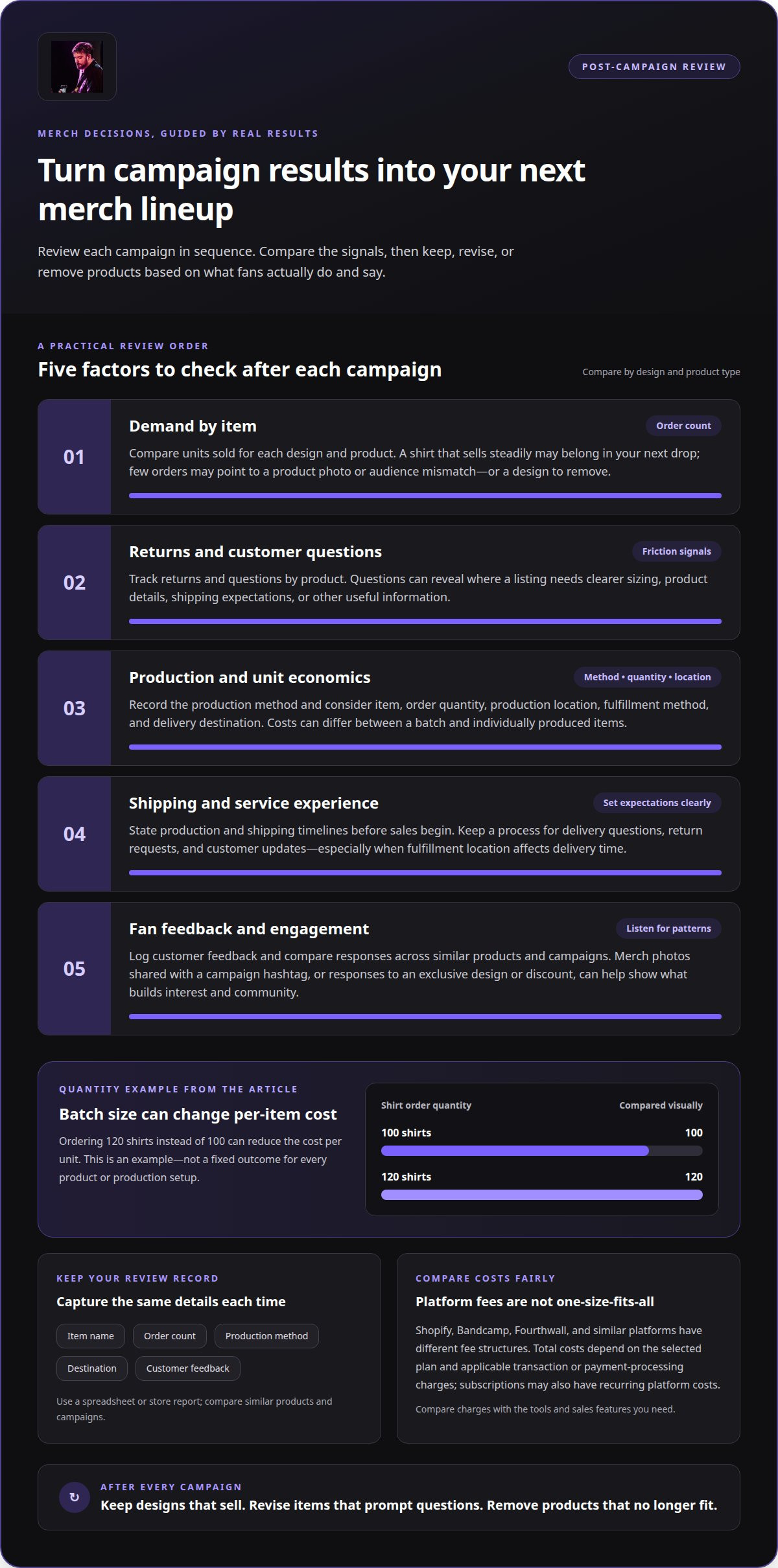
Review orders after each tour campaign closes. Compare units sold, returns, and customer questions by design and product type. A shirt that sells steadily may belong in your next drop. A design with few orders might need a clearer product photo, a different audience, or removal from the catalog. Let demand, not guesswork, guide what you sell next.
Track results in a spreadsheet or store report. Record each item’s name, order count, production method, destination, and customer feedback, then compare similar products and campaigns. For example, offer mailing-list subscribers an exclusive design or discount. Invite fans to share merch photos with a campaign hashtag, then track and respond to their posts. The feedback can show which designs build interest and community.
Shopify, Bandcamp, Fourthwall, and similar platforms have different fee structures. The total depends on the selected plan and applicable transaction or payment-processing charges. Subscription pricing may also involve recurring platform costs. Compare those charges with the tools and sales features you need, rather than assuming every platform charges the same way.
Production and shipping costs depend on the item, order quantity, production location, fulfillment method, and delivery destination. A batch of shirts can have different per-item economics from individually produced items. For example, ordering 120 shirts instead of 100 can reduce the cost per unit. Build production and delivery charges into your pricing decisions before opening orders.
Set clear expectations for shipping, returns, and customer service before sales begin. State the production and shipping timeline for custom or one-of-a-kind merchandise. For global fulfillment, the production location affects how long an order takes to reach a fan. Establish a process for answering delivery questions, recording return requests, and sharing updates. Consistent information helps fans know what to expect after checkout.
Review your catalog after each campaign. Keep designs that sell, revise items that prompt questions, and remove products that no longer fit. If you offer recurring access, explain the price and included content before fans sign up. Clear listings help supporters understand what an order or subscription includes and give you more useful feedback for your next release.
Selling through online stores and music platforms
A direct store gives fans one place to buy shirts, listen to your music, and follow new releases. Choose a setup that fits how you promote, fulfill orders, and connect with supporters.
Direct-to-Fan Store Setup
Start by choosing a store or music platform, then prepare the essentials: band name, product descriptions, artwork, product images, and checkout details. Shopify and Bandcamp are examples artists may consider, but their features and costs differ. Before launch, review each platform’s current terms and subscription pricing. Check that product pages explain sizing, printing, shipping expectations, and how fans can reach you about an order.
Make your store easy to navigate on a phone. Clearly group shirts, other physical items, and music downloads. Place a test order to review the buying steps before promoting the shop.
Online Store Integrations
Integrations can connect a storefront with payment, order management, email, or merchandise fulfillment tools. Options depend on the platform and services you use. Map the process from checkout to delivery before choosing integrations. Identify where order details appear and who handles shipping questions. Avoid tools that duplicate tasks or create confusing handoffs.
For fans shopping before, during, or after a concert, share the same store link in tour announcements, on social profiles, and in printed materials. A QR code at the merch table can take concertgoers to your online listings.
Sales Tax and Merchandise Rights
U.S. sales tax obligations vary by state and seller circumstances, so there’s no single rule for every online order. Set up tax collection for the jurisdictions where your business has obligations, and keep clear sales records.
Use band names, logos, and artwork you own or have permission to use. Licensed merchandise requires authorization under the applicable agreement. Organize rights and license details before uploading designs or offering products.
Promoting Online Merchandise
Promote specific items with a clear example: show the shirt design, name the tour, and link directly to the product page. Share the store before a show, remind fans during the concert, and post a follow-up afterward. Email announcements can reach supporters who missed the merch table. Use consistent product names and images so fans recognize the same item across posts.
For a music-focused space where fans can find artist updates and merchandise together, explore artist profiles and merchandise tools.
Selling custom merchandise without upfront costs or inventory
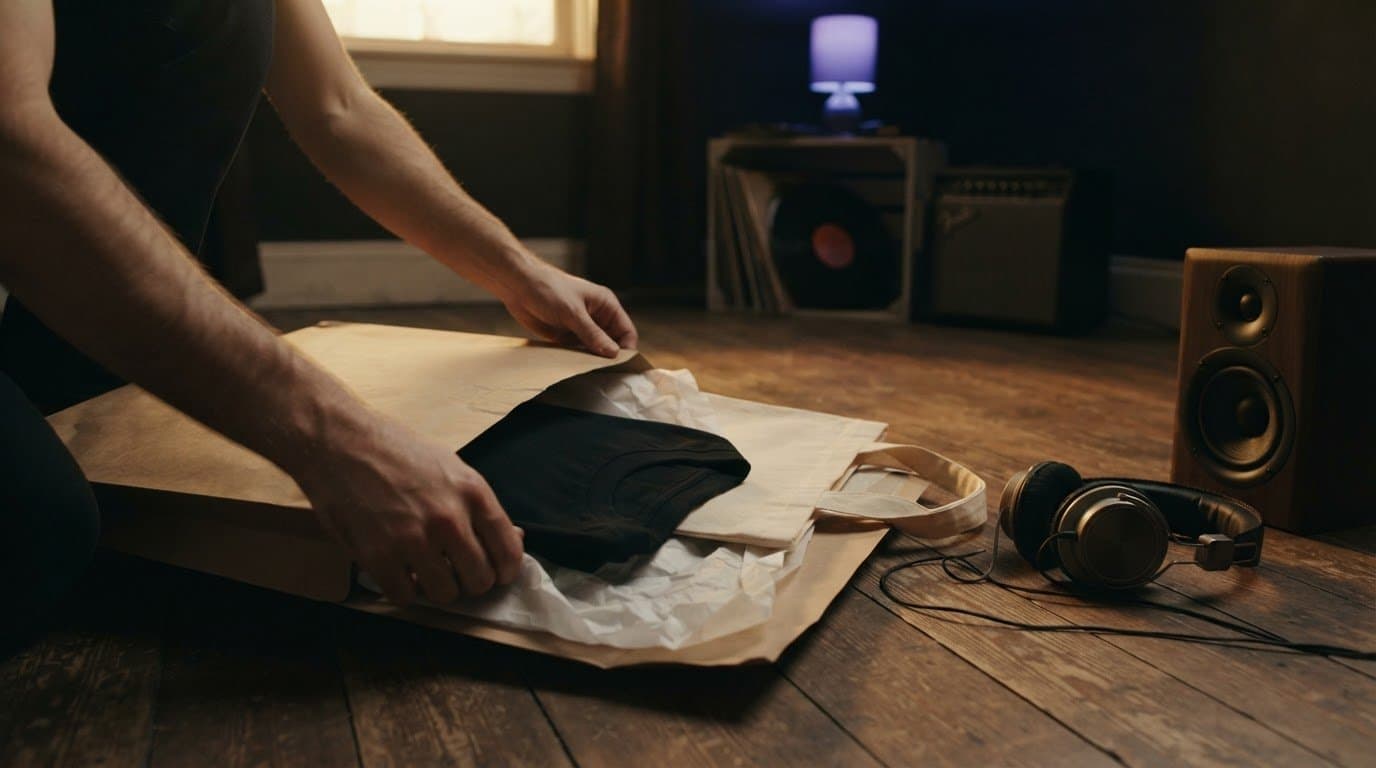
Print-on-demand lets you offer custom shirts or hoodies without buying and storing inventory first. After a fan orders, the service produces and ships the item. This can reduce the risk of unsold stock, but each product still needs a clear design, description, and production timeline. Explain the timeline on the product page so fans know what to expect after checkout.
A presale lets you test demand before production. Set an order window, promote the design, and fulfill orders after the deadline. Completed orders help estimate the initial quantity instead of relying on guesses about how many shirts or hoodies fans might want. State the closing date, expected production period, and shipping process before the campaign starts. Share an update after the deadline so fans know what happens next.
Direct online sales also carry risks. Fraudulent orders or payment disputes can leave artists with production or shipping costs, while an oversized batch can become unsold inventory. Limit exposure by using a presale for limited-run items and reviewing unusual order details before fulfillment. Keep order records, payment information, and customer messages together. No approach eliminates every risk, but smaller production decisions can reduce leftover stock after a campaign.
Choose a method based on the item and the demand you can observe. Print-on-demand suits designs you want to keep available without storing stock. A presale can work for a tour-specific hoodie or limited artwork, since orders help determine production quantity. For either option, distinguish the order window from the fulfillment timeline. Custom production takes time, so share updates when the deadline passes and fulfillment begins. Then review completed orders and fan responses before planning the next design.
Physical and digital merchandise options
Physical and digital items give artists different ways to connect with fans. A shirt, poster, or hoodie gives supporters something to wear or display. A music download or exclusive digital content offers another way to support a release without shipping a parcel. Build a focused catalog around the tour, and make each product’s format clear before checkout.
Physical merchandise has tangible appeal, but each item needs a production and delivery plan. Product pages should explain available options, show the design clearly, and set expectations for fulfillment. For example, a tour poster can feature a specific show design, while a shirt can carry the band’s tour artwork. Artists also need to answer order questions and communicate if production takes longer than expected.
Digital items work differently. A music download reaches a buyer without packing or mailing a physical order. Exclusive content can bring fans closer through material reserved for supporters. Describe exactly what each digital listing includes, how fans access it, and whether it relates to a specific release. Clear descriptions prevent confusion between a download and a shipped product.
A mixed catalog can suit different fan preferences. Pair a physical tour design with a digital release, or offer them separately so supporters can choose. Keep product titles and descriptions distinct. Label downloads as digital and include shipping information on physical items. This simple step helps buyers understand what they’re ordering and makes fulfillment questions easier to handle.
Use sales feedback to decide which formats to feature in the next release. If fans respond to a design but prefer a digital option, adjust the lineup rather than assuming every supporter wants a parcel. Artists can bring music and merchandise into one fan experience through a shared music and merch space.
OohYeah!: Merchandise Marketplace
OohYeah!'s Merchandise Marketplace lets artists offer items to fans online. Bands can present merchandise alongside an artist profile, music downloads, or exclusive content. Fans can find more ways to support an artist beyond a tour purchase, while artists build a direct connection with their audience.
Artist Profile Hosting provides a home for an artist’s presence on the platform. Digital Music Downloads and Exclusive Content Access can complement physical merchandise with online options. OohYeah! enables artists to retain 100% of sales revenue from music and merchandise. Each offering serves a different fan preference, so bands can choose what fits their releases and community.
Explore OohYeah!'s Merchandise Marketplace to bring your merchandise and music together for fans.
Build Your Next Fan Connection
Your next merch release can do more than mark a tour. It can give supporters a lasting way to feel connected to your music. Choose a focused next step: test a design, offer a digital extra, or bring your music and merchandise together in one fan experience. Use the response to guide what you create next.
Selling tour merchandise online directly to fans gives you a way to build that connection on your terms. Keep your next move focused on the people who already support your work. A thoughtful product and a clear path to discover it can turn a release into an ongoing conversation with your audience.
If you’re ready to explore a home for your fan merchandise, contact OohYeah! about fan merchandise. Take the next step at your own pace, and keep creating alongside the fans who make the journey matter.
Frequently Asked Questions
What platforms let artists sell tour merchandise directly to fans online?
Artists can use online storefronts and music-focused marketplaces, including Shopify, Bandcamp, Fourthwall, and OohYeah. The right fit depends on how you want fans to discover products and what you need to manage after checkout. For example, a band releasing a tour EP might choose a platform that presents music and merch together. Compare current platform terms before deciding.
How do musicians set up an online merch store for a tour?
Start with the tour identity: choose a store name, prepare artwork you’re authorized to use, and select products that fit the release. Create a clear listing for each item, with accurate sizing, format, and fulfillment details. Test the path from product page to checkout on a phone. Before announcing the store, make sure the link works in your tour bio, email, and show announcements.
Should artists use print-on-demand or bulk inventory for tour merch?
Print-on-demand can suit artists testing a design or serving fans between tours, since orders trigger production. Bulk inventory may fit an established design with predictable demand, especially if the band wants stock ready for several shows. Consider how quickly you need items, how much storage you can manage, and whether the design is evergreen or tied to one event. Use sales history to guide your choice.
What U.S. sales tax rules apply to selling tour merchandise online?
U.S. sales tax obligations vary by state and seller circumstances. Set up tax collection for jurisdictions where your business has obligations, and keep clear sales records.
How much does it cost to produce and ship common tour merchandise?
Production and shipping costs depend on the item, order quantity, production location, fulfillment method, and delivery destination. For example, ordering 120 shirts instead of 100 can reduce the cost per unit.