
Songwriting 101: How to Write Songs That Stand Out in 2026
Beginner songwriting tips for 2026: learn how to start, write, and finish original songs with practical advice on lyrics, melody, and recording.
August 28, 2026
FRANKLY with Frank Lee

Writing a song is one of the most personal and vulnerable things an artist can do. It is also one of the most fulfilling. Whether you have been playing for years or you are picking up an instrument for the first time, the blank page can feel like the biggest obstacle between you and a finished song. The good news is that you do not need perfect gear, formal training, or approval from anyone else to begin. You only need a few basic tools, a little patience, and the willingness to write something imperfect before you write something great.
Songwriting is a blank slate. It can hold pain, grief, shame, joy, beauty, and love. The act of writing can be powerfully therapeutic, but that only happens when you give yourself the freedom to begin. These songwriting tips for beginners are designed to help you move from a scattered idea to a complete song you are proud to share.
Give Yourself Permission to Start
The first thing every beginner songwriter needs is permission. Not permission from a teacher, a label, or a gatekeeper. Permission from yourself. Too many people wait until they feel "ready" or "good enough," and the songs never get written. Songwriting is incredibly personal and vulnerable. It can feel like there is so much you need to know before you even begin. But the truth is, you only need three things to start writing songs: permission, chords, melody, and lyrics.
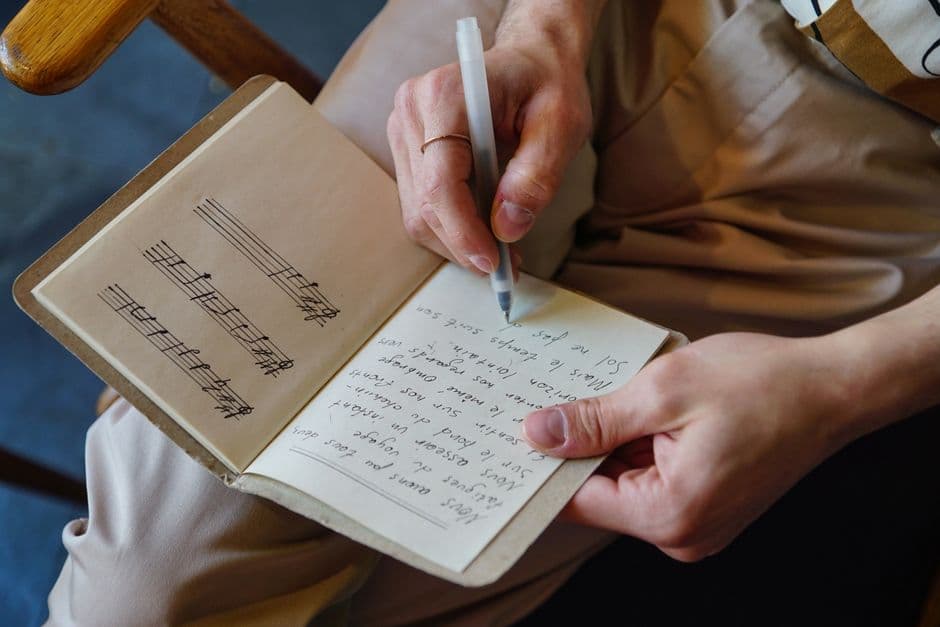
Do not wait for the perfect moment. Pick a topic. Open your notebook or a blank document. Start writing. This is the most important part, and it is almost always the part people skip. Aim for four lines. If you only get two, great. If you get twenty, great. The goal is momentum, not perfection. Write down as many different ideas as you can come up with, then build off the ones that excite you. You can revise later. You can edit later. But you can only shape something that already exists.
Learn the Basic Building Blocks of a Song
Every song, no matter how complex or experimental, is built from the same four basic elements: rhythm, harmony (chords), melody, and lyrics. You do not need to master all four before you write your first song. In fact, most beginner songs are built with just two or three of them in place, and the others fill in as the song grows.
Rhythm is the pulse that keeps everything moving. Harmony comes from the chords you choose and how they work together. Melody is the line that carries the song in your head long after it ends. Lyrics are the words that give the song meaning and connect it to the listener. When you strip a song down, that is all it really is. Learning to recognize these four pieces will help you understand why some songs grab you immediately and why others fade into the background.

Write Your First Complete Song in Four Steps
There is no universal rule that says every song must be written in the same order. Many songwriters, though, find it helpful to move through the same four stages. A common beginner-friendly approach is to start with the music, then build the melody, then write the lyrics, and then make a recording. This sequence keeps you moving forward instead of getting stuck on one section.
Step One: Build the Music
Start with the chords. You do not need complicated progressions to write a song that stands out. Interesting chord changes can make a simple idea feel fresh, but the most important thing is that the chords support the mood you are going for. Play around with a few progressions. Repeat them until they feel natural, then experiment with small changes. A song that sits comfortably in your hands is easier to sing and much easier to finish.
Step Two: Shape the Melody
Once you have a chord progression you like, hum or sing over it until something sticks. The melody should sound conversational, but it should also sound lyrical. Strong melodies tend to have clear high and low points, and they repeat just enough to feel familiar without becoming boring. You do not need a perfect voice to write a good melody. You just need to be willing to follow your ear and try a few different approaches before settling on one.
Step Three: Write the Lyrics
Lyrics are where many beginners get stuck, but they do not have to be complicated. Use strong verbs, but do not make the words sound "written." Write conversationally, but make sure the phrasing still sounds musical when it is sung. Paint pictures with your words. Imagery, metaphor, and simile are your friends, but keep them simple. A clear image delivered in a few words lands harder than a tangled metaphor stretched across three lines.
Remember the rhyme scheme rule: not every line needs to rhyme. Forcing rhymes often makes a lyric sound stiff and predictable. Let some lines breathe on their own. The spaces between rhymes create tension, and tension is what keeps a listener leaning in.
Step Four: Make a Recording
The fourth step is the recording. You do not need a professional studio to capture your first song. Learning the basics of a DAW will take you a long way. A DAW lets you layer your instruments, fix small mistakes, and shape the final sound of the track. Investing in the basics of home recording is one of the smartest moves a beginner songwriter can make, because it lets you finish songs and hear them back the way a listener would.
Practical Songwriting Tips for Beginners
Beyond the four steps, a few consistent habits will help you grow faster as a songwriter.
Listen to good songwriters, particularly lyricists. Pay attention to how they structure verses, how they use imagery, and how they handle the spaces between lines. You are not copying them. You are learning the craft from people who have already done the hard work of figuring out what connects.
Learn how to sing. Even if you never perform in front of an audience, singing your own ideas helps you write melodies that fit a human voice. Learn how to play instruments, too. You do not need to master them. Even a little chord knowledge opens hundreds of doors and makes the music step feel less intimidating.
Learn to ignore negativity and harsh critics. Every writer hears criticism. The important thing is to take what resonates with you and leave the rest. Not every opinion deserves to be carried into your next writing session. Trust your instincts and stay open to feedback that actually helps.
Write whole songs. It is easy to write a strong verse and then abandon the song when the chorus gets hard. Push through. A finished song, even an imperfect one, teaches you more than ten half-finished ideas sitting in a folder. Read more as well. Songwriting feeds on the words, stories, and sounds you take in, so give yourself a steady diet of good writing in every form.

Keep Going Until You Sound Like You
Songwriting gets easier the more you do it. The first songs you write may feel simple, and that is fine. Every songwriter starts there. Over time, your rhythm, your chord choices, your turn of phrase, and the topics you keep returning to will start to sound like you. That voice does not appear all at once. It appears after dozens of unfinished drafts, late-night rewrites, and recordings you almost deleted.
Stay curious about the world around you. A line overheard in a coffee shop, a memory that keeps coming back, or a chord you discovered by accident can all become the seed of a song. Keep your notebook close and keep collecting ideas. The more you write, the more clearly your own perspective shows up in the music.
Share Your Songs With the People Who Matter
Once you have a finished song, do not hide it. Sharing your music is how you build a relationship with listeners. A song that means something to you will mean something to someone else, but only if they get the chance to hear it. Having a space where you can post your music, connect with fans, and keep control of your work matters more than ever. Platforms that put artists first, like OohYeah's community and commission-free marketplace, let you keep the revenue and the relationship with your audience. Your music, your name, and your future are worth that kind of control.
Frequently Asked Questions
Do I need to know how to play an instrument to write songs?
No. You can write songs using your voice, a recording app, or a simple instrument you pick up along the way. That said, learning the basics of an instrument helps you build chord progressions and melodies more easily. You do not need to master it. A few chords and a willingness to experiment are enough to start writing songs that feel like your own.
Should every line in my song rhyme?
No. Forcing every line to rhyme usually makes lyrics sound stiff and predictable. Rhyme is a tool, not a rule. Use it when it strengthens a line and let it go when the meaning matters more. Conversational lyrics, strong images, and a clear melody carry a song much further than a perfect rhyme scheme ever will.
What order should I write a song in?
There is no single order that works for everyone. A common beginner-friendly approach is to start with the music, then build the melody, then write the lyrics, and then record the song. Many songwriters also start with a title or a lyrical idea. Do what feels natural and stay flexible. The goal is to finish a complete song, not to follow a rigid process.
How can I get better at songwriting?
Write regularly, even when the ideas feel small. Listen closely to lyricists you admire. Learn the basics of singing and playing an instrument, and learn how to use a simple DAW so you can finish recordings. Ignore harsh critics and keep the feedback that resonates with you. Most importantly, finish whole songs. Every completed song teaches you something that no amount of reading can replace.