How to Fund a Music Tour With Fan Subscriptions and Crowdfunding
Learn how funding music tours through fan subscriptions and crowdfunding can help you budget realistically, reward supporters, and plan a tour with fan backing.
November 17, 2026
FRANKLY with Frank Lee
A tour doesn’t have to depend on one major backer. Marillion raised $60,000 to help finance a 1997 North American tour, showing how fan support can help make a tour possible. Funding music tours through fan subscriptions can make committed listeners part of the plan, alongside rewards-based crowdfunding and other income.
Tour costs can feel daunting before ticket sales begin. A shorter route, a clear budget, and fan support can help you plan around what you can realistically raise instead of relying on one funding source.
Learn how to set a practical tour budget, shape rewards fans value, combine income streams, and invite supporters to contribute. You’ll also see how fan subscriptions can build ongoing support, so your tour plan starts with your community and grows from there.
Key Takeaways
- Build a tour plan around a manageable route and a budget that accounts for the costs you’ll need to cover.
- Combine fan support with income from shows and merchandise to avoid relying on a single funding source.
- Make your crowdfunding offer clear and give supporters rewards that fit your music and community.
- Use digital music downloads to give fans a direct way to support your work while you plan your next tour.
2. Starting with a modest tour and setting a budget
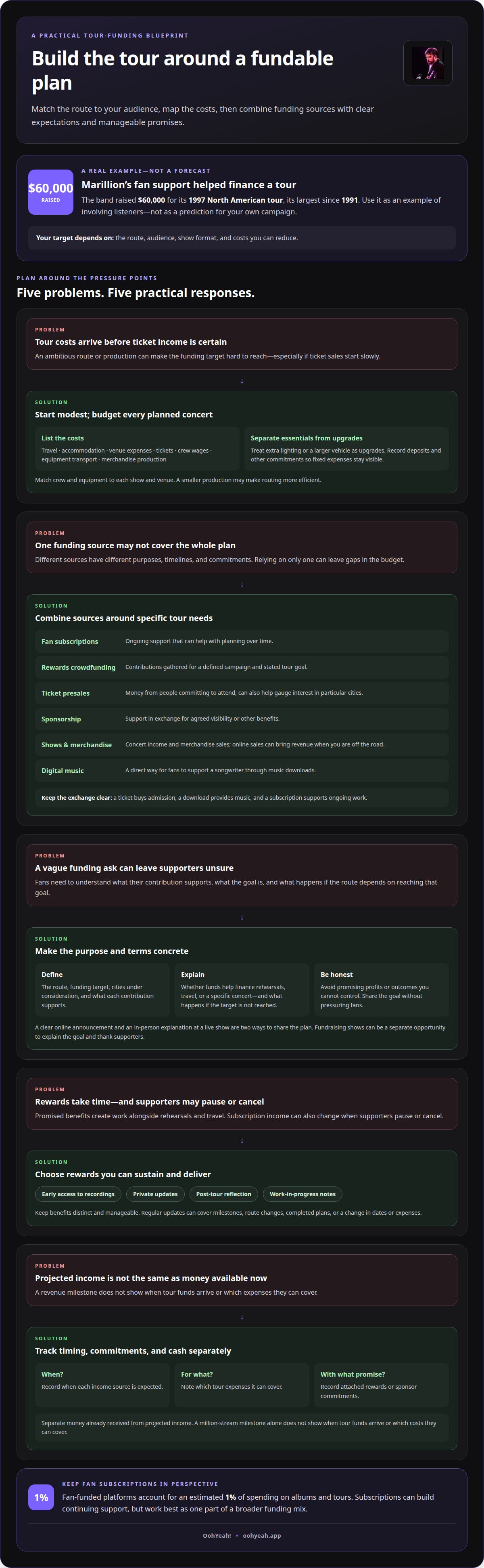
Choose a route that matches your current audience, then build a budget around each planned concert. List travel, accommodation, venue expenses, tickets, crew wages, equipment transport, and merchandise production. Separate essential costs from upgrades, such as extra lighting or a larger vehicle. This gives you a clear funding target and helps protect your tour budget if ticket sales start slowly.
Marillion offers a striking example of fan support at work. The band raised $60,000 to help finance a 1997 North American tour, which became its largest since 1991. Use that example as a model for involving listeners, not as a forecast for your own career. Your target depends on the route, audience, show format, and costs you can reduce.
Build the budget before choosing tour support, sponsorship, or loans. Support can bring resources, while a sponsor may expect agreed visibility or other benefits. A loan adds repayment obligations, so include its terms in your cash-flow plan. Compare each option with fan contributions and the revenue you can reasonably expect from tickets and merchandise.
Crew and equipment expenses can rise with every added date. Keep the setup practical: plan which musicians and crew each show needs, and match equipment to the venue and performance. A smaller production may make routing more efficient. Record deposits, transport, accommodation, and other commitments in one budget so you can see which expenses are fixed.
Merchandise can support a tour before, during, and after each concert. Estimate what you can carry, display, and sell without adding avoidable transport costs. Online merchandise sales can also bring in revenue when you are off the road. Fan subscriptions carry risks: supporters may pause or cancel, and promised rewards take time to deliver. Set a realistic target and explain how contributions will fund the tour.
3. Combining multiple funding sources
Fan subscriptions provide ongoing support, while crowdfunding usually gathers contributions for a defined campaign. Ticket presales bring in money from people committing to attend, and sponsorship can add support in exchange for agreed visibility. Each source works differently, so combine them around a clear tour budget rather than expecting one stream to cover everything.
Start with income tied to specific activity. Subscriptions can support planning over time; presales can help gauge interest in particular cities. Rewards-based crowdfunding can fund a stated tour goal, while sponsorship may suit artists whose audience and partnership offer align. Keep each commitment distinct, and explain what supporters receive or help make possible.
Merchandise adds another revenue stream beyond ticket sales. Selling merchandise online can offset tour expenses when you aren’t performing, while carrying selected items to shows connects sales with the concert itself. Digital music can also give fans a direct way to support a songwriter. Make each exchange clear: a ticket buys admission, a download provides music, and a subscription supports ongoing work.
Use a simple cash-flow plan to keep these sources useful. Record when each type of income is expected, which tour expenses it can cover, and any rewards or sponsor commitments attached to it. Then separate money already received from projected income. A million-stream milestone may sound impressive, but it doesn’t tell you when tour funds arrive or which costs they can cover.
Fan subscriptions work best as one part of an active funding mix, not as a replacement for every other source. They can build continuing support, while crowdfunding, ticket presales, and sponsorship each serve a different purpose. Combining them can spread risk, but it also means managing separate timelines and promises. Set a clear target for each source, and tell supporters how their contribution fits the tour plan.
4. Funding tours through fan contributions
To launch a tour-funding subscription, define the route, set a funding target, and explain what each contribution supports. Then choose a reliable way to share updates and deliver promised rewards. Make the offer concrete: patrons should understand how their support helps finance rehearsals, travel, or a specific concert.
Clarity builds trust. Share the tour’s purpose, the cities under consideration, and how you’ll use contributions. If the route depends on reaching a target, explain what happens if you fall short. Avoid promising profits or outcomes you can’t control. A direct, honest plan helps fans decide whether ongoing support fits their budget.
Offer subscribers rewards that match the effort you can sustain. Examples include early access to recordings, private updates, or a post-tour reflection. Keep the benefits distinct and manageable, so each new commitment doesn’t compete with rehearsals or travel. A songwriter can also share work-in-progress notes, giving patrons a closer connection to the creative process.
Use more than one way to invite participation. A clear online announcement can explain the subscription, while a live show gives you a chance to describe the tour plan in person. Musicians may also hold one or two fundraising shows to help finance a tour. Treat each event as a separate opportunity to share the goal, thank supporters, and invite contributions without pressure.
Fan-funded platforms account for an estimated 1% of spending on albums and tours, so subscriptions work best as one part of a broader funding strategy. Keep supporters active with regular updates on milestones, route changes, and completed plans. If a date or expense shifts, explain the change promptly. That communication respects fans’ contributions and keeps the relationship focused on shared progress.
The core takeaway: make the purpose specific, the rewards realistic, and the updates consistent. Fans aren’t just a source of finance; they’re partners in bringing live music to the stage.
4. How much can artists realistically raise from fan subscriptions for a tour?
Fan-subscription income depends on how many supporters join, their contribution levels, and how long they stay. Focus on your campaign’s expected net revenue after rewards and delivery work, not a headline from another artist. Estimate it based on your active fanbase and the support people have already shown.
Electric Eel Shock offers a concrete example from 2004. A clearly defined package can turn fan interest into a contribution toward tour costs. That was a specific offer to its fans, not a standard result for touring artists. Its takeaway is practical: a clear package can turn fan interest into a defined funding contribution.
To estimate your target, start with the tour expenses you need subscriptions to cover. Then consider the supporters likely to join, the amount they’re willing to contribute, and how long they’ll support the campaign. Separate gross contributions from what remains after fulfilling rewards. Digital extras may take less effort to deliver than physical items, while personal access can require ongoing time.
Keep the offer aligned with your audience. A smaller, engaged community may respond to meaningful updates and exclusive music; a broader audience may prefer a simple contribution tied to the tour’s progress. Explain what the money supports, how you’ll share updates, and what subscribers receive. Clear expectations help fans make an informed choice and help you plan the work involved.
Use subscriptions as one layer of tour finance, then review actual contributions as the campaign runs. If support grows, direct additional funds toward the costs that matter most. If participation is slower, your budget and route should still reflect the resources available. For a direct way to share music and exclusive content with supporters, create a home for your fan content.
OohYeah!: Digital Music Downloads
OohYeah! gives artists a direct way to share music and merchandise with fans through digital music downloads, artist profile hosting, a merchandise marketplace, and exclusive content access. Use these offerings when you want supporters to discover your work and contribute through music or merchandise purchases alongside a tour-funding plan.
Use your artist profile to bring music and exclusive material together, then give fans ways to support your work beyond a ticket purchase. OohYeah! enables artists to retain 100% of their sales revenue from music and merchandise. These sales can complement subscription contributions, while exclusive content gives supporters another way to stay connected to your work.
If you’re ready to build a direct connection with fans around your music, contact OohYeah!.
Turn fan support into your next creative move
A tour can become more than a run of shows. It can open a new chapter in how you share your work and build relationships with listeners. Treat funding music tours through fan subscriptions as an ongoing conversation: tell supporters what you’re creating, listen to what resonates, and let that connection inform what comes next.
Your next step is to shape a plan that feels true to your music and sustainable for you. Choose a goal you can explain clearly, then invite fans to help make it real. You don’t need to wait for every detail to feel perfect before moving forward. Start with a thoughtful plan and keep your community close as it develops.
Contact OohYeah! about your tour and explore how to bring your music closer to the people who support it. Your next opportunity can start with that connection.
Frequently Asked Questions
Where Do I Get the Money to Pay for my Tour?
Combine income sources that match your audience and schedule. A working musician might use ticket presales to test interest, crowdfunding for a defined tour need, merchandise sales, and recurring fan support. Show revenue or sponsorship can fill other gaps. Map each source to the date you need funds, especially for deposits, so expected income arrives in time to cover commitments.
How do fan subscriptions fund music tours?
Funding music tours through fan subscriptions means fans make recurring payments to support an artist, often in exchange for exclusive material or updates. An artist can dedicate those contributions to tour expenses and share progress with subscribers. For example, updates might explain when funds go toward booking travel or preparing a live set. Keep the offer sustainable by matching subscriber benefits to the time you can give.
Which platforms let musicians use fan subscriptions to finance tours?
Choose a platform that supports recurring fan payments and lets you share the content promised to supporters. OohYeah! offers Artist Profile Hosting, Digital Music Downloads, and Exclusive Content Access, helping artists connect fans with their work. Review how each platform handles subscriptions, content delivery, and sales before deciding which tools fit your funding plan.
How can artists estimate tour costs and set a subscription funding goal?
Build the target from the tour’s actual commitments, then subtract income already secured. A plan for funding music tours through fan subscriptions should account for costs tied to each date and the time or materials needed for subscriber rewards. For example, a route with overnight travel needs a different target from nearby shows. Set a goal tied to a clear use of funds, and explain how you’ll adjust the plan if support changes.