Sell instruments online or through a store? Fees and trade-offs
Sell instruments online vs local store: compare seller fees, shipping, store offers, and consignment. Choose control or less hands-on selling work.
November 18, 2026
FRANKLY with Frank Lee
Sell instruments online when you want control over your asking amount, listing, and negotiations; choose a local store buyout when you want to hand off the selling work after accepting an offer. Neither route guarantees a better payout: compare what you keep after fees, preparation, shipping, and the time you spend closing the sale.
- Sell instruments online vs local store comes down to control, net proceeds, and hands-on work.
- OohYeah offers zero seller commissions for music gear sellers; shipping and other transaction costs still need checking.
- A local store buyout removes buyer-facing work after the store purchases your instrument.
- Consignment means a store sells for you; get commission, payment, and withdrawal terms in writing.
Is it better to sell instruments online or through a local store?
Sell online for control. Choose a store buyout for a simpler handoff. Consignment sits between them: the store handles the buyer-facing sale, but you wait for a buyer and follow the consignment agreement.
OohYeah is best for music gear sellers who want zero seller commissions and control over their listings. You still need to describe the instrument accurately and handle the seller responsibilities attached to your transaction.
| Selling route | Best for | Main advantage | Main drawback | Check before committing |
|---|---|---|---|---|
| Online marketplace | Sellers prepared to manage their own sale | Control over the listing and negotiations | Photography, messages, payment checks, and fulfillment take work | Seller fees, payment terms, shipping responsibilities, and dispute rules |
| Local store buyout | Sellers who want to stop managing the sale | The store becomes your buyer | You accept the store's offer rather than negotiate with the eventual player | Inspection conditions, payment method, and whether the offer is cash or credit |
| Store consignment | Sellers who want someone else handling buyers | The store presents and sells the instrument | Payment depends on a completed sale and the agreement | Commission, markdown authority, insurance, withdrawal, and payment timing |
Why this matters
The biggest asking amount is not automatically the best deal. An online sale with packing work and shipping costs needs a different comparison from a store offer you can accept after inspection.
For your 2026 sale, separate money from effort. Decide whether you want to maximize control, clear space, or stop answering messages; those are different goals, and they point toward different selling routes.
Selling online: Best for control over the sale
An online listing lets you explain exactly what you own. Identify the model, condition, modifications, included accessories, and known faults instead of relying on a buyer to work everything out from a distant photograph.
That control matters when your instrument needs context. A replaced pickup, repaired headstock, missing power supply, or intermittent output jack belongs in the description, not in a surprise message after payment.
What you gain
You choose the asking amount and decide which offers to accept. You also control how you demonstrate the instrument: clean photographs, a functional test, and a clear description give buyers material to evaluate.
OohYeah's music gear marketplace charges 0% seller commissions. That removes seller commission from the comparison, not every possible expense connected with preparing, collecting payment for, or delivering an instrument.
What you take on
You handle inquiries and keep the listing accurate. If shipping is part of the agreement, you also need suitable packaging, accurate parcel measurements, and a clear understanding of the carrier's coverage requirements.
An unanswered question can become a disagreement later. State whether the case, stand, cables, footswitch, or power supply shown in the photographs comes with the instrument.
Choose online selling when you can do the listing and fulfillment work properly. Don't choose it solely because another seller posted an ambitious asking amount.
Local store buyout: Best for handing off the work
A buyout means the store purchases the instrument from you. Once that purchase is complete under the agreed terms, the store handles its own resale rather than asking you to find the eventual buyer.
Bring the gear in a condition that allows a useful inspection. Include the correct power supply, relevant accessories, and an accurate account of repairs or faults.
What you gain
You negotiate with the store instead of managing individual buyer inquiries. You also avoid packing and shipping to the eventual customer when the store takes possession locally.
Ask whether the offer remains conditional on further testing. Confirm when ownership transfers and how payment happens before leaving the instrument behind.
What you give up
The store's purchase offer and its eventual resale amount serve different purposes. The store is buying inventory to resell, so compare its offer with your expected online proceeds—not with an unverified listing for similar gear.
Separate a cash offer from store credit. Credit only fits your goal if you actually want to buy something from that store; it is not interchangeable with money you need for rent, recording, or another obligation.
Choose a store buyout when the agreed payout and reduced workload meet your needs. Keep shopping the instrument if the offer doesn't work for you.
Store consignment: Best for delegated selling
Consignment is not a buyout. You leave the instrument with a store to sell under an agreement, and the agreement determines your share and when you receive it.
For a 2026 consignment agreement, get the terms in writing before handing over the case. A friendly conversation is useful, but it doesn't replace a record of what both sides accepted.
What you gain
The store handles the buyer-facing presentation and inquiries covered by its service. Ask specifically whether testing, photographs, online promotion, and shipping are included rather than assuming every store does the same work.
What you give up
You accept the agreed commission and conditions. You also lose access to the instrument while it remains with the store unless the agreement allows you to retrieve it.
Confirm who can approve a lower sale amount. Ask what happens if the instrument is damaged, returned by a buyer, or still unsold when you want it back.
Choose consignment when you want delegated selling and accept the written terms. Skip an agreement that leaves commission, responsibility, or payment timing unclear.
Why the better selling route varies
The online-versus-store decision changes with the instrument and your circumstances. Use these factors rather than treating every guitar, keyboard, and drum kit as the same transaction:
- Condition: Known faults need disclosure. Unexplained faults make it harder to write an accurate listing or evaluate a conditional store offer.
- Packing requirements: A small effects pedal and a full drum kit present different packing and transport tasks. Work out the actual job before agreeing to ship.
- Your deadline: An active listing is not a completed sale. Neither online selling nor consignment guarantees a buyer by your preferred date.
- Your willingness to communicate: Direct selling puts questions, negotiations, and scheduling on your plate. Decide whether you want that work.
- The written terms: Seller commissions, consignment deductions, payment conditions, and responsibility for delivery affect what the deal means.
- Your need for cash versus credit: Compare offers in the form you actually need. Don't treat spending credit as a cash payout.
Keep your 2026 comparison tied to the instrument in front of you. Advice about a compact keyboard doesn't settle how you should sell an upright piano.
Compare the routes before accepting an offer
Build a short comparison sheet. Record the same condition, accessories, and known faults for every route so you aren't comparing different versions of the instrument.
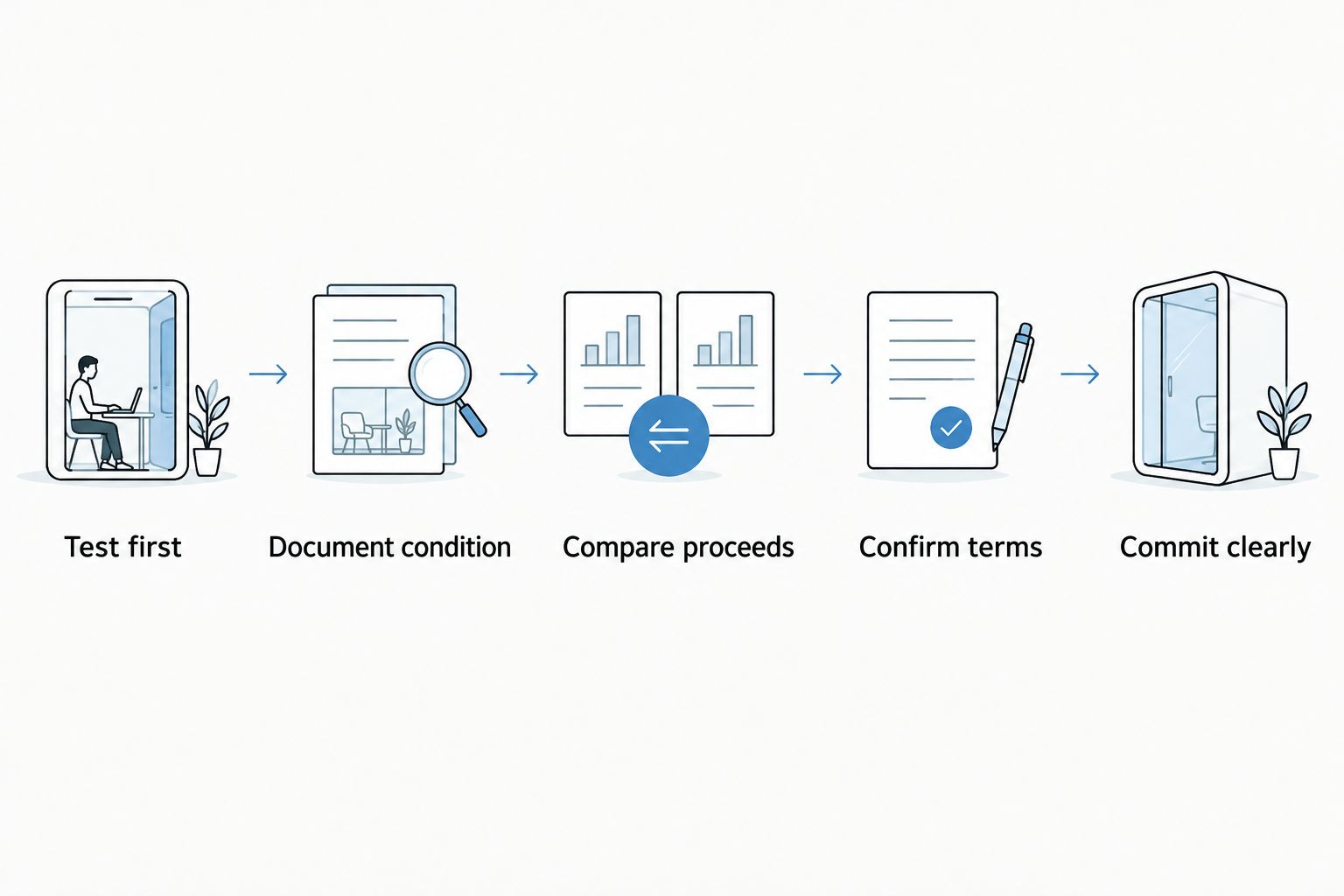
1. Test first
Check the functions a buyer will reasonably expect to work. For an electric guitar, that includes the controls and output; for a keyboard, check keys, controls, outputs, and the correct power supply.
Write down faults as you find them. Don't describe an instrument as fully working if you haven't tested the relevant functions.
2. Document condition
Photograph the whole instrument, identifying details, included accessories, and damage. Keep the original files and record the serial number privately for your transaction records.
A functional demonstration helps explain what photographs cannot. Follow the used music gear demo video guide to plan a useful demonstration rather than a performance that hides the controls.
3. Compare proceeds
Request 1 written store offer as a starting point. If you plan to ship, obtain 1 packed-shipping quote using the actual parcel dimensions and weight—not the instrument's weight alone.
Use this calculation without guessing the deductions:
Expected proceeds = agreed sale amount − seller-paid fees − packing − seller-paid shipping − agreed preparation costs.
For consignment, include the written commission and any other agreed deductions. Keep your time beside the calculation as a separate consideration rather than inventing an hourly value you don't use.
4. Confirm terms
Read the current 2026 terms before creating a listing or signing a store agreement. Check payment conditions, return responsibilities, and what happens if the transaction doesn't proceed as expected.
For online sales, verify payment through the actual account or payment service. A screenshot or email claiming payment is not a substitute for checking the transaction yourself.
5. Commit clearly
Choose the route that meets your payout and workload requirements. If you advertise in multiple places, keep details consistent and remove other listings once the instrument sells.
Don't accept overlapping commitments. Before switching away from consignment, follow the withdrawal terms you signed.
Can I sell online without paying a seller commission?
OohYeah offers zero seller commissions for music gear sellers. Create an account and list your gear if you want to manage the sale yourself; check the applicable transaction and delivery terms before accepting an offer.
Zero seller commission doesn't remove the need for accurate descriptions, secure payment checks, or suitable packing. Build those tasks into your decision.
List the gear you're ready to sell
Create an account, describe your instrument, and sell with zero seller commissions.
Is a local store always faster than selling online?
A completed store buyout removes the need to wait for an individual buyer, but a store must first agree to purchase your instrument. Consignment still requires a sale, and an online listing has no guaranteed completion date.
Should I repair an instrument before selling it?
Get a repair assessment before authorizing work solely for resale. Compare the repair expense with your selling goal, and disclose any remaining fault whether you sell online, accept a buyout, or consign.
FAQ
What's better for a first-time seller: selling instruments online or through a store?
A store buyout fits a first-time seller who wants to hand off the selling work; online selling fits someone willing to manage the listing and transaction. Compare a written store offer with expected online proceeds before deciding.
Do music stores buy every used instrument?
Don't assume a music store will buy your instrument. Ask whether it considers your model and condition before transporting the gear.
Is consignment the same as selling my guitar to a store?
No. A buyout makes the store your buyer, while consignment lets the store sell the guitar under an agreement that sets your share and payment terms.
Does zero seller commission mean selling gear has no costs?
No. Zero seller commission removes that commission, while packing, shipping, payment-related charges, or agreed preparation expenses still need checking for your transaction.
Can I list an instrument online while a store has it on consignment?
Check the consignment agreement before listing the same instrument elsewhere. Exclusivity and withdrawal terms determine what you agreed to do.
How do I compare a store offer with an online sale?
Compare the store's written offer with the online sale amount after seller-paid fees, packing, shipping, and agreed preparation costs. Then decide whether the extra hands-on work fits your goal.
What should I do before handing over a used instrument?
Document its condition, confirm the included accessories, and verify the agreed payment arrangements. Keep the listing, messages, agreement, and handoff records together.
One last thing
Online and local aren't opposites. You can find a buyer online and arrange a local handoff if the marketplace's terms permit it; that changes the shipping task without turning the transaction into a store buyout.
Before your 2026 listing goes live, write down what success means: an acceptable payout, manageable work, and a clear handoff. Sell the instrument in a way you can actually finish.