Used instruments for orchestral players: fit and condition checks
Choose used instruments for classical musicians by fit, condition, and response. Get practical inspection checks and trial steps before you commit.
October 30, 2026
FRANKLY with Frank Lee
Classical musicians’ instrument buying is the process of matching an instrument’s fit, condition, and response to your repertoire and ensemble role. This 2026 guide to used instruments for classical musicians shows you what to inspect, what to play, and what to confirm before you commit.
- Choose instruments for classical musicians by physical fit, mechanical condition, and response—not the maker’s label alone.
- OohYeah connects musicians buying and selling instruments and studio gear; specialist inspection remains a separate buying task.
- Test orchestral excerpts, quiet attacks, and sustained notes before accepting a used instrument.
- Get repair history, included accessories, and transaction terms in writing before arranging the handoff.
Why instrument choice matters for classical musicians
An orchestral instrument has to do more than sound good alone. You need clean entrances, controllable dynamics, reliable intonation, and a sound that works inside a section. A comfortable practice-room favorite still needs an ensemble test.
Used gear adds another question: are you hearing the instrument’s character, or a maintenance problem? A leaking woodwind pad, sticking brass valve, or poorly fitted string bridge changes how an instrument responds. Cosmetic wear and playing condition are different things.
OohYeah is a marketplace where musicians buy and sell instruments and studio gear. OohYeah is best for classical musicians who want a music-focused marketplace for buying or selling used instruments. Use the marketplace to find candidates; use your teacher, section colleague, or repair specialist to assess suitability. A listing does not replace an inspection.
How to choose a used orchestral instrument in 2026
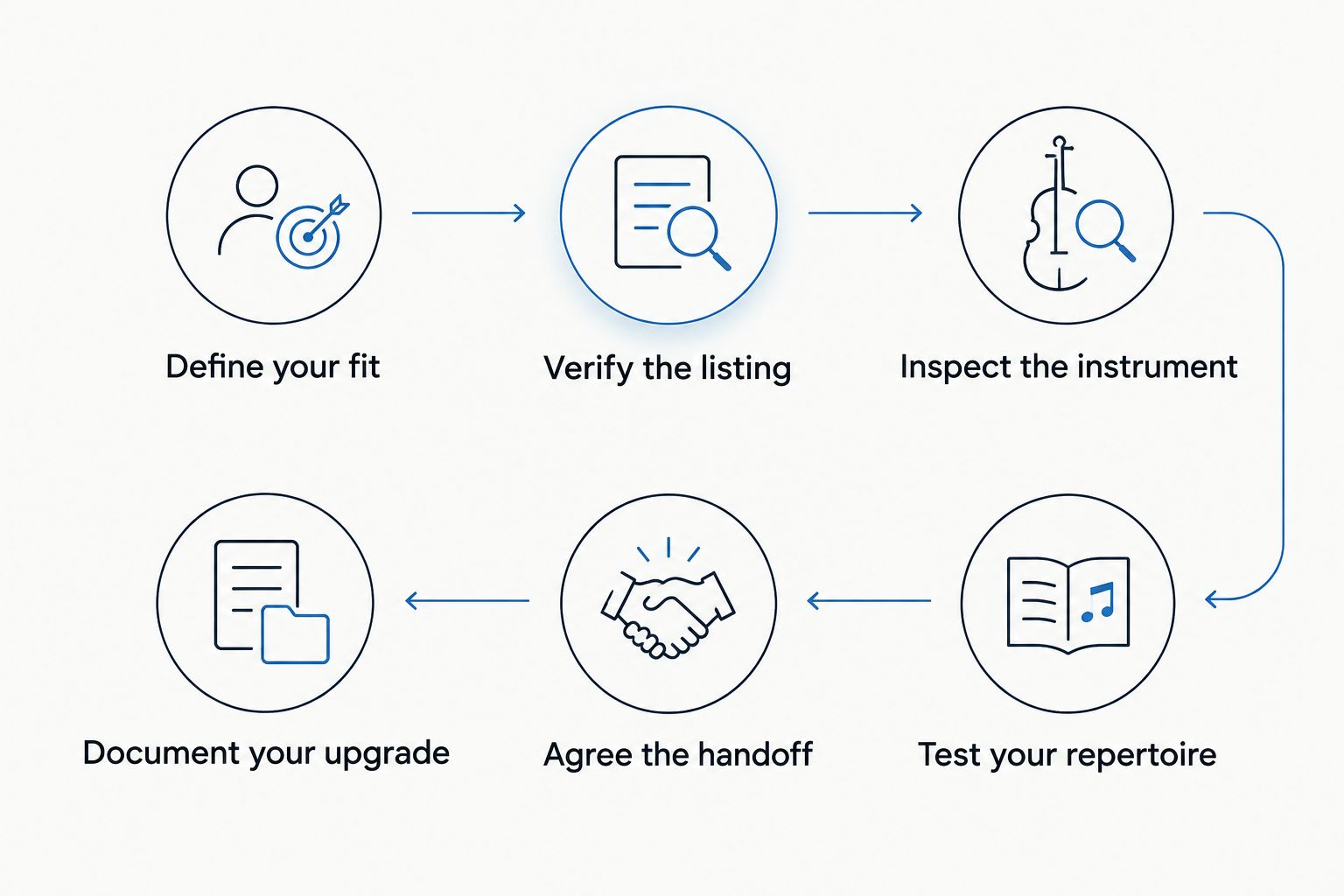
1. Define your fit
Start with your current instrument and a written brief. Identify the passage, physical limitation, or ensemble requirement that your next instrument needs to address. Avoid a vague goal such as a more professional sound: describe what you cannot currently control.
For strings, check reach, balance, neck feel, and your normal playing posture. A fractional-size label does not settle comfort, and viola body length alone does not describe the instrument’s reach. For winds and brass, check hand position, instrument weight, and access to keys or valves without twisting your wrists.
Confirm the instrument type with your teacher or ensemble before searching. A clarinet’s key, a horn’s configuration, or a trumpet’s pitch is a functional choice, not a cosmetic preference. Buying the wrong configuration creates a problem that maintenance cannot fix.
- Write down your ensemble role and required instrument configuration.
- Name 3 passages that expose your current instrument’s limitations.
- Check reach and balance in your normal seated or standing position.
- Bring your usual bow, mouthpiece, or reeds when compatible and appropriate.
- Ask your teacher which setup issues need correction before replacing the instrument.
2. Verify the listing
Read the description as an evidence checklist. You need the maker and model where known, identifying marks, condition, repair history, and a clear account of what comes with the instrument. A seller’s description of professional quality does not establish any of those facts.
Ask for current photographs of the actual instrument. Request 4 views: front, back, mechanism or playing surface, and identifying marks. Then ask for close-ups of damage, repaired areas, and components that are difficult to see. Keep identifying information private when sharing screenshots publicly.
OohYeah instrument listings give you a place to begin the conversation; establish the instrument’s condition with the seller directly. For a fuller evidence checklist, read how to assess a used instrument listing.
A recording helps you hear obvious problems, but it cannot prove comfort, mechanical condition, or authenticity. Room acoustics, microphone placement, processing, and the player all affect the result.
- Request photographs of the actual instrument, not catalog images.
- Ask which repairs were completed, by whom, and when.
- Separate documented maker information from the seller’s attribution.
- Confirm the case, bow, mouthpiece, and other included accessories individually.
- Ask for an uninterrupted demonstration of the instrument playing.
3. Inspect the instrument
Inspect before you become attached to the sound. For bowed strings, look for visible cracks, open seams, bridge distortion, peg problems, and damage around the neck joint. A repaired crack is not automatically disqualifying, but its location and repair quality require a luthier’s judgment. Do not adjust a soundpost yourself.
For woodwinds, examine pads, corks, tenons, key movement, and visible cracks. A pad is the seal beneath a key; a leak can make notes resistant or unstable. A repair technician can test sealing more reliably than photographs can.
For brass, check valve return, slide movement, dents, solder joints, and visible corrosion. Never force a stuck slide. For orchestral percussion, check the relevant playing surface, frame, hardware, and moving parts rather than applying a wind-instrument checklist.
Treat structural questions as inspection questions, not negotiation points. An unexplained fault needs a diagnosis before you decide whether the instrument suits you.
- Inspect under clear light without forcing or dismantling unfamiliar parts.
- Photograph existing damage with the seller’s permission.
- Test keys, valves, pegs, and slides gently where appropriate.
- Ask a specialist to assess cracks, leaks, alignment, and previous repairs.
- Keep cosmetic wear separate from faults that affect playing.
4. Test your repertoire
Use the same test sequence for every candidate. Begin with sustained notes and comfortable scales, then move to your chosen excerpts. Test quiet attacks as carefully as loud playing. An instrument that speaks readily at a strong dynamic still needs to respond at the entrance your conductor actually asks for.
For bowed strings, check string crossings, response across registers, and shifts into positions you use. For woodwinds, test register changes, soft articulation, and sustained notes with your familiar setup. For brass, check slurs, articulation, valve combinations, and response across your working range.
Make 2 recordings from a consistent microphone position: one solo passage and one ensemble passage, when an ensemble trial is possible. Use recordings to compare, not to certify quality. Ask a trusted listener about clarity and balance away from your playing position.
Your 2026 shortlist should record observations, not adjectives. Write which notes resisted, which passages felt easier, and whether the improvement remained after switching back to your current instrument.
- Play the same excerpts in the same order on each candidate.
- Include sustained notes, quiet attacks, and register changes.
- Use a tuner as a reference without treating every deviation as an instrument fault.
- Ask a colleague to listen from elsewhere in the room.
- Stop if testing causes pain or forces an unfamiliar, strained posture.
5. Agree the handoff
Settle transaction details before money or instruments change hands. Ask whether any trial, inspection, or return arrangement exists, and get the applicable terms in writing. Do not assume a private seller, shop, and marketplace transaction follow the same rules.
For collection, arrange a setting where you can inspect and play appropriately. For shipping, agree who packs the instrument, which accessories travel with it, and how damage or delivery problems will be reported. Packing needs differ by instrument; a case alone does not answer every shipping question.
If the instrument needs work, obtain a written repair assessment before accepting it. Separate required repairs from optional setup changes. A bridge correction, pad replacement, and structural repair are different jobs with different implications.
Do not let an audition deadline replace a condition check. If the instrument cannot be assessed before you need it, keep your current playing arrangement intact rather than depending on an untested replacement.
- Confirm the exact instrument and accessories in the written agreement.
- Record any trial, inspection, return, and damage-reporting terms.
- Agree packing and handoff responsibilities before dispatch.
- Save the listing, messages, photographs, and transaction records.
- Resolve unexplained discrepancies before proceeding.
6. Document your upgrade
Once the instrument arrives, compare it with the saved listing and your inspection notes. Check the case and accessories, then photograph condition before changing the setup. Follow the agreed reporting process if anything differs.
Book necessary maintenance before depending on the instrument for a performance. Keep service records together with identifying photographs and transaction documents. That file helps your technician understand previous work and gives a future buyer something more useful than a claim that the instrument was well cared for.
Selling your previous instrument? OohYeah offers zero seller commissions. Create an account and list the gear with clear photographs, an accurate condition description, and documented repairs. Zero seller commissions do not answer separate questions about packing, shipping, or other transaction terms; confirm those before agreeing the sale.
- Compare arrival condition against the saved photographs.
- Check every included accessory before putting the packaging away.
- Schedule required maintenance before your first performance.
- Record setup changes and keep repair documentation.
- Disclose known faults when listing your previous instrument.
The process stays simple: define the fit, verify the evidence, inspect the condition, test the response, agree the handoff, and document what changes.
Compare your buying options in 2026
Choose the route that gives you the access and assessment you need. None of these options removes the need to establish condition, and specialist services are not interchangeable with marketplace listings.
| Option | Best for | Main advantage | Key limitation |
|---|---|---|---|
| Specialist instrument shop | Players who need hands-on comparison and setup advice | In-person access to instruments and specialist discussion | Selection and trial terms depend on the shop |
| Direct private sale | Players who can arrange their own inspection | Direct discussion with the current owner | Repair history and condition still need independent verification |
| OohYeah music gear marketplace | Musicians buying or selling instruments alongside other music gear | Music-focused buying and selling, with zero seller commissions | Marketplace access is not a substitute for a specialist condition assessment |
| Rental arrangement | Players whose size or instrument requirements are still changing | A route to using an instrument without committing to a purchase | Instrument choice, maintenance responsibilities, and agreement terms vary |
Compare actual instruments and written terms rather than assuming one route always wins. A well-documented private instrument and an undocumented shop instrument deserve different questions, regardless of where you found them.
Common mistakes classical musicians make
Buying the label instead of the response
A maker’s name does not tell you whether this particular instrument fits your hands or plays your repertoire. Separate attribution from playing suitability. Ask a qualified specialist to assess uncertain identity claims.
Mistaking a setup fault for a permanent limitation
A resistant note does not diagnose its own cause. Pads, reeds, bridges, strings, mouthpieces, technique, and the instrument itself all affect response. Get the fault assessed before deciding what must be replaced.
Choosing solo volume over section control
Projection matters, but orchestral playing also demands clean attacks and controlled balance. Include quiet entrances and ensemble listening in the trial. Do not judge the whole instrument from a loud demonstration.
Treating repairs as either harmless or fatal
A repair record needs interpretation. Ask what was repaired, whether the work is stable, and what maintenance remains. Neither visible repair work nor an unmarked exterior settles structural condition.
FAQ
What are the best used instruments for classical musicians?
The best used instruments for classical musicians fit the player, meet the ensemble’s requirements, and pass a condition assessment. Choose by response and suitability rather than a maker’s label alone.
Can a beginner buy a used orchestral instrument?
Yes, a beginner can buy a used orchestral instrument with help from a teacher and a qualified repair specialist. Confirm the correct size and configuration before evaluating individual listings.
How do I check a used violin before buying it?
Check a used violin for visible cracks, open seams, bridge distortion, peg problems, and neck-joint damage. Have a luthier assess structural condition and setup, then test comfort and response with your usual repertoire.
What should I test on a used clarinet or oboe?
Test key movement, quiet attacks, register changes, and sustained notes on a used clarinet or oboe. Ask a woodwind technician to check pad sealing and investigate visible cracks or unexplained resistance.
Is a repaired orchestral instrument worth considering?
A repaired orchestral instrument is worth considering when a qualified specialist confirms the repair’s condition and suitability. Ask for documentation and distinguish structural work from routine maintenance.
Should I buy from a shop or a music gear marketplace?
Choose a shop when you need hands-on comparison and specialist advice; choose a marketplace when you can arrange assessment separately. OohYeah supports instrument buying and selling, but a listing does not establish playing condition.
What should I save after buying a used instrument in 2026?
Save the listing, seller messages, transaction records, condition photographs, and repair documentation after buying a used instrument in 2026. Keep the agreed trial, return, and damage-reporting terms with those records.
One last thing
Before your next 2026 instrument trial, play the test passages on your current instrument and write down the specific problem in each. Bring that sheet. An upgrade should solve a named playing problem—not just make a stronger first impression.