How to Price Digital Music Downloads: The 2026 Artist Strategy Guide
Learn how to price digital music downloads in 2026. Maximize your artist profit, ditch platform cuts, and earn more than streaming with direct fan sales.

September 20, 2026
FRANKLY with Frank Lee
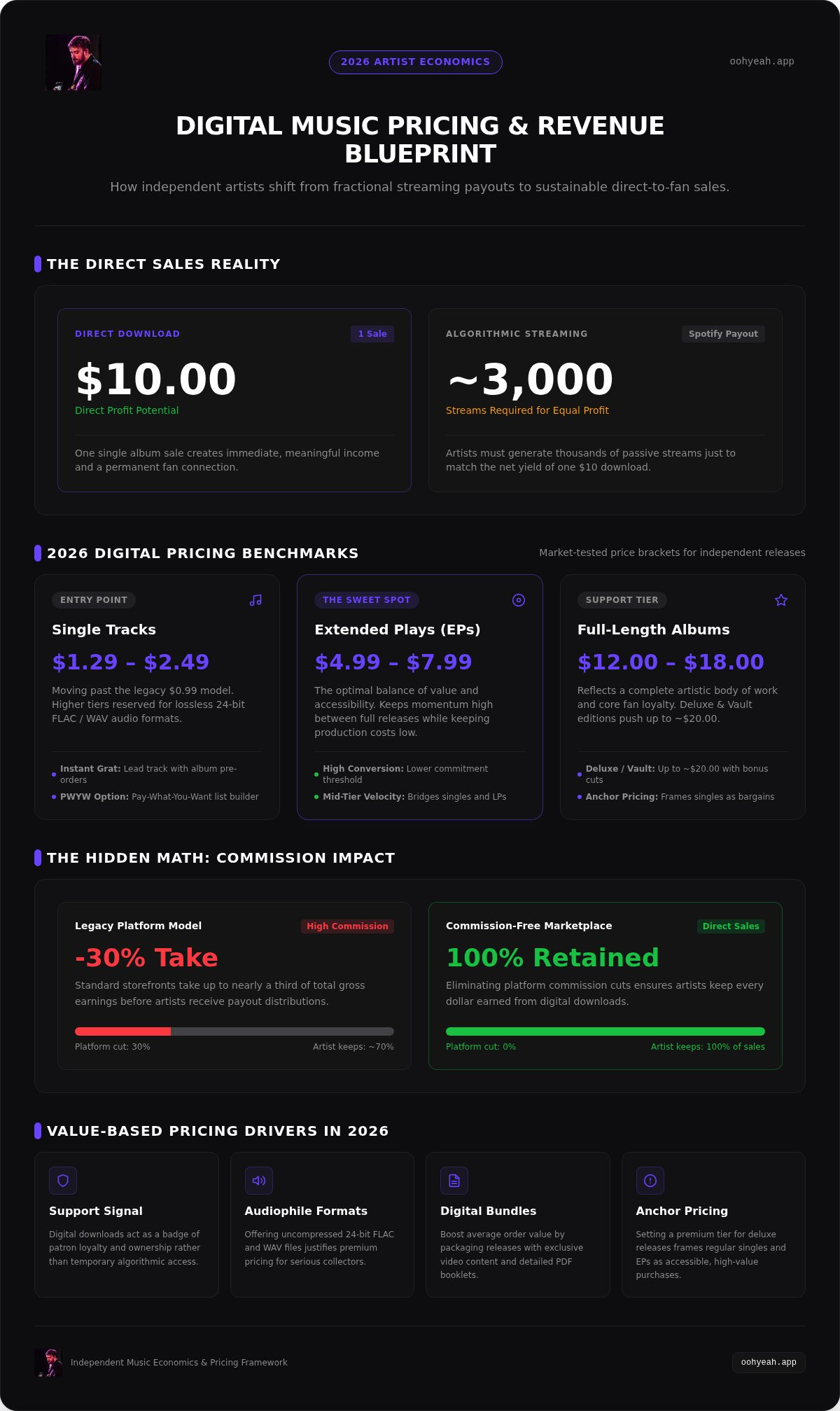
Did you know that selling just one $10 digital album nets you the same profit as roughly 3,000 streams on Spotify? It's a staggering reality that highlights why your direct sales strategy is more critical than ever. For independent artists in 2026, learning how to price digital music downloads is the fastest way to reclaim your financial independence. You've likely felt the sting of commission fatigue or worried that charging a fair price will drive fans back to low-pay streaming platforms. It's frustrating to watch 30% of your hard-earned revenue vanish into a platform's pocket before you even see a cent.
We agree that the old industry model is broken. You deserve to keep every dollar you earn while offering your fans the high-quality FLAC and WAV files they actually want. This guide will help you master the art of digital pricing to maximize your revenue and build a sustainable, long-term career. We'll provide a clear pricing framework for singles and albums, explain how to keep 100% of your sales, and show you how to boost your monthly recurring revenue through direct fan connections. It's time to stop settling for fractions of a penny and start building a business on your own terms.
Key Takeaways
- Treat digital downloads as a "support signal" from superfans who value ownership over casual streaming.
- Master how to price digital music downloads using current 2026 benchmarks for singles, EPs, and high-resolution albums.
- Calculate your true net profit to see how traditional platform commissions drain your bank account.
- Boost your average order value by bundling music with exclusive digital assets like video content and PDF booklets.
- Reclaim your independence by moving to a commission-free marketplace where you keep 100% of every sale.
The Psychology of Digital Music Pricing in 2026
In 2026, a digital download is no longer just a file on a hard drive. It's a support signal. While casual listeners stick to algorithmic playlists, your superfans use downloads to prove their loyalty. This shift from "access" to "ownership" is the reason why digital sales have stabilized despite the dominance of streaming. When you learn how to price digital music downloads, you aren't just tagging a product; you're setting the value of your creative independence.
Fans buy downloads because they want to own a piece of your journey. They want to know that if a streaming service disappears or a licensing deal expires, your music stays in their library. This isn't a retail transaction. It's an act of patronage. You don't need to compete with "free" or "nearly free" streaming prices because you are offering something streaming cannot: a direct connection and a permanent asset.
The Superfan Premium: Why Context Matters
Think of a digital download as a digital souvenir. It marks a specific moment, a tour, or a limited release. Fans are willing to pay a premium for this context, especially when you offer high-fidelity formats. Providing 24-bit FLAC or WAV files justifies a higher price point because it caters to audiophiles and collectors who demand the best possible quality. Value-Based Pricing is the strategy of setting prices based on the perceived worth to the fan rather than the cost of the file. By focusing on the emotional and technical value, you move away from the race to the bottom.
Breaking the $0.99 Barrier
The industry has spent decades stuck in the shadow of the original iTunes store. However, the $0.99 single is a relic of the past. Inflation and the rising costs of production mean that legacy price points no longer support a healthy career. Fans understand this. The "starving artist" narrative has evolved into a community-driven movement where listeners want to see you thrive.
Many artists now utilize psychological pricing strategies to move beyond these old limits. Instead of "buying a song," fans are "investing in the artist." When the friction of platform commissions is removed, your pricing can reflect the actual value of your work. You are no longer trying to sell a commodity. You are inviting your audience to fuel your next project. This mindset shift allows you to set prices that reflect your worth without fear of driving fans away.
2026 Pricing Benchmarks: Singles, EPs, and Albums
Setting the right price is a balancing act between accessibility and sustainability. In 2026, the market has moved beyond the "dollar-per-song" era. According to data from the RIAA sales database, while streaming dominates, digital downloads provide a high-margin revenue stream for artists who target their superfans correctly. Understanding how to price digital music downloads requires looking at current benchmarks that reflect the true value of your work. You don't have to follow the old rules set by major labels decades ago.
The Single: Your Entry Point
For a single track, standard pricing now ranges from $1.29 to $2.49. This higher bracket is often reserved for high-fidelity files like FLAC or WAV. If you are releasing a lead single for a pre-order, consider using "Instant Grat" tracks. These are songs fans get immediately upon purchasing the full album. You can also experiment with "Pay What You Want" (PWYW) for specific tracks to build your mailing list. This lowers the barrier to entry while allowing generous fans to overpay. It's a powerful way to identify who your biggest supporters are early in a release cycle.
EPs occupy the "sweet spot" for modern independent releases. Priced between $4.99 and $7.99, they offer enough value to justify a purchase without the high commitment of a full LP. This pricing tier is perfect for maintaining momentum between larger projects. It provides a professional product for your audience while keeping your production costs manageable.
The Full-Length Album: The Support Tier
A full-length digital album should be priced between $12.00 and $18.00. This range reflects the effort of a cohesive project and the loyalty of your core audience. "Vault" content or classic reissues often command even higher prices. For example, the Aaliyah "One in a Million" digital release showed that fans are willing to pay more for rare or historically significant music because of the perceived scarcity and emotional weight. Deluxe editions with bonus tracks or exclusive voice memos can also push your price point toward the $20 mark. Fans aren't just buying audio; they're buying the complete experience of your art.
Use the "Anchor Price" strategy to guide your fans. By setting a premium price for a deluxe album, your standard singles and EPs look like affordable alternatives. This psychological framing helps fans feel they are getting a deal while ensuring you get paid fairly. When you host your music on a platform that lets you set your own pricing tiers, you gain the freedom to test these benchmarks without losing a cut to commissions.
The Hidden Math: How Commissions Dictate Your Price
Gross revenue is a vanity metric. What actually matters for your career is the net profit that hits your bank account. Many artists struggle with how to price digital music downloads because they forget to account for the "legacy tax" imposed by traditional marketplaces. If you sell an album for $10 on a platform that takes a 15% or 30% commission, you are losing a massive chunk of your earnings before you even pay your bills. This commission structure forces you to inflate your prices just to break even, which can accidentally drive your fans back to low-pay streaming services.
The math is simple but painful. On a standard 15% commission platform, you lose $1.50 on every $10 sale. Over 500 sales, that is $750 out of your pocket. While Music Modernization Act regulations have improved the landscape for digital royalties, they don't protect you from the high take-rates of private storefronts. You need to understand the "Gross vs. Net" reality to ensure you aren't working harder for less money.
Commission-Heavy vs. Commission-Free
Legacy platforms often pitch their 15% cut as a fair trade for "discovery," but for most independent artists, the traffic comes from your own social media and mailing lists. Paying a permanent commission on fans you found yourself is a bad deal. In contrast, a commission-free model allows you to keep 100% of your sales revenue. On OohYeah!, the only friction between your fan's wallet and your pocket is the standard payment processing fee from providers like PayPal or Stripe. This transparency gives you the freedom to set lower, more competitive prices while still taking home more profit than you would on a commission-heavy site.
Pricing for Profitability
Calculating your take-home price should be the first step in your strategy. If you know you keep 100% of the sale, you can offer your fans better deals. For example, you could price an EP at $5.99 and still make more than you would selling it for $7.99 on a platform taking a 30% cut. Lowering the price for the fan while increasing the profit for the artist is the ultimate win-win scenario.
When you direct your audience to your commission-free marketplace, you are investing in the health of your business. You gain the flexibility to run flash sales or offer "early bird" pricing without worrying about whether the platform's cut will eat your entire margin. Focus on the net, and your career will become much more sustainable.
Strategic Pricing: Bundling and Tiered Fan Access
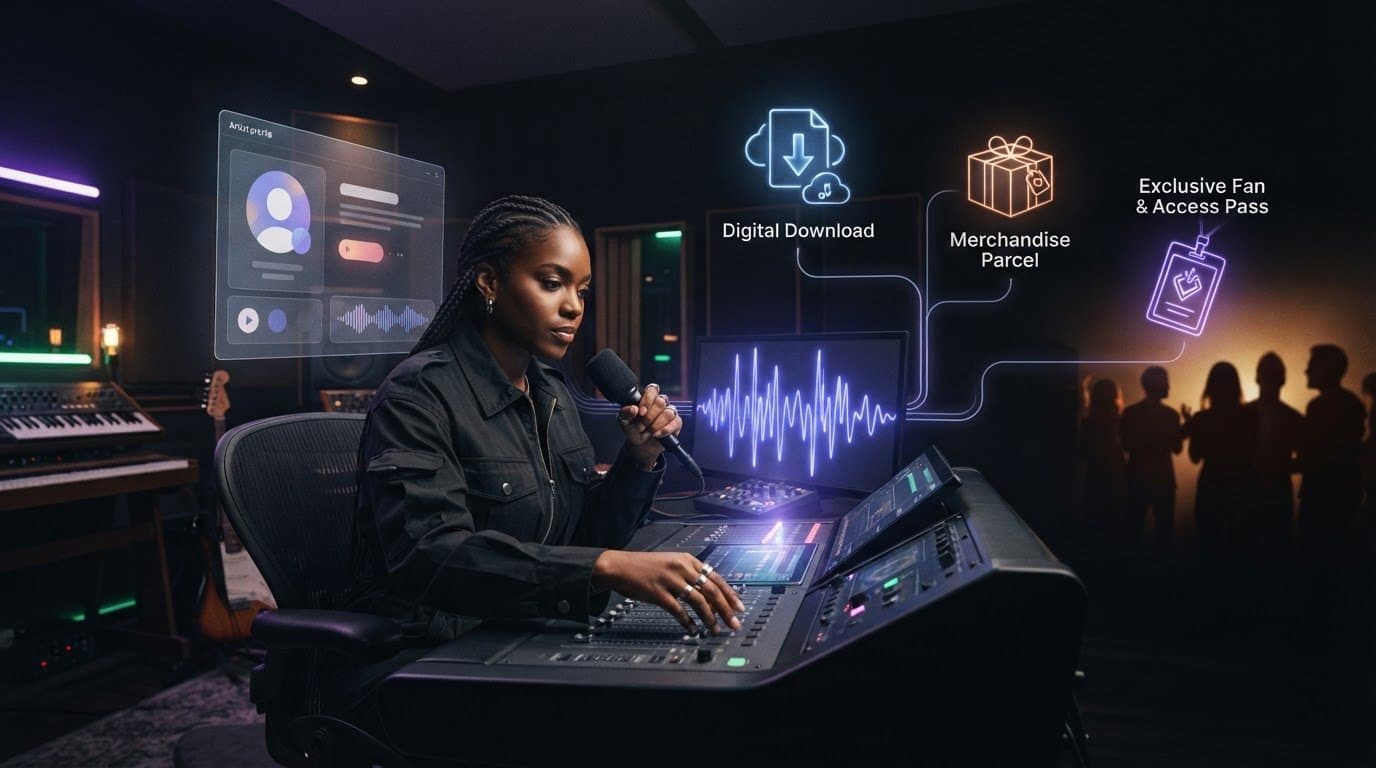
Pricing a single song is only the first step toward financial independence. To maximize your earnings, you must look at the bigger picture. The "Bento Box" strategy involves bundling your music with exclusive digital assets that fans can't find on streaming platforms. This approach transforms a simple download into a premium experience. When considering how to price digital music downloads in this context, you aren't just selling audio; you're selling a "Digital Deluxe" package that rewards your most loyal supporters.
These bundles can include high-resolution PDF booklets, exclusive behind-the-scenes video content, or even track stems for aspiring producers. By adding these layers, you justify a higher price point that reflects the extra effort. This strategy moves the conversation away from the commodity price of a file and toward the unique value of your creative world. It's about giving fans a reason to choose ownership over a rental.
The Digital Bundle Advantage
Bundling also allows you to move your back catalog more effectively. A discography bundle provides an immediate revenue spike. For example, offering five albums for $40 feels like a massive win for the fan while putting a significant sum in your pocket. You can also use digital downloads as a "thank you" for physical merchandise purchases. If a fan buys a t-shirt, giving them a digital-only exclusive track reinforces their decision to support you directly. These digital-only exclusives are your secret weapon because they cannot be found on streaming services.
Subscriptions vs. One-Off Sales
The most significant shift in 2026 pricing is the move toward recurring revenue. Integrating your downloads into a fan club or subscription tier changes your entire financial outlook. You no longer have to rely solely on the $1.99 sale of a single track to pay your bills. Instead, a $5.00 monthly membership can include all future downloads and early access to new releases. This creates a predictable income stream that supports your creative process year-round.
Balancing one-off sales with subscriptions lets you capture different types of fans. Casual supporters can buy the single, while your superfans join the inner circle for deeper access. This tiered approach ensures you aren't leaving money on the table. You can easily set up fan subscription tiers to start building your recurring revenue today. By focusing on the relationship rather than just the transaction, you build a career that lasts.
Executing Your Pricing Strategy on OohYeah!
You have the strategy. Now you need the engine to run it. OohYeah! is designed for artists who are done losing 15% to 30% of their earnings to platform commissions. This is where you apply everything you've learned about how to price digital music downloads. Because you keep 100% of your sales revenue, your pricing tiers can finally be both competitive and highly profitable. You aren't just setting up a store; you're building a fortress for your creative business where every dollar stays in your pocket.
Setting Your Prices for Maximum Retention
The OohYeah! dashboard gives you total control over your digital inventory. You can set different prices for various file formats, allowing you to charge a premium for high-resolution WAV or FLAC files while keeping standard MP3s accessible. Integrating your digital store with your artist profile creates a seamless experience for your visitors. Fans browse your discography and buy singles without ever leaving your ecosystem. Use the built-in fan subscription tools to transition one-time buyers into recurring patrons, creating a steady income stream that supplements your download sales.
Leveraging the "Exclusive Content" feature is your best tool for justifying premium price points. Use it to lock "Digital Deluxe" bundles or behind-the-scenes footage that isn't available on streaming platforms. This creates the scarcity required to drive higher-value sales and rewards your most dedicated supporters. When you pair downloads with exclusive access, you turn a simple transaction into a lasting relationship. It’s the most direct path from being a struggling creator to becoming a sustainable, independent business owner. Your pricing strategy is only as strong as the platform that hosts it.
Promoting Your Store to Your Fanbase
Your fans want you to succeed, but they need to know how to help. When you promote your store, tell them exactly why buying direct matters. Explain that 100% of the money goes toward your next recording, tour, or music video. This transparency builds a deeper bond and encourages fans to choose your marketplace over a low-pay streaming service. Use your social media "Link in Bio" tools to drive all traffic to your commission-free shop rather than a third-party aggregator. By owning the destination, you own the relationship and the data that comes with it.
Selling music directly to fans is the most effective way to reclaim your financial independence as an artist.
Reclaim Your Creative Independence
Your music is more than just a digital file; it is the foundation of your independent career. By shifting your mindset from retail transactions to fan patronage, you unlock the true value of your creative work. You've seen the math. Traditional platform commissions act as a hidden tax that drains your bank account and slows your professional growth. Moving to a model that prioritizes your earnings allows you to experiment with bundling and subscriptions, turning casual listeners into lifelong supporters.
Mastering how to price digital music downloads is the final step in taking back control of your financial future. You deserve a partner that values your work as much as you do. With artist-first distribution tools and 100% revenue retention, you can finally build a business that is both fair and profitable. Don't let legacy platforms dictate your worth or take a cut of your hard-earned success. It is time to step into the future of the digital music economy.
Join OohYeah! and keep 100% of your music sales today. Your fans are ready to support you. Give them a direct way to fuel your next project and watch your career thrive.
Frequently Asked Questions
How much should I charge for a single digital song in 2026?
In 2026, the standard price for a single track ranges between $1.29 and $2.49. You should aim for the higher end of that bracket if you provide high-resolution files like 24-bit FLAC. This price point reflects the shift from music as a commodity to music as a support signal. When you decide how to price digital music downloads, remember that your most loyal fans aren't looking for a bargain; they're looking to invest in your career.
Is it better to offer "Pay What You Want" or a fixed price for downloads?
A hybrid approach often works best for independent creators. Setting a fixed floor price of $1.50 or $2.00 ensures you cover your costs while preventing payment processors from eating your entire margin. Enabling a "Pay What You Want" option on top of that floor allows your superfans to contribute more. Data shows that tip-enabled purchases frequently exceed the list price by 15% or more, giving your audience a direct way to show extra support.
Why should I charge for downloads when my music is on Spotify?
Streaming services pay fractions of a penny per play, making it difficult to build a sustainable career. Selling a single digital download can generate the same revenue as thousands of streams on platforms like Spotify. Beyond the money, downloads offer your fans permanent ownership. They don't have to worry about licensing deals expiring or songs disappearing from playlists. Buying a download is a deliberate choice to support an artist's longevity rather than just consuming a file.
What is the best price for a full-length digital album?
Most independent artists find success pricing full-length digital albums between $12.00 and $18.00. This range honors the creative effort required for a cohesive project while remaining accessible to your core audience. If you're releasing a "Deluxe Edition" with bonus tracks, voice memos, or exclusive artwork, you can justify moving toward $20.00. High-value reissues or rare "vault" content can also command a premium due to their scarcity and the emotional connection they provide to fans.
Do fans still buy digital downloads in the age of streaming?
Digital downloads have stabilized because they serve a different purpose than streaming. While casual listeners use algorithms, superfans buy music to own a piece of an artist's legacy. Downloads act as digital souvenirs of a specific release or tour. They also cater to audiophiles who demand the high-fidelity sound that streaming often lacks. In 2026, permanent ownership is a badge of honor for dedicated supporters who want to ensure their favorite artists stay funded.
How do platform commissions affect my final music pricing?
Traditional platform commissions of 15% to 30% act as a hidden tax on your creativity. These high take-rates force you to inflate your retail prices just to reach a baseline profit. When you understand how to price digital music downloads effectively, you realize that commission-free models provide much more flexibility. By keeping 100% of your sales revenue, you can offer fan-friendly prices without sacrificing your own financial health. This transparency benefits both the creator and the listener.
Should I charge more for high-quality audio files like FLAC or WAV?
You can absolutely justify a higher price for lossless audio formats. Audiophiles and DJs are often happy to pay a premium for 24-bit FLAC or WAV files because they offer superior sound quality. While a standard MP3 might sell for $1.29, a high-resolution version can easily command $2.49 or more. Offering these tiers allows you to cater to different segments of your audience while maximizing the total revenue generated from every single release you put out.
How can I sell music and merch together without paying a commission?
The most effective way to avoid losing revenue is to host your store on a commission-free marketplace like OohYeah!. Instead of taking a cut of every transaction, this platform uses a recurring artist subscription model. This allows you to retain 100% of your sales from digital music downloads and physical merchandise. You get professional distribution tools and a direct-to-fan storefront without the "commission fatigue" that plagues traditional industry marketplaces. It is a fairer way to grow your business.