Convert Followers into Paying Music Fans: A Practical Guide
Learn how to convert followers into paying music fans with practical strategies to monetize your music, build trust, and sell merch or downloads with ease.

October 9, 2026
FRANKLY with Frank Lee
A large following can still leave your music income unpredictable. The path to convert followers into paying music fans isn’t another sales pitch. It’s about building trust, then giving listeners a clear, worthwhile way to support the music they love.
If your follower count isn’t translating into income, you’re not alone. Asking for support too often can feel awkward, and it’s hard to know what fans will value. Make support part of a stronger relationship, not a constant ask.
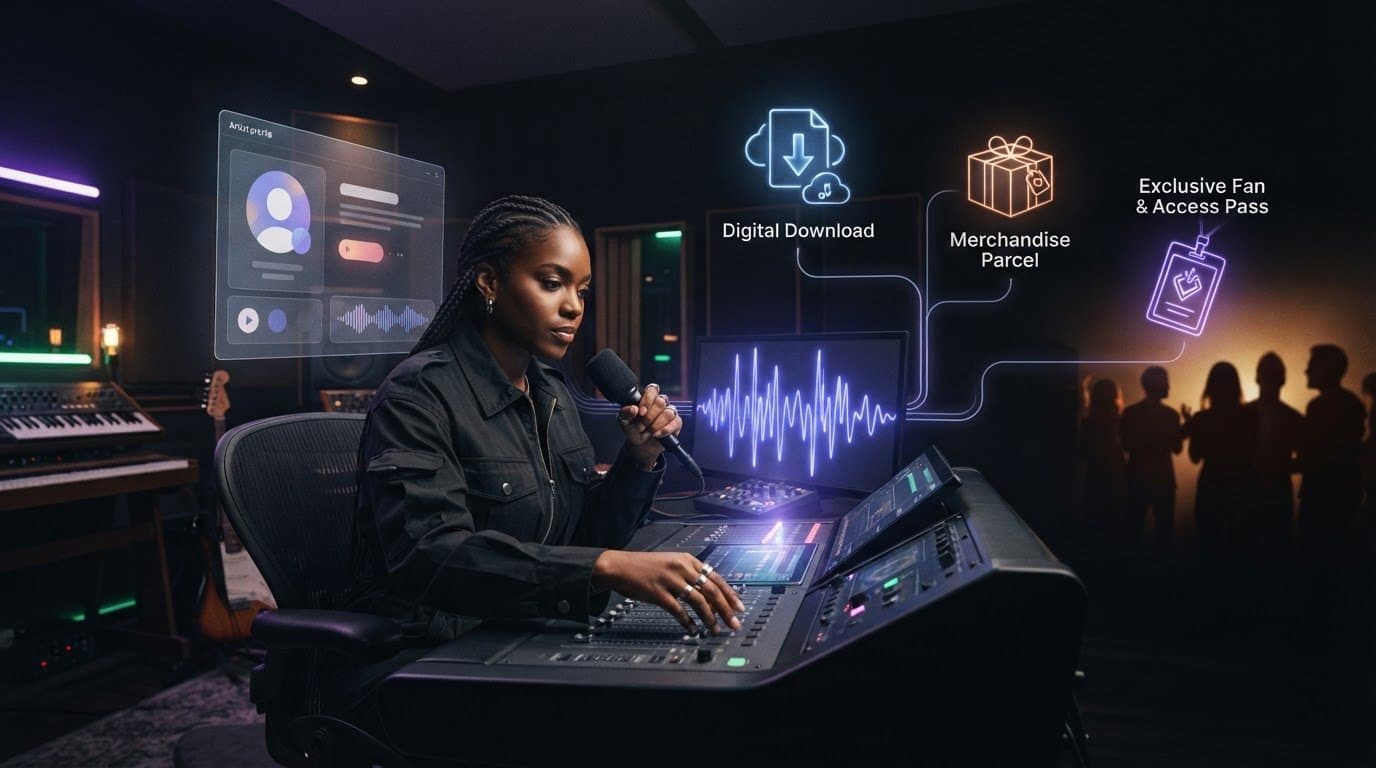
This guide will help you create a practical, repeatable path from casual listener to direct supporter. You’ll learn how to deepen fan connections, shape relevant offers like downloads, merchandise, and exclusive content, and invite people to support your work without putting trust at risk. You’ll also see how OohYeah! brings an artist profile and fan offerings together. Artists keep 100% of sales revenue and pay a recurring subscription for platform access. The goal is to build support that works beyond streams.
Key Takeaways
- Separate reach, engagement, direct contact, and purchase intent so you can see which listeners are ready for a next step.
- Use a clear sequence from discovery to connection, relevant offer, easy action, and ongoing relationship to make support feel natural.
- To convert followers into paying music fans, match each fan signal with an invitation and offer that fits their level of interest.
- Test one audience, one offer, and one invitation, then review signups, offer-page visits, purchases, and repeat purchases where available.
- Bring artist profiles, downloads, merchandise, and exclusive content together, while accounting for OohYeah!’s recurring artist subscription and commission-free sales model.
Why follower counts alone do not create paying music fans
A follower count measures how many accounts have connected with your profile. It doesn’t show how many people notice each post, want to hear from you directly, or are ready to buy. Social platforms can help you reach listeners, but reach is only the beginning of a fan relationship. Someone may follow because one track caught their attention, then rarely see your updates or take another step.
Audience attention means someone has encountered your music; paying fan support is a deliberate choice to spend money on it. Keeping that distinction clear helps you understand what your audience is doing instead of treating every follow as a likely sale.
Think of four separate signals:
- Reach: A person sees or hears your music. This shows exposure, not a lasting connection.
- Engagement: A listener likes a post, comments, shares a track, or replies. They’ve taken an action, but not necessarily one connected to buying.
- Permission-based contact: Someone voluntarily signs up to receive updates. That gives you a more direct way to stay in touch, but it isn’t a purchase commitment.
- Purchase intent: A listener explores an offer, such as a music download or exclusive artist content. This may indicate readiness to support you, though interest can still change.
These stages can overlap, but they aren’t interchangeable. A listener might stream a song repeatedly without following you. Another might follow without hearing your latest release. Someone who signs up for updates may still be deciding whether an offer suits them. That’s why a large follower count can coexist with few direct sales: the number records a connection on a platform, not the listener’s needs, attention, or buying decision.
What separates a follower from a paying fan?
A follower is part of your audience, not proof of purchase intent. Deeper signals can include returning to your music, replying to a message, or voluntarily signing up for updates. Each action shows a different kind of interest. Treat these signals as clues, not promises: even a highly engaged listener may never buy, and that choice is theirs.
Direct-to-fan music marketing focuses on building a direct relationship between artists and listeners. The Direct-to-fan music marketing model helps explain why that relationship matters: it creates ways to connect with listeners beyond counting platform follows. The goal isn’t to label every fan as a prospect. It’s to notice genuine interest and make relevant support options easy to find.
Why listeners choose to support an artist
Support is more likely to feel worthwhile when a listener feels connected to your work, sees value in the offer, and understands how to act. A fan might buy a download to keep a copy of an album or choose exclusive content to get a closer look at your creative process. Make the invitation clear and respectful. Listeners don’t owe artists payment for enjoying freely available music; a purchase is their choice.
To convert followers into paying music fans, help listeners move from casual discovery toward a meaningful connection, then offer a fitting way to support you. The count may show potential reach. Their actions reveal where a relationship is developing.
How trust and a clear offer turn listeners into supporters
Trust grows through what you share before you ask for a purchase. A listener may discover a track through a post, return for another song, and begin to recognize your voice and values. You earn that attention through music and genuine, useful communication. A financial invitation is a separate step, and it should make sense in the relationship you’ve built.
Trust makes a clear, relevant offer feel like an invitation to support your work, not pressure to buy. Give listeners a reason to stay connected, then show them a straightforward way to support you if they choose.
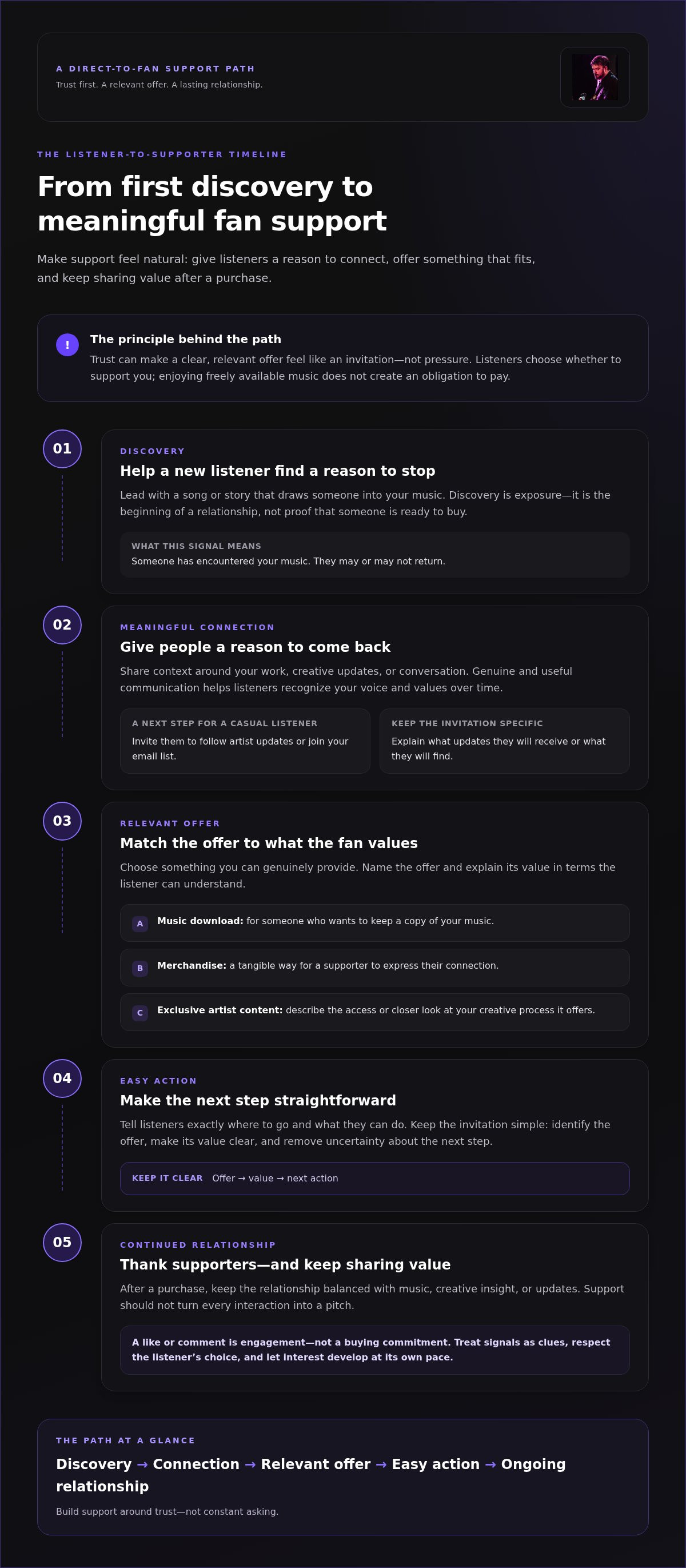
Build the path one step at a time:
- Discovery: Help new listeners find a song or story that draws them in.
- Meaningful connection: Share context, creative updates, or conversation that gives people a reason to return.
- Relevant offer: Present something that fits their interest, such as a music download, merchandise, or exclusive artist content.
- Easy action: Explain exactly where to go and what the listener can do.
- Continued relationship: Thank supporters and keep sharing value after a purchase, without making every interaction a pitch.
Give casual listeners a low-pressure next step
Not every listener is ready to buy, so offer a next step that matches their interest. Invite someone who enjoyed a release to follow your artist updates, or give a curious listener the option to join your email list. Be specific about what updates they’ll receive or what they’ll find by following. Don’t turn every like or comment into a sales opening. Let attention grow into a connection.
Make the paid offer valuable and easy to understand
Choose an offer you can genuinely provide. A download might suit someone who wants to keep your music, while merchandise gives a supporter a tangible way to express their connection. Describe exclusive content by the access or deeper connection it offers. Keep the invitation simple: name the offer, explain its value, and make the next action clear.
Consistent value keeps the relationship balanced. Share music, creative insight, or updates because they matter to your audience, not just to prepare for a sale. Research into the psychology of fan-musician relationships on social media offers context for how these connections develop. The practical lesson is simple: show up with care, listen to responses, and make paid support one option among your ongoing interactions.
To convert followers into paying music fans, make each step feel natural rather than rushing from a new follow to a purchase request. An artist profile that brings music and offers together can make the next step easier to find. OohYeah! brings downloads, merchandise, and exclusive content together in a direct-to-fan destination.
Choose the right conversion path for each kind of fan
A listener who just discovered your music needs a different next step from someone who regularly responds to your updates. Match each invitation to what the person has shown you. Streaming and social platforms can introduce your music and help listeners engage. An owned contact channel, such as an email list, gives interested fans a way to receive updates more directly. A direct purchase is another step: it lets a listener choose to support you financially. No platform or offer will convert every listener, and each stage has value even when it doesn’t lead to a sale.
Use observable signals as a guide, not a guarantee. A stream or new follow may mean someone is curious. A thoughtful reply or voluntary signup suggests a stronger connection. A purchase shows that a fan chose a specific offer. Let that context shape what you invite them to do next.
| Fan signal | Stage | Next step | Possible offer |
|---|---|---|---|
| Streams a track or follows after a discovery post | New listener | Invite them to hear more or follow artist updates | More music, release news |
| Replies, shares a release, or signs up for updates | Engaged fan | Point them to a clear, relevant artist offer | Digital download, merchandise, exclusive content |
| Has already purchased or returned to your offers | Existing supporter | Share what’s new and let them choose whether to take part | A new download, merchandise, or exclusive content |
Match the invitation to the listener’s level of interest
For a new listener, keep the request light: “Hear more of my music” or “Follow for release updates.” For someone who regularly responds, make a more specific offer, such as a download of a release or access to exclusive artist content. For a past buyer, share a new option without implying that their earlier support obligates them to spend again. A respectful invitation leaves room for fans to participate in the way that suits them.
Reduce friction between interest and purchase
Make calls to action clear and the buying process straightforward. A listener should understand what an offer is, why it may interest them, and where to take the next step. Avoid sending a curious new fan straight to a crowded sales page before they’ve had a chance to explore your music.
A focused artist profile can bring music and purchase options together, so a listener who wants to go further doesn’t have to search across scattered posts. For example, someone arriving from a streaming platform could find your tracks first, then discover downloads, merchandise, or exclusive content in the same destination. That makes the path easier to follow without forcing a sale.
To convert followers into paying music fans, build a path with choices at each stage: discovery, connection, then direct support. Track which invitations earn attention and which lead to meaningful actions. Keep the steps useful on their own, and let each fan decide how far to go.
Build a repeatable plan and measure fan conversion
A repeatable campaign turns fan support from a vague hope into something you can learn from. Keep the first test focused. If you change the audience, offer, message, and destination at once, you won’t know which part influenced the result. Start small, record what happens, and use the evidence to shape your next invitation.
Measure completed support actions, not follower growth alone, because purchases and repeat purchases show whether fans chose to support your music directly. Follower growth can show that more people are discovering you. It can’t tell you whether they acted on a particular offer.
Create a focused campaign around one offer
Choose one audience, one offer, one invitation, and one review date. For example, you might share a digital release with listeners who have engaged with your recent music. Write one message that explains why the offer may interest them, then share it through suitable artist channels without flooding followers. Decide when you’ll review the results before the campaign begins.
- Audience: Choose a group with a relevant connection to the offer, such as listeners who engage with a release.
- Offer: Focus on one download, merchandise item, or exclusive-content offer.
- Invitation: Say what fans can get and what action to take.
- Review date: Set a time to check the results and decide what to adjust next.
Keep a simple record of the response. Track signups, offer-page visits, purchases, and repeat purchases where that information is available. These actions help you see where interest grows or drops off. For instance, visits without purchases may suggest that the offer details or purchase steps need attention. Signups without later visits may point to a need for clearer follow-up. Treat these as questions to investigate, not automatic explanations.
Learn from results and improve the next invitation
At your review, compare the results with your own previous campaigns, not an assumed industry benchmark. Look at which message drew meaningful engagement and whether that attention led to completed purchases. Change one element at a time, such as the offer description or call to action, so you can make a more useful comparison. Small audience samples can swing sharply, so don’t treat a single purchase or quiet campaign as conclusive proof.
Timing, audience mix, and other changes may also affect results. A post that coincides with more sales doesn’t prove it caused them. Look for patterns across repeated efforts, and keep notes on what changed between campaigns. That gives you a clearer basis for deciding whether to repeat an approach, adjust it, or try a different invitation.
To convert followers into paying music fans, make measurement part of the relationship, not a reason to send more sales messages. OohYeah! gives interested fans a focused destination that connects an artist profile with music and offers. Artists retain 100% of sales revenue while paying a recurring subscription for platform access and sales tools. See how OohYeah! brings direct-to-fan artist profiles and sales tools together.
Turn direct fan support into a lasting artist relationship
A direct purchase can do more than create a sale. It gives a fan a clear way to support your work and gives you a chance to keep building the relationship after they choose to buy. Streaming and social platforms still matter: they help listeners discover your music and follow your creative journey. A direct-support destination adds another step by bringing your artist profile and ways to support you together.
That connection works best when fans can understand what’s available and choose what suits them. One listener may want a digital download. Another may prefer merchandise or exclusive content. Keep sharing your music and updates, and let each offer complement discovery rather than replace it.
Give fans a direct way to support your music
On OohYeah!, fans can discover artists, access music and downloads, and purchase merchandise through the marketplace. Artists can also offer exclusive content. OohYeah!’s commission-free sales model lets artists retain 100% of sales revenue, while artists pay a recurring subscription fee for platform access and sales tools. Sales revenue stays with the artist, and platform access has a recurring subscription cost.
Direct support doesn’t mean every fan will make a purchase, nor does it guarantee a particular income. It means interested listeners have a direct option when they’re ready. Continue using social and streaming platforms to reach new people, then make it easy for those who want to support you to find your artist profile and offers.
Make the next step simple for artists
Start by choosing the offer you want fans to support first. Decide whether a download, merchandise, or exclusive content best fits what you’re making and what your audience values. Then make that option easy to find alongside your music. A focused profile helps connect discovery with the next step without asking listeners to piece together offers from scattered posts.
Use the framework from this guide: understand who you’re inviting, give them a relevant reason to take part, make the action clear, and learn from what happens. Keep the relationship active after a purchase with music and updates that give fans a reason to stay connected. That turns direct sales into part of an ongoing connection, not a one-time transaction.
OohYeah! brings artist profiles and direct-to-fan support together in one marketplace, with downloads, merchandise, and exclusive content. This gives listeners a place to discover an artist’s music and ways to support their work.
Build your next step around the fans who care
Your next move doesn’t need to be a major campaign. Choose one clear invitation, share it with the listeners most likely to value it, and pay attention to what they do. Then use what you learn to make the next interaction more useful. Small, thoughtful steps can build momentum without turning your connection with fans into a constant sales pitch.
The goal isn’t to make every follower buy. It’s to create an honest path for the people who want to support your music. When you convert followers into paying music fans, you give that support a clear place in a lasting artist-fan relationship.
Keep making work you believe in, keep showing up for your listeners, and let fans choose how they want to be part of what comes next. Your community can grow one genuine connection at a time.
Frequently Asked Questions
How do I turn social media followers into paying music fans?
To convert followers into paying music fans, start with people who already engage meaningfully, such as those replying to your posts or returning to hear new releases. Invite them to take one small step, like signing up for artist updates. Later, connect a relevant offer to something they’ve shown interest in. For example, mention a digital release to listeners responding to that music, then review offer-page visits and completed purchases rather than likes alone.
Can independent musicians make money from a small fanbase?
Yes, a small fanbase can include listeners willing to support an artist, but income varies and isn’t guaranteed. Focus on understanding what those listeners value instead of assuming you need a large audience first. If a few fans purchase a release, thank them and note what drew their interest. That feedback can guide your next offer, while steady relationship-building gives more listeners time to discover your work.
What should I offer fans who want to support my music?
Offer something you can provide well and that makes sense for your audience, such as a digital music download, merchandise, or exclusive artist content. Be specific about what the fan receives and how it connects to your music. For instance, explain which release a download includes or what kind of added access exclusive content provides. Ask fans what they value, then compare their feedback with what they actually choose.
How often should musicians promote paid music or merchandise to followers?
There’s no single posting frequency that fits every artist or audience. Tie paid invitations to a genuine reason, such as a release or newly available offer, and balance them with posts that share music or meaningful updates. Watch for signs of audience fatigue, including fewer responses or more unsubscribes, as well as purchases. If engagement drops, reconsider the message, timing, or offer before increasing how often you promote it.
Do fans need exclusive content before they will pay an artist?
No. Exclusive content is one possible offer, not a requirement for fan support. A listener might prefer a digital download because they want to own a copy, or merchandise because it represents an artist they care about. Choose based on what you can deliver and what your audience responds to. Explain the benefit plainly, keep the decision voluntary, and use actual choices and feedback to shape future offers.
How can I tell whether followers are becoming paying fans?
Look for a progression of measurable actions, such as someone signing up for updates, visiting an offer page, making a purchase, and buying again where those records are available. Note which message or channel preceded each action, then compare results across campaigns. A like or a rising follower count can signal attention, but it doesn’t confirm a sale. With a small audience, gather observations over time before deciding a tactic worked.