How to Monetize Music Without Spotify Playlists: Build Revenue Beyond Placement
Learn proven strategies for monetizing music without spotify playlists. Build direct fan revenue through digital downloads, merch, and subscriptions today.
October 8, 2026
FRANKLY with Frank Lee
A playlist can introduce your music, but it can’t guarantee meaningful income or lasting fan relationships. That’s why monetizing music without spotify playlists starts with a more useful question: how can you turn listeners you already have into supporters who come back? Playlist exposure is unpredictable, and relying on it alone leaves too much of your earning potential tied to a single discovery route.
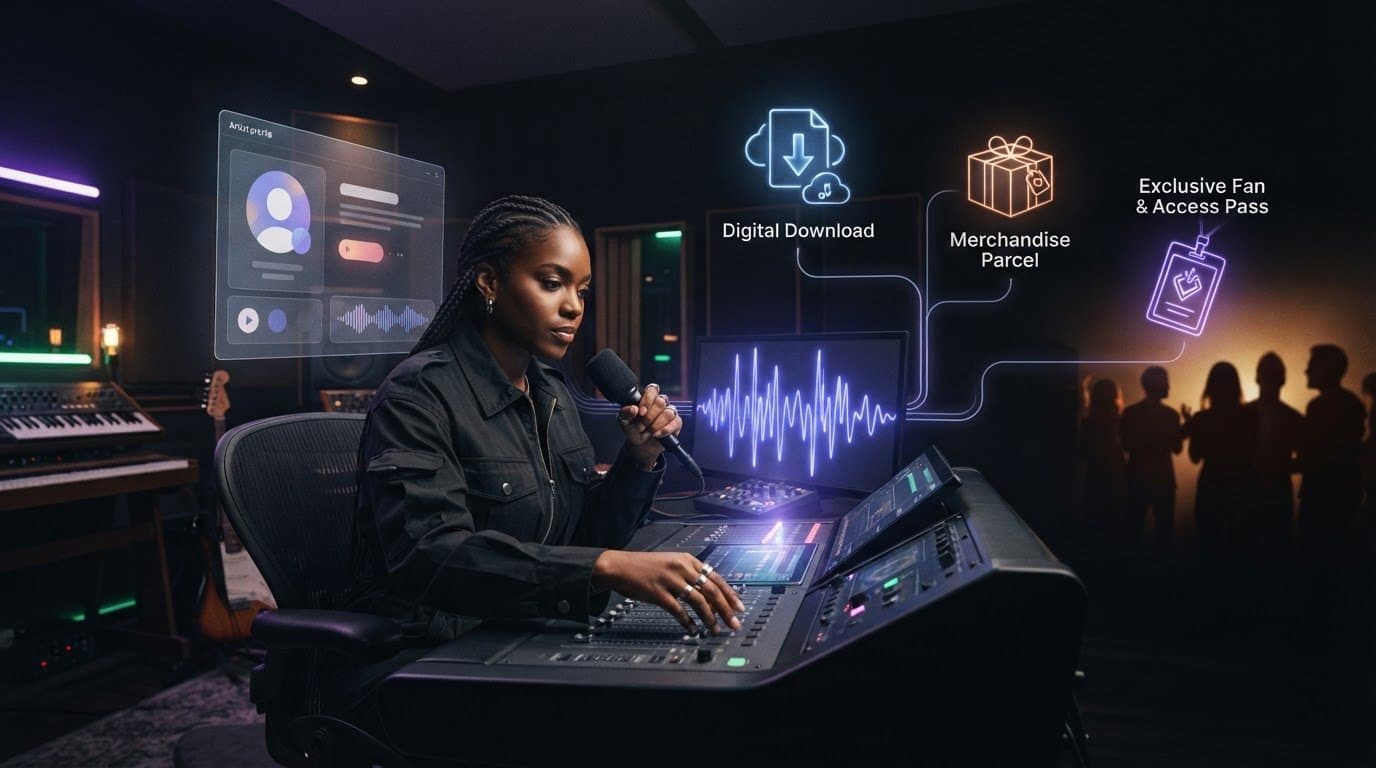
You don’t have to abandon streaming to build beyond it. Give fans direct ways to support your work through digital music downloads, merchandise, and exclusive content. Each option creates another path to revenue and a closer connection with the people who value your music.
This guide covers practical ways to earn from existing fans, build repeat support, and choose a manageable first step. You’ll also learn how artist profiles and optional fan subscriptions can bring different income streams together. On OohYeah!, artists retain 100% of sales revenue while paying a recurring platform subscription, so direct sales can become part of a broader income mix.
Key Takeaways
- Separate discovery from income by giving listeners clear ways to become paying supporters.
- Consider how digital downloads, merchandise, and fan subscriptions can contribute to a broader income mix.
- Compare playlist promotion, streaming, direct sales, and subscriptions to understand what each route can do for your music career.
- Make monetizing music without spotify playlists practical by starting with one offer that fits your audience and release goals.
- Use artist profiles and exclusive content to strengthen fan relationships and bring direct support options together.
Monetizing music without Spotify playlists starts with separating discovery from income
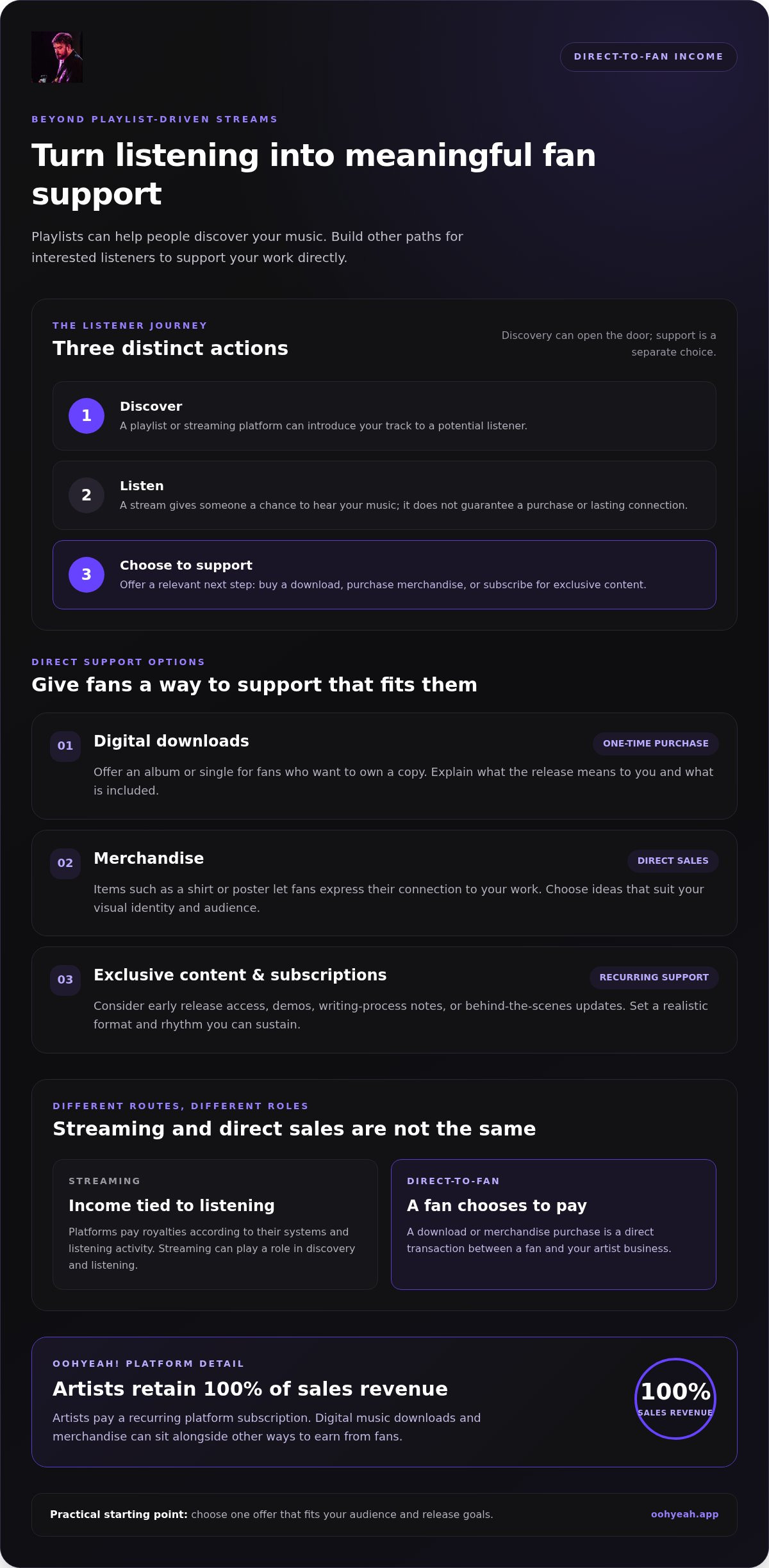
A playlist can put a song in front of someone new. But discovery is only a first step, not the same as a lasting fan relationship or income. Playlist exposure is a discovery tactic, not a complete income strategy. Use Spotify and other streaming platforms to reach listeners while building additional ways to earn from people who connect with your music.
Think of the process as three distinct actions: someone discovers a track, listens to it, then chooses whether to take a revenue-generating step. That step could be buying a digital download, purchasing merchandise, or subscribing for exclusive content. The broader idea of Monetization in the music industry is turning attention or value into income. For artists, it means creating a clear path from listening to support.
Does playlist placement automatically create meaningful music income?
No. A playlist add may help a track reach potential listeners, and a stream gives someone a chance to hear it. Neither action automatically means that listener will buy music or support the artist directly. Streaming can be part of an income mix, but returns depend on listening activity and platform systems. Treating uncertain playlist placement as a complete business plan ties your income to an outcome you can’t control.
Keep the distinction clear: placement may create exposure, a stream records listening, and a purchase is a direct decision to pay for something. Each has value, but each serves a different purpose. Use playlists as one possible discovery route, then offer interested listeners a relevant next step that supports your work.
What does monetizing music without playlist dependence mean?
It means earning through more than playlist-driven streams, not turning away from streaming altogether. An artist might use streaming to introduce a new song, an artist profile to help listeners learn more, digital downloads for direct purchases, and exclusive content or merchandise for deeper support. Monetizing music without spotify playlists means building several routes to income rather than relying on one placement.
Picture a listener who hears your track, follows your work, buys a download, and later subscribes for exclusive content. That journey won’t happen for every listener, and it shouldn’t be treated as guaranteed income. It shows how discovery can lead to a meaningful fan action when you make that action clear and relevant.
Direct-to-fan revenue depends on audience fit and consistent engagement. A close-knit group of listeners may respond to a personal release, while another audience may care more about merchandise or ongoing access. Pay attention to what fans already engage with, explain what their support makes possible, and keep your invitation genuine. The goal isn’t to turn every stream into a sale. It’s to give interested fans a direct way to support your music while streaming continues to play its role in discovery and listening.
How artists can earn from music beyond playlist-driven streams
Streaming royalties and direct fan income work differently. Streaming platforms pay royalties according to their systems and listening activity, so income is tied to how people stream your music. A download sale or merchandise purchase is a direct transaction between a fan and your artist business. Neither route guarantees a particular return, but offering both gives supporters more than one way to help sustain your work.
Platform royalties come from listening; direct fan purchases come from a listener choosing to pay you. That distinction can guide what you offer and how you describe it. Streaming keeps your music accessible, while direct options give fans a concrete way to support you beyond pressing play.
Digital downloads and merchandise as direct sales
A digital download gives fans who want to own a copy a straightforward way to buy your music. Present an album or single as a purchase option alongside its streaming version. Explain what the release means to you, what’s included, and why a fan might want to keep it. Clear context connects the offer to the music instead of making it feel like an unrelated sales pitch.
Merchandise adds another kind of value. A shirt, poster, or other artist-branded item can let fans express their connection to your work while giving you a direct sales channel beyond recordings. Choose ideas that fit your visual identity and audience rather than creating merchandise just to fill a store. Sales depend on whether fans want the item, how well it suits them, and whether you make it visible through consistent promotion.
Exclusive content and recurring fan support
Exclusive content gives dedicated fans a reason to support you more closely. Depending on what you create and can sustain, that might include early access to a release, demos, notes about the writing process, or behind-the-scenes updates. Be specific about what supporters will receive. A clear, manageable commitment builds more trust than a broad promise of “exclusive access” with no defined value.
Optional fan subscriptions can create recurring revenue, but they work best when you can offer ongoing value and communicate with supporters consistently. Decide on a realistic rhythm and format before inviting fans to subscribe. A small, reliable promise is stronger than an ambitious schedule you can’t maintain. You can combine subscriptions with one-time purchases so fans can choose the level of support that suits them.
On OohYeah!, artists can sell digital music downloads and merchandise while retaining 100% of their sales revenue and paying a recurring platform subscription. Keep those figures in your planning as separate items: sales revenue and the cost of using a platform are different parts of your income mix. An artist profile and direct sales page brings music, merchandise, and exclusive content options together for fans exploring how to support your work.
Compare playlist-led promotion with direct-to-fan music monetization
Each route serves a different purpose. Playlist promotion can help introduce your music, while streaming gives listeners a way to hear it. Direct sales and subscriptions invite fans to support you more personally. You don’t have to choose just one. Use discovery channels to bring people in and direct offers to deepen the relationship.
| Route | Purpose | Audience relationship | Income mechanism | Artist effort |
|---|---|---|---|---|
| Playlist promotion | Seek discovery and potential reach | Often begins with unfamiliar listeners | No direct income from placement itself | Plan and manage outreach or campaigns |
| Streaming | Make music available to listen to | Listeners can return to tracks, but the connection may remain platform-based | Royalties tied to listening and platform systems | Release and promote music consistently |
| Direct sales | Offer music or merchandise for purchase | Creates a direct transaction with a fan | Income from individual purchases | Choose relevant offers and make them easy to find |
| Fan subscriptions | Offer ongoing support with continuing value | Builds a closer, ongoing connection | Recurring fan payments | Deliver and communicate value consistently |
What playlist promotion can do, and what it cannot guarantee
A playlist placement or campaign may expose a track to potential listeners and support discovery. But campaign activity is not the same as guaranteed streams, purchases, or lasting fans. Someone may hear a song and move on; another listener may follow your work or seek out more. Treat promotion as one optional route to reach people, not as proof that income or a durable audience will follow.
When direct fan income fits an artist’s goals
Match the offer to what your engaged fans are likely to value. Listeners who want to keep a release may appreciate a digital download. Fans who identify with your music may connect with merchandise, while those who want a closer look at your creative process may value exclusive content. Recurring support makes sense when you can sustain a clear, worthwhile exchange over time.
Direct sales are worth considering even if your audience is modest. A smaller group of engaged fans can help you learn which offers resonate. Notice what people respond to, make one relevant offer, and see how your community engages. Keep expectations grounded: results depend on audience interest, offer fit, and how clearly you share it.
For monetizing music without spotify playlists, think of each channel as a different step in the listener journey. Promotion may create an introduction, streaming supports listening, and direct offers give interested fans a way to participate financially. Combine those paths without treating any one of them as a guaranteed solution.
Build a practical plan to monetize music without relying on playlists
You don’t need a complicated funnel to start earning directly from fans. Begin with people who already show interest, make one relevant offer, and give them a clear next step. A focused test can teach you more than launching several offers at once. Use this plan to turn listener interest into a repeatable path toward support.
- Identify engaged fans. Notice who comments, shares your releases, attends performances, or returns to your music. These signals can help you understand who may want a closer connection.
- Choose one offer. Match the offer to your audience and current goal. A new release may suit a digital download; fans who want to show their connection may respond to merchandise or exclusive content.
- Explain its value. Tell fans what they’ll receive and why it matters. Be clear about what’s included and avoid promises you can’t sustain.
- Invite support. Share one direct link to your artist profile or sales destination. Make the invitation warm and specific, then let fans decide whether the offer fits them.
Choose an offer fans can understand and value
Start with a simple question: which fans are you speaking to, and what would make supporting you meaningful to them? A listener who wants to keep a release may prefer a download. Someone drawn to your visual identity may value merchandise. Fans seeking a closer creative connection might appreciate exclusive content. Recurring support can fit when you have clear, ongoing value to offer. Keep the terms realistic and easy to understand.
One offer is enough for a first test. For example, connect a release announcement to a digital download, or share a specific piece of exclusive content that reflects your process. Avoid presenting every option at once. A focused invitation helps fans understand what they’re choosing and helps you learn what resonates.
Build a repeatable path from listener to supporter
Give listeners a clear destination, such as an artist profile where they can explore your music and support options. Include that destination in release announcements and social posts, with a short explanation of what fans will find there. Keep the message consistent, but make each invitation relevant to the moment, such as a new release or behind-the-scenes update.
Review the response over time. Track purchases, repeat support, and meaningful fan engagement, not just clicks or views. If people listen but don’t act, clarify the offer or make the next step easier to spot. If fans return or engage with a particular type of content, use that signal to refine your approach. Monetizing music without spotify playlists works best as a steady learning process, not a one-time promotion.
To bring artist profiles, direct sales, and fan support into one place, explore a direct-to-fan music platform and choose an offer that fits your next release.
Use OohYeah! to bring music, direct sales, and fan support together
Once you know which offers fit your audience, give fans a clear place to find them. OohYeah! brings artist profiles, music downloads, merchandise, and exclusive content together in a direct-to-fan marketplace. It doesn’t replace discovery channels. It gives interested listeners a destination where they can explore your work and choose how to support it.
That makes it relevant to monetizing music without spotify playlists: your income options don’t have to depend on a playlist feature or a single kind of transaction. Fans can discover music, explore your work, and find ways to support you directly. The best mix still depends on what you create and what your audience values.
How OohYeah! supports direct fan relationships
An artist profile gives fans a place to find your music and supporter-facing offers. Make a digital download available for listeners who want to buy a release, while merchandise gives fans another way to show their connection to your work. Exclusive content offers a closer experience for supporters looking for more than a stream or purchase.
Optional fan subscriptions can provide recurring support. Make the value clear and sustainable: explain what supporters can expect, then choose a rhythm of content or engagement you can maintain. Bringing these options together on an artist profile can make it easier for fans to move from enjoying your music to supporting it directly.
What to weigh before choosing a direct-to-fan platform
Start with the offers you want to make and the experience you want fans to have. Consider whether you need artist profile hosting, digital downloads, merchandise sales, exclusive content, or fan subscriptions. A platform is more useful when its tools match your plans, rather than adding options you won’t use or can’t consistently support.
Also weigh the platform’s business model. On OohYeah!, artists pay a recurring platform subscription and retain 100% of their sales revenue from music and merchandise. These are separate parts of the decision: retaining sales revenue doesn’t mean there’s no platform cost. Consider the value of bringing your profile and direct-to-fan offers together, then factor in the ongoing subscription commitment as you plan your income mix.
Direct sales won’t guarantee a particular level of income, and a platform can’t replace the work of building genuine fan relationships. But a clear profile and relevant offers can give engaged listeners an easier way to act on their support. Build a more direct way to earn from your music.
Make your next release an invitation to connect
Your next release can be more than a moment of attention. Treat it as an invitation to deepen your relationship with people who already care about your work. Choose one meaningful way for them to participate, explain why it matters, then give that connection room to grow beyond launch day.
Progress in monetizing music without spotify playlists comes from learning what your own community responds to, not copying another artist’s formula. Keep your first move manageable. Let genuine fan behavior guide what you develop next, and shape an approach that fits your music, your capacity, and the kind of connection you want to build. You don’t need to turn every interaction into a transaction. Make support feel like a natural part of being a fan, not a toll for listening.
OohYeah! gives artists a place to shape a direct-to-fan approach. Build a more direct way to earn from your music and take your next step on your own terms. Grow your connection with listeners, one honest invitation at a time.
Frequently Asked Questions
Can artists make money without Spotify playlists?
Yes. Artists can earn through direct purchases and fan support without playlist placement. For example, after a listener discovers a song through a live performance or social post, the artist can point them to a clear purchase or support option. Playlist exposure may still help people find music, but it’s only one possible route to an audience. A mix of discovery methods can help artists avoid depending on a single source of attention.
How can independent musicians make money without streaming?
Independent musicians can sell music and related offers directly to supporters without relying on streaming income. Start by choosing one offer for a release, announcing it through channels where fans already follow you, and making the next step clear. After the release, notice which messages lead to questions or purchases. That response can guide future offers and help you focus effort where fans show interest.
Do artists need a large fanbase to sell music directly?
No. A large fanbase isn’t required to test direct sales. Begin with a small circle of listeners who regularly engage, share a focused offer, and pay attention to the response. Questions or feedback can reveal what fans value. Keep the first test manageable, and don’t treat a quiet response as a verdict on the music; the offer, timing, or message may need adjustment.
What can musicians sell besides streaming access?
Musicians can sell digital downloads, merchandise, and access to exclusive content, or invite fans to provide ongoing support. Consider what each offer gives the supporter: a download for someone who wants a copy of a release, merchandise for a fan who wants to represent the artist, or continuing access for someone seeking a closer connection. Describe the offer plainly so fans can decide whether it fits them.
Is direct-to-fan music sales the same as music distribution?
No. Distribution makes recordings available through external music services or stores, while direct-to-fan sales let artists offer music or related products to supporters through a sales destination. These approaches can work together. For example, an artist can use streaming services for listening while directing interested fans to a separate page to purchase a release. Make each destination’s purpose clear so listeners know where to listen and where to support.
Can fan subscriptions provide recurring income for musicians?
Yes, fan subscriptions can provide recurring income when supporters choose to pay for ongoing value or access. They’re best suited to artists who can set clear expectations and keep delivering what they promise. Before inviting fans to subscribe, outline what supporters will receive and choose a schedule you can sustain. Subscriptions can complement one-time purchases, but they shouldn’t be treated as guaranteed income or a replacement for every other revenue source.