How to Monetize Superfans as an Independent Musician in 2026
Learn how to monetize superfans as an independent musician. Build sustainable revenue beyond streaming with exclusive offers, merch, and direct fan engagement.
October 16, 2026
FRANKLY with Frank Lee
What if your most committed fans could support your music in ways that streaming numbers can’t measure? If streaming income feels disconnected from fan loyalty, you’re not alone. Learning how to monetize superfans as an independent musician starts with matching each offer to how deeply a fan wants to connect, not with chasing a bigger audience or asking everyone to buy.
The right approach doesn’t have to turn your community into a sales funnel or add a second full-time job. Give fans meaningful ways to support you, explain each offer clearly, and build at a pace you can sustain. Trust stays central when paid support feels like an invitation, not an obligation.
This guide will help you choose offers that fit your music and audience, then shape a manageable path from free engagement to paid support. You’ll explore digital downloads, merchandise, and exclusive content, along with ways to create recurring revenue and sell directly to fans. The goal is a practical income plan built around real connection, not streams alone.
Key Takeaways
- Identify superfans by repeated, voluntary engagement, not by a fixed listener-count threshold.
- Choose offers based on what your fans value and what you can sustainably create.
- Compare one-time purchases, recurring support, and merchandise by fan value, workload, and repeatability.
- Learn how to monetize superfans as an independent musician with a low-pressure launch that invites support without making it an obligation.
- See how OohYeah! brings artist profiles, downloads, merchandise, and exclusive content together, with no sales commissions and a recurring artist subscription.
What Counts as a Superfan, and Why Their Support Matters
A superfan isn’t simply someone who racks up plays or follows your account. Look for a pattern of voluntary engagement over time. A listener might discover one track, enjoy it, and move on. An interested fan may save a release, follow your updates, or reply to a post. A sustained supporter returns across releases, joins conversations, shows up at events, or chooses to buy something directly from you.
A superfan is someone who repeatedly chooses to engage with and support an artist, not just someone who listens often. That distinction matters. A high-volume listener can generate streams without having a direct relationship with you. A superfan shows an ongoing connection through actions they choose to take. The broader idea of a Fan (enthusiast) helps frame that connection, but your own audience’s behavior is what makes the label useful.
How to recognize superfans without overreading your metrics
No single signal proves someone is a superfan. Look for repeat engagement across different moments and channels, and treat each sign as a clue rather than a promise of future support.
- Repeat listening and saves: A fan returns to your music or saves releases to revisit them.
- Conversation: They reply to posts, respond to messages, or bring thoughtful questions to a livestream or event.
- Participation: They attend more than once, share your work with friends, or offer useful feedback.
- Direct support: They make a repeat purchase or choose to support a new release directly.
A social follow or one stream can mark discovery, not commitment. Even a purchase is one piece of context, not a reason to assume someone wants constant messages or paid offers. Respect the signals, and let fans decide how they want to engage.
Why a smaller committed audience can still matter
Reach measures how widely your music travels. Direct support shows that some listeners want to participate more closely, whether by buying a download, merchandise, or exclusive content. The two forms of value can work together, but they aren’t interchangeable. Streaming can introduce your music to new listeners; direct engagement can reveal what your most connected fans value enough to choose.
Picture an independent artist with a large audience of occasional listeners and a smaller group that regularly replies, attends local shows, and shares new releases. The larger audience creates reach. The smaller group offers clearer feedback about what resonates and may be more inclined to support a fitting offer. That’s a useful hypothesis to test, not a guarantee that engagement will become a sale.
There’s no magic fan count that guarantees meaningful income. Your audience’s interests, your offer, and the effort required all shape the result. The practical question behind how to monetize superfans as an independent musician is not “How many followers do I need?” It’s “What do my most engaged fans value, and what can I offer without making support feel like an obligation?”
Design Superfan Offers Around What Your Fans Actually Value
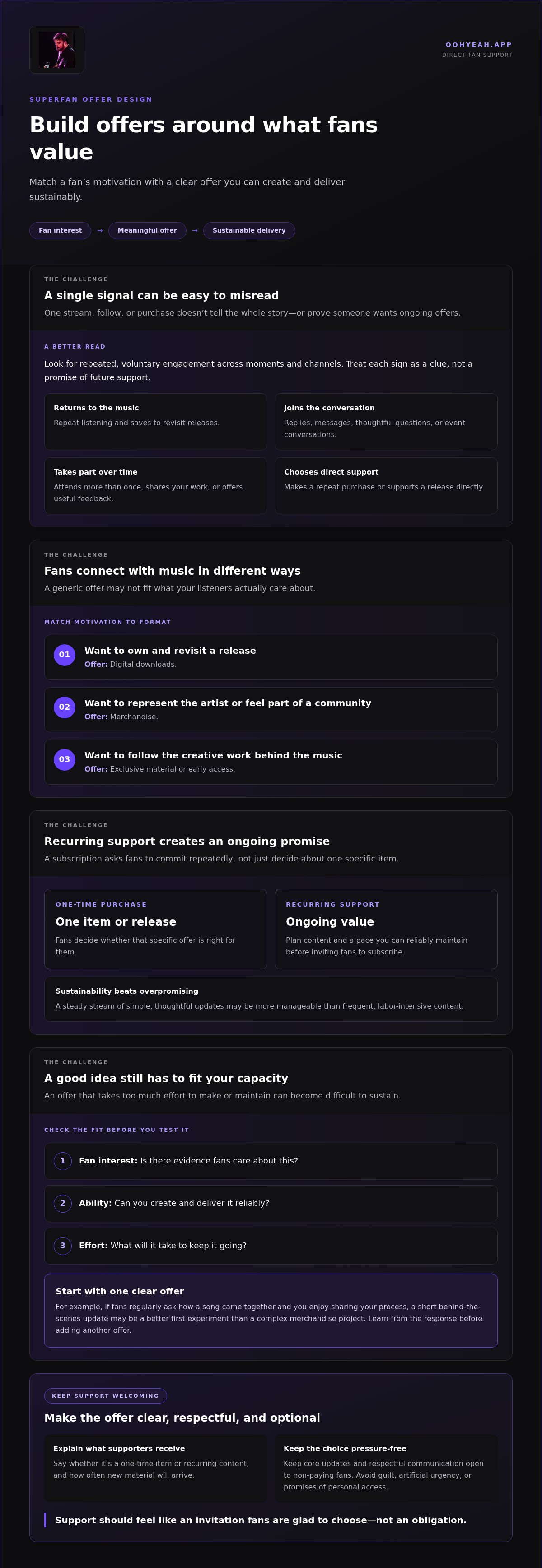
The best offer isn’t the one every artist is selling. It’s the one that connects a real fan interest with something you can create and deliver sustainably. Start with the questions fans ask, the moments they respond to, and the creative work you already enjoy making. The Luminate Super Fan Report offers a music-specific frame for thinking about fan engagement, but your own audience can show you which ideas are worth testing.
A strong offer gives fans clear value beyond access alone. That value could be owning a release, showing their connection to your music, or following a creative process they care about.
Match each offer to a fan motivation
Let fan behavior guide the format, then match it to what you can make well. For example:
- Downloads: A natural fit for listeners who want to own and revisit a release.
- Merchandise: A way for fans to represent an artist or feel connected to a community.
- Exclusive material: A closer look at your creative process for fans who want to follow the work behind the music.
Early access can also suit fans who enjoy hearing what’s next. Choose an offer because it fits your audience, not because it appears on a generic checklist.
Choose between a one-time purchase and recurring support
A one-time purchase asks fans to decide about a specific item or release. Recurring support asks them to commit repeatedly, so it needs ongoing value and a pace you can maintain. Consider what you can reliably provide before inviting fans to subscribe. A steady stream of simple, thoughtful updates may be more sustainable than promising frequent, labor-intensive content.
Keep paid support welcoming and optional
Make the offer easy to understand. Say what supporters receive, whether it’s a one-time item or recurring content, and how often new material will arrive. Keep your core updates and respectful communication open to non-paying fans, too. Avoid guilt, artificial urgency, or promises of personal access. Support should feel like a choice fans are glad to make.
To decide what to test first, compare three things: evidence of fan interest, your ability to deliver the offer, and the effort it will take to sustain. If fans regularly ask how a song came together and you enjoy sharing your process, a short behind-the-scenes update may be a better first experiment than a complex merchandise project. Start with one clear offer. Learn from the response before adding another.
That practical approach is central to how to monetize superfans as an independent musician: make the paid option meaningful, keep expectations clear, and protect the relationship. If you want a direct home for music downloads, merchandise, and exclusive content, explore OohYeah!’s artist marketplace.
Compare Superfan Revenue Streams by Value, Effort, and Fit
You don’t need a huge audience to test a paid offer. You need a clear reason for a fan to choose it and a way to deliver what you promise. Compare the options by more than possible revenue: consider the value fans receive, the work you take on, how often the offer can repeat, and the practical steps involved.
| Revenue stream | Fan value | Artist workload | Repeatability | Operational complexity |
|---|---|---|---|---|
| One-time purchase | A specific release or item to own | Preparation around each release or offer | New purchases depend on new offers | Usually simpler for digital downloads; varies by offer |
| Recurring support | Ongoing exclusive material or a continuing way to support your work | Regular content and clear communication | Can continue while fans choose to participate | Requires a sustainable delivery rhythm |
| Merchandise | A physical way to represent an artist or community | Design, production, and fulfillment planning | Can suit releases and other campaign moments | Includes more practical steps than a digital offer |
Use the table as a filter, not a ranking. A digital release may be a manageable first test if you already have music ready to sell. Merchandise may fit an audience that enjoys wearing or displaying its connection, but it also brings production and fulfillment work. Recurring support can create a continuing relationship, but it needs a continuing reason for fans to take part.
One-time sales versus recurring fan support
Downloads and merchandise often make sense around a discrete release, campaign, or moment fans are already excited about. The offer has a clear beginning and a specific item to receive. Memberships or subscriptions ask for an ongoing commitment from both sides. Fans need a reason to keep participating, and you need a realistic plan to keep delivering. Recurring support isn’t automatic or effortless income.
Choose a sustainable offer, not the most elaborate one
Before launching, estimate the preparation time, delivery work, and follow-up each option requires. An elaborate set of tiers can create more promises to track before you know what your fans want. A single, well-explained offer is easier to communicate and learn from. You can build on what works later.
Keep meaningful free engagement available alongside paid options. Fans have different budgets and levels of interest, and a paid offer shouldn’t be the price of staying connected. Be clear about what supporters receive and what remains part of your regular artist-fan relationship.
There’s no guaranteed result. Outcomes depend on the fit between the offer and your audience, how fans respond, your consistency, and your costs. That’s why how to monetize superfans as an independent musician starts with a manageable test, not a big audience or a complicated plan. Choose the offer you can deliver well, then use real responses to guide your next move.
Turn Fan Interest into Support with a Low-Pressure Launch
A paid offer doesn’t need a high-pressure campaign. A simple launch gives fans a clear choice and gives you a chance to learn what resonates. Keep the process focused: listen, select one offer, explain its value, invite support, and review the response. The goal isn’t to persuade everyone. It’s to make it easy for interested fans to take the next step.
- Listen for repeated interest. Note the questions fans ask and what they respond to, such as requests for a download, merchandise, or a closer look at your creative process.
- Choose one manageable offer. Start with something you can deliver well. Avoid launching several options before you know which one your audience wants.
- Explain the value. State what the offer is, who it’s for, and what supporters receive. Be specific about any ongoing content and its planned frequency.
- Invite support clearly. Share one direct link and make the next step easy to find. Keep the invitation warm and optional.
- Review the response. Look at questions, clicks, purchases, repeat support, and feedback. Use the pattern to decide what to adjust, rather than treating one quiet launch as a verdict on your music.
Make the first invitation clear and respectful
Your announcement should answer three things quickly: what’s available, why a fan might value it, and how to access it. For example: “I’ve put together a digital download of the new release for listeners who want to keep and revisit it. You can find it here.” Keep the message direct. Don’t suggest fans owe you money, and don’t use guilt or manufactured urgency to push a decision.
Reduce friction between interest and purchase. Put the offer link where fans can find it in the announcement, and avoid making them search through multiple pages or posts. A clear path respects their time and lets the offer speak for itself.
Learn from the response and improve the next offer
Pay attention to more than the final number of purchases. Questions may show that the offer needs clearer wording; clicks without purchases may signal a mismatch or a confusing next step. Direct feedback can reveal whether fans prefer a different format or want more detail. Use those clues to refine the offer and how you describe it.
Before inviting fans into recurring support, set a delivery rhythm you can keep alongside your music-making. Consistency builds trust, but it should fit your capacity. This measured approach is central to how to monetize superfans as an independent musician: invite, observe, and improve without making the relationship feel transactional.
When you’re ready to put a direct-to-fan offer in one place, create an artist profile on OohYeah! to bring your music downloads, merchandise, and exclusive content together for fans.
Use OohYeah! to Bring Direct Superfan Support Together
Once you’ve chosen an offer that fits your fans and your capacity, give them a straightforward way to find it. OohYeah! brings artist profile hosting together with a marketplace for digital music downloads, merchandise, and exclusive content. Use it as a direct-to-fan home for the offers you choose to share, rather than treating every possible offer as a must-have.
Bring music, merchandise, and exclusive content into one fan experience
Each category can serve a different kind of support. A digital download lets fans purchase music directly. Merchandise gives them a way to represent your work or community. Exclusive content can offer a closer look at your creative output for fans who want more. Your artist profile can bring these options together so supporters have a clear place to explore what you make available.
Keep the selection intentional. A profile doesn’t need to carry every format at once. You might start with a release download, then add merchandise or exclusive material if those offers fit your audience and workflow. The right mix is the one you can explain clearly and deliver consistently. OohYeah! provides the marketplace tools; you decide what to offer and how it reflects your relationship with fans.
- Digital music downloads can connect direct support to a specific release.
- Merchandise can give fans a tangible way to show their connection.
- Exclusive content can give participating fans access to additional material.
Keep the economics and expectations transparent
OohYeah! doesn’t take commissions on music and merchandise sales, so artists retain 100% of sales revenue. Standard payment processing fees may apply. Artists pay a recurring subscription for platform hosting and sales tools, so include that ongoing cost in your planning rather than treating the marketplace as cost-free.
That clear model can help you assess whether direct sales fit your plans, but it doesn’t guarantee purchases or income. Results still depend on your offer, your fans’ response, and the work involved in delivering what you promise. Start with a manageable option. Describe exactly what supporters receive, keep your communication honest, and build trust through consistent delivery.
The larger lesson in how to monetize superfans as an independent musician is that the platform is a tool, not the strategy itself. Your community’s interests should guide the offer, and you can adjust as you learn what fans value. Keep free engagement welcoming, make paid support optional, and add only what you can sustain.
Explore OohYeah! to bring your direct-to-fan offers together, choosing the music, merchandise, or exclusive content that fits your community.
Make Your Next Fan Offer a Starting Point
Your next step doesn’t need to reshape your whole music career. Choose one offer you can deliver with care, invite fans to explore it, and let their response guide what comes next. A thoughtful first experiment can build confidence and deepen a direct connection without asking you to do everything at once.
OohYeah! gives artists a place to bring profiles, digital downloads, merchandise, and exclusive content together. The marketplace takes no commission on music and merchandise sales, while artists pay a recurring subscription for platform tools. Clear economics help you decide whether it fits your plans, but your community and creative capacity should shape the offers you make.
Knowing how to monetize superfans as an independent musician isn’t about turning every interaction into a sale. It’s about making meaningful support possible while keeping trust at the center. Bring your music and fan offers together on OohYeah! Start with what feels right for your community, then build from there with confidence.
Frequently Asked Questions
How many superfans do you need to start monetizing?
There’s no universal minimum number of superfans you need before testing an offer. A handful of listeners who ask thoughtful questions, respond to release updates, or have supported your work before can give you useful early feedback. For how to monetize superfans as an independent musician, try one relevant offer and treat the response as information, not a forecast. Interest can guide your next step, but it doesn’t guarantee a purchase.
Can independent musicians monetize superfans without a large social media following?
Yes, a large following isn’t the only way to reach committed listeners. You can share an offer through direct communications fans have chosen to receive, mention it during a live interaction, or include it in a release update. Keep the invitation clear and relevant to the people receiving it. Social platforms can still help with discovery, but follower totals alone don’t determine whether fans will respond or buy.
What should an independent musician offer superfans first?
Start with an offer that connects your strengths to something fans have already shown interest in. If listeners ask where they can keep an album, a download may fit. If they respond to your visual identity, merchandise could be worth testing. If they enjoy hearing how songs develop, consider exclusive material. No format works for every artist. Explain the benefit plainly, then let fans decide without pressure.
How often should an independent artist share exclusive content with paying fans?
Set a cadence you can maintain, rather than promising an ambitious schedule that competes with making music. For example, you might plan content around milestones in your creative process instead of committing to frequent posts. Tell supporters what format to expect and how often you intend to share it. If your capacity changes, communicate that openly and adjust based on what you can reliably deliver and supporter feedback.
Do superfans expect personal access to an independent musician?
No single expectation applies to every supporter. Some fans value hearing demos or seeing notes from the writing process, while others may look for opportunities to interact. You can offer exclusive material without promising one-to-one contact. Describe exactly what’s included, and only mention personal access if you genuinely plan to provide it. Clear boundaries help fans understand the offer and protect time for your music and life.
Can an independent musician combine music sales with fan subscriptions?
Yes, one-time purchases and recurring support can sit alongside each other if they serve different purposes. A download can give fans a specific release to own, while a subscription can provide ongoing exclusive material or another continuing benefit. Explain each option separately so supporters know what they receive and don’t confuse a purchase with a recurring commitment. Keep both voluntary, and avoid making the same promise in multiple offers.