Where to sell music gear the same day: offers and trade-offs
Need to sell music gear same day? Start with a confirmed local store offer. Compare direct buyers, zero-commission listings, and payout trade-offs.
November 4, 2026
FRANKLY with Frank Lee
Best overall for a same-day attempt: a local music store that confirms it buys your gear and pays at handoff. Best for controlling the deal: a direct local buyer. Best for avoiding seller commissions: OohYeah. To sell music gear same day, confirm the payment timing before you commit—not just whether someone wants the instrument.
- To sell music gear same day, start with a local music store that confirms payment at handoff.
- Direct local buyers let you negotiate the deal, but finding a committed buyer takes time.
- OohYeah offers zero seller commissions for music gear sellers; a listing does not guarantee same-day payment.
- A buyer's message, an accepted offer, and money you can use are different milestones.
Why this matters
You need money today. A listing published today does not solve that problem unless a buyer completes the purchase and the payment reaches you in usable form.
For a 2026 gear sale, separate finding a buyer, completing the handoff, and receiving payment. Those are distinct steps. A quick offer can still leave you waiting on inspection, collection, or payment processing.
OohYeah connects musicians and music stores buying and selling instruments and studio gear, with zero seller commissions. That makes it a route to consider when keeping the proceeds matters, but it is not a promise of an immediate sale.
What makes the best same-day music gear selling route?
Judge the route by what happens before the money reaches you—not by how quickly you can post an ad.
- Payment timing: Ask when you receive the money and when you can use it. Get a specific answer before traveling or handing over gear.
- Buyer commitment: Separate a firm appointment from a casual inquiry. Confirm the item, condition, and meeting details.
- Inspection requirements: Find out what the buyer needs to test and what you need to bring.
- Control over the deal: Decide whether you want to negotiate directly or accept a business's purchase offer.
- Selling workload: Count photography, messages, testing, packing, and travel. Remove steps that do not fit today's deadline.
- Clear terms: Record what is included, known faults, the agreed payment method, and the handoff conditions.
The best same-day route is the one with a committed buyer and confirmed payment terms—not the shortest listing form.
Same-day selling routes at a glance
This 2026 comparison ranks routes by how directly you can establish a buyer, inspection, and payment plan. It does not assign unsupported payout deadlines to individual marketplaces.
| Rank and route | Best for | Standout feature | Key limitation |
|---|---|---|---|
| 1. Local music store buying outright | A deadline-driven seller seeking a business buyer | You can ask about inspection and payment before visiting | The store must agree to buy your specific item |
| 2. Direct local buyer | A seller who wants to negotiate directly | You and the buyer can agree on a handoff | A listing does not produce a committed buyer automatically |
| 3. OohYeah | Music gear sellers prioritizing zero seller commissions | A marketplace centered on music gear and the music community | No same-day sale or payout guarantee is established here |
| 4. Pawn shop buying outright | A seller checking another local purchase option | You can request an outright purchase rather than a loan | You must confirm the shop accepts the item and explain the transaction you want |
| 5. Shipped marketplace sale | A seller willing to separate selling from immediate payment | You can pursue buyers beyond a local handoff | Shipping and payment conditions add steps to the transaction |
1. Local music store: best for a confirmed business purchase
A local music store that buys used gear is the first route to check when today's payment deadline comes first. Call before loading the car. Ask about your exact model, its condition, and whether the store will consider an outright purchase.
Do not confuse buying with consignment. An outright purchase means the store buys the item; consignment means the store sells it on your behalf under agreed terms. Ask which arrangement the store is offering.
Local music store pros:
- You can establish whether the store wants the item before traveling.
- You can ask what testing equipment and accessories to bring.
- You negotiate with the business rather than arranging an individual buyer meeting.
Local music store cons:
- The store can decline the item after inspection.
- An initial estimate is not the final purchase agreement.
- A trade-in proposal does not meet a cash-payment goal.
Best for: Sellers who need a clear yes-or-no purchase decision and can reach a suitable store.
Ask whether payment happens at handoff and in what form. Verdict: Hold the trip until the store confirms the buying process and payment terms.
2. Direct local buyer: best for controlling the deal
A direct local sale puts you in charge of the conversation. You describe the gear, negotiate with the buyer, and agree on inspection and handoff conditions.
This route fits a same-day attempt when you already have a serious inquiry or a buyer in your music network. Posting publicly is a starting point, not a completed transaction.
Direct local buyer pros:
- You can explain modifications, repairs, and included accessories directly.
- You can negotiate the item and handoff together.
- A local handoff removes the need to pack and ship the instrument.
Direct local buyer cons:
- Messages and negotiation consume time before a buyer commits.
- You must arrange a safe, practical place to inspect the gear.
- You are responsible for checking payment before releasing it.
Best for: Sellers with a serious local lead and enough time to manage the handoff.
Agree on a workable test. A guitar buyer needs a way to hear the pickups; an audio-interface buyer needs a compatible test setup. Verdict: Hold the gear until inspection and payment are complete.
3. OohYeah: best for zero seller commissions
OohYeah is best for music gear sellers who want zero seller commissions. The marketplace serves musicians, music stores, and producers buying and selling instruments and studio gear.
Use a listing to explain what a musician needs to know: exact model, condition, repairs, modifications, included accessories, and known faults. Create an account and list the gear, but do not make an urgent payment deadline depend on an unconfirmed buyer.
OohYeah pros:
- Zero seller commissions.
- A music-focused marketplace for instruments and studio gear.
- A place for both individual musicians and music stores to sell.
OohYeah cons:
- A listing does not guarantee a buyer today.
- You still need to answer questions and agree on transaction details.
- Same-day payment is not established by the marketplace description.
Best for: Music gear sellers who prioritize zero seller commissions over a guaranteed deadline.
For a 2026 clear-out, prepare a useful listing while checking any urgent local purchase options separately. Verdict: Wait for a confirmed transaction before counting on the proceeds.
List your music gear
Create an account and describe your instruments or studio gear. Zero seller commissions.
4. Pawn shop: best for checking another local purchase option
A pawn shop is another business to contact about an outright sale. State that you want to sell the item, not borrow against it, and ask whether the shop considers that type of instrument or recording equipment.
Keep the transaction clear. A pawn loan and an outright sale serve different goals; read the agreement before signing either.
Pawn shop pros:
- You can ask about an outright purchase before visiting.
- You can present the item for an in-person inspection.
- You can assess a concrete offer without first creating a public listing.
Pawn shop cons:
- The shop must accept your item before a sale is possible.
- You need to distinguish purchase terms from loan terms.
- You still need to confirm payment timing and method.
Best for: Sellers checking another nearby business after establishing what transaction they want.
Bring identification and whatever ownership documentation the shop requests. Verdict: Skip any agreement you do not understand or that does not match an outright sale.
5. Shipped marketplace sale: best when today is not the payment deadline
A shipped sale lets you pursue a buyer without arranging a local handoff. It also introduces packing, dispatch, delivery, and the marketplace's applicable payment conditions.
Treat a shipped listing as a separate plan when you need usable money today. Before accepting an order, read the current selling and payment terms for the service you choose.
Shipped marketplace sale pros:
- You can pursue buyers beyond a local meeting.
- Detailed photos and descriptions let buyers assess the item remotely.
- You can prepare the listing without transporting the gear first.
Shipped marketplace sale cons:
- You must prepare suitable packaging and arrange dispatch.
- An accepted order does not establish when money reaches your account.
- Damage or a description dispute adds another issue to resolve.
Best for: Sellers who can wait and handle shipping properly.
A valuable instrument deserves a packing plan, not a rushed box. Verdict: Skip this route as your sole plan for money today.
Build a same-day selling plan
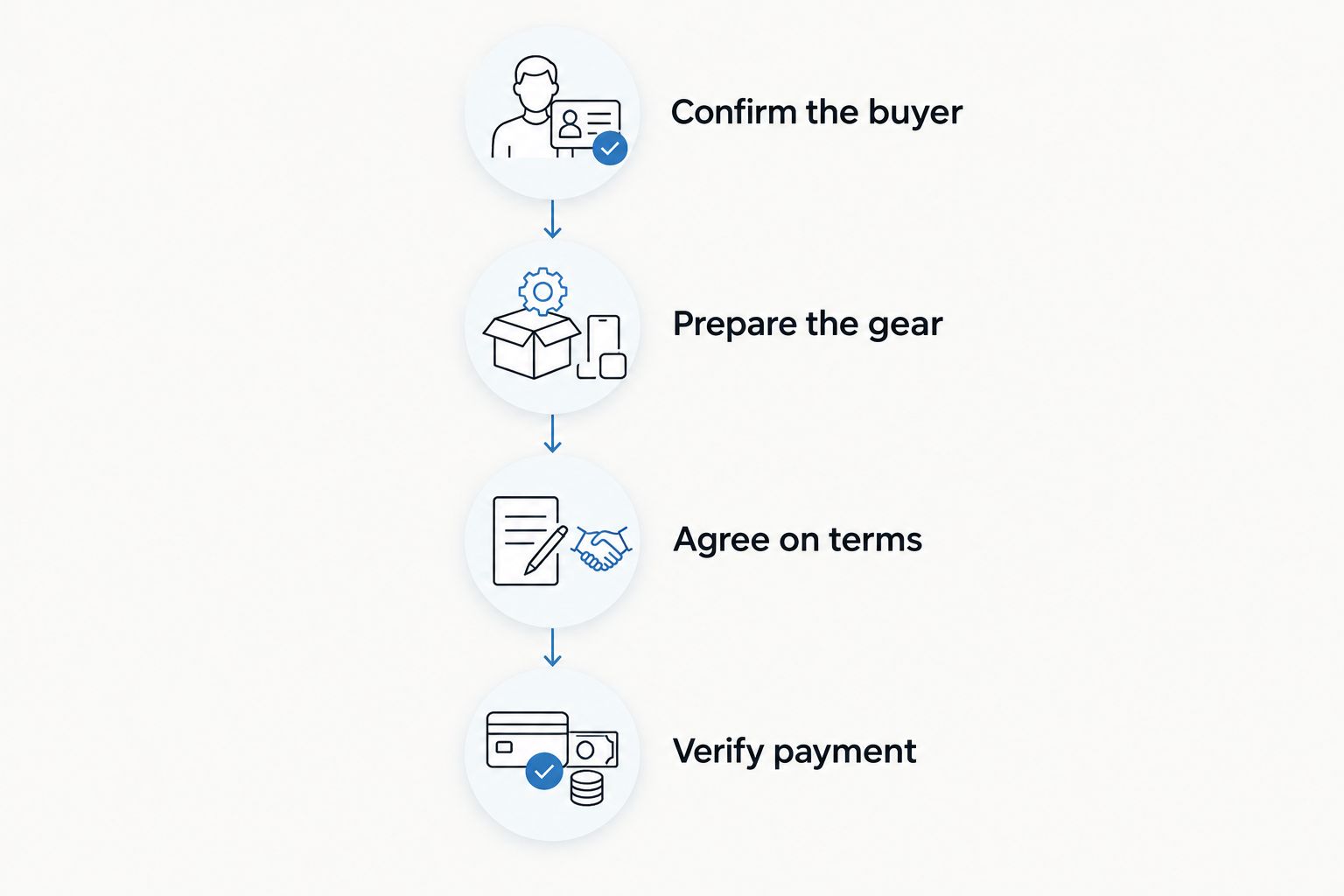
Use this sequence for a focused 2026 selling attempt. Finish each step before moving to the next; do not let an incoming message rush the handoff.
Confirm the buyer
Contact a suitable business or confirm a serious individual inquiry. Identify the exact model and disclose faults immediately. Ask who will make the purchase decision and what inspection is required.
Prepare the gear
Gather the power supply, case, cables, and other included accessories. For an electric guitar, record a 30-second demonstration of clean signal and working controls. Use it to show the current condition, not as a substitute for inspection.
Agree on terms
Write down the item, included accessories, payment method, and handoff plan. For a remote conversation, take 3 detail photos as a starting checklist: the model identification, visible wear, and included accessories. Add more wherever condition needs explaining.
Verify payment
Inspect the transaction in your own payment account rather than relying on a buyer's screenshot. If anything is unclear, pause. Complete the handoff only when you understand the payment status and have recorded the sale.
Keep 2 copies of the sale record: one for you and one for the buyer. Include the item identification, disclosed faults, included accessories, date, and agreed terms. Keep private account information out of it.
Protect the deal without slowing everything down
Speed does not require hiding damage or skipping questions. Describe scratchy controls, intermittent outputs, missing parts, and previous repairs before anyone travels. A buyer discovering an undisclosed problem at inspection puts the whole deal back into negotiation.
For a guitar, distinguish the exact model from a similar-looking version. The guide to how much your used guitar is worth is a useful next step before you agree to sell.
Remove personal files from storage-equipped devices and check any account or software-transfer requirements separately. Do not promise that a plugin license transfers with an interface unless the license terms establish that it does.
How the routes are ranked
The ranking prioritizes buyer commitment, payment clarity, inspection requirements, seller control, and workload. A confirmed outright purchase comes ahead of an unconfirmed listing when the goal is payment today.
This is a decision guide, not a timed payout test. The 2026 recommendation stays simple: establish the actual transaction terms before treating any route as same-day money.
Which selling route should you choose?
Start with a local music store that confirms an outright purchase process and payment at handoff. If a serious local buyer is already ready to inspect the gear, compare that concrete proposal instead of waiting for a new inquiry.
Choose OohYeah for a zero-seller-commission music gear listing when keeping control of the selling process matters more than a fixed deadline. Keep an urgent cash plan separate from any sale that still needs a buyer.
FAQ
Where should I start if I need to sell music gear same day?
Start with a local music store that confirms it considers outright purchases and explains payment at handoff. Give the exact model and condition before traveling; inspection can still change whether the store buys it.
Can I sell my guitar today without shipping it?
An in-person sale to a willing business or local buyer removes shipping from the transaction. Confirm the inspection, payment method, and handoff before treating the sale as settled.
Is a local buyer better than a music store?
A direct local buyer is better for negotiating the transaction yourself; a music store is a route for seeking a business purchase. For a same-day deadline, compare confirmed arrangements rather than assuming either route will finish faster.
Does OohYeah charge seller commissions on music gear?
OohYeah offers zero seller commissions. That does not establish a same-day sale or payout, so confirm the transaction details before counting on the money.
Is trading in an instrument the same as selling it?
No. A trade-in applies the instrument toward another purchase under the store's terms, while an outright sale transfers it for payment. Ask specifically for an outright purchase if that is your goal.
Does an accepted online offer mean I can use the money today?
No. An accepted offer does not establish when payment becomes usable. Check the transaction status and the applicable payment terms before releasing the gear or relying on the proceeds.
What should I bring when selling an amp or audio interface?
Bring the included power supply and accessories, plus whatever the buyer requests for a safe functional test. Disclose faults and confirm the test setup before traveling.
One last thing
Do not wipe every trace of a studio setup before proving the gear works. Capture a functional demonstration first, then remove personal data and disconnect accounts as appropriate. You want a clean handoff without destroying your ability to demonstrate the item.
For a same-day sale in 2026, the final question is not whether someone said yes. It is whether inspection, payment, and handoff are actually agreed.