Sell Music Directly to Fans as an Independent R&B Artist
Learn how independent R&B artists sell music directly to fans, compare costs, and create bundles, limited releases, and exclusive offers that grow revenue.

November 5, 2026
FRANKLY with Frank Lee
You don’t need a label-sized budget to sell music on your own terms. To understand how independent R&B artists sell music directly to fans, compare the available channels and consider the value of building a direct relationship with listeners and shaping each offer yourself.
When comparing distribution costs, look beyond the price of uploading a track. Payment processing, the format you offer, and any extras you include all affect the experience and your return. Direct sales also let you make personal offers, from an early demo to an EP or exclusive content.
This guide explores the costs and trade-offs of distribution and direct sales, along with bundles, limited releases, private demos, and fan-only content. Use these ideas to match each offer to your audience, preserve the intimacy of your R&B sound, and build a clear path from release to revenue.
Key Takeaways
- Compare the costs of a basic sales setup with the fees and payout terms attached to each sales route.
- Use an email list or Discord community to build a direct line to fans before announcing a release.
- Choose between distribution and direct sales based on how you want fans to discover, buy, and receive your music.
- Make releases feel more personal with thoughtfully priced bundles, limited EPs, private demos, or exclusive content.
How much does it cost to sell music online as an independent artist?
Your total also depends on payment processing and the tools you choose. A plan for how independent R&B artists sell music directly to fans starts by matching channel costs to each release offer.
For copyright and royalties, consider registering songs with the U.S. Copyright Office before release and joining ASCAP, BMI, or SESAC to collect performance royalties. Document collaborators’ ownership shares in a split sheet before recording begins, and clear samples or interpolations in writing before releasing a Hip-Hop track.
Email, social media, and fan communities can turn release announcements into sales. Share a specific offer, such as a download or early demo, and invite supporters to join your email list or community for updates.
- Build an email list you control. Add a signup form to your artist profile and social posts. Give people a clear reason to subscribe, such as a lyric note, release preview, or studio update. An email list gives you a direct channel for release news beyond social feeds.
- Send emails with a purpose. Plan messages around a release: share a teaser, explain a track’s story, then announce where fans can buy it. Make the next step clear. Invite readers to purchase the EP or hear a private demo.
- Give your Discord community a role. Use it for conversation, previews, and reminders, not repeated sales messages. Pin the current offer and share context, such as what inspired a song. Keep email subscriptions separate from community membership.
- Connect a sales page with ongoing communication. Explain what a buyer receives, then offer a clear way to join your email list. Treat purchases and signups as separate actions, so fans understand what they’re choosing.
- Review costs before choosing your setup. Compare plan fees, payment-processing costs, and tools you’ll use. A clear budget for how independent R&B artists sell music directly to fans weighs each expense against the release offer, not an assumed sales result.
Digital distributors and direct-sales platforms
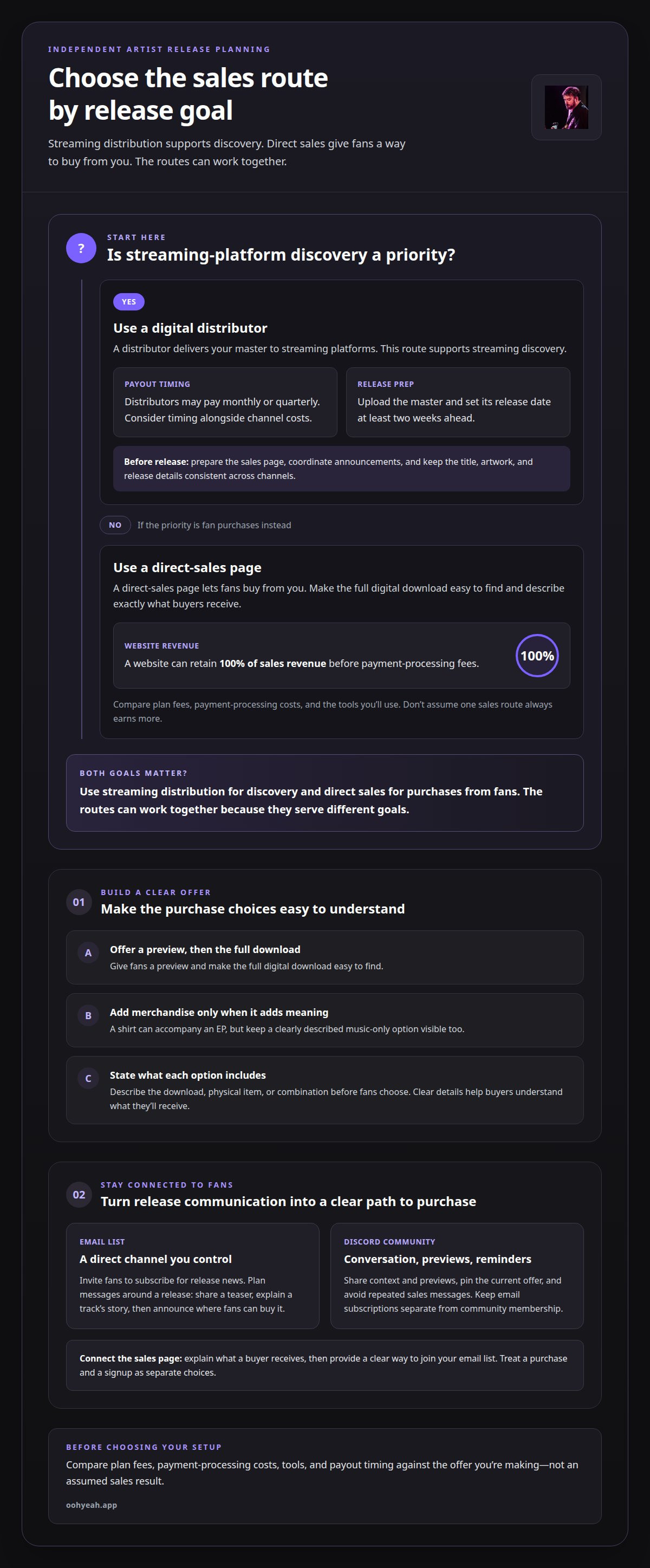
Use streaming distribution to support discovery and direct sales for purchases from fans. These routes can work together, but they serve different goals.
-
Choose Distribution and Direct-Sales Channels
Understanding how independent R&B artists sell music directly to fans starts with separating reach from purchase. A digital distributor delivers your master to streaming platforms, while a direct-sales page lets fans buy from you. A website can retain 100% of sales revenue before payment-processing fees. Distributors may pay monthly or quarterly, so consider payout timing alongside each channel’s purpose and costs.
-
Offer Music Previews and Downloads
Upload your master and set its release date at least two weeks ahead. Use that time to prepare your sales page and coordinate announcements. Offer a preview, then make the full digital download easy to find. Keep the title, artwork, and release details consistent across channels. The best approach to how independent R&B artists sell music directly to fans depends on whether streaming discovery, direct purchases, or both are priorities.
-
Add Physical Merchandise to Direct Sales
Pair a digital release with merchandise when it adds meaning for fans. For example, offer a shirt alongside an EP, with each purchase option clearly described. Keep the music-only option visible for listeners who don’t want merchandise. Before announcing the offer, list exactly what each option includes. Clear details help fans choose a download, a physical item, or both.
Presenting digital music downloads alongside other fan offers can give supporters a clear path to choose what they want.
Digital distributors may pay artists monthly or quarterly. Knowing the payout schedule can help you plan when revenue may arrive.
Merch bundles and limited EP releases
A bundle can make a direct purchase more appealing by pairing music with a meaningful extra. Direct-sale income depends on each fan’s purchase, while streaming revenue is calculated through platform and rights-holder arrangements. Compare the actual sales and payout terms for your release rather than assuming one route always earns more.
- Design one clear bundle. Pair a limited EP with a related item, such as a lyric booklet, art print, or shirt. Make each item’s role clear, and let fans understand what the bundle includes before purchasing. Keep a music-only option for listeners who want the EP without merchandise. This choice can serve different budgets without making the offer confusing.
- Set a price from the offer’s value. Consider the music, merchandise, production costs, payment processing, and the audience you’re serving. An EP-only download and an EP-plus-shirt bundle offer different value, so explain the difference plainly. Avoid choosing a price just because another artist uses it; your costs and included items shape the decision.
- Make a limited release genuinely time-bound. A time-limited music drop can offer paid early access and retain revenue and fan contact information. State when the offer closes and what buyers receive. Don’t call a release limited if fans can keep purchasing it after the stated window.
- Build a focused merchandise store. Group items with the matching release, then describe sizes, materials, and what each listing includes. Keep the EP and physical item distinguishable at checkout. Before launch, record orders and related expenses; U.S. tax treatment depends on the seller’s circumstances and location, so keep clear transaction records.
- Set up the store and payment flow. Choose a storefront that can present digital music and merchandise, accept payments, and explain delivery for each item. Preview the checkout as a fan would. Make the digital download instructions clear, and state how buyers receive physical merchandise without implying unlisted delivery terms.
Password-protected demos and exclusive content
A private demo can bring supporters closer to your creative process. Treat access as a distinct offer: explain what fans receive, how they’ll access it, and whether it’s a preview or finished music.
- Choose a demo with a clear purpose. Share an alternate vocal take, an unfinished arrangement, or a song’s early direction. Add a short note about what listeners are hearing. A password can limit casual access, but it can’t prevent recipients from sharing the password or recording playback. Share only material you’re comfortable circulating.
- Make the access instructions simple. Put the password and listening instructions beside the demo link. Tell supporters whether the track is for listening only or available to download. Avoid sending passwords in a public post, where the audience may extend beyond the fans you intended to reach.
- Give exclusive content a defined value. Offer a studio diary, handwritten lyric commentary, or a private performance recording. Explain what makes each item exclusive, rather than labeling ordinary updates as premium material. Fans should know what access includes before they pay or sign up.
- Connect access to a release moment. Share a demo before an EP announcement, then follow with the finished track or release details. This gives the early listen context and makes the next step clear. Keep the message focused, so a private preview feels like an invitation, not another generic promotion.
- Keep the experience consistent. Use a stable place for access details and update it when content changes. If a password changes, send the new instructions directly to eligible supporters. Separate demos from finished downloads, and label files clearly, so fans know which version they’re hearing.
Build a closer connection with supporters through exclusive content access, using private demos and behind-the-scenes material to give fans more than the public release.
OohYeah!: Artist Profile Hosting
OohYeah! gives independent R&B artists a place to connect fan support with music, merchandise, and exclusive content. Use Artist Profile Hosting to present your artist identity and Digital Music Downloads to offer music directly. The Merchandise Marketplace lets fans support your work with merchandise, while Exclusive Content Access can bring supporters closer to demos or behind-the-scenes material.
OohYeah! enables artists to retain 100% of sales revenue from music and merchandise. That makes it a natural fit when you want direct sales alongside the personal connection built through exclusive content. Shape your profile around the music and offers you want fans to discover, from a new download to a private release. Contact OohYeah! to discuss building a direct connection with your fans.
Make Your Next Release a Fan Connection
Your next release can do more than mark a date on the calendar. It can start an ongoing conversation with the people who choose to support your work. Let their responses guide what you create and share next, keeping the music and the connection at the center.
A thoughtful approach to how independent R&B artists sell music directly to fans starts with a release experience that feels true to your sound. Build on what feels personal, then refine your approach as you learn what resonates with your audience. Each release is another opportunity to strengthen that connection.
Ready to explore a direct path for your music? Talk with OohYeah! about your next release and take the next step on your own terms. Your music, your vision, your connection.
Frequently Asked Questions
What platforms let independent R&B artists sell music directly to fans?
Artists can use direct-sales platforms for downloads and fan offers alongside distributors that deliver releases to streaming services. Choose based on the experience you want: a page for a new EP or a profile that brings music and supporter content together. OohYeah! offers Artist Profile Hosting and Digital Music Downloads; streaming distribution is a separate route.
How can artists sell physical CDs and vinyl directly to fans?
Sell physical records through an online storefront you manage, and plan inventory, packaging, and delivery before announcing the release. For example, offer a signed CD alongside a digital album, clearly identifying what each listing includes. Set aside time to pack orders and handle buyer questions. Physical records need fulfillment arrangements distinct from digital downloads.
What are the risks and costs of selling music directly, including fulfillment, refunds, and chargebacks?
Direct sales can involve production, packaging, postage, payment processing, refunds, and time spent resolving disputes. Set clear product descriptions and fulfillment expectations before launch, and keep order and delivery records to help address buyer concerns. For OohYeah! purchases, payments are processed through PayPal. Secure checkout · PayPal Purchase Protection may apply. Account for these responsibilities when setting a bundle price.