Direct fan messaging that turns discovery into music sales
Direct fan messaging strategies to increase music sales help artists turn discovery into opt-in conversations, nurture loyal fans, and sell more music.
October 27, 2026
FRANKLY with Frank Lee
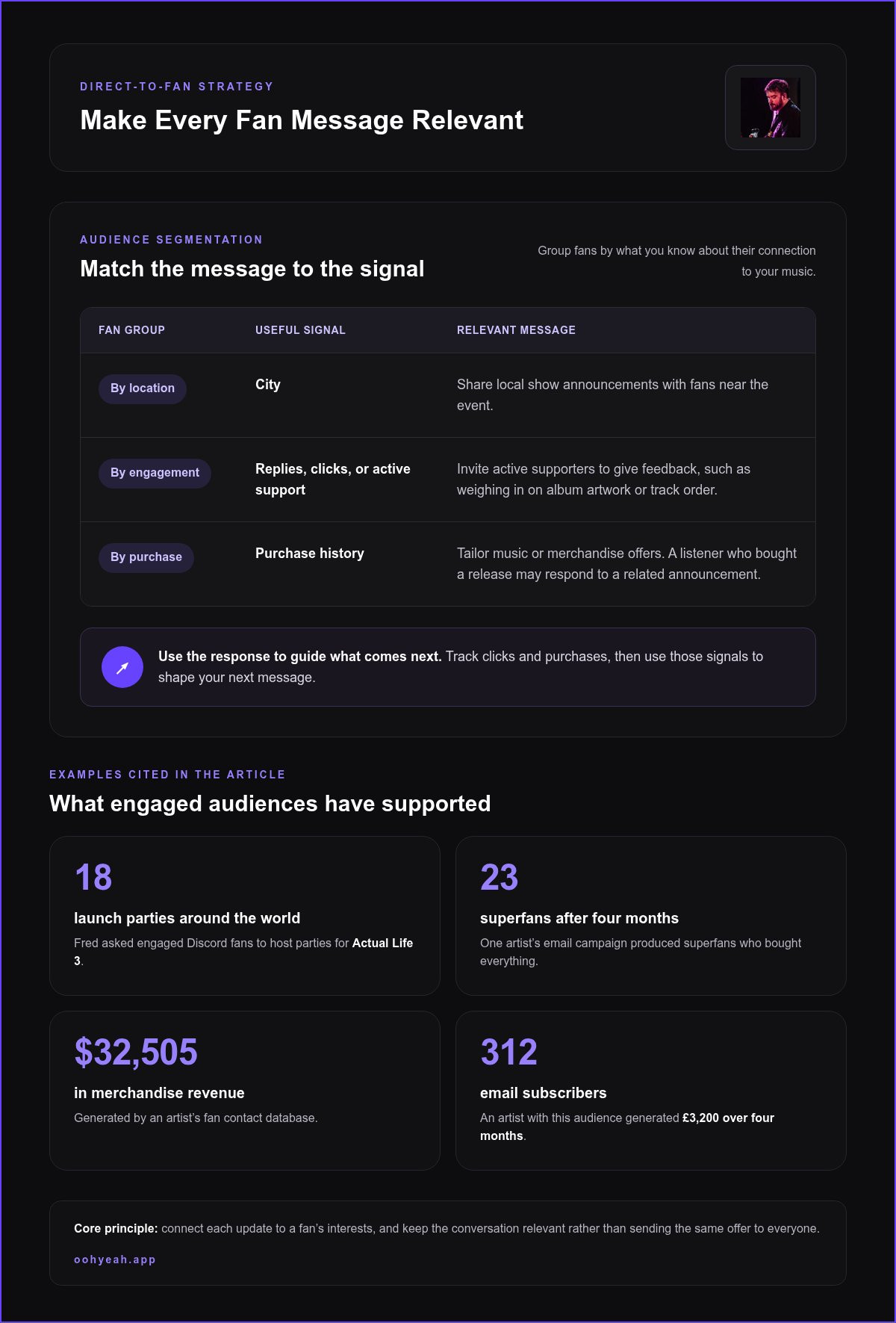
A smaller, engaged fanbase can be more useful than a much larger passive following. Fred put that connection to work by asking engaged Discord fans to host 18 launch parties around the world for Actual Life 3. Direct fan messaging strategies to increase music sales build on the same idea: turn genuine interest into permission-based conversations, then make it easy for fans to support the music.
If you’re trying to grow an audience, it can feel as though social posts and streams should do all the work. They help people discover your music, but direct communication gives interested listeners a clear way to hear from you again. The key is to offer relevant updates and opportunities, not a constant stream of sales messages.
This article explains how artists use email and other direct channels, invite fans to opt in, and connect discovery with music and merchandise sales. You’ll also learn how timing, audience segments, and thoughtful follow-up can turn casual interest into lasting support as your career grows.
Key Takeaways
- Group fans by location, engagement, and buying behavior so each message speaks to a relevant interest.
- Use your website to bring music and merchandise together with a clear, voluntary email signup.
- Keep your audience connection active between releases with useful updates and a consistent place to direct fans.
- Make discovery the start of a direct relationship by inviting interested listeners to opt in for relevant news and offers.
Are there any artists or musicians using these strategies effectively?
Yes. Artists have used direct communication to turn engaged fans into promoters, buyers, and repeat supporters. Fred, for example, mobilized fans around Actual Life 3.
Segmentation makes each campaign more relevant. Group fans by city to share local show announcements, by engagement to invite active supporters to give feedback, and by purchase history to tailor music or merchandise offers. Someone who votes on album artwork may welcome another creative update; a listener who bought a release may respond to a related announcement. Track clicks and purchases, then use those signals to shape your next message.
Consistent Posting and Two-Way Engagement
Consistent posting shares an artist’s work regularly, while two-way engagement invites fans to respond and take part. One social growth plan recommends posting twice daily for 90 days and replying to every comment and direct message during that period. Use conversations to ask fans about artwork or track order, then acknowledge their input. This turns platform activity into a relationship, while fan responses can help artists develop promotion that feels connected to the music.
Release Follow-Up Engagement
Release follow-up keeps fans involved after the first announcement and launch-day attention. Fred asked engaged Discord fans to host 18 Actual Life 3 launch parties around the world, turning listeners into active promoters. After a release, share meaningful updates, invite reactions, and show how fans’ support carries the music forward. A campaign that continues beyond release week gives interested listeners more chances to connect, rather than treating one launch moment as the whole promotion.
Engagement That Encourages Repeat Purchases
Repeat purchases become more likely when artists keep their communication relevant to fans’ interests. One artist’s email campaign produced 23 superfans who bought everything after four months. That example points to a useful approach: learn what supporters respond to, then make each follow-up feel connected rather than sending the same offer to everyone. An artist’s fan contact database also generated $32,505 in merchandise revenue. Engagement can help artists understand which announcements lead supporters back to a purchase.
Using a website to sell music and merchandise and collect fan emails
An artist website can connect music discovery with direct sales and voluntary fan signups. Give each page a clear action, such as listening to a track or joining your email list.
Permission-Based Email and SMS Opt-Ins
Permission-based signups let fans choose which promotional messages they receive and help build a clearer connection. Offer separate, explicit choices for email and SMS, and explain what each signup includes, such as release announcements or exclusive updates. A music or merchandise purchase doesn’t automatically subscribe someone to marketing. Keep transaction messages separate from optional promotions, and collect only the information needed to send the updates you’ve promised.
Messaging Channels and Private Communities
Independent artists can sell music and merchandise through an artist website or direct-to-fan platform, then connect those sales to email, text, or a private community. Streaming can help people discover your music; a direct sales page gives interested listeners a clear next step. Use email for fuller release context, text for brief, timely announcements, and community spaces for conversation. Give each channel a consistent role in the fan journey.
Email and SMS Conversion Rates
Email and SMS conversion rates depend on the audience, message, timing, and action offered, so one channel won’t always outperform the other. Compare clicks and completed purchases rather than relying on opens alone. A purchase after a message doesn’t prove the message caused it. In the U.S., service costs depend on list size, message volume, and automation needs; compare plans with your actual sending requirements.
Release Promotion Through Email and Text
For a release campaign, send an email with the story behind the music and a direct listening or purchase action. Use a concise text for a timely announcement, then follow up with a distinct update rather than repeating the same pitch. Keep the message and destination consistent across promotion channels. An artist music and merchandise destination can give fans one clear place to take action.
How can aspiring artists utilise a direct-to-fan strategy when they are starting their careers?
Start with a simple system to stay connected with supporters between releases. Consistent updates help emerging artists build relationships before asking fans to buy.
Marketing Infrastructure Between Releases
A reliable direct-marketing setup gives fans a clear way to follow an artist between releases. Create one central destination for your music, signup options, and upcoming announcements. Use social media to guide listeners there, then share updates that offer more than a sales pitch. A pre-save or mailing list can support your next release, while basic audience analytics show which messages attract attention.
Relationships with Early Supporters
Authentic relationships grow when artists include early supporters in the creative journey. Reply to comments, ask focused questions, and share progress such as a demo or artwork choice. Then acknowledge fan contributions in a follow-up update. An artist with 312 email subscribers generated £3,200 over four months, showing how a small, connected audience can support direct music marketing.
Value Tiers for Different Fans
Offer fans different ways to participate without making every interaction a purchase. Start with free updates for curious listeners, offer occasional music or merchandise purchases, and reserve exclusive content for more committed supporters. Match each offer to the relationship and what you can realistically produce. A paid membership doesn’t need to come before your audience is ready for one.
Direct-to-Fan Audience Building
Direct-to-fan audience building turns discovery into ongoing connection. In 2026, independent artists are increasingly using direct sales to strengthen audience relationships and revenue. Share music clips or live moments on social media, then invite interested listeners to opt into release updates. Keep the destination and message consistent, and track signups, clicks, and purchases to learn what fans value. Use those insights to shape the next campaign.
Converting discovery into direct fan opt-ins
Discovery matters most when an interested listener has a clear next step. A focused signup or sales page can connect a new song, social post, or stream with a direct relationship.
Turning Listeners into Fans
Direct fan messaging strategies to increase music sales start by giving discovery an easy path forward. Invite listeners from social platforms or streaming pages to visit one destination, where they can choose updates, explore music, or opt in for announcements. One artist converted 0.5% of its streaming audience into direct-to-consumer customers. Record where each signup or purchase began, rather than treating follower growth as proof of sales.
Make the page easy to use on mobile, and tell fans what they’ll receive before asking for an email address or phone number. Someone interested in an exclusive track may need a different next step from a listener discovering your music for the first time. Clear choices let fans act without forcing every visitor down the same path.
Calls to Action and Offers
A call to action should name one specific action and connect it to an offer fans value. Invite listeners to buy a digital download, access exclusive content, or sign up for release updates. Direct fan messaging strategies to increase music sales work best when the message matches its destination. Avoid sending everyone to a crowded page with competing buttons.
Pre-saves can help identify listeners with strong interest and focus attention around a release. To measure sales, record campaign sources, clicks, completed purchases, and net receipts. Compare purchases with clicks to assess conversion, then weigh receipts against campaign costs to calculate return on investment. Opens and clicks show engagement, but they don’t prove a message caused a purchase.
Give interested listeners a direct place to buy music downloads directly after discovery.
OohYeah!: Artist Profile Hosting
OohYeah! gives artists a direct place to present their music and connect fan interest with ways to support them. Artist Profile Hosting brings an artist’s presence together, while Digital Music Downloads and a Merchandise Marketplace let fans buy music and merchandise directly. Artists can also use Exclusive Content Access to share material with supporters looking for more than public updates.
It’s a natural next step when you’re ready to give listeners a clear destination after a message, release announcement, or social post. OohYeah! enables artists to retain 100% of their sales revenue from music and merchandise. The platform supports the connection between discovery and direct support, while artists remain responsible for building relevant messages and inviting fans to opt in.
Visit oohyeah.app to explore how OohYeah! can support your direct-to-fan approach.
Make Your Next Release a Starting Point
Every release can start a longer conversation with the people who choose to listen. The most useful direct fan messaging strategies to increase music sales aren’t one-off tactics. They create a learning loop: share something meaningful, notice how supporters respond, and use that response to shape your next offer. Keep the relationship at the center. Make fans feel included, not given another reason to click away.
As your audience grows, build a rhythm you can sustain and a clear destination for supporters ready to take the next step. OohYeah! brings Artist Profile Hosting together with Digital Music Downloads and a Merchandise Marketplace, giving artists options for connecting their music with direct support. Choose the approach that fits your next stage, then keep listening to the community around your work. If you’re ready to explore a creator-first path, contact OohYeah! to grow your audience.
Your music deserves the chance to find its people. Keep creating and connecting, and let each new conversation move your career forward.
Frequently Asked Questions
What direct messaging channels work best for musicians to sell music to fans?
Email works well for detailed release stories, while SMS suits short, timely reminders. Private communities can encourage conversation among listeners who want closer involvement. Choose a channel that fits the action: an album note may work well by email, while a show reminder may suit text. Keep each channel’s purpose clear, and give fans a way to manage their preferences.
How can artists grow an opt-in email and SMS list without violating privacy laws?
Invite fans to sign up directly, and explain what updates they’ll receive before they submit their details. Offer separate choices for email and SMS, then record each signup and its stated purpose. Don’t treat a purchase, social follow, or contact import as blanket permission. Make it easy for subscribers to change their preferences or stop messages.
How often should musicians message fans without causing unsubscribes or complaints?
Set a sustainable pace around meaningful news instead of sending messages simply to stay visible. For example, contact fans when a release, show announcement, or relevant behind-the-scenes update gives them a clear reason to hear from you. Monitor unsubscribes, complaints, replies, and clicks after each campaign. If negative responses increase, reconsider the timing and relevance.
What U.S. laws govern promotional email and text messages to music fans?
In the U.S., promotional email and text campaigns can involve different federal and state requirements, so don’t assume that one channel’s rules cover the other. Build a process around clear, channel-specific permission, accurate sender identification, accessible opt-outs, and records of consent and removals. Requirements can depend on the message and recipient. Seek qualified legal guidance about your campaign’s specific circumstances.
How can artists segment fan lists and personalize messages to improve sales?
Use information fans have chosen to share, along with their interactions with your music, to create useful audience groups. For example, send a local show announcement to subscribers who selected that city, and share a release with fans who clicked on related music. Keep personalization consistent with the stated signup purpose. Review clicks and purchases to see which messages suit each group.
What are the risks of buying fan contact lists or sending unsolicited music promotions?
Purchased lists can contain outdated addresses or records that don’t show what someone agreed to receive. A fan’s purchase from another organization doesn’t give you permission to send marketing, and a blank consent field isn’t a subscription. Unsolicited promotions can lead to complaints and unsubscribes, and damage the trust artists need for future releases.