Best used guitar pedals for direct recording in 2026
Compare used guitar pedals for direct recording. Strymon Iridium leads for simplicity; match five picks to your setup and check used gear before buying.
November 5, 2026
FRANKLY with Frank Lee
Best overall: Strymon Iridium. Best for flexible recording chains: Line 6 HX Stomp. Best for a compact pedalboard: BOSS IR-2. These used guitar pedals for direct recording cover different jobs; choose the one that supplies the amp sound, cabinet processing, and connections your home studio actually needs.
- Strymon Iridium is the default pick for used guitar pedals for direct recording with straightforward amp and cabinet controls.
- Line 6 HX Stomp suits guitarists who need amp modeling, effects, and USB recording in one device.
- BOSS IR-2 fits compact boards; DSM & Humboldt Simplifier suits analog stereo routing.
- Tech 21 SansAmp GT2 suits players who want tactile analog direct tones without loading cabinet files.
- Check power requirements, output routing, and every connection before buying a used recording pedal.
Why this matters
A distortion pedal is not automatically a complete direct-recording rig. Guitar speakers shape the sound substantially; recording an overdrive straight into an interface without suitable amp and cabinet processing produces a different result from recording a miked amplifier.
Buy the missing part of your recording chain, not another version of something you already own. Oohyeah connects musicians buying and selling gear, but the right purchase starts with knowing whether you need amp modeling, cabinet simulation, effects, or all three.
For a 2026 home studio, connection compatibility matters more than the length of the preset list. Establish how the pedal reaches your recording software before comparing sounds.
What makes the best direct-recording pedal?
- Complete direct sound: The pedal needs suitable amp and speaker processing, or a clearly defined role before software that supplies those stages.
- Recording connections: Analog outputs, headphone monitoring, and USB audio solve different problems. Confirm which ones your setup needs.
- Useful controls: You should be able to adjust gain, tone, and output without interrupting a take.
- Routing flexibility: Stereo effects, external pedals, and separate monitoring paths need compatible connections and settings.
- Used-condition checks: Switches, knobs, jacks, power connections, and digital communication all matter. Cosmetic wear alone tells you little.
Best used direct-recording pedals at a glance
| Pedal | Best for | Standout feature | Key limitation |
|---|---|---|---|
| Strymon Iridium | Straightforward amp-and-cab recording | Amp modeling with impulse-response cabinet processing | USB is not an audio-interface connection |
| Line 6 HX Stomp | Recording chains with several effects | Amp models, effects, routing, and USB audio | More setup work than a dedicated amp pedal |
| BOSS IR-2 | Compact pedalboards | Amp-and-cab processing with USB audio | Small controls and selectable modes require careful setup |
| DSM & Humboldt Simplifier, original model | Analog stereo rigs | Analog amp and cabinet simulation with routing options | No user-loaded cabinet impulse responses |
| Tech 21 SansAmp GT2 | Hands-on analog direct tones | Analog amp and speaker emulation | No stereo processing or USB recording |
These are workflow recommendations, not measured sound-quality scores. No single pedal wins every recording task.
1. Strymon Iridium: best for straightforward direct recording
Strymon Iridium combines digital amp modeling with cabinet impulse responses. An impulse response, or IR, captures a system's response; guitar cabinet IRs reproduce the filtering associated with a particular speaker-and-microphone setup.
Iridium makes sense when you already like your overdrive, delay, and modulation pedals. Put those sounds around a dedicated amp-and-cab stage rather than rebuilding your entire board inside a processor.
Strymon Iridium pros:
- Dedicated controls keep core amp adjustments accessible.
- Cabinet IR support lets you change speaker character.
- Headphone monitoring supports playing without a separate amplifier.
Strymon Iridium cons:
- It does not replace a USB audio interface.
- It is not a full multi-effects processor.
- You need to plan external effects placement around its connections.
For a used purchase in 2026, test the headphone output as well as the main outputs. Ask the seller to demonstrate changing amp and cabinet selections, and check the manufacturer's software requirements before planning to manage IRs from your computer.
Best for: Guitarists who want familiar pedalboard controls and a dedicated recording amp sound.
Verdict: Buy Strymon Iridium when simplicity matters more than an all-in-one effects library.
2. Line 6 HX Stomp: best for flexible recording chains
Line 6 HX Stomp combines amp and cabinet modeling with effects and USB audio. It can serve as the center of a compact recording rig rather than just its final amp-simulation stage.
Choose it when different songs require different signal chains. You can build a restrained rhythm sound, then create another preset with different amplification and effects without physically repatching a board.
Line 6 HX Stomp pros:
- USB audio supports a direct computer-recording workflow.
- Amp models and effects share one programmable device.
- Routing options accommodate external equipment.
- Presets make complex sound changes repeatable.
Line 6 HX Stomp cons:
- Menus and signal-chain decisions take time to learn.
- Processing resources limit what fits into a preset.
- An unfamiliar preset can hide the cause of a level problem.
Before buying used, test the USB connection with a computer, not just the analog outputs. Confirm that the encoders, footswitches, and display work, and inspect the power connection for intermittent behavior.
Start with an empty preset. Add only the stages you need before auditioning downloaded patches.
Best for: Guitarists recording varied material who want effects, amp processing, and computer connectivity together.
Verdict: Buy Line 6 HX Stomp if you will use its routing and effects; skip it if menus interrupt your writing.
3. BOSS IR-2: best for compact pedalboards
BOSS IR-2 puts amp modeling and cabinet IR processing into a compact stompbox format. USB audio adds a computer-recording path without requiring a separate pedal-sized processor elsewhere on the board.
Its appeal is physical simplicity. You get a dedicated direct-recording stage while keeping space for the pedals you already use.
BOSS IR-2 pros:
- Compact housing fits an existing pedalboard.
- USB audio supports direct computer recording.
- An effects loop helps integrate external effects.
BOSS IR-2 cons:
- Compact controls demand attention when adjusting settings.
- It does not replace a broad multi-effects library.
- Recording and monitoring still depend on correct routing.
For a 2026 purchase, distinguish BOSS IR-2 from similarly named BOSS devices. Match the exact model to its owner's manual, then check the main outputs, headphone connection, USB communication, and effects-loop connections individually.
Do not judge the pedal only through headphones. Record a short part into your actual software and listen back through your normal monitoring chain.
Best for: Players adding direct-recording capability to an established compact board.
Verdict: Buy BOSS IR-2 when board space and a dedicated amp stage are your priorities.
4. DSM & Humboldt Simplifier: best for analog stereo rigs
The original DSM & Humboldt Simplifier uses analog circuitry for its amp and cabinet simulation. It suits players who prefer physical controls and want to organize a direct rig around analog connections.
Be precise about the model. Simplifier versions differ, so a listing that says only “Simplifier” does not establish the connections or features you will receive.
DSM & Humboldt Simplifier pros:
- Analog controls keep sound shaping hands-on.
- Stereo routing supports a wider direct-recording setup.
- Balanced outputs support connections to suitable recording equipment.
DSM & Humboldt Simplifier cons:
- The original model does not load cabinet IR files.
- It is not a USB recording interface.
- Similar model names make vague used listings harder to assess.
Ask for clear rear-panel and top-panel photographs. Then compare the actual unit with the original model's documentation rather than assuming a newer version's features apply.
Best for: Guitarists building an analog direct rig with stereo effects and an existing interface.
Verdict: Buy the original DSM & Humboldt Simplifier for its analog workflow; skip it if loading custom IRs is essential.
5. Tech 21 SansAmp GT2: best for tactile analog direct tones
Tech 21 SansAmp GT2 provides analog amp and speaker emulation through knobs and selector switches. It offers a different workflow from digital modelers: turn controls, record a part, and commit to the sound.
It also works as a deliberate limitation. If preset browsing stops you finishing guitar tracks, a simpler control surface keeps the session focused.
Tech 21 SansAmp GT2 pros:
- Physical controls make adjustments immediate.
- Analog direct processing needs no preset editor.
- Amp-character switches provide distinct starting points.
Tech 21 SansAmp GT2 cons:
- No USB audio connection.
- No stereo effects processing.
- No custom cabinet IR loading.
On a used unit, move each selector through every position and listen for intermittent audio. Check the battery compartment for corrosion if the seller used battery power, and verify the external supply requirements before connecting an adapter.
Best for: Players who want a straightforward analog direct sound and already own an interface.
Verdict: Buy Tech 21 SansAmp GT2 for hands-on recording; skip it for elaborate stereo or software-managed rigs.
Connect the pedal without stacking the wrong processing
For your 2026 setup, choose one main amp-and-cab path before adding effects. Doubling processing without intending to changes the sound and makes troubleshooting harder.
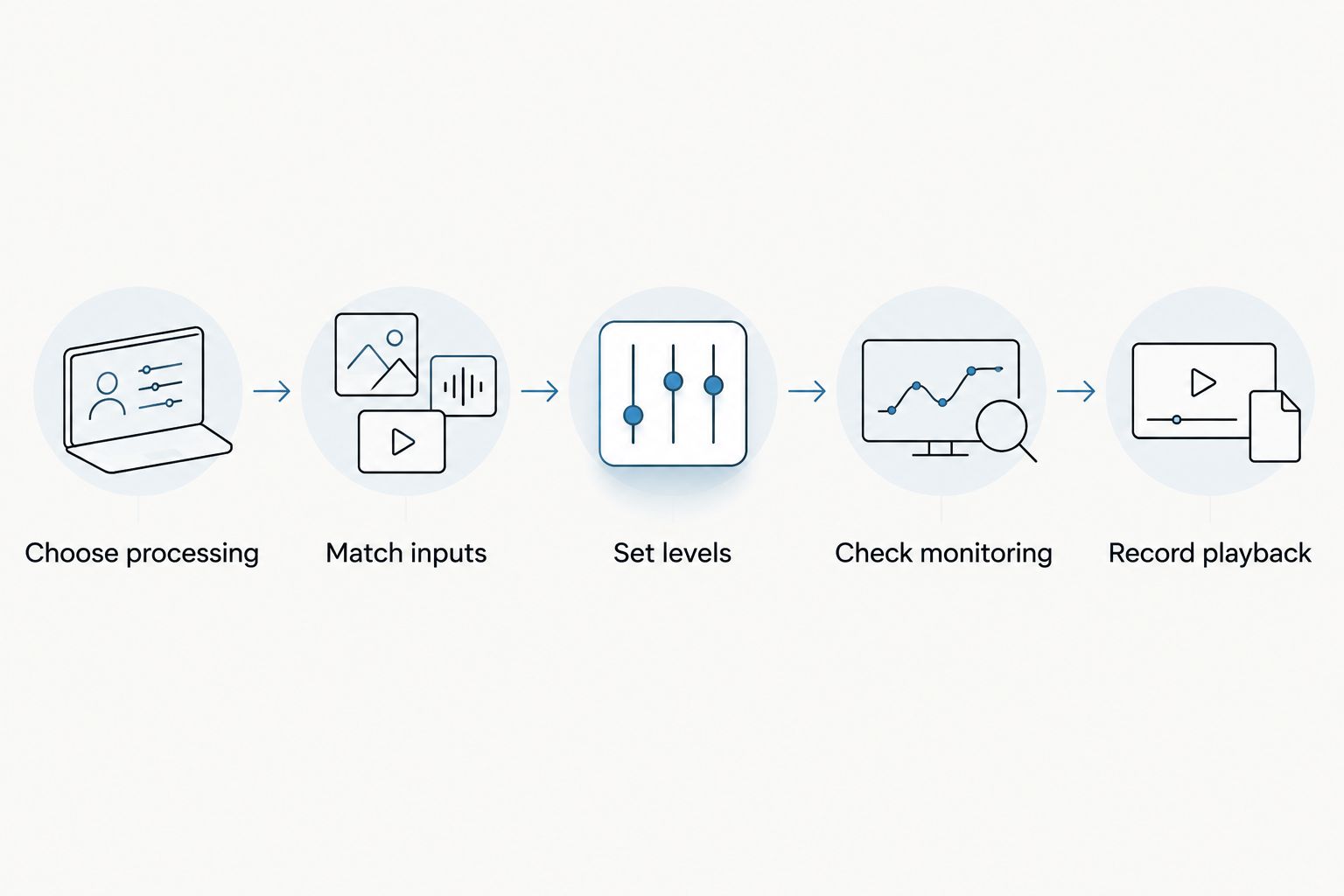
Use this sequence:
- Choose processing: Decide whether the pedal or your recording software supplies the amp and cabinet sound.
- Match inputs: Connect the pedal's output to an appropriate interface input. Follow both manufacturers' level guidance.
- Set levels: Play your hardest passage and adjust gain so the interface does not clip.
- Check monitoring: Listen for doubled audio caused by hearing direct monitoring and software monitoring together.
- Record playback: Capture a short take and listen to the recorded file, not just the live signal.
Software belongs in this decision too. When your pedal supplies drive or preamp color but leaves cabinet shaping to the computer, amp sims with IR loading let you place cabinet processing inside the recording session; avoid adding another cabinet stage automatically when the hardware already provides one.
A practical starting session is 24-bit recording at 48 kHz, provided your equipment supports it. That is a setup recommendation, not a claim that another supported format sounds worse; keep collaborators' files and session settings consistent.
For mono recording, use one suitable output and one interface input. Stereo requires two recording channels, and the finished part still needs a mono check.
Inspect the used pedal before committing
A convincing sound clip does not prove every socket works. Request a demonstration of the connections you will actually use, including USB recording or headphones where relevant.
Use this inspection order:
- Confirm the exact model from photographs of the unit.
- Check the specified voltage, polarity, and current requirements.
- Test every knob, switch, and connection.
- Listen with the guitar's volume down for unwanted noise.
- Record sustained notes and hard-picked chords.
- Ask about faults, repairs, modifications, and missing accessories.
Power is not interchangeable just because a connector fits. A familiar 9 V DC pedal supply is not permission to use that supply with every device; read the exact unit's markings and manual first.
For online purchases, evaluate the listing as carefully as the pedal. The questions in how to tell whether a used instrument listing is legitimate apply to missing photos, unclear descriptions, and sellers who cannot demonstrate the item.
Replacing gear? Oohyeah's used guitar pedals marketplace supports sellers with zero seller commissions. Create an account, list the exact model, and describe faults plainly rather than hiding them behind “works great.”
How the ranking works
The 2026 ranking prioritizes complete direct sound, practical recording connections, usable controls, routing, and inspectable used condition. Strymon Iridium leads for a focused amp-and-cab workflow; the other picks earn separate slots rather than competing on an unsupported sound-quality score.
Oohyeah is best for musicians who want to buy and sell used gear within a music-focused marketplace. That marketplace role is separate from the pedal recommendations: none of these placements implies a particular seller or listing is verified.
Which direct-recording pedal should you choose?
Choose Strymon Iridium if you want the clearest default. Choose Line 6 HX Stomp for a programmable recording system, BOSS IR-2 for a compact board, DSM & Humboldt Simplifier for analog stereo routing, or Tech 21 SansAmp GT2 for tactile analog tones.
For 2026, write down your required connections before searching. A pedal that fits your recording chain beats a more elaborate device you cannot integrate cleanly.
FAQ
What's the best used guitar pedal for direct recording?
Strymon Iridium is the default recommendation for straightforward amp-and-cab recording. Line 6 HX Stomp is the better fit when you also need programmable effects and USB audio.
Can I record a distortion pedal directly into an audio interface?
Yes, but a distortion pedal alone does not necessarily provide amp or cabinet simulation. Add suitable processing in hardware or recording software when you want the sound of a miked guitar amplifier.
Do I need an audio interface with these pedals?
You need a suitable recording connection, which can be a separate interface or a pedal's supported USB audio connection. Strymon Iridium, the original DSM & Humboldt Simplifier, and Tech 21 SansAmp GT2 need an external recording interface for computer capture.
Is BOSS IR-2 better than Strymon Iridium?
BOSS IR-2 fits players prioritizing compact size and USB audio, while Strymon Iridium fits a dedicated amp-and-cab workflow with accessible controls. Choose by connections and operation rather than assuming one is universally better.
Should I leave cabinet simulation on when recording direct?
Leave cabinet processing on when it supplies the speaker sound you want and no later stage replaces it. If software supplies your cabinet processing, configure the hardware accordingly rather than stacking stages accidentally.
What should I check before buying a used recording pedal?
Check the exact model, power requirements, controls, audio connections, and any computer connection you need. Ask for a recorded demonstration and clear photographs of the actual unit.
Can I sell my old guitar pedals on Oohyeah?
Yes. Oohyeah supports buying and selling music gear with zero seller commissions. Create an account and describe the pedal's exact model, condition, faults, and included accessories.
One last thing
A huge stereo sound can hide a weak guitar arrangement. Record a dry rhythm part, check it in mono, and leave room for the vocal before adding width and long effects tails.
Wrote some songs, now what? Finish a clear demo, identify the performance you cannot supply yourself, and brief a session guitarist or producer. The next useful purchase is not always another pedal.