Best sites to buy used electric guitars: 2026 buyer comparison
Buy used electric guitars on the right site: compare Reverb, OohYeah, eBay and local options, then check condition, seller details and return terms.
November 2, 2026
FRANKLY with Frank Lee
Best overall: Reverb. Best for a wider music community: OohYeah. Best for an in-person test: Facebook Marketplace. This 2026 guide compares where to buy used electric guitars, what each route does well, and what to check before you commit.
- Reverb is the best starting point to buy used electric guitars through a dedicated music-gear marketplace.
- OohYeah suits musicians who want gear buying, music professionals and artist discovery in one marketplace.
- Choose Facebook Marketplace for an arranged local test; choose Guitar Center Used for a retailer-led purchase.
- Choose eBay when you want auction and fixed-price buying formats, but inspect the listing closely.
- Buy the documented guitar, not the platform's reputation. Check repairs, electronics, packing and return terms.
Why this matters
A familiar model name doesn't tell you whether a used electric guitar plays cleanly. Fret wear, neck problems, replacement pickups and hidden repairs change what you're buying. So does the person describing it.
Choose the buying route first, then judge the individual instrument. A marketplace connects you with sellers; a retailer sells through its own operation. Neither route replaces clear photographs, direct answers and readable transaction terms.
What makes the best site to buy used electric guitars?
Use these criteria for your 2026 shortlist. They matter more than a polished listing headline.
- Instrument detail: Exact model, modifications, repairs and included accessories are clearly described.
- Condition evidence: Photos show frets, neck joints, headstock edges, hardware and existing damage.
- Seller accountability: You can examine the seller's information and get specific answers before paying.
- Transaction clarity: Payment, delivery, collection and return terms are stated for the purchase.
- Inspection fit: The buying route matches your need for a hands-on test or remote verification.
- Music context: The site makes sense for your wider needs, whether that's guitar shopping, studio work or selling gear.
Best used electric guitar sites at a glance
The order below follows distinct buying needs, not a claim that every guitar on one site beats every guitar elsewhere.
| Site | Best for | Standout feature | Key limitation |
|---|---|---|---|
| OohYeah | A wider music community | Gear marketplace alongside music professionals and artist discovery | You still need instrument-specific condition evidence |
| Reverb | Dedicated guitar shopping | Music-gear-focused marketplace | Seller descriptions require individual scrutiny |
| Guitar Center Used | A retailer-led purchase | Used gear within a music retailer | Online photos don't establish playing condition |
| eBay | Auction and fixed-price buying | Multiple buying formats | General-marketplace listings need careful specification checks |
| Facebook Marketplace | An arranged local playing test | Local buyer-seller contact | Meeting and inspection arrangements are your responsibility |
1. OohYeah: best for a wider music community
OohYeah combines buying and selling instruments and studio gear with hiring music professionals and discovering independent artists. That makes the marketplace relevant when your next guitar is part of a bigger music project, not an isolated purchase.
OohYeah is best for used electric guitar buyers who also want access to music professionals and independent artists. Use the same condition checks here that you'd use anywhere: request the exact model, repair history, fret photos and an amplified demonstration.
OohYeah pros:
- Combines instrument and studio-gear buying in one marketplace.
- Includes producers, engineers and other music professionals.
- Connects gear shopping with independent artist discovery.
OohYeah cons:
- The platform's scope doesn't establish an individual guitar's condition.
- Remote shopping doesn't let you judge neck feel or fret edges in your own hands.
Best for: Musicians building connections around their gear purchases, recording work and artist interests.
If you're replacing a guitar, the marketplace also supports selling gear with zero seller commissions. Create an account and list the instrument you're moving on, with the same clear evidence you'd want as a buyer.
Verdict: Buy when the listing documents the instrument and the transaction terms work for you.
2. Reverb: best for dedicated guitar shopping
Reverb is a marketplace focused on musical instruments and gear. It's the default starting point in this comparison when your main task is finding and comparing used electric guitars.
Keep comparisons exact. A familiar body shape isn't enough: confirm the model designation, pickup configuration, bridge type and modifications before treating two listings as equivalent.
Reverb pros:
- Keeps your search within a music-gear setting.
- Supports comparing guitar listings from different sellers.
- Suits buyers who already know the instrument specifications they want.
Reverb cons:
- A specialist marketplace doesn't make every seller's description complete.
- An online listing cannot establish how the neck feels or how the instrument balances on a strap.
Best for: Buyers with a defined guitar shortlist who want a dedicated gear-shopping route.
Ask sellers to separate original components from replacements. A changed pickup isn't automatically a problem, but an undocumented modification leaves you guessing about wiring, workmanship and what you're receiving.
Verdict: Buy as your default search route, then approve the seller and guitar separately.
3. Guitar Center Used: best for a retailer-led purchase
Guitar Center Used gives you a retailer-based route rather than a transaction centered on an independent marketplace seller. Choose this route when you'd rather deal with a music retail business.
Don't assume an online description answers every playing-condition question. Ask about the specific guitar, where it can be inspected, and which purchase terms apply before making a trip or paying remotely.
Guitar Center Used pros:
- Gives you a music-retailer buying route.
- Provides an alternative to arranging a private transaction.
- Lets you direct condition questions to the business selling the instrument.
Guitar Center Used cons:
- Listing photos don't replace a fret and electronics check.
- A retailer name doesn't tell you the repair or modification history of a particular guitar.
Best for: Buyers who prefer a retailer relationship over an individual-seller transaction.
For a 2026 purchase, read the current terms tied to the transaction. Ask how a condition discrepancy should be reported, rather than assuming a previous purchase elsewhere establishes the process here.
Verdict: Buy when the retailer answers your condition questions and confirms the applicable terms.
4. eBay: best for auction and fixed-price buying
eBay offers auction and fixed-price formats across a general marketplace. It suits buyers who want those different purchase formats and are prepared to inspect the instrument details closely.
Start with identity. Check that the title, description and photographs describe the same guitar, including handedness, pickup layout and any replacement neck or hardware.
eBay pros:
- Offers auction and fixed-price buying formats.
- Provides a general-marketplace alternative to specialist gear sites.
- Suits a search built around an exact model or component description.
eBay cons:
- A general-marketplace description can omit details a guitarist needs.
- An auction deadline doesn't give you more time to resolve unanswered questions.
Best for: Buyers comfortable assessing listings across different purchase formats.
Decide what evidence you need before participating in an auction. If the seller hasn't clarified a repaired headstock, nonworking pickup or uncertain model identity, the approaching end time isn't a reason to overlook it.
Verdict: Buy only after resolving specification and condition questions; skip deadline pressure.
5. Facebook Marketplace: best for an arranged local playing test
Facebook Marketplace is the route to consider when you want to arrange a local purchase and inspect the instrument yourself. Confirm that the seller agrees to a playing test before you travel.
An electric guitar needs an amplified check. Looking at the finish won't tell you whether the output jack cuts out or a pickup selector loses signal.
Facebook Marketplace pros:
- Supports arranging a local buyer-seller meeting.
- Lets you request a hands-on inspection before committing.
- Gives you a route to discuss the instrument directly with its seller.
Facebook Marketplace cons:
- You must arrange a safe meeting and a suitable testing location.
- An in-person handover doesn't establish authenticity or reveal every hidden repair.
Best for: Buyers who can inspect and play the guitar locally, especially when neck feel matters more than finding a particular finish.
Bring a working cable and agree on access to an amp. Choose a suitable public setting or music business that permits the inspection; don't assume equipment or space will be provided.
Verdict: Buy after a satisfactory playing test; skip any meeting that feels unsafe or rushed.
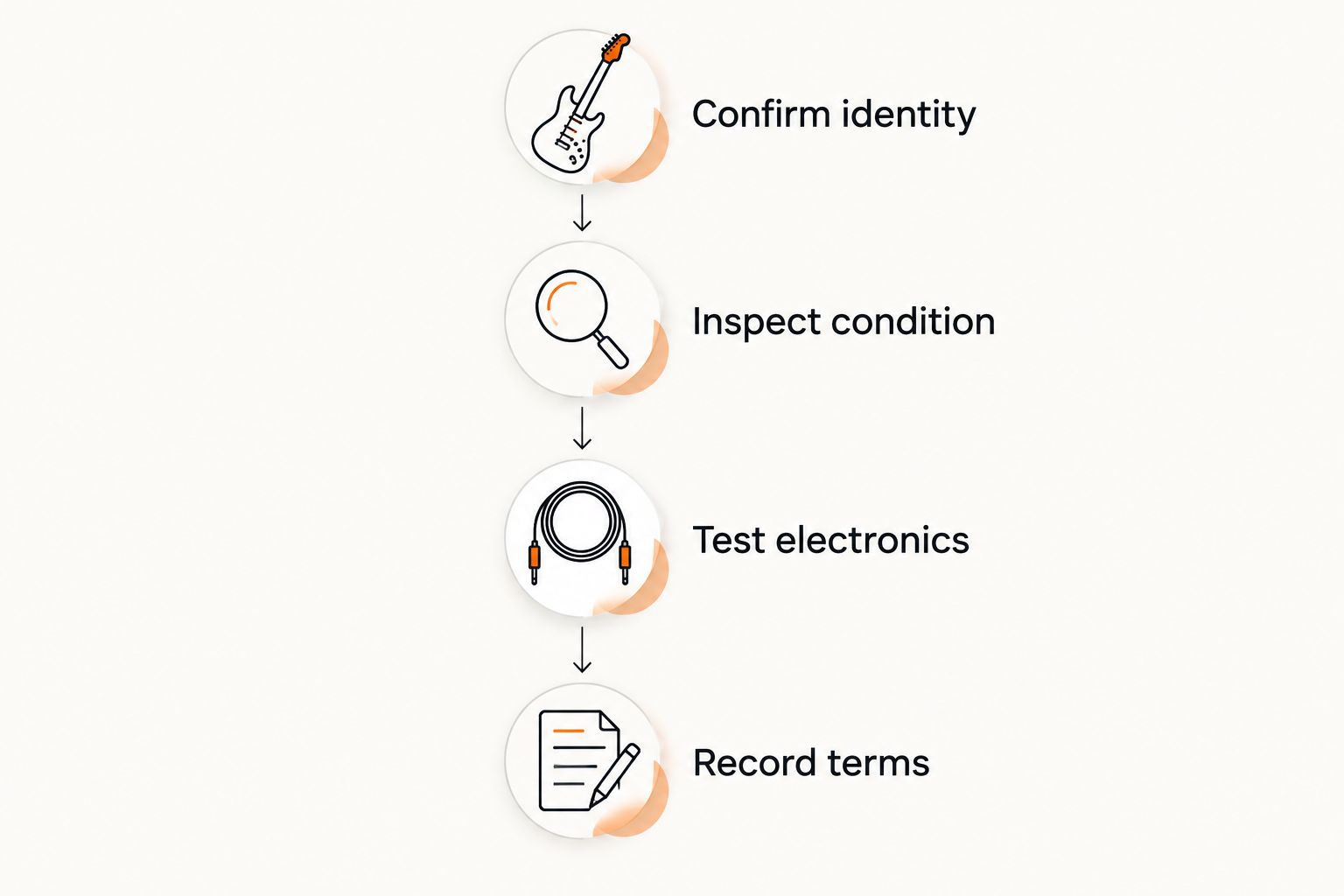
Check the guitar before you choose the checkout
Use this sequence for every site in your 2026 search. Save the answers with the listing so the instrument's description doesn't depend on memory.
Confirm identity
Ask for the exact model designation and clear photographs of identifying details. A serial number helps your research, but it isn't standalone proof of authenticity. For a vintage or unusually modified instrument, get a qualified specialist's assessment before committing.
Inspect condition
Request close-ups of the frets, headstock, neck joint, bridge and any damage. Ask whether cracks are finish-only or repaired structural damage, and request repair documentation where it exists.
Check whether the neck, pickups, tuners, bridge and controls are original or replacements. Read the guide to checking whether a used instrument listing is legitimate before sending payment.
Test electronics
Request a 60-second clean demonstration as an initial screening step, not proof that everything works. Ask the seller to switch through the pickup positions, turn the controls and show that the output jack maintains a signal.
For a hands-on test, play notes across the neck, including around the 12th fret. Listen for notes that choke out or buzz abnormally, and distinguish a noisy cable from a fault in the guitar.
Record terms
Confirm the included case or bag, collection arrangements, packing responsibility and the terms for reporting an undisclosed problem. Keep these answers in writing. Don't substitute a platform's reputation for the terms of your particular purchase.
A useful remote demonstration shows the guitar rather than burying it under effects. Ask for 2 separate clips if necessary: one for amplified sound and another for close-up condition details. That's a practical request, not a guarantee against hidden faults.
How the sites rank
This comparison ranks buying routes by music focus, inspection fit, seller accountability and transaction clarity. It doesn't award points for unverified inventory totals, assumed protections or a platform's popularity.
Reverb takes the overall starting-point slot because its focus matches dedicated gear shopping. The other recommendations solve different problems: a broader music community, a retailer relationship, auction buying or a local test. The strongest listing can still be on a different site from your preferred platform.
Which site should you choose?
Start with Reverb if you know the guitar you want and need a dedicated music-gear marketplace. Choose the retailer route if you prefer dealing with a business, or arrange a local inspection when feel and playability are your deciding factors.
For 2026, keep your decision simple: shortlist the site that fits your buying style, then reject listings that leave major questions unanswered. Don't talk yourself into an undocumented repair because the finish looks right.
FAQ
What's the best site to buy used electric guitars?
Reverb is the best starting point in this comparison for dedicated guitar shopping. Choose another route when you specifically want a retailer relationship, an auction format or an arranged local playing test.
Is OohYeah a place to buy used electric guitars?
OohYeah is a marketplace for buying and selling instruments and studio gear. It also connects musicians with music professionals and independent artists; check individual listings for the instrument details you need.
Should I buy a used electric guitar online or in person?
Buy in person when neck feel and a hands-on playing test are essential to your decision. For a remote purchase, request detailed photographs, an amplified demonstration and written transaction terms.
What photos should I request before buying a used guitar?
Request clear photos of the frets, headstock, neck joint, bridge, identifying details and any damage. Ask for additional close-ups wherever the description mentions a repair or modification.
Does a guitar serial number prove it's authentic?
No, a serial number alone doesn't prove a guitar is authentic. Check it alongside construction details, components and documentation, and use a qualified specialist for a purchase that needs expert authentication.
What should I test on a used electric guitar?
Test the pickups, selector switch, volume and tone controls, output jack and notes across the neck. Use a working cable and a clean amp setting so effects don't obscure problems.
Should I buy a modified electric guitar?
Buy a modified electric guitar only when you understand the changes and accept the instrument as described. Ask who performed the work, which components changed and whether any original parts are included.
One last thing
A setup and a repair aren't the same thing. Adjustable string height doesn't establish that a neck is healthy, and a seller's claim that a guitar “just needs a setup” isn't a diagnosis. Ask what symptom needs fixing. If nobody can explain it, get an assessment before buying—not after the guitar reaches your rehearsal room.