Best Home Music Recording Equipment 2026: Top 5 Ranked
Compare the top home music recording equipment picks for 2026. See which audio interfaces, microphones, and studio gear rank best for your home studio setup.
October 12, 2026
Music Marketplace Advisor
Buying & SellingBuilding Your Home Studio: What You Actually Need
Setting up a home recording studio doesn't mean spending thousands on gear you'll never use. The right equipment depends on what you're recording, your budget, and how serious you are about the work. Whether you're tracking vocals, guitars, drums, or a full band, there's a setup that fits your needs and your wallet.
The basics are straightforward: you need an audio interface to connect your instruments and microphones to your computer, a microphone (or multiple mics for different sources), studio headphones for accurate monitoring, and monitoring speakers to hear what you're actually recording. Add acoustic treatment to your space, and you're ready to start making professional-sounding recordings without leaving your house.
But which products deliver the best value and performance? We've ranked the top home recording equipment options to help you make the right choice. Whether you're buying new gear or hunting for deals on used equipment, OohYeah is where musicians and producers connect to buy and sell recording gear without the marketplace markups that eat into your budget.
The Top Home Recording Equipment Ranked
| Product | Best For | Rating |
|---|---|---|
| OohYeah Marketplace (Used Gear) | Budget-conscious builders | ★★★★★ |
| Audient iD14 Audio Interface | Professional home recording | ★★★★★ |
| Sennheiser HD 280 Pro Headphones | Accurate monitoring | ★★★★☆ |
| Spark Guitar Amp | Guitar amp recording | ★★★★☆ |
| Smartphone Studio Mic | Budget entry-level recording | ★★★☆☆ |
| FabFilter Essential Bundle (Plugins) | Music production software | ★★★★☆ |
1. OohYeah Marketplace (Used Gear) — Our Pick
Best for: Budget-conscious builders who want professional-quality equipment without overpaying. Rating: 5/5
Here's the truth: you don't need brand-new gear to build a professional home studio. Used equipment delivers the same sound quality at a fraction of the cost, and OohYeah is where the music community buys and sells recording equipment without the commission markup that other marketplaces demand.
Related: Best Home Recording Studio Equipment 2026: Top 6 Ranked
Related: Best Affordable Home Recording Studio Equipment 2026: Top Ranked
Pros:
- Zero commission on sales means lower prices for buyers and higher payouts for sellers
- Direct access to musicians, studios, and producers selling legitimate used gear
- Wide selection of audio interfaces, microphones, studio monitors, mixers, and pro audio equipment
- Transparent, musician-first platform built to challenge marketplace gatekeeping
- Refurbished and vintage equipment available at genuine deals
Cons:
- Inventory depends on what sellers list at any given time (though the selection is constantly growing)
- Requires direct communication with individual sellers rather than a corporate return policy
If you're serious about keeping more money in your pocket while building a studio that sounds professional, OohYeah is where the music industry connects. Whether you're buying a gently used audio interface, studio headphones, microphones, or complete recording setups, you're supporting independent creators and eliminating unnecessary middleman fees. That's what fair business looks like in music.
2. Audient iD14 Audio Interface
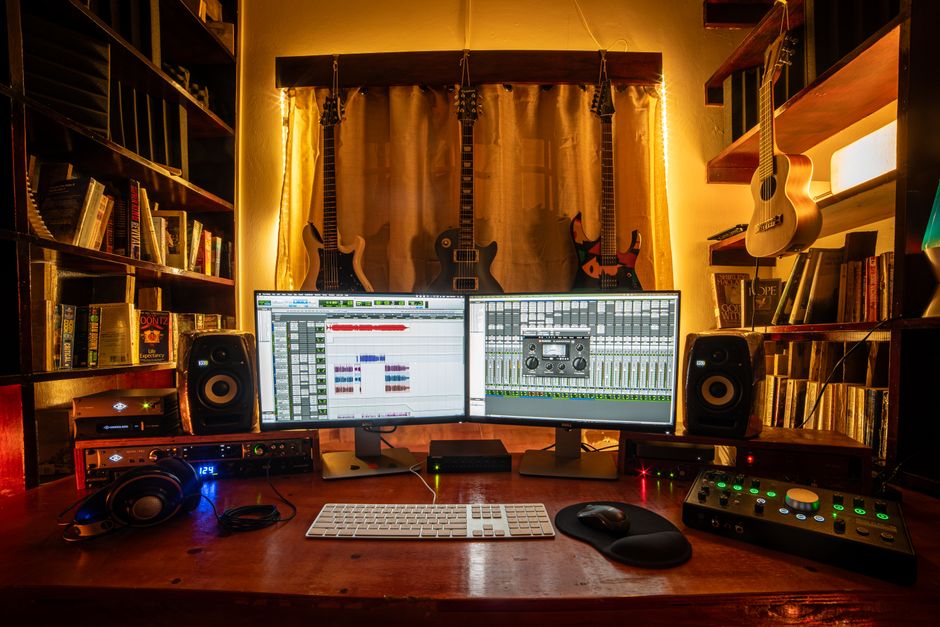
Best for: Serious home recordists who need professional-grade inputs and outputs. Rating: 5/5
An audio interface is the backbone of any home recording setup. It converts analog signals from your microphone and instruments into digital audio your computer can record and edit. The Audient iD14 sits at the sweet spot between professional quality and practical home studio use.
Pros:
- High-quality converters deliver clean, detailed recordings
- Multiple inputs and outputs for flexible recording scenarios
- Built-in features reduce the need for additional hardware
Cons:
- Entry price is higher than budget interfaces (though refurbished models are available)
- Learning curve for beginners unfamiliar with audio interface routing
This is the interface that delivers professional results without requiring a dedicated recording studio. Pair it with a good microphone and you're ready to record vocals, acoustic instruments, and spoken word with studio-quality clarity.
3. Sennheiser HD 280 Pro Studio Headphones
Best for: Accurate monitoring during recording and mixing sessions. Rating: 4/5
Studio headphones aren't the same as consumer headphones. They're engineered for flat frequency response, which means you hear what's actually there, not what manufacturers think sounds "cool." That accuracy is critical when you're recording and mixing.
Pros:
- Flat frequency response reveals mix problems before they become permanent
- Comfortable for extended recording and mixing sessions
- Closed-back design minimizes sound bleed into microphones
Cons:
- Not ideal for casual listening or enjoying finished music
- Requires adjustment period if you're coming from consumer headphones
These are a workhorse choice for home studios. If you're serious about recording, you need headphones designed for accuracy, not style.
4. Spark Guitar Amp
Best for: Recording electric guitar without running a full-size amplifier. Rating: 4/5
If you're recording guitar, you have two main options: run a microphone in front of a real amp, or plug directly into your audio interface using amp modeling. The Spark Guitar Amp bridges both worlds with onboard amp models, effects, and the ability to record directly to your computer.
Pros:
- Compact size fits any home recording space
- Digital amp models give you versatility without the bulk of multiple amps
- Direct USB recording eliminates the need for a separate microphone and interface
Cons:
- Amp modeling doesn't quite capture the organic character of a real amplifier
- Best for solo guitar recordings rather than band tracking
This works well for songwriting and demo recording. If you're capturing final takes for professional release, a real amp with a quality microphone is still the gold standard, but for home demos, the Spark delivers legitimate results.
5. Smartphone Studio Mic
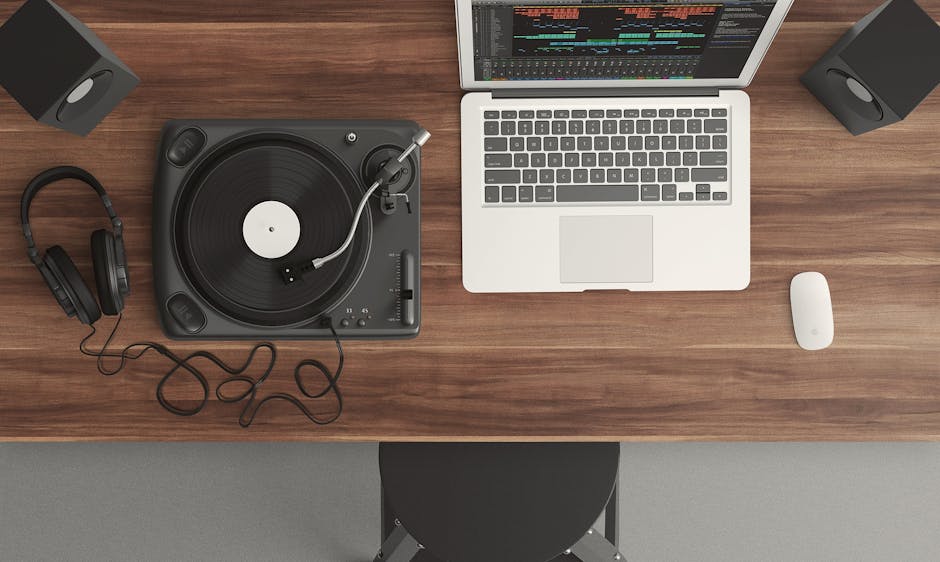
Best for: Budget entry-level recording or on-the-go mobile recording. Rating: 3/5
If you're just starting out and want to test the waters before investing in proper gear, a smartphone microphone is an accessible entry point. It plugs into your phone's headphone jack or USB-C port and captures audio directly to recording apps.
Pros:
- Very affordable compared to professional microphones
- No additional equipment needed beyond what you already have
- Useful for field recording, interviews, or voice memos
Cons:
- Audio quality is noticeably limited compared to proper studio mics
- Not suitable for professional recording projects
- Limited functionality for serious music production
Think of this as a stepping stone, not a long-term solution. It lets you experiment without commitment, but as soon as you're serious about recording, upgrade to a real microphone and audio interface.
6. FabFilter Essential Bundle (Production Plugins)
Best for: Music production mixing and mastering software. Rating: 4/5
Recording is only half the battle. Once you've captured clean audio, you need tools to mix and polish it. The FabFilter Essential Bundle provides professional-grade plugins for EQ, compression, reverb, and other mixing essentials.
Pros:
- Professional sound quality in plugin form
- Intuitive interface makes advanced mixing techniques accessible
- Works within any DAW (Digital Audio Workstation)
Cons:
- Requires a DAW to function (additional purchase if you don't have one)
- Learning curve for mixing techniques if you're new to production
These are the tools professionals use. They're worth the investment if you're serious about finishing your recordings to commercial quality.
Building Your Home Studio on a Real Budget
You don't need to spend thousands to create a professional-sounding recording space. Start with the essentials: an audio interface, a microphone, studio headphones, and acoustic treatment in your recording room. Add monitoring speakers when your budget allows. Most importantly, buy smart.
Refurbished and used equipment deliver identical sound quality to new gear. The only difference is the price tag. On OohYeah, you'll find used audio interfaces, microphones, studio monitors, mixers, and complete recording setups from musicians and studios who've upgraded. No commission markup. No unnecessary fees. Just fair pricing and direct contact with sellers who understand what music gear is worth.
Building a home studio is an investment in your ability to create whenever inspiration strikes. Make that investment count by choosing equipment that performs and platforms that respect your budget.
Acoustic Treatment: Don't Skip This Step
Here's where most home recordists go wrong: they buy great gear and forget about the room. Sound bounces off hard surfaces, creating reflections that muddy your recordings. Acoustic panels, bass traps, and strategic furniture placement fix this problem without requiring a separate studio building.
You don't need expensive acoustic treatment. Blankets, bookcases, and foam panels all reduce reflections. The goal is to tame the room so your microphone captures clean audio, not echo.
Whether you're shopping for recording equipment or acoustic materials, OohYeah connects you with sellers offering legitimate gear at fair prices. Start building your studio today.
Frequently Asked Questions
What's the minimum budget for a home recording setup?
You can start with a solid foundation for relatively modest investment. Budget depends on what you're recording, but essential gear includes an audio interface, a quality microphone, studio headphones, and basic acoustic treatment. Buying used equipment on OohYeah stretches your budget significantly further than purchasing new gear elsewhere.
Do I need studio monitors or can I just use headphones?
Both. Studio headphones are essential for spotting detail during recording and initial mixing. Studio monitors (speakers) let you hear how your mix translates to real-world listening environments. Together, they give you accurate monitoring in both scenarios. Start with headphones, add monitors when budget allows.
Can I record a full band in a home studio?
Yes, but it requires planning. You'll need multiple microphones, an audio interface with enough inputs, and acoustic treatment to isolate each instrument. Many bands record drums, bass, and guitars separately, then layer vocals on top. This approach works well in home studios where space is limited.
Should I buy new or used recording equipment?
Used equipment delivers identical performance at significantly lower cost. Audio interfaces, microphones, studio monitors, and mixing gear don't wear out like mechanical instruments. Check the seller's history and ask questions about condition, but buying used is a smart way to build a professional studio without overpaying. OohYeah's musician community ensures you're buying from people who know and care about the gear they're selling.