What is sync licensing? A guide to getting your music placed
What is sync licensing? Discover what is sync licensing and how music gets placed in film, TV, ads, and games to boost revenue.
October 30, 2025
Music Marketplace Advisor
Buying & SellingEver heard a song in a movie or a commercial and thought, "That's the perfect track for this scene"? That's sync licensing in action.
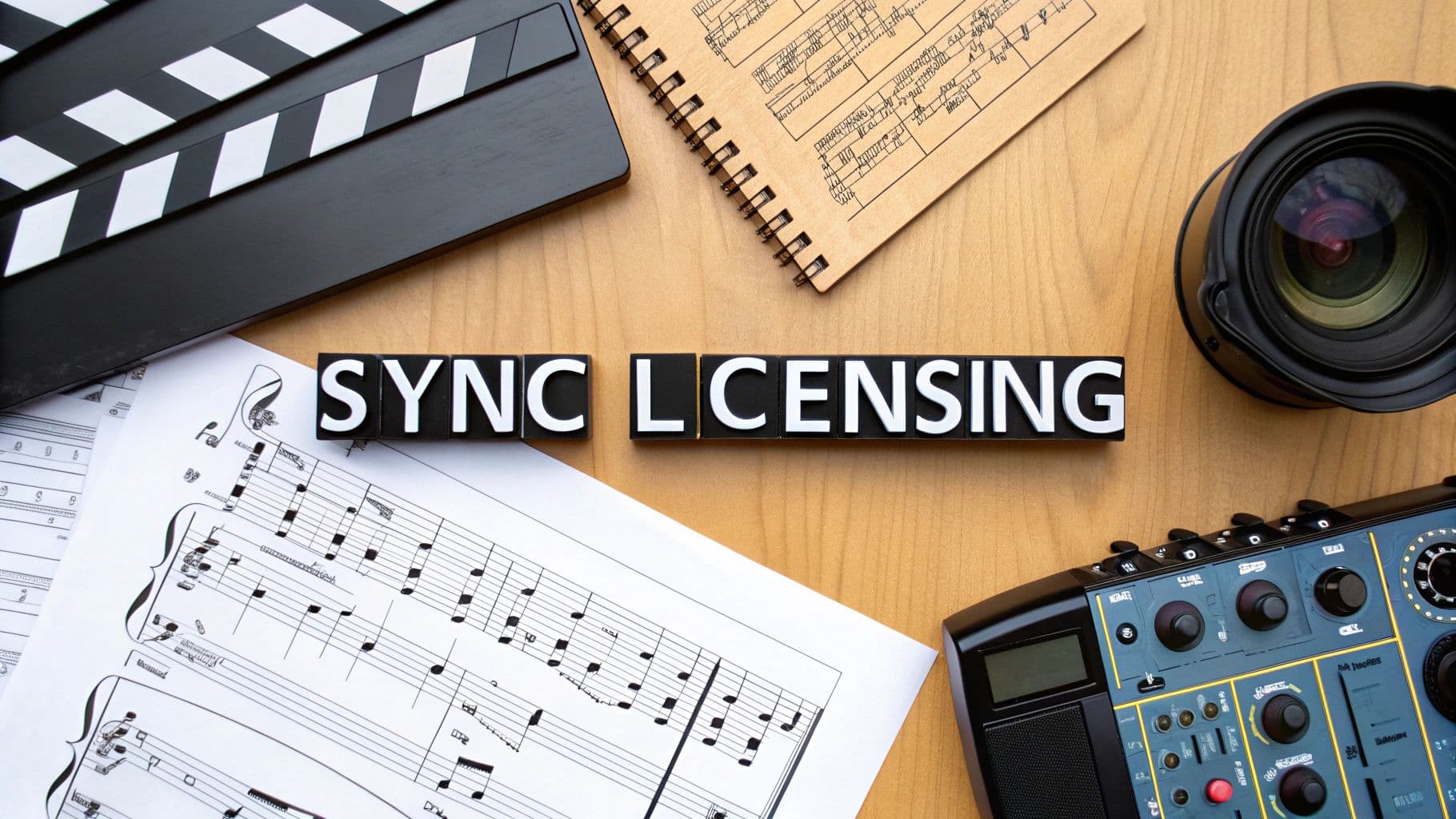
At its core, sync licensing—short for synchronization licensing—is all about getting the legal green light to pair a piece of music with some form of visual media. It’s the process that ensures artists, songwriters, and publishers get paid when their work shows up in films, TV series, advertisements, video games, or even a viral TikTok video.
Decoding Sync Licensing: A Simple Guide
Let's break it down with an analogy. Imagine a filmmaker needs the perfect house to shoot a pivotal scene. They can't just walk in and start filming; they have to negotiate with the homeowner for permission and pay a fee to use the location for a set period.
A sync license works the same way. The song is the "house," and the production company pays the rights holder—the "homeowner"—for the right to feature it. The agreement, or license, spells out exactly how, where, and for how long they can use the music. Simply put, a creator pays you a fee to legally "synchronize" your music with their visuals.
The Two Sides of Music Copyright
To really get sync, you have to understand that every recorded song has two distinct copyrights, and you need permission from both sides to secure a license.
- The Master Recording: This is the actual sound recording itself—the "master" track you hear on Spotify or the radio. This right is typically owned by the recording artist or their record label.
- The Composition: This refers to the underlying song—the melody, lyrics, and arrangement. These rights belong to the songwriter and are usually managed by a music publisher.
If you wrote and recorded your song entirely on your own and haven't signed any deals, you own both sides. But if you have a publisher or are signed to a label, you'll be co-owning these rights with them. Getting a sync placement means the production company must clear the deal with everyone who holds a piece of the copyright pie.
The Core Components of a Sync License
A sync agreement isn't just a simple "yes" or "no." It’s a detailed contract that outlines the entire scope of the deal. Here's a quick look at the moving parts.
| Component | What It Means | Who Is Involved |
|---|---|---|
| Sync Fee | The upfront, one-time payment for the right to use the song. | Music User (e.g., film studio) pays the Rights Holders (artist, label, publisher). |
| Usage Term | How long the music can be used in the project (e.g., 5 years, in perpetuity). | Negotiated between the Music User and Rights Holders. |
| Territory | The geographical regions where the media can be shown (e.g., USA only, Worldwide). | Defined in the agreement to match the project's distribution plan. |
| Media | The specific type of media the license covers (e.g., TV, film, web, video games). | Specified by the Music User, approved by the Rights Holders. |
These elements are all negotiable, and the final sync fee can vary wildly depending on the scale and budget of the project.
Why Sync Licensing Is a Game-Changer
At its heart, a sync deal is a straightforward exchange. A music supervisor, ad agency, or filmmaker wants your track to make their project better. To do it legally, they pay an upfront sync fee, which goes directly to the rights holders.
The beauty of sync is that it creates a new revenue stream for artists outside of traditional sales or streaming. One placement can introduce your music to a massive new audience and provide significant income.
This is a fundamental part of the modern music business. For many independent artists, a well-placed sync can be a career-defining moment. Getting a solid handle on understanding music licensing is the first, most critical step toward unlocking these powerful opportunities. Without it, you’re just navigating in the dark.
How a Sync Licensing Deal Actually Unfolds
So, how does a song actually get from your hard drive onto the screen in a hit show? It all boils down to one fundamental concept: every song is a two-sided coin. For a sync deal to go through, both sides of that coin—the master recording and the composition—have to be cleared. No exceptions.
Let’s walk through a real-world scenario. A music supervisor for a new streaming series finds the perfect song for a huge, dramatic closing scene. Their work has just begun. Now they have to put on their detective hat and track down everyone who owns a piece of that song to get permission. This means securing two separate licenses.
- The Master License: This is for the actual recording you hear. The supervisor needs to contact whoever owns that specific recording—usually the artist or their record label—and negotiate a fee to use it.
- The Sync License: This license is for the song itself—the melody and the lyrics. For this, they have to find the songwriter's publisher and negotiate a separate fee for the right to use the composition.
Only when both of these licenses are signed, sealed, and delivered can the song legally be used. This is exactly why being a “one-stop shop,” where you own both the recording and the composition, gives you a massive leg up in the sync world. It just makes life easier for everyone.
The Key Players in the Sync Ecosystem
Getting a song placed isn't just a simple back-and-forth. It’s a dance between a few key professionals who bridge the gap between music and media. The main people you'll run into are music supervisors, sync agents, and publishers.
A music supervisor is the creative mind hired by the film studio or production company. They’re tasked with finding, selecting, and licensing every single piece of music for a project. They work hand-in-hand with the director to find tracks that truly elevate the story. Think of them as the gatekeepers.
Since supervisors get absolutely bombarded with music submissions, they tend to rely on trusted sources. That’s where a sync agent becomes invaluable. Sync agents spend their time building solid relationships with supervisors and pitching them pre-cleared music from a curated roster of artists. They’re your champion, getting your music in front of the right people. Publishers often play a very similar role, but for the composition side of things.
From Discovery to Final Placement
The process usually kicks off when a supervisor gets a creative brief. They need a song that fits a specific mood, a certain tempo, or has just the right lyrical theme. They might dig through their own libraries, send out a call to their sync agent contacts, or browse through music licensing platforms.
Once they land on a track that feels right, they reach out to the rights holders to get a quote. This is where the negotiation starts. The final fee depends on a ton of different factors, and you can get a better idea of how much a sync license is worth in our detailed guide. Once the fee, term, territory, and type of media are all agreed upon, the lawyers get to work drafting the contracts. As soon as the ink is dry, the deal is done, and your music is officially set for placement.
A successful sync deal is more than just a transaction; it's a carefully coordinated effort between creators, supervisors, and rights holders to bring a creative vision to life.
This whole process really underscores just how important sync has become financially. In fact, global synchronization revenues recently grew for a fourth straight year, hitting a whopping $650 million. In an industry where streaming payouts can feel frustratingly low, this market offers a vital and much more stable source of income for artists. For a deeper dive, you can explore the latest data on global music revenues and trends to see the full picture.
Exploring Different Types of Sync Placements
When it comes to sync licensing, not all deals are cut from the same cloth. The opportunities are incredibly diverse—your track could end up as subtle background music in an indie film or become the anthem for a massive global advertising campaign. Getting a handle on these differences is crucial for setting realistic goals and knowing which opportunities are right for you.
The value of any placement really boils down to its scope, which is spelled out by a few critical terms in every sync agreement. These terms are what ultimately shape the fee and the overall impact of the deal.
- Term: This is the lifespan of the license. It could be as short as one year or "in perpetuity," which means forever.
- Territory: This defines where in the world the media can be shown. A license for just North America is going to be a lot more affordable than one that covers the entire globe.
- Exclusivity: This determines if the production gets to be the only one using your song in a specific context (like, say, no other car commercials can use it) for a set amount of time.
A placement in a major motion picture, for example, usually comes with a hefty upfront fee and opens you up to a gigantic new audience. On the flip side, a song used in a small, independent film might offer a more modest payment but can provide some serious artistic credibility and connect you with a really passionate fanbase.
Breaking Down the Major Placement Categories
TV shows are another huge playground for sync, with fees that can be all over the map. If your song is featured prominently during a pivotal scene in a hit streaming series, you could see a high price tag, often from $5,000 to over $20,000 for a known artist. Naturally, if it’s just playing quietly in the background of a diner scene, the fee will be on the lower end.
Commercials are often the holy grail of sync placements. A national or global ad campaign for a big-name brand can easily pull in fees from $20,000 to well over $150,000. This is especially true if the license is for a long term and covers multiple countries. It's not just about one-off uses, either; understanding concepts like sonic branding shows how music can become deeply embedded in a brand's very identity.
Video games are a booming market for sync licensing. Getting a track into a blockbuster title like Grand Theft Auto or FIFA can introduce your music to millions of players around the world. Fees here typically range from $2,000 to $10,000 or more, depending on the game's budget and how your song is used.
A sync deal's value is a direct reflection of its reach. The more people who will see and hear the project, the more the license is worth.
From the initial creative search to the final legal paperwork, getting a sync placement is a journey with several key steps.
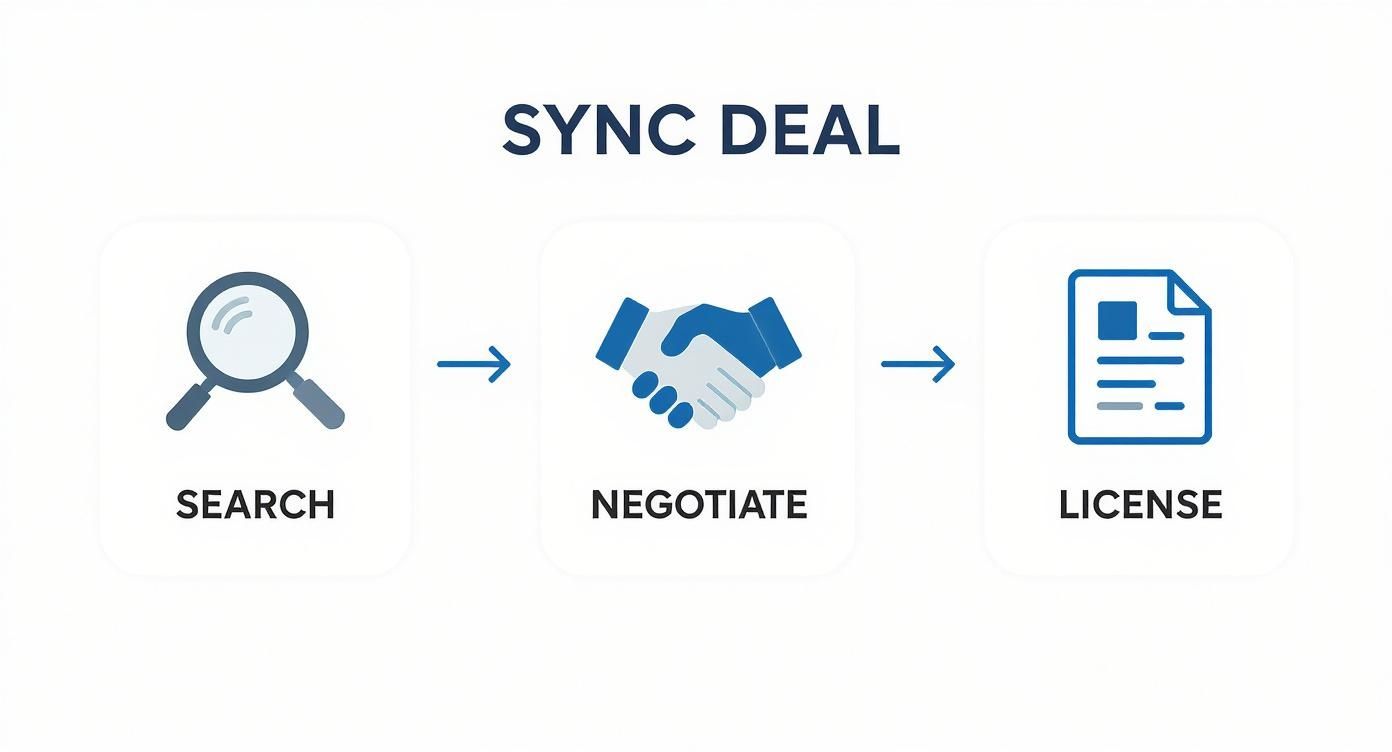
This just goes to show that a successful placement isn’t a simple transaction. It’s a process that involves creative discovery, sharp negotiation, and careful legal review to get it over the finish line.
Comparing Sync Fee Ranges by Media Type
To give you a clearer picture of how these factors shake out financially, it helps to see the numbers side-by-side. Sync fees aren't just pulled out of a hat; they're calculated based on the project’s scale, budget, and intended audience.
| Media Type | Typical Fee Range (USD) | Key Factors Influencing Price |
|---|---|---|
| Major Motion Picture | $15,000 – $60,000+ | Worldwide territory, in-context vs. trailer use, perpetuity term. |
| TV Commercial (National) | $20,000 – $150,000+ | Brand recognition, term length (e.g., 1-year vs. 5-year), exclusivity. |
| Hit TV Show (Streaming/Network) | $5,000 – $20,000 | Prominence of use (e.g., main title vs. background), series popularity. |
| Independent Film | $500 – $5,000 | Limited budget, festival-only rights vs. full distribution. |
| Blockbuster Video Game | $2,000 – $10,000+ | In-game radio vs. menu screen, game's sales projections. |
| Student Film / Low-Budget Web | $50 – $500 | Non-commercial use, very limited term and territory. |
As you can see, the potential earnings can vary wildly. A song used in a student film, for instance, might only command a few hundred dollars because its term is short, its territory is limited to film festivals, and its audience is small.
Contrast that with a track chosen for the trailer of a major Hollywood blockbuster. That kind of placement could easily earn $10,000 to $80,000 thanks to its global reach and high-impact promotion. Each opportunity is its own unique puzzle, and understanding the variables is the first step toward negotiating a great deal.
How to Get Your Music Ready for Sync Licensing
 Landing a sync placement isn't just about writing a killer song—it's about being a pro. Music supervisors work on insanely tight deadlines, and they need music that’s high-quality, legally clear, and ready to drop into a project at a moment's notice.
Think of it like getting a house ready to sell. You'd fix the leaky faucet, get the deed in order, and stage it perfectly before any buyer walks through the door. The same goes for your music. Getting it "sync-ready" means handling all the technical and administrative details upfront, making it as easy as possible for a supervisor to say "yes."
Your Essential Pre-Pitch Checklist
Before you dream of sending your music to a sync agent or music supervisor, your catalog has to be in perfect shape. This isn't just busywork; it's the foundation that can make or break a career-changing placement. A supervisor who hits a roadblock—whether it’s a missing file or a legal question—won't wait around. They'll just move on.
Here’s what you absolutely need to have in order:
- High-Quality Masters and Instrumentals: Your tracks need to be broadcast-quality, fully mixed, and professionally mastered. Just as important, every song with vocals must have a corresponding instrumental version. Dialogue is king in film and TV, and an instrumental gives editors the freedom to tuck your music under spoken lines without a clash.
- Clean Versions Are a Must: If your lyrics have any profanity, you need "clean" edits. Network television has strict rules, and having these alternative versions on hand makes your music instantly viable for a much broader range of projects.
- Accurate and Complete Metadata: Metadata is your song's digital business card. It includes everything from songwriter names and publisher info to the release year and your contact details. Sending out a track without proper metadata is like handing someone a blank business card—it leads nowhere.
Getting your administrative house in order isn't the glamorous part of being an artist, but in the world of sync licensing, it's what separates professionals from hobbyists. A well-organized catalog is a sign that you are ready for business.
Navigating Copyrights and Royalties
Beyond having the right files, you need to have your legal ownership locked down. The biggest nightmare for a music supervisor is a potential lawsuit, so they will only work with artists who can guarantee their music is 100% cleared.
This means knowing exactly who owns what. If you co-wrote a song, you need a split sheet—a simple agreement signed by all collaborators that clearly defines the ownership percentages for both the master recording and the composition. Trying to figure this out after an offer comes in is a recipe for disaster and will almost certainly kill the deal.
You also need to make sure every writer is registered with a Performing Rights Organization (PRO) like ASCAP, BMI, or SESAC. This is how you and your co-writers collect performance royalties, which are the backend payments you earn every time the TV show, film, or ad featuring your song is broadcast. If you’re not registered, you’re literally leaving money on the table. For a deeper dive, explore our guide on how to sell your music and manage your rights effectively.
Finding the Right Path to Placement
Once your music is ready, how do you get it into the right hands? Pitching directly to music supervisors is a tough nut to crack. Instead, your goal should be to connect with a sync agent.
These are the industry pros who have built relationships and trust with supervisors. They act as a critical bridge, vetting music from independent artists and pitching it for projects where it’s a perfect fit. To get their attention, you need to present your work professionally. Learning how to build a portfolio website is a great first step. A clean, well-organized site shows you're serious about sync and makes it easy for agents to hear your best work and get in touch.
The Future of Sync and What It Means for Artists
https://www.youtube.com/embed/_eQQyQ_UEc0
The sync licensing world doesn't stand still. It's a living, breathing part of the media industry, constantly shifting with our habits and technology. If you're an artist, looking at where sync is headed is just as important as understanding where it is today. You want your music ready for tomorrow's opportunities, not just today's.
Right now, two massive waves are reshaping the landscape: artificial intelligence and the explosion of user-generated content. Both are creating entirely new playgrounds for your music to get placed. Technology is changing everything from how a music supervisor finds the perfect track to how media itself is made, bringing both exciting new possibilities and a few new hurdles for artists to clear.
The Rise of AI and Dynamic Soundtracks
Artificial intelligence is already becoming a go-to tool for music discovery. New algorithms can tear through thousands of songs, analyzing them for a specific mood, tempo, or instrumentation that perfectly matches a creative brief. This is actually great news for independent artists, as it helps level the playing field and can get your music in front of supervisors who might have never found it otherwise.
But discovery is just the beginning. AI is also paving the way for truly dynamic media. Think about a video game where the soundtrack shifts in real-time based on what you're doing—ramping up the intensity during a boss battle and then quieting down as you explore a peaceful village. This isn't your standard sync deal. It requires a whole new approach where you're not just licensing a single track, but providing the musical building blocks (stems, loops, alternate takes) that can be reassembled on the fly.
Artists who get ahead of this by preparing their tracks for this kind of use will have a serious edge.
The future of sync isn't just about dropping a finished song into a scene. It's about providing the musical ingredients for interactive, personalized experiences that forge a much deeper connection between the sound and the moment.
Micro-Licensing in the Creator Economy
Platforms like TikTok, YouTube Shorts, and Instagram Reels have kicked off an insatiable demand for music. The licensing model here, however, is a completely different beast. Instead of one big, high-value placement, the creator economy runs on micro-licensing—millions of tiny uses by everyday creators.
While one person using your song in their video might only net you a fraction of a cent, the sheer volume can add up to a significant and steady stream of income.
This trend is also a massive discovery engine. How many times has a song blown up on TikTok and then, a few weeks later, you hear it in a major TV commercial? It happens all the time. Music supervisors are watching these platforms closely, and a viral hit is often their first stop when looking for a track that already has a built-in audience.
The road ahead for sync is tied directly to these trends. As AI-powered music creation and direct-to-fan platforms become more common, even more doors will open, particularly in interactive media like gaming and VR. You can find more music industry predictions and trends on bridge.audio.
For any artist looking to succeed, simply making great music isn't enough anymore. You have to adapt your strategy. Keeping an eye on these technological shifts and getting a handle on the creator economy is no longer just a good idea—it’s absolutely essential for building a career in the new world of sync.
Common Sync Licensing Questions Answered
If you're an artist, diving into the world of sync licensing can feel a bit like learning a new language. A lot of the same questions pop up time and time again. Let's break down some of the most common ones to clear the air.
Do I Really Need a Publisher to Get a Sync Deal?
This is probably the first question most artists ask. The short answer is no, it's not strictly required. But the long answer is, it helps—a lot.
Think of a publisher or a dedicated sync agent as your insider connection. They've spent years building relationships with the very music supervisors you're trying to reach. For an independent artist, they become your champion, getting your music past the gatekeepers and into the right hands.
While you can certainly pitch your music directly, especially for smaller indie projects, your chances skyrocket when you have a representative who's already on a first-name basis with the decision-makers.
How Much Money Can One Sync Placement Make?
Everyone wants to know about the money, and for good reason! But there's no magic number. A sync fee can range from a few hundred dollars for a student film to a massive, six-figure payday for a Super Bowl commercial. It all comes down to the negotiation.
So, what determines the final fee? A few key things:
- Media Type: A blockbuster film has a much bigger budget than a regional TV spot.
- Usage: Is your song the main title theme, or is it quiet background music in one short scene? Prominence matters.
- Term: How long will they use the song? A one-year license is cheaper than one that lasts forever ("in perpetuity").
- Territory: A global ad campaign will pay significantly more than a license for just one country.
Every deal is its own unique puzzle, with the fee reflecting the project's scale, reach, and how your music fits into it.
Understanding Sync Fees vs. Royalties
This is a critical point that trips up a lot of newcomers. The initial sync fee and the backend royalties are two completely different income streams from the same placement. Getting this right means you don't leave money on the table.
The sync fee is the upfront, one-time payment for the license itself. But the performance royalties are the ongoing payments you get every time the show, movie, or ad is broadcast on TV.
These performance royalties are tracked by Performing Rights Organizations (PROs) like ASCAP, BMI, or SESAC. The PRO collects that money from the network and pays it directly to the songwriter and the publisher. If your songs aren't registered with a PRO, you're missing out on this entire revenue stream.
Ready to take control of your music career? OohYeah provides the tools you need to sell, stream, and market your work directly to fans, all in one place. Start building your future at https://oohyeah.app.