What is SoundCloud? Explore Its Features & Artist Impact
Curious what is SoundCloud? Discover how it empowers independent artists. Our guide covers features, monetization, and why it's crucial for music discovery.
March 29, 2026
Music Marketplace Advisor
Buying & SellingSo, what exactly is SoundCloud? At its simplest, it's a massive online platform where anyone can upload, share, and listen to audio. But that description barely scratches the surface. Think of it less like a digital record store and more like a social network built entirely around sound, connecting artists directly with their fans and the wider music community.
What Makes SoundCloud a Digital Open Mic
Imagine a global open mic night that runs 24/7. Anyone, from a producer in their bedroom testing out a new beat to a world-famous DJ dropping an exclusive mix, can step up to the virtual microphone and instantly share their creation. That’s the real spirit of SoundCloud. It isn’t just another app for playing music; it's a living, breathing ecosystem designed for discovery and driven by creators.
This "open mic" idea is the best way to understand it. While many other platforms are geared toward polished, final-cut releases, SoundCloud is where the raw, the experimental, and the brand-new can thrive. It’s the spot where artists feel free to upload demos, works-in-progress, podcasts, and unofficial remixes, getting immediate feedback from a genuinely engaged audience.
A Creator-First Origin Story
Founded back in 2007 by Alexander Ljung and Eric Wahlforss, SoundCloud didn't start as a streaming service for the masses. It was originally built as a practical tool for musicians to share audio files with each other—almost like a Dropbox designed specifically for sound. That creator-first DNA is still at the heart of the platform today and explains why it feels so different. It wasn't built for just listening; it was built for creating and collaborating.
That initial focus allowed it to grow into something much bigger: a launchpad for entire genres and one of the most important scouting grounds for new talent. Many artists who are now household names—like Post Malone, Billie Eilish, and Chance the Rapper—got their first real break by uploading tracks and building a following right on the platform.
At its core, SoundCloud is all about celebrating the unfiltered journey of a track, from a rough idea to a community-driven hit. It’s a space where an artist can test the waters, get instant feedback via timed comments on the waveform, and build momentum from the ground up.
The Scale of Its Influence
The platform's impact isn't just a few success stories; the numbers tell a powerful story. SoundCloud remains one of the world's top destinations for music discovery, with around 140 million registered users who have collectively uploaded an incredible 375 million tracks to date. This enormous library isn't just a static archive; it's a living collection of emerging sounds that artists often use as a testing ground before a bigger release.

This dedication to new and undiscovered music is what truly makes SoundCloud special. It has become an essential stop for A&R scouts, music bloggers, and die-hard fans who want to hear what's next before it ever hits the mainstream. For any artist today, understanding why music streaming platforms are crucial for exposure is key, and SoundCloud's unique blend of social networking and audio hosting makes it a powerful part of that equation.
SoundCloud vs Traditional Streaming Services
To really grasp SoundCloud's unique role, it helps to see how it stacks up against more conventional streaming services. While they might seem similar on the surface, their core purpose and user experience are fundamentally different.
| Aspect | SoundCloud | Traditional Streaming Services |
|---|---|---|
| Primary Focus | Creator uploads, community interaction, and music discovery. | Polished, licensed music from established labels and artists. |
| Content Library | User-generated content: demos, remixes, podcasts, DJ sets, original tracks. | Curated catalogs of officially released albums and singles. |
| Main Goal for Artists | Building a community, getting feedback, and gaining initial traction. | Monetizing official releases and reaching a broad, passive audience. |
| Main Goal for Listeners | Discovering new and emerging artists and sounds before they go mainstream. | Listening to favorite, well-known artists and curated playlists. |
Ultimately, services like Spotify and Apple Music are like massive, perfectly organized digital record stores. SoundCloud, on the other hand, is the sprawling, energetic, and sometimes chaotic workshop where the music of tomorrow is being made today.
The Core Features That Empower Creators and Fans
To really get what SoundCloud is all about, you have to look past the streaming app on your phone and dig into the tools that make the whole thing tick. These aren't just a random list of functions; they’re the nuts and bolts of an ecosystem built to connect artists directly with the people who find and fall in love with their music. At its core, the platform’s magic is how it turns the simple act of uploading a song into a living, breathing conversation.

It all starts with SoundCloud's famously open-door policy for audio. Unlike a lot of other places that have strict limits, SoundCloud lets you upload high-quality audio files like WAV or AIFF. This means the sound you painstakingly mixed in the studio is exactly what your listeners will hear.
From there, you can add all the crucial details: album art, genre tags, and a good description to help people find your track. You also get to decide if a song is public for everyone or kept private—a perfect feature for sharing works-in-progress with your band, a label, or a handful of superfans.
The Iconic Waveform Player
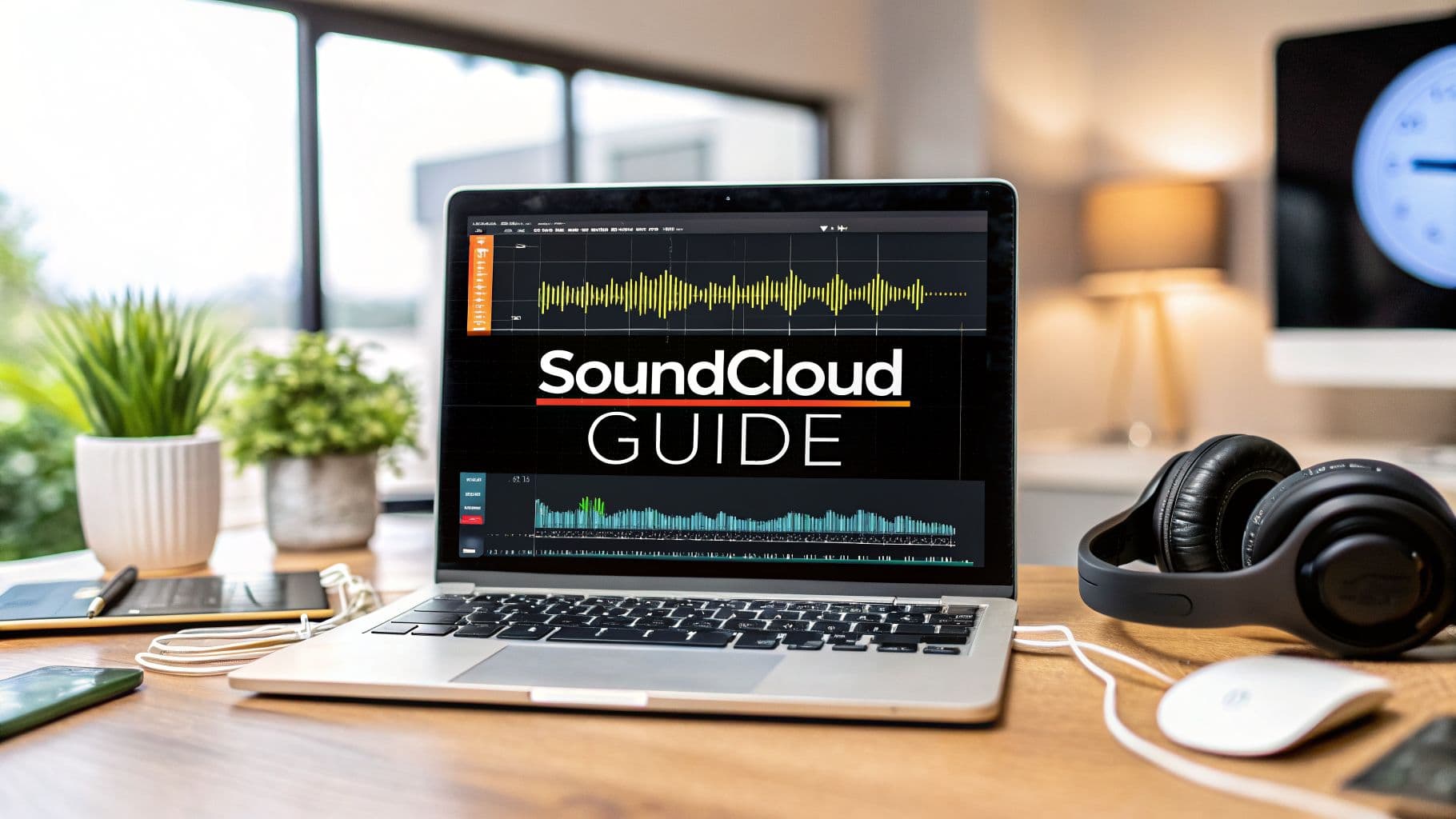
The most instantly recognizable part of SoundCloud has to be its visual waveform player. This is so much more than a progress bar; it’s an interactive map of the track itself. As the music plays, the waveform scrolls by, but its real power comes from the timed comments.
Listeners can click on any exact moment—that perfect bass drop, a clever lyric, a screaming guitar solo—and leave a comment that pops up right at that spot. This simple feature turns passive listening into a dynamic, social event.
This essentially creates a real-time focus group for every track. An artist can see exactly which parts of their song resonate most with their audience, providing direct, pinpoint feedback that is invaluable for creative growth.
Instead of wading through generic comments, artists get a detailed blueprint of how people are reacting to their music in real time. This direct feedback loop is one of the main reasons so many producers and songwriters use the platform to road-test new material.
A Social Hub for Artists and Fans
SoundCloud was built from day one to be a social network for sound. This isn't an afterthought; it's woven into every part of the experience. It transforms an artist's profile from a static portfolio into a dynamic community hub, all driven by a few key interactions:
- Likes: The simplest nod of approval. A "like" shows you appreciate a track and saves it to your personal collection for later.
- Reposts: Think of this as the "share" button of the SoundCloud world. When someone reposts your track, it shows up on their profile for all their followers to see. A single repost from an influential curator can make a new song go viral overnight.
- Direct Messaging: Artists and fans can connect privately, which helps build a much stronger, personal bond. It's the go-to channel for collaboration requests, booking inquiries, or just for a fan to say how much a song meant to them.
Mastering these tools is essential for any artist trying to build a real fanbase. For those ready to level up, learning how to attract fans to your music profiles can turn these social features into a serious growth machine.
SoundCloud for Artists Monetization and Analytics
Once you're ready to get serious, the platform offers "SoundCloud for Artists," a suite of premium services focused on monetization and deep analytics. With a Next Pro subscription, creators can distribute their music to other major streaming services, earn money from plays on SoundCloud itself, and unlock a dashboard of detailed listener data.
This dashboard tells you who is listening, where they are, and which tracks are getting the most traction. For any artist trying to build a career, this data is gold. It helps you fine-tune your marketing, plan tours, and truly understand your audience.
Even if you're just starting out with audio production, checking out the best apps for creating podcasts can offer great insights into the kind of tools modern creators have at their disposal. From that first demo upload to analyzing fan demographics, these features show what SoundCloud is at its best: a platform designed to support a song from its first spark of an idea to its life out in the world.
Who Actually Uses SoundCloud

While SoundCloud boasts millions of users, you can't really paint them all with the same brush. The platform’s real magic isn’t just in its numbers, but in the specific, passionate communities that have carved out their own spaces there. If you want to get what SoundCloud is all about, you need to know who these people are and what they're doing on the platform.
It's not just about passive listening; it's an active scene. From musicians uploading raw, unfinished ideas to industry insiders hunting for the next big sound, four distinct groups really drive the culture. Each has a clear reason for being there, which fuels a powerful cycle of creation, discovery, and feedback.
The Emerging Independent Artist
For any artist just starting out, SoundCloud is the perfect sandbox. It’s a low-pressure spot to drop a new track and see what people think without the whole production of a formal release. You can use timed comments to see exactly which parts of a song hit home, build a real following from the ground up, and share demos that make fans feel like they're part of your journey.
That direct line to the audience is priceless. Instead of just releasing music and hoping for the best, artists get immediate, specific feedback. Seeing a spike in comments on a particular drum fill or lyric helps them fine-tune their sound in a way that just wasn't possible before.
SoundCloud acts as a digital proving ground where audience engagement becomes the primary currency. A track gaining organic momentum through reposts and comments is a powerful signal that an artist has tapped into something special.
This is where so many careers get their start. You don't need a label or a massive budget—just a solid track and the drive to connect with the community. For countless musicians, it's the first rung on the ladder.
The DJs and Producers
Entire subcultures of DJs and producers have been built on SoundCloud. It’s their go-to spot for sharing long-form DJ mixes, bootleg remixes, and unofficial edits that simply wouldn’t fly on more restrictive, commercially-minded streaming services. That freedom has made it an indispensable hub for electronic music and far beyond.
For these creators, the platform is a living portfolio. A slick, well-curated DJ set can act as a resume, helping them land gigs and build a name for themselves. It’s also where they can experiment with new sounds and share their passion with an audience that genuinely gets it.
SoundCloud is practically built for this community for a few key reasons:
- Long-form Content: It has no problem hosting hour-long mixes and live sets.
- Community Curation: People discover new music by seeing what their favorite DJs or labels repost.
- Niche Genre Hubs: It’s a place where even the most specific subgenres can thrive and connect artists and fans globally.
The Music Industry Scout
Where there’s a spark of raw talent, you can bet someone is looking for it. Music industry pros, particularly A&R (Artists & Repertoire) reps, treat SoundCloud like a gold mine for undiscovered artists. They keep a close eye on rising play counts, dive into comment sections, and watch for reposts from influential tastemakers to spot talent long before it hits the mainstream.
An artist who starts gaining real momentum on SoundCloud is a strong signal of market potential. The platform provides hard data on an artist’s ability to build an audience from scratch, making them a much safer bet for a label. The whole "SoundCloud rapper" phenomenon is a perfect example of this in action—an entire generation of stars was signed right off the platform.
The Dedicated Fan and Trendsetter
The last, but absolutely essential, piece of the puzzle is the listener. The typical SoundCloud user isn't just a passive consumer; they're an active, 'lean-in' fan. These are the music fanatics who live to find an artist "before they were famous." They're the ones digging through obscure profiles, reposting hidden gems, and becoming evangelists for new music they believe in.
This drive for discovery is what truly makes the platform’s audience different. One report showed that American listeners on SoundCloud spend a whopping 43% of their time on new tracks, almost double the 24% average across the rest of the streaming industry. This hunger for what’s next is what makes the platform such a powerful trendsetter. You can dig deeper into these music consumption trends and what they mean for artists in SoundCloud's own report.
How to Get Started on SoundCloud in Three Simple Steps
Jumping into SoundCloud is easy, whether you're an artist ready to drop your first track or a fan on the hunt for fresh sounds. The platform gets you in on the action quickly. Let's walk through the first moves, breaking it down for both creators and listeners.
Step 1: Create Your Account
First things first, you need a profile. Think of this as your digital storefront or your personal listening hub—it’s your home base on SoundCloud.
- Head over to SoundCloud’s website or grab the app. You can sign up with your email or link your Google, Facebook, or Apple account to get going even faster.
- Pick your display name. This is how everyone will see you. If you're an artist, make sure this matches your official artist name for consistency.
- Add a profile picture and a header image. Don't skip this! A sharp, complete profile looks professional and instantly makes you more credible.
This whole process only takes a few minutes, but it sets the stage for everything else. A well-put-together profile is your first step toward making a real connection on the platform.
Step 2: The Creator Path — Upload and Share
Alright, if you're an artist, DJ, or podcaster, this is where the fun begins. It's time to get your sound out there. SoundCloud was built for this, and your main goal is to make sure your track can be found by the right people.
Once your profile is set up, you're ready to upload. For a complete walkthrough, our detailed guide on how to upload music covers all the best practices and pro tips you'll need.
Here’s a quick guide to uploading your first track effectively:
- Find and click the ‘Upload’ button, usually right at the top of the page.
- Choose your audio file. For the best sound quality, always go with a high-quality format like WAV or FLAC.
- Fill out all the track details—this is critical. Add great artwork, a clear title, and a solid description. Most importantly, use relevant genre tags (like #Electronic, #IndieFolk, or #HipHop) so your music shows up in searches.
- Set it to public and hit save. You're live!
Think of your track's metadata—the title, tags, and description—as signposts guiding listeners directly to your music. A track with rich, accurate tags is infinitely more discoverable than one without.
As soon as you upload, use the built-in sharing tools to push the link to your other social media channels. That initial push is often all it takes to get the ball rolling and start building momentum.
Step 3: The Fan Path — Discover and Curate
If you’re here strictly to listen, your journey is all about discovery. SoundCloud is basically a massive, uncharted library of music, and your goal is to build a collection that feels like it was made just for you.
Your mission is simple: find artists you connect with and organize their music.
- Start with the search bar. Type in artists, genres, or even moods you already love. This is your jumping-off point.
- Follow artists you enjoy. When you follow someone, their new tracks and reposts will pop up in your Stream, which is your personalized feed.
- Build playlists. Hear something great? Immediately add it to a playlist. You can create them for workouts, studying, or different genres. This is how you carve out your own corner of SoundCloud.
- Check out related tracks. When a song ends, SoundCloud’s algorithm suggests similar music. This is one of the best ways to fall down a musical rabbit hole and find your next obsession.
By following creators and curating playlists, you become more than just a listener—you become an active part of the discovery process.
Getting to Grips with SoundCloud’s Subscription Tiers
To really make SoundCloud work for you, you need to know how its subscription plans are structured. The platform has a few different options, and each one is built for a specific point in an artist's career. It’s a bit like choosing a car: the free plan is great for getting around town, but you’ll need a more powerful engine if you're planning a cross-country tour.
SoundCloud splits its plans between what fans use and what creators need. For artists, the choice comes down to a trade-off between cost and access to critical tools for uploading, analyzing your audience, and making money. The plan you pick has a direct impact on how fast and how far you can grow.
The Free Tier: Your Starting Point
Every artist's journey on SoundCloud starts in the same place: the Free plan. It’s the perfect, no-strings-attached way to get your music out there, build a profile, and start connecting with your first listeners. This lets you get a real feel for the platform before putting any money down.
But here’s the catch: the free tier has some pretty firm limits. The biggest one is the upload cap—you only get 3 hours of total audio space. That’s enough for a handful of singles or an early demo, but anyone serious about building a catalog will hit that wall in no time.
SoundCloud Next: The Growth Engine
Once you start bumping up against that upload limit, it's time to look at SoundCloud Next. This is the first paid tier and it’s built for creators who are regularly releasing music and need more runway. The main benefit? It completely removes the 3-hour cap, giving you unlimited upload time.
Just as importantly, the Next plan opens the door to the SoundCloud Premier program, which is how you start earning money from your plays. It’s a game-changer for artists gaining traction who want to start turning their art into a real income stream. This plan hits the sweet spot between affordability and essential features.
This flowchart gives you a clear look at that first decision every new user makes.

As you can see, the platform immediately directs you down one of two paths: creating music or discovering it.
SoundCloud Next Pro: The Professional's Toolkit
For artists who are running their music like a business, SoundCloud Next Pro is the top of the line. It packs in everything from the other plans and adds a powerful suite of professional-grade tools. This is for the creator who needs deep data and total control over their career.
Next Pro subscribers get access to the works:
- Advanced Analytics: Find out exactly which cities your fans live in, see what websites are sending you traffic, and dive into super-detailed stats for every track.
- Distribution to Other Services: Push your releases directly from SoundCloud to other major platforms like Spotify and Apple Music.
- Full Monetization Control: Access premier monetization tools and keep a larger share of the revenue you generate.
Comparing SoundCloud Creator Subscription Tiers
Deciding which tier is right for you depends entirely on your goals. This table breaks down the core differences between the creator-focused plans to help you make the right call.
| Feature | Free Tier | SoundCloud Next | SoundCloud Next Pro |
|---|---|---|---|
| Upload Limit | 3 hours total | Unlimited | Unlimited |
| Basic Analytics | Yes | Yes | Yes |
| Monetization | No | Yes (via SoundCloud Premier) | Yes (via SoundCloud Premier) |
| Basic Monetization Features | No | Yes | Yes |
| Advanced Fan Analytics | No | No | Yes |
| Distribution to Other DSPs | No | No | Yes |
| Promotional Tools | Limited | Limited | Yes (Advanced) |
| Pricing | Free | $2.50/month (billed annually) | $8.25/month (billed annually) |
Ultimately, moving from the Free tier to a Next or Next Pro subscription is an investment in your own career. The right plan gives you the tools you need at the stage you're at.
The deep analytics from a Next Pro account are especially crucial in certain scenes. Take electronic music, which is projected to make up over a third of all uploads by 2025 and has already caused a 39% spike in #DJSET tags. For the DJs and producers driving this wave, that granular data is gold for targeting new fans and getting booked. You can read more about these electronic music trends and see how they’re shaping the platform.
Picking a subscription isn't just about unlocking features. It's a strategic move. You're investing in the right tools at the right time to match your ambition and professional growth.
In the end, SoundCloud lays out a clear path for creators. By understanding what you gain at each level, you can make a smart decision that supports your goals—whether you’re uploading your very first track or distributing your next album to the world.
The Future of Music Creation Beyond SoundCloud
For more than a decade, SoundCloud has been the lifeblood of new music. It became the global stage where raw demos could turn into chart-topping hits, launching careers and defining entire genres from the ground up. The platform’s magic was in its simplicity: anyone with a track could find an audience. For that, its place in music history is cemented. It’s a vital, often essential, first step in any modern artist's story.
But as artists grow, so do their ambitions. While SoundCloud is fantastic for getting discovered, many creators eventually hit a ceiling. They start to feel the limitations, especially when it comes to making a real living from their work and gaining true independence. Relying on a single platform for your entire audience and income can feel risky, which naturally leads artists to ask, "What's next?"
Charting Your Course to True Independence
The future for any serious artist is about building your own world—a self-owned ecosystem. This is a huge shift in thinking. It’s no longer just about racking up plays and followers on someone else’s platform; it’s about building direct, genuine relationships with your fans and taking full control over your art and your money.
This doesn't mean you have to ditch discovery platforms entirely. Think of them as the top of your funnel, while you build a dedicated home base. For many, this means exploring different tools to connect with their superfans. Artists often weigh their options, comparing services like Patreon vs Substack, because each offers a different way to earn a living from a loyal following.
The next wave of tools for creators needs to help them build a sustainable business around their art, not just get discovered. It’s about moving from a model of renting an audience to truly owning that relationship.
The ideal platform takes the community spirit that made SoundCloud great but adds the missing pieces for financial freedom. Imagine a single place where you can sell your music, merch, and exclusive fan club memberships directly to your audience—without a platform taking a cut of every single sale. That's the new frontier.
The Blueprint for a Creator-First Future
Once you've built a following on SoundCloud, the logical next step is to build your own digital headquarters. The right platform should give you an integrated set of tools designed specifically for independence:
- Direct-to-Fan Sales: The power to sell digital downloads, vinyl, and merch where 100% of the revenue goes straight into your pocket.
- Commission-Free Subscriptions: A way to run a fan club with exclusive content for your biggest supporters, without platform fees eating into your earnings.
- Integrated Marketing Tools: Built-in features to announce new music, send updates, and talk directly to all your fans from one central dashboard.
- Total Creative Control: The freedom to own your fan data, control your brand, and build a real business on your own terms.
The path that begins on SoundCloud—the one of finding your voice and your first listeners—should ultimately lead to a place of true empowerment. The future of music is one where artists aren't just players in someone else's game; they're the architects of their own success.
Frequently Asked Questions About SoundCloud
As you get started with SoundCloud, a few common questions always seem to pop up. Whether you're an artist figuring out how to share your work or a fan looking for your next favorite track, these answers should clear things up.
Can I Use SoundCloud for Free?
Yes, absolutely. For listeners, the free experience is fantastic—you can stream millions of tracks, follow artists, and build playlists without ever paying a dime.
For creators, the free plan is your starting point. It lets you upload your first 3 hours of audio, which is more than enough to test the waters, share your first few songs, and get a feel for the community.
What Kind of Audio Can I Upload?
This is one of the best parts about the platform. SoundCloud isn't picky about formats. Of course, you can upload standard MP3s, but it also fully supports high-quality, lossless files like WAV, FLAC, and AIFF.
This means you can share your music exactly as you mixed and mastered it, with no loss in audio quality. It's not just for music, either—DJ sets, podcasts, and other original audio projects are all welcome.
How Do Artists Make Money on SoundCloud?
Monetization on SoundCloud is built around the SoundCloud Premier program, which is part of the Next and Next Pro subscriptions. Once you're eligible, you can start earning revenue directly from the plays your tracks get on the platform.
Next Pro subscribers also get access to SoundCloud's distribution service. This lets you push your music to other big platforms like Spotify and Apple Music, opening up royalty streams from across the entire streaming world.
Think of SoundCloud's model as a ladder. You start by building an audience. Once you have that momentum, the platform gives you the tools to turn those dedicated listeners into a real source of income.
Is SoundCloud Only for Electronic Music and Rappers?
Not at all. While SoundCloud undeniably became a launchpad for a generation of rappers and electronic producers, its community is incredibly diverse.
You'll find everything from indie rock bands and folk singers to classical composers and ambient artists. The platform's open-mic feel means that no matter how niche your sound is, there's a good chance you can find your audience there. It’s a genuine melting pot for all kinds of audio creators.
Ready to take control of your music career and build a direct connection with your fans? OohYeah offers the tools you need to sell your music, merch, and subscriptions commission-free. Move beyond just getting discovered and start building a sustainable business around your art. Learn more and sign up for OohYeah today!