What Is Sales Conversion: Guide for Artists in 2026
Learn what is sales conversion, how to calculate it, & see music benchmarks. Get actionable tips for artists to turn fans into buyers on OohYeah.
June 26, 2026
Music Marketplace Advisor
Buying & SellingSales conversion is the percentage of people who take the action you want, and in digital commerce the average global eCommerce conversion rate is 2.66%. For a musician, it's the art of turning a casual listener or follower into a true, paying supporter who buys your merch, downloads, or subscription.
If that sounds a little uncomfortable, you're not alone. A lot of artists are sitting on streams, likes, comments, and profile visits, yet the money still feels thin. The audience is there, the songs are landing, but the jump from attention to income keeps breaking down.
That gap is what what is sales conversion really helps you understand. It's not a corporate term that only matters to software companies. It's the practical difference between having fans who say “love this” and fans who support your work with their wallet.
From Listeners to Lifelong Supporters
You release a song. People save it, share it, maybe even post your hook over their videos. Your social pages look active. Then you drop a shirt, a download, or an exclusive membership, and almost nobody buys.
That's the moment many artists assume the problem is the product. Maybe the merch design wasn't strong enough. Maybe the subscription offer was too early. Maybe fans just don't spend anymore.
Sometimes that's true. Often, it isn't.
Why artists get stuck
A lot of creators think in a product-first way. “I made a song, so now I need to sell the song.” Or, “I designed a hoodie, so now I need people to buy the hoodie.” But people usually don't buy because an item exists. They buy because that item means something to them.
A shirt can signal identity. A subscription can create closeness. A download can feel like direct support. A vinyl can become a collectible memory tied to a season of someone's life.
Research on low sales conversion rates argues that many teams struggle because they fail to uncover the buyer's motivation to change, and that moving from product-centric to problem-centric selling is the effective solution. In music, that translates well. Fans don't just want “content.” They want connection, belonging, expression, and a reason to back you now instead of later.
Practical rule: Don't ask, “How do I sell this track?” Ask, “Why would this fan want to own a piece of this moment?”
What conversion looks like in music
In a music career, a conversion can be different depending on the offer:
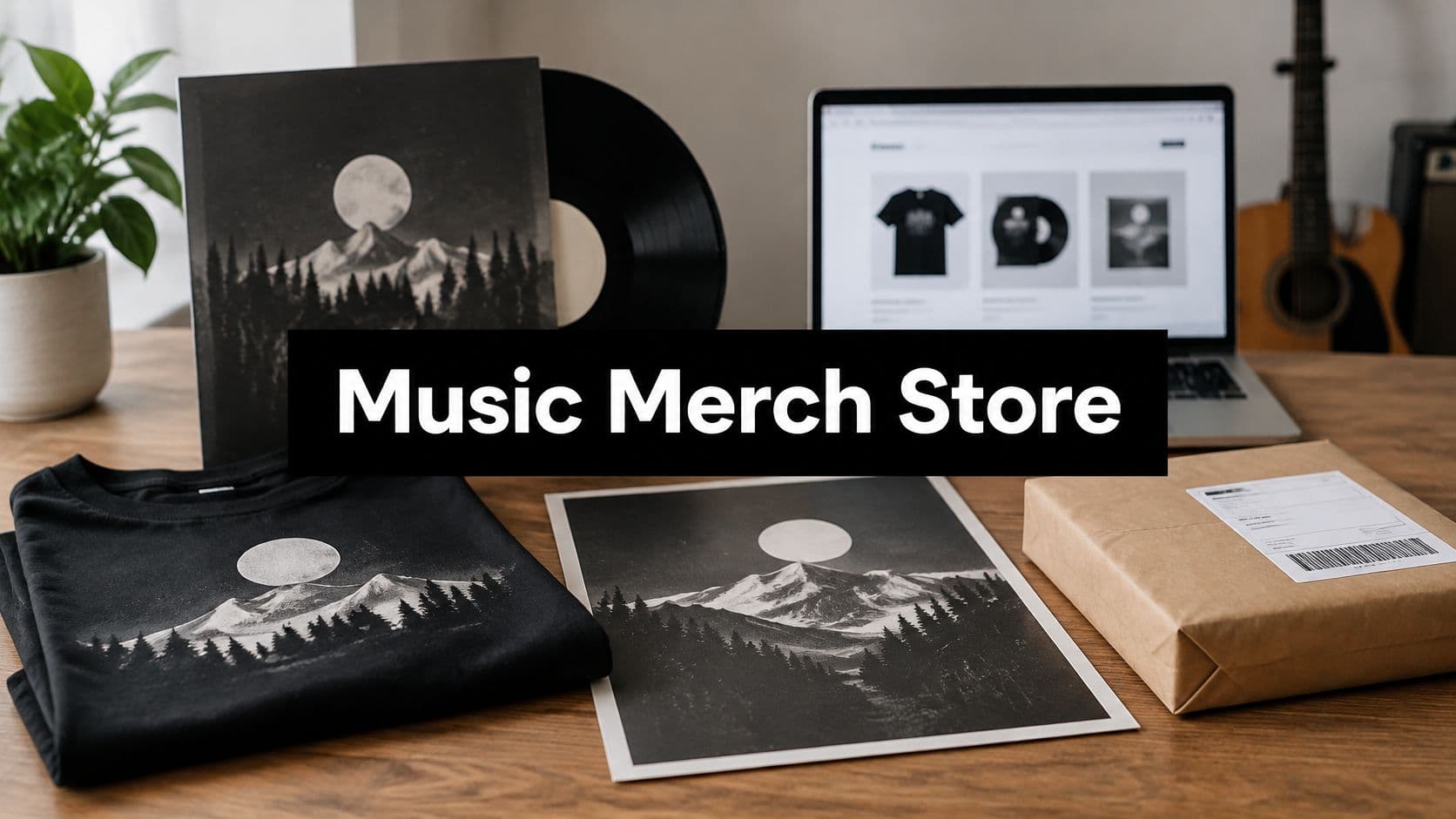
- A merch conversion happens when someone who visits your store buys a shirt, poster, or vinyl.
- A subscription conversion happens when a follower chooses ongoing paid access to your exclusives.
- A download conversion happens when a listener moves from streaming passively to buying directly.
- A message-driven conversion happens when personal contact leads a fan to support a release or drop.
This reframes sales in a healthier way. You're not forcing art into a business template. You're giving people a clear path to support work they already care about.
A better way to think about selling
The strongest artists don't treat sales as interruption. They treat it as continuation.
If your song helps someone feel seen, the next offer should deepen that relationship. If your audience connects to your visual world, your merch should extend that world. If fans follow you for behind-the-scenes honesty, a subscription should give them more of that closeness.
Sales conversion isn't about squeezing money out of attention. It's about making support feel natural.
When artists understand that, sales stops feeling fake. It starts feeling like fan development.
The Sales Conversion Formula for Musicians
At its simplest, sales conversion rate is the percentage of people who become paying customers. Valiotti's explanation of sales conversion rate defines it as (Closed Deals ÷ Total Qualified Leads) × 100, and describes it as one of the clearest signals of sales health.
For artists, the same logic applies even if the language changes.

Translate the formula into music terms
You don't need to think in terms like “qualified leads” if that feels too sales-heavy. Use fan behavior you can see.
| Part of the formula | Music example |
|---|---|
| Total audience | People who clicked your merch page, release page, or subscription offer |
| Conversions | People who bought, subscribed, or downloaded |
| Conversion rate | The percentage of visitors who completed that action |
That gives you a practical musician-friendly version:
Conversion Rate = (Number of Conversions ÷ Total Visitors) × 100
A simple example
Say 1,000 fans visit your store page and 20 buy a shirt.
Your math is:
(20 ÷ 1,000) × 100 = 2%
That means your merch page converted 2% of visitors into buyers.
Here's another way to think about it. If fans click your subscription page and only a handful join, the page may not be matching what they expected. If lots of people add merch to cart but don't finish checkout, the friction may be happening late in the process.
What counts as a conversion and what doesn't
Artists often get confused here.
A conversion is a desired action, but not every action is a sales conversion.
- Counts as a sales conversion: merch purchase, paid subscription, paid download
- May count as a marketing conversion: email signup, pre-save, joining a waitlist
- Doesn't count as a sales conversion on its own: likes, views, comments, follows
Those softer actions still matter. They just sit earlier in the funnel.
If a fan taps “like,” they've shown interest. If they buy, they've converted.
Why this number matters
Conversion rate helps you separate two problems that often get mixed together:
Traffic problem
Not enough people are seeing the offer.Offer problem
Plenty of people are seeing it, but too few are acting.
That distinction matters. An artist with low traffic and high conversion needs more reach. An artist with high traffic and low conversion needs a better offer, clearer messaging, or less friction.
Once you know the formula, you stop guessing. You can finally tell whether your release campaign is attracting the wrong people, or whether the right people are arriving and then losing momentum.
What Is a Good Conversion Rate in Music
Most artists ask this right after they calculate their number. “Okay, but is that good?”
A useful baseline comes from eCommerce. Dynamic Yield's global conversion benchmark puts the average global eCommerce conversion rate at 2.66%. That means only about 2.66 out of every 100 site visitors complete a desired action such as making a purchase.

That's helpful because it shows something many creators underestimate. Even strong stores do not convert everyone. In fact, most don't convert many at all. The point of conversion work isn't perfection. It's steady improvement.
Context matters more than bragging rights
A “good” conversion rate in music depends on what you're asking fans to do.
A low-friction action, like claiming a free item or joining a mailing list, will usually be easier than buying a premium collectible. A simple digital download often asks less commitment than a subscription. A shirt with a clear visual identity may convert differently from a niche item tied to one release.
So don't compare every offer to every other offer. Compare each offer to its own purpose.
- Broad support offer: easier for casual fans
- Collector item: better for a smaller, more committed segment
- Subscription: strongest when trust is already built
- Tour-related merch: often tied to emotion and timing
Digital conversion affects the wider music business
This matters beyond one sale. Research published in the Journal of Interactive Marketing found that music streaming accounted for 65% of global recorded music revenue as of 2021, and when a user subscribes or upgrades their streaming plan, their willingness to pay for live events increases by €16.6 in the first 0–6 months after conversion and €12.5 in the following 6–12 months. The same source notes that the global music industry was valued at US$29.6 billion in 2024, with 69% of revenue coming from streaming, and that in 2025 global recorded music revenues grew by 6.4% to US$31.7 billion, with streaming revenues surpassing US$22 billion and accounting for 69.6% of total income.
The big takeaway is simple. Digital conversion doesn't live in a separate box. When a fan commits online, that behavior can carry into live music and other spending.
A fan who upgrades from passive listening to active support often becomes more valuable across your whole career, not just on one transaction.
A better benchmark for artists
The most useful benchmark is personal and specific. Ask:
- Which offer converts best for me
- Which traffic source brings buyers instead of browsers
- Which audience segment acts fastest
- Which release format leads to deeper support
That's a better standard than chasing someone else's screenshot.
Actionable Tactics to Boost Your Conversion Rate
Improving conversion usually has less to do with hype and more to do with clarity. People buy when the offer feels relevant, easy, and trustworthy.

Salesforce's guide to sales conversion rate recommends optimizing landing pages to match visitor intent, simplifying checkout by reducing steps, and improving page load times. It also notes that emerging 2026 data identifies poor product information and imagery without multi-angle detail as a major UX barrier to conversion.
Make the offer match the fan's intent
If someone clicks because they saw a clip from your new single, don't send them to a cluttered page full of unrelated items. Send them to the offer that fits the moment.
A fan coming from a song teaser may want one of these next steps:
- Direct support with a paid download
- Identity purchase through release-themed merch
- Closer access through a subscription tied to the release
The page should continue the story they just entered. Same artwork. Same language. Same emotional frame.
Show the product like a real merch table
Artists lose sales when fans can't tell what they're buying. If you sell physical goods, the page needs more than one flat mockup and a vague title.
Use multiple views
Show front, back, close-up details, and fit or scale when relevant.Write useful descriptions
Tell fans what makes the item special. Tie it to a release, lyric, or era.Answer purchase questions early
Cover variants, materials, edition details, or what's included.
That's especially important for apparel, posters, vinyl packages, and bundles. Fans buy confidence as much as product.
Studio note: Your product page should answer the same questions a fan would ask if they were standing in front of you after a show.
Remove friction from checkout
A lot of artists work hard to create desire, then lose the sale in the final steps.
Common friction points include:
- Too many clicks before payment
- Confusing options that slow decisions
- Slow pages that interrupt momentum
- Mismatch between promo and product page that creates doubt
If your checkout path feels complicated, trim it. If your page loads slowly on mobile, fix the assets and layout. If your fan has to hunt for the buy button, the page is doing too much.
Here's a useful walkthrough on how digital offers can be framed more clearly:
Sell the meaning, not just the item
A black shirt is easy to ignore. A shirt tied to the night your fan first heard your breakout chorus isn't.
Try writing copy that connects the item to a moment:
- Release memory: “Designed from the artwork of the EP.”
- Fan identity: “For the people who've been here since the first demo.”
- Insider access: “Only available during this release window.”
This doesn't mean fake urgency. It means giving the offer context that makes emotional sense.
Personalize the ask
The same offer doesn't need the same message for everyone.
A new listener may respond to a low-commitment support option. A longtime fan may want a collector item or subscription. A live-show attendee may be ready for a post-show exclusive while the emotion is still fresh.
That's where artist communication matters. Direct messages, voice notes, community posts, and segmented emails can all make the ask feel personal instead of mass-produced.
Keep your pages focused
One page should usually have one main job.
If the page is for a shirt drop, let it sell the shirt. If the page is for a paid fan club, let it sell the membership. If the page is for a download, don't bury it under every other project you've made.
Clarity converts. Overloaded pages distract.
Tracking Conversions and Understanding Your Fans
Tracking conversion isn't about staring at dashboards all day. It's about listening to behavior. Fans tell you what they value through clicks, purchases, drop-offs, and repeat actions.

The mistake many artists make is only looking at the final sale. That's like judging a song only by the last chorus. You need to hear the whole arrangement.
Track the full fan journey
When someone buys, ask what happened before the purchase.
Did they come from an email? Did they click from a release post? Did they visit the page more than once? Did they spend time on a product page and then leave at checkout?
Those patterns help you diagnose what's really happening.
| Question | What to look for |
|---|---|
| Where are buyers coming from | Traffic sources that lead to purchases, not just visits |
| What are fans buying | Which offers get action from which audience segments |
| Where do people stall | Product pages, cart, payment, or after clicking from promo |
| Which content supports sales | Posts, songs, or campaigns that lead to higher-intent visits |
Focus on signal, not vanity
Plays and likes can help you gauge interest, but they don't always tell you whether support is growing. Conversion tracking shows whether attention is deepening.
A few practical signals matter a lot:
- Buyer-heavy traffic sources show where your best fans come from
- Repeat visits before purchase can suggest fans need more trust or information
- Strong conversion on one product type can reveal what your audience values most
- Low action from a high-traffic channel may mean the audience is broad but not committed
When you track conversions, you stop asking “How many people saw this?” and start asking “Which people cared enough to act?”
Use tracking to make better artistic business decisions
This kind of tracking helps with decisions artists face all the time.
Maybe your email audience buys more consistently than your short-form video audience. Maybe one song page leads fans into merch better than another. Maybe subscriptions grow when you offer process, demos, and voice notes, not polished extras.
That information shapes what you make and how you present it. It can influence release strategy, merch design, launch timing, and how often you ask for support.
Keep the learning loop simple
You don't need a giant analytics stack to get better. Start with a basic rhythm:
- Launch one clear offer
- Watch where visitors come from
- See where they drop off
- Adjust one thing at a time
- Compare the next round
That cycle teaches you more than random promotion ever will.
Sales Conversion FAQs for Musicians
Does a social media like count as a conversion
Usually, no. A like is engagement, not a sales conversion. It can be an early sign of interest, but a sales conversion happens when someone completes the action tied to revenue, such as buying merch, subscribing, or purchasing a download.
Is following me the same as converting
Not in sales terms. A follow means someone wants to keep hearing from you. That matters. But it's still one step before financial support.
What's the difference between engagement and conversion
Engagement shows attention. Conversion shows commitment.
Comments, shares, saves, and follows tell you people are interested. Purchases and paid sign-ups tell you they crossed the line from audience to supporter.
What if I have lots of traffic but low sales
That usually means one of three things. The offer isn't strong enough, the message doesn't match why people clicked, or the buying process creates friction. Start by reviewing the product page, the clarity of the offer, and the path to checkout.
How long should I wait before judging results
Long enough to collect a real pattern, but not so long that you ignore obvious issues. If fans are landing on the page and immediately bouncing, you can fix that quickly. If you're testing messaging or audience quality, give the campaign enough time to gather meaningful behavior.
Can one fan convert more than once
Absolutely. In music, that's common. Someone might first buy a download, then purchase merch, then join a subscription later. That's why conversion matters so much. One action often opens the door to the next.
Is sales conversion only about selling more stuff
No. It's also about learning what support looks like for your audience. Some fans want collectibles. Others want access. Others want a simple way to contribute directly. Good conversion work helps you build offers that fit real fan behavior instead of guessing.
If you want one place to stream your music, sell merch, offer subscriptions, message fans directly, and keep more control over how support turns into income, OohYeah is built for that artist-first model. It gives creators a unified space to turn attention into direct fan support without the usual platform sprawl.