What Is EPK In Music Your Essential Guide to a Pro Press Kit
Unsure what is EPK in music? This guide breaks down everything you need to create a standout electronic press kit that gets you noticed by the industry.
December 21, 2025
Music Marketplace Advisor
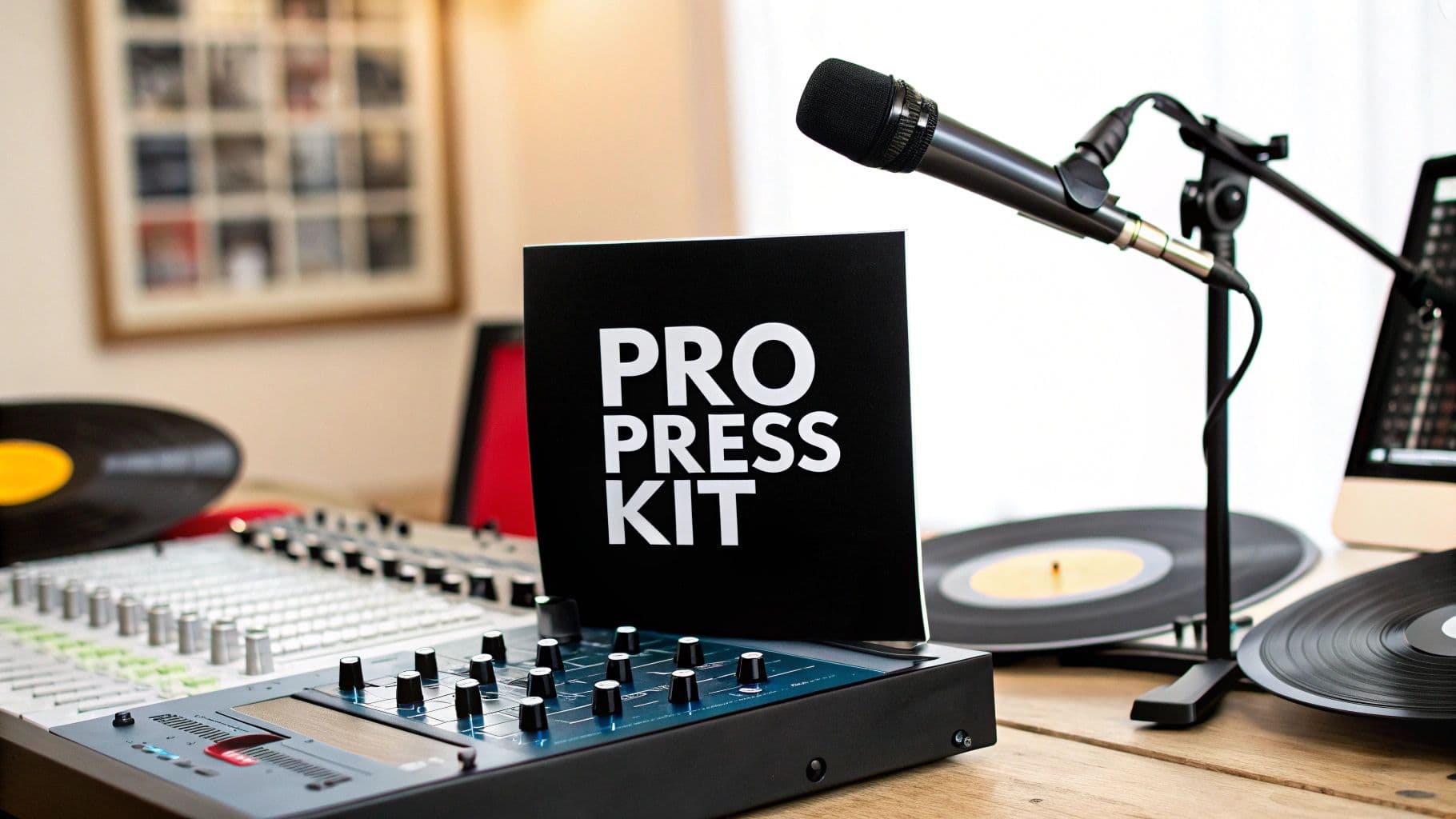
Buying & SellingLet’s cut right to it: an Electronic Press Kit, or EPK, is your professional music industry résumé. It’s the polished, all-in-one digital package that bundles your artist bio, music, high-quality photos, and contact info into a single, easily shareable link.
Think of it as your digital handshake—the first impression you make on booking agents, journalists, festival promoters, and venue owners.
Your Digital Handshake: What Is a Music EPK?
Picture this: you're trying to land a slot at a major festival or get your new single reviewed by a popular blog. The person on the other end of that email is drowning in submissions. A professional EPK is your secret weapon. It cuts through the noise by giving them everything they need, exactly where they expect to find it.
This isn’t just about sending a few scattered links and attachments. An EPK is a strategic, organized hub that quickly answers the most important questions industry gatekeepers have: Who are you? What do you sound like? What have you already accomplished? It’s not just a folder of files; it’s a tool built to communicate your value in seconds.
An EPK isn’t just about providing information—it's about demonstrating professionalism. A well-crafted kit signals to promoters and press that you are serious about your music career and prepared for the next level.
The Evolution from Physical to Digital
It's easy to forget that the modern EPK is a massive leap forward. Not long ago, artists had to mail out bulky physical press kits. We’re talking glossy 8x10 photos, a burned CD, and a printed bio, all stuffed into a big manila envelope. The whole process was painfully slow and expensive.
The digital shift really started taking hold in the late 1990s and became the undeniable industry standard by the 2010s. Early platforms like Sonicbids were already offering EPK-style services way back in 2005. This move completely changed the game, slashing costs and killing delivery delays. What used to take weeks of "snail mail" now happens instantly.
While printing and shipping just one physical kit could run you a small fortune, a digital EPK can often be maintained for under $100 per year. If you want to dive deeper, you can discover more insights on the EPK's journey from mailrooms to web browsers over on Artist.Tools.
Thanks to this digital transformation, your professional portfolio can now be updated on the fly and shared with a single click. It's an indispensable asset for any artist today, but the goal is timeless: open doors and land bigger opportunities.
Building Your EPK Component by Component
Think of your EPK as a professional toolkit. Each piece is designed to give a busy industry pro—a blogger, booking agent, or A&R scout—exactly what they need, right when they need it. This isn't just about ticking boxes; it's about making each component work hard for you.
Your EPK is really doing three jobs at once. It’s your resume, your creative portfolio, and your business card, all rolled into one slick package.
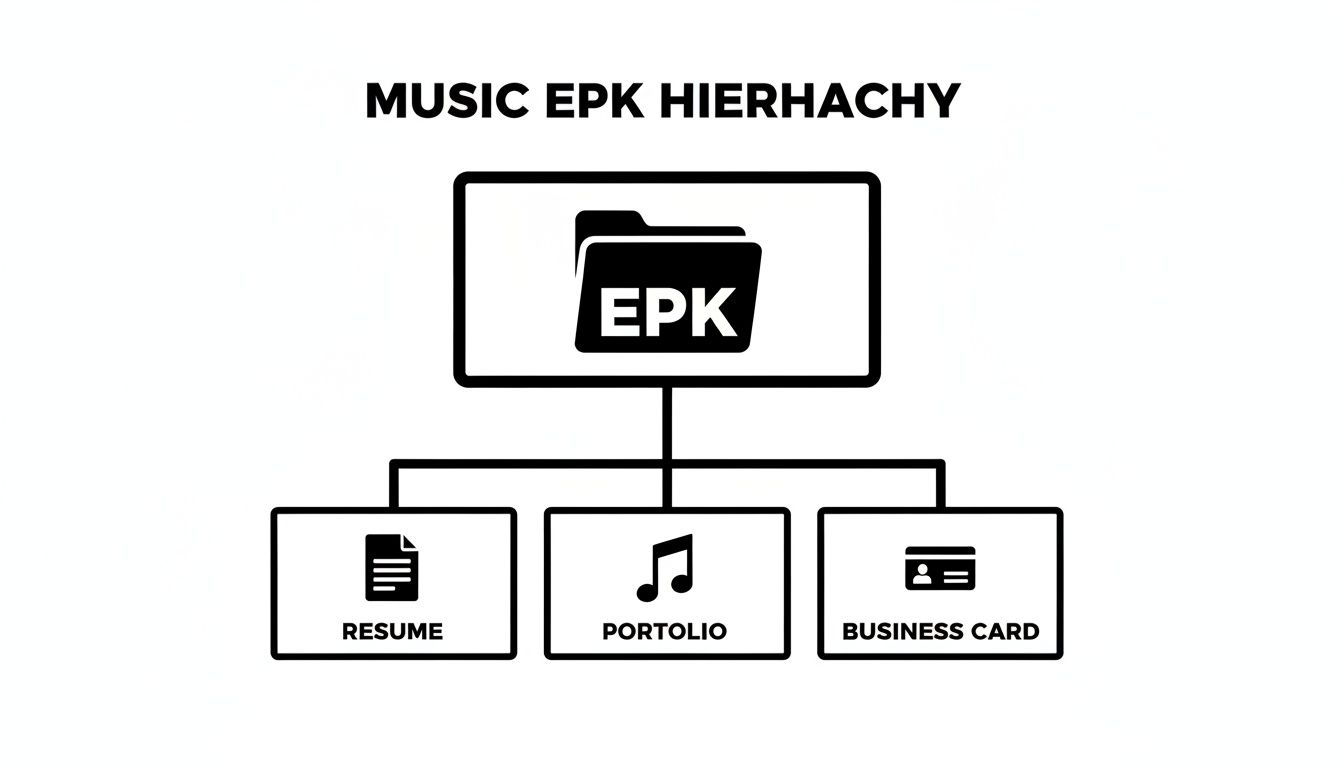
This structure means that anyone can find what they’re looking for, whether it's a quick contact email or a deep dive into your music. Each part supports the others to create a complete, compelling picture of who you are as an artist.
The Core Story: Your Artist Biography
Your bio is the story that ties everything else together. It has to be engaging, but it also needs to be flexible. That’s why you should always have two versions ready to go.
- The Short Bio (The Elevator Pitch): This is a single, powerful paragraph. It nails down who you are, your genre, and what makes you unique. It's perfect for social media profiles and quick introductions.
- The Long Bio (The Full Narrative): This version gives you more room to breathe, typically 250-500 words. You can dig into your backstory, your influences, key achievements, and the meaning behind your music. This is the material journalists and bloggers need to write a real feature.
Having both means you're prepared for any opportunity, from a fast-paced networking event to a formal interview request.
The Sonic Showcase: Your Music Selection
Let's be clear: this is the heart and soul of your EPK. The goal is to make an unforgettable first impression with your sound. Resist the urge to dump your entire back catalog here. Curation is everything.
Choose 3-5 of your absolute best tracks. They should be well-produced and represent your current artistic direction. And how you present them matters. Use high-quality streaming links from a platform like SoundCloud or a dedicated player on your EPK page. Whatever you do, don't force anyone to download a file—make it as simple as hitting "play."
A busy venue booker will likely give you less than 30 seconds to make your case. Your best song, a killer photo, and your short bio need to be front and center to grab their attention.
Visual Identity: Photos And Videos
Nothing says "I'm serious about my career" like professional visuals. High-resolution photos are a must-have, not a nice-to-have. The industry standard is at least 300 DPI, which ensures your pictures look sharp in print magazines, not just on a screen. Make sure to include a mix of professional headshots and high-energy live performance shots.
Video is another powerful tool for telling your story. To get the most out of your music videos or live clips, it's worth exploring some effective video marketing strategies that can help you connect with a wider audience.
The Proof: Press And Technical Details
This section is where you build credibility and prove you’re a pro. Showcase short, punchy quotes from positive reviews or link directly to articles that feature your music. Always remember to credit the publication. If you're looking to generate more of this kind of buzz, learning how to write a press release that gets your music noticed is a great place to start.
For booking agents and venues, two documents are absolutely essential: the tech rider and the stage plot. These outline all your technical needs for a live show, from how many mics you need to where everyone stands on stage. Providing these documents upfront shows you’re organized, experienced, and ready to play.
Why a Great EPK Is a Career Game Changer
Knowing what goes into an EPK is one thing. Understanding how it can genuinely launch your career is something else entirely. A great EPK isn't just a digital résumé; it's your most powerful tool of persuasion. It's often the single factor that decides whether you're taken seriously or get lost in a crowded inbox.
Think about a booking agent with only a few minutes to spare. They don't have time to hunt down your story across scattered social media profiles. Your EPK hands them everything they need on a silver platter, instantly signaling that you’re a professional who is organized and ready for the gig.
It’s the same for journalists and music bloggers, who are constantly on a deadline. When you provide high-resolution photos, a tight bio, and easy-to-stream music, you make their job a whole lot easier. This simple act of being prepared dramatically boosts your chances of getting press coverage because you’ve removed all the friction.
Your Professional Foot in the Door
Let's put this in a real-world context. You're pitching your new single to a major playlist curator who gets hundreds of submissions every single day. An email with a clean link to your EPK will always stand out from a messy one filled with attachments or a long, rambling story. It shows you understand how the industry works and, more importantly, that you respect their time.
This sense of professionalism extends to labels and A&R reps, too. A thoughtfully constructed EPK tells them you have a clear vision for your brand. It’s a powerful signal that you’re not just a hobbyist but an artist with a plan, which makes you a much more compelling prospect for them to invest in.
A strong EPK doesn’t just share information; it builds the credibility and trust essential for opening doors. It silently communicates that you are reliable, prepared, and ready for the opportunities you’re seeking.
From Information to Opportunity
At the end of the day, your EPK is the bridge between the music you create and the career-defining moments you're chasing. Whether you're trying to book a tour, land a festival slot, or catch the ear of a record label, your EPK is your frontline representative. It works for you 24/7, making your case to the very people who can help you climb to the next level.
It's a foundational part of your promotional toolkit. If you’re looking for more strategies to get your music heard, be sure to read our complete guide on how to market your music as an independent artist.
A truly great EPK does more than just list your achievements; it tells the compelling story of who you are as an artist and where you're going. By presenting yourself professionally, you turn a simple inquiry into a genuine opportunity, transforming a digital handshake into a real-world career game changer.
How to Avoid Common EPK Mistakes
Knowing what to put in your EPK is only half the battle. Just as important is knowing what to leave out—and which common mistakes can sink your chances before anyone even hits "play."
These slip-ups, however small, can make a talented artist seem unprofessional or just plain difficult to work with. Think of your EPK like a job interview. You wouldn't show up with a coffee stain on your shirt, right? The same logic applies here. Simple errors can close doors you never even knew were opening.
Let’s walk through the most common blunders I see artists make and, more importantly, how to sidestep them. Getting this right ensures your first impression is as polished as your music.
Technical and Content Blunders
Nothing gets an EPK sent to the trash folder faster than a technical glitch or sloppy content. A broken link, a blurry photo, or a massive file attachment screams "amateur." It sends a clear message that you don’t pay attention to detail, which is a major red flag for any busy industry professional.
Here’s what to watch out for:
Mistake: Sending Huge File Attachments. Never, ever attach MP3s, WAV files, or giant photos directly to an email. It clogs up inboxes, often gets flagged by spam filters, and is just considered bad form.
Solution: Host everything online and send a single, clean link. Use private SoundCloud or an embedded player for your music. The goal is to let them stream your tracks instantly with one click, not force them into a download.
Mistake: Using Low-Quality Photos. A journalist can't use a grainy, 72 DPI image from your Instagram for a magazine feature. Giving them unusable assets just creates extra work, and they’ll simply move on to the next artist who made it easy for them.
Solution: Provide a link to a cloud folder (like Dropbox or Google Drive) with high-resolution images. Make sure your best shots are at least 300 DPI and clearly labeled.
Professionalism and Presentation Errors
Once you’ve nailed the technical side, it’s all about how you frame your story. A rambling bio or an EPK that’s obviously out of date can kill your credibility just as fast as a broken link.
A professional EPK isn’t just about the information it contains, but also the information it leaves out. Keep it concise, curated, and focused on your most relevant and impressive achievements.
Avoid these classic presentation mistakes to keep your image sharp:
Mistake: A Long, Unfocused Bio. No one has time to read your entire life story. A promoter needs to understand your sound, your vibe, and your unique angle in a matter of seconds. If they have to search for the important stuff, they won't.
Solution: Write a tight, compelling bio. Lead with your genre and what makes you stand out. Have a short, one-paragraph version ready for quick pitches and a slightly longer one for those who want to dig deeper.
Mistake: Outdated Information. An EPK with tour dates from last year or a link to a single you released two years ago makes it look like you're not active. It sends the wrong message entirely.
Solution: Treat your EPK like a living document. Set a reminder to update it every quarter, and do it immediately after any big win—a new release, a great press hit, or a tour announcement. Strong presentation is a huge part of your brand, which is why it's so critical to understand why artists should focus on branding and image.
EPK Examples for Different Music Artists
 An EPK isn’t some cookie-cutter document you just fill out. Its real strength lies in how you shape it to fit your goals, your sound, and where you are in your career. Think about it: a DJ hustling for a festival slot has entirely different needs than a songwriter trying to get a publisher’s attention.
Let’s look at how three very different artists would build their EPKs to make the biggest splash. These examples should give you a good idea of which parts of your own story you need to put in the spotlight.
The Emerging Indie Songwriter
When you're a new solo artist, everything is about making a personal connection. Your music and the story behind it are your most powerful assets. Promoters, bloggers, and A&R reps are searching for an authentic voice they can get behind.
Your EPK has to lead with a killer bio that gets to the heart of your perspective and how you write. In this context, a raw, emotionally charged acoustic performance video is worth more than a dozen slick, expensive music videos.
Key Components to Prioritize:
- A powerful bio: This is your chance to tell your story. Talk about your influences, what drives your lyrics, and what makes your point of view worth hearing.
- Curated music samples: Pick 3-4 of your absolute best tracks. Embed them with a clean SoundCloud player and choose songs that showcase raw emotion and lyrical craft.
- Intimate live videos: Share high-quality links to videos of you playing an acoustic set or a solo show. You want to capture your raw talent, free from heavy production.
The Established Touring Band
Once your band has miles on the van, the EPK’s job changes. Now, it's all about proving your draw, your professionalism, and your ability to rock a crowd. Booking agents and festival organizers aren’t just booking music; they're booking a reliable act that can fill a room.
This EPK needs to hit them with your live energy right away. High-octane concert photos and a sizzle reel of performance clips should be the first thing they see. Back that up with a detailed list of past shows, highlighting well-known venues you've played and impressive bands you've opened for.
The EPK for an active band serves as a dynamic log of their momentum. It’s less about potential and more about proven experience, showcasing a history of successful shows and positive press to justify bigger bookings.
The Electronic Music Producer or DJ
A producer or DJ's EPK is a whole other animal. It's a professional calling card aimed squarely at club promoters, festival talent buyers, and labels scouting for new tracks. Here, hard data and technical specs are just as crucial as the music itself.
Your EPK needs to feature downloadable DJ mixes and direct links to streaming profiles showing healthy monthly listener counts and key playlist placements. A detailed tech rider isn't just a nice-to-have; it's a must. It proves you're a pro who is ready for a serious booking. For a bit of inspiration on laying all this out, checking out some influencer media kit examples can really help you see how to package your brand effectively.
Key Components to Prioritize:
- Downloadable DJ mixes: Provide 1-2 recent mixes (SoundCloud or Mixcloud are perfect for this) that show off your signature style and mixing skills.
- Streaming data: Don't be shy. Showcase your key metrics like Spotify monthly listeners, significant playlist adds, and social media follower counts.
- Technical rider: Always include a downloadable PDF that clearly outlines exactly what gear you need to perform.
Frequently Asked Questions About Music EPKs
Once you get the hang of what an EPK is, the real-world questions start popping up. How is it different from my regular website? Should I send a PDF or a link? How often do I need to deal with updating it? Nailing these details is what separates an EPK that gets results from one that gets ignored.
Let's walk through the most common questions artists ask. Think of this as the final check-in to make sure you're ready to use your EPK like a pro and keep your career moving forward.
EPK vs. Artist Website: What Is the Difference?
This is a big point of confusion, but the difference is actually pretty simple—and super important. Your artist website is your home base, built for your fans. It's the place for selling merch, sharing your full backstory, posting tour diaries, and building a community. It’s a public-facing space meant for everyone.
An EPK, however, is a laser-focused tool built specifically for the music industry. It’s a clean, curated pitch with only the essential info a booking agent, journalist, or label A&R needs to make a quick decision. Your website is the party; your EPK is the business meeting.
Your EPK often lives as a specific page on your artist website—sometimes hidden from public view. Even though it's hosted in the same place, its audience and purpose are completely different.
Should My EPK Be a PDF or a Webpage?
This one’s easy: a webpage. In today’s industry, a webpage is the standard, and for good reason. While making a PDF might feel straightforward, it’s full of hidden headaches for the people you're sending it to. They’re clunky to download, a pain to update, and embedded music or video players are notorious for breaking on different devices.
A clean, mobile-friendly webpage just works better. It gives industry pros one-click access to stream your music, lets you update new press quotes in real-time, and gives you a single, professional link to share everywhere. It's simply more efficient for everyone involved.
Here’s why a webpage always wins:
- Instant Access: A busy promoter is way more likely to click a link than to download, save, and then find a file on their computer.
- Real-Time Updates: Just landed a killer review? You can add it in seconds. With a PDF, you’d have to edit the source file and re-export the whole thing.
- Smooth Media: Embedded players from SoundCloud or YouTube work flawlessly on a webpage, making for a much better listening and viewing experience.
Sure, having a simple PDF one-sheet available as an optional download is a nice touch, but your main EPK should always be a live webpage.
How Often Should I Update My EPK?
Think of your EPK as a living document. It has to reflect where your career is right now. A good habit is to give it a full refresh every 3-6 months. That said, you should be updating it immediately after any big win.
An EPK with old information doesn't just look lazy; it can make you look like you’re not active anymore. The whole point is to give someone an impressive, accurate snapshot of your current momentum. Stale tour dates from last year just send the wrong signal.
Jump in and update your EPK as soon as you get:
- New Music: Your latest single or album needs to be the first thing people see and hear.
- New Press: Get those fresh quotes and links from recent reviews or interviews in there.
- New Photos: Keep your brand looking current with your latest high-quality promo shots.
- Major Bookings: Add any significant upcoming shows, festival slots, or tours.
Your EPK is your career’s highlight reel. Keep it fresh, and it’ll keep working for you.
Ready to create a professional hub for your music, merch, and EPK? With OohYeah, you can build a streamlined artist page that puts you in control. Host your EPK, sell directly to fans with zero commission, and manage your career all in one place. Start building your artist ecosystem on OohYeah today!