What Is an EPK for Musicians and How to Build One
Discover what is an EPK for musicians and learn how to build a professional press kit that gets you noticed by agents, venues, and the media.
September 16, 2025
Music Marketplace Advisor
Buying & SellingSo, what exactly is an Electronic Press Kit, or EPK? Think of it as your professional calling card, digital resume, and a full-on media presentation all wrapped up in a single, shareable link. It’s the one place industry pros—booking agents, venue managers, journalists, playlist curators—can go to get everything they need to know about you and your music, instantly.
Your Digital Handshake: What Is an EPK?
It wasn't that long ago that artists had to mail out bulky manila folders crammed with headshots, press clippings, and demo tapes. The EPK takes that entire package and transforms it into a sleek, efficient, and far more powerful online tool. It’s your one-stop shop, intentionally built for the fast-paced music industry.
This isn't just a random assortment of your best stuff. A truly effective EPK is a strategic marketing asset. It’s designed to make life easier for the busy people you’re trying to impress, giving them a reason to say "yes" to booking you, writing about you, or adding you to their festival lineup.
From Physical Mailers to Digital Assets
The move from physical press kits to digital ones has been a total game-changer, especially for independent musicians. Gone are the days of postage costs and waiting for the mail to arrive. Now, you can make updates in real-time and embed high-quality audio and video with a single click.
But this shift has also raised the bar. A polished, professional EPK signals that you're serious about your music career. It shows you’re organized, prepared, and that you respect the other person’s time—a crucial first impression when you're competing for a limited number of opportunities.
In fact, the impact is measurable. By 2020, artists with professional EPKs had already boosted their chances of landing gigs and press coverage by over 40%. You can dig into more stats on EPK effectiveness over at Muso Soup.
The Anatomy of a Powerful Musician EPK
A truly effective Electronic Press Kit isn't just a digital folder stuffed with your files; it's a carefully constructed narrative of your brand as an artist. Every single piece has a job to do, all working together to tell your story and signal that you're a pro. Think of it as your professional highlight reel—the one that grabs a busy industry insider's attention and doesn't let go.
This visual breaks down the core pieces every musician needs to build an EPK that actually gets results.
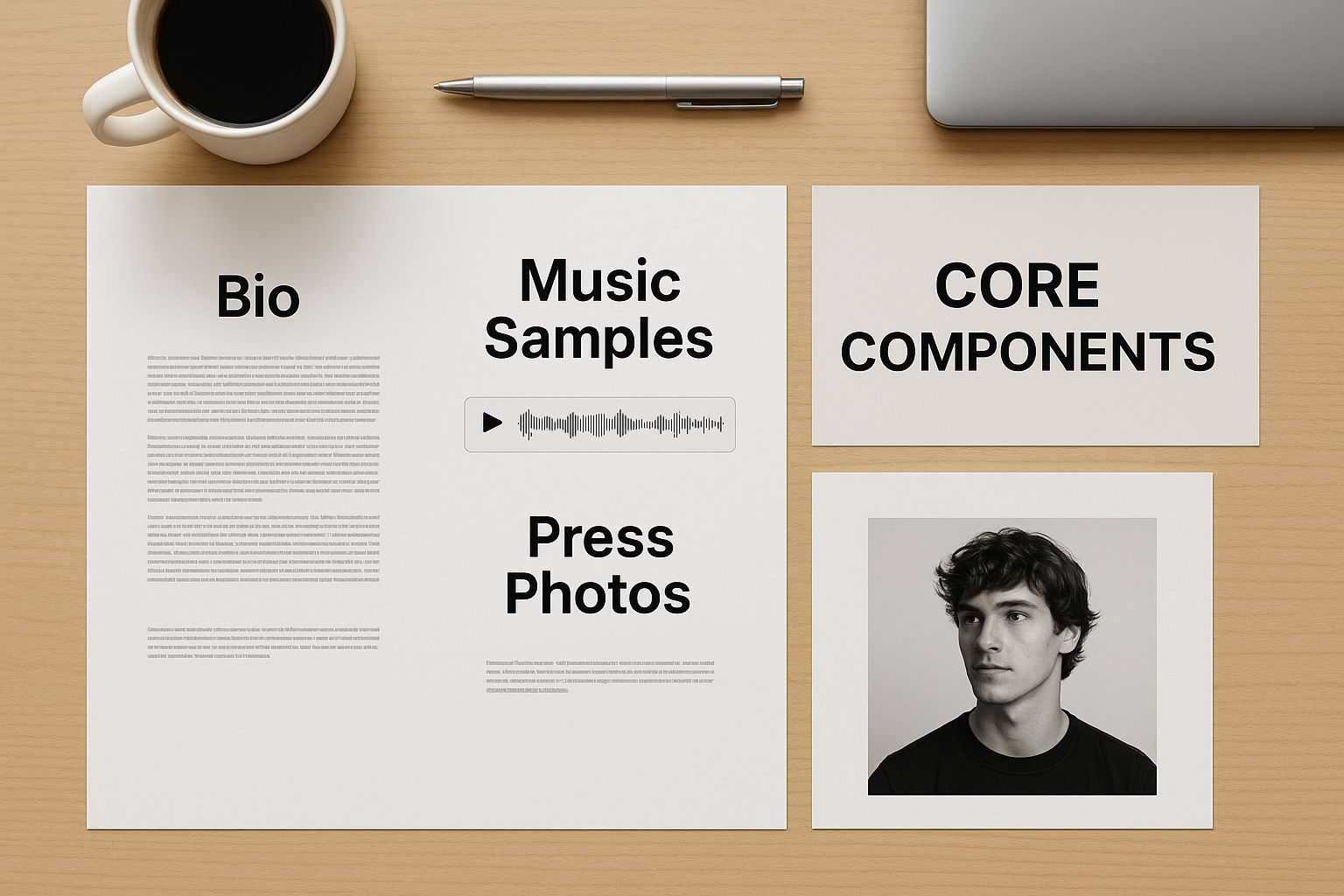
As you can see, things like your artist bio, your music, and professional photos are the bedrock of your professional identity. These aren't optional—they need to be polished and presented perfectly.
Your Core Media Assets
At the heart of any great EPK is your media. This is what lets someone experience your art instantly, without having to click away to Spotify or YouTube.
Your Artist Bio: This is where you tell your story. It needs to be tight and engaging, hitting on your journey, your unique sound, and any big wins you've had. Always have a short version (one paragraph) and a more detailed one ready to go.
High-Resolution Photos: You absolutely need professional images. Make sure you have a mix of high-res headshots and dynamic live performance shots that a promoter can easily grab for a flyer or a website listing.
Your Best Music: This is your sonic handshake, so make it a firm one. Embed a player with 3 to 5 of your strongest tracks. These should be your best-produced songs that really capture your current sound. And a crucial tip: never force a download. Streaming is the industry standard.
Your EPK has less than a minute to make an impact. Everything in it—from the bio you write to the songs you choose—must be curated to show you’re a serious artist ready for the next big opportunity.
Essential Supporting Information
Beyond the music and photos, a few other details provide critical context and build your credibility. This is the stuff that helps bookers, bloggers, and journalists understand where you stand professionally and makes their job easier.
Professional Videos: A high-quality video of a live performance can be worth more than a dozen slickly produced music videos. It shows a promoter exactly what they're getting when they book you.
Press and Testimonials: Pull out the best quotes from reviews, interviews, or even a good word from a venue owner you've worked with. Always link back to the original article or source to show it's legitimate.
Clear Contact Information: Don't make people dig for your contact info. List the right person—whether that's you, your manager, or a booking agent—along with a professional email and phone number, right where they can't miss it.
To round out your EPK, consider including key documents like a press release for a new single or tour. To get a feel for what works, check out some effective press release examples. These materials add another layer of professionalism, proving you understand the business side of being a musician.
Below is a quick checklist to ensure you've covered all the non-negotiable components for a solid EPK.
Essential EPK Components Checklist
| Component | Purpose and Key Details |
|---|---|
| Artist Bio | Your story. Have both a short (1 paragraph) and long (3-4 paragraphs) version available. |
| Music | Embed 3-5 of your strongest, best-produced songs. Always use a streaming player, not download links. |
| Hi-Res Photos | Include a mix of professional headshots and live performance shots. Make them easily downloadable. |
| Videos | A high-quality live performance video is key. Link to 1-2 of your best videos. |
| Press & Quotes | Showcase your best press clippings and testimonials. Include links to the original sources. |
| Contact Info | Clearly display the name, email, and phone number for the primary contact (manager, agent, or self). |
Think of this table as your final pre-flight check before you start sending your EPK out into the world. If you can tick off every box, you’re in a great position to make a professional impression.
Why a Great EPK Can Make or Break Your Music Career
Knowing what goes into an EPK is a start, but understanding why it matters is what truly separates the hobbyists from the pros. A polished press kit isn't just a digital scrapbook or something you throw together last minute. It’s a powerful, professional tool that works for you 24/7, creating real opportunities. Think of it as your silent agent, telling the industry gatekeepers you're serious before you've even met them.
Picture this: a festival booker is sifting through 100 different submissions. Most of them are a total mess—just rambling emails with a bunch of random links and missing information. Then, they click on yours. A single, clean link opens up a page with your best music, a compelling bio, professional photos, and a killer live video. In an instant, you’ve made their job easier, and that alone puts you right at the top of the pile.
Unlocking Doors and Building Momentum
A well-crafted EPK is all about making it incredibly easy for busy people to say "yes" to you. But it's not just about convenience; it’s about controlling your narrative. You get to present your music and your brand exactly the way you want it to be seen, making sure that every first impression is the right one. This level of professionalism builds trust long before you ever play a note for them.
Taking this proactive step shows you get the business side of music, which is a huge part of building a career. It’s a point we drive home in our guide on why networking is important in the music industry. At its core, your EPK is a networking powerhouse that does the talking for you.
Your Electronic Press Kit is your 24/7 representative in the music industry. It’s what gets you considered for opportunities while you sleep, write, or perform. A weak or incomplete EPK closes doors you never even knew were opening.
Ultimately, putting real time and effort into your EPK pays off in very tangible ways. It directly leads to:
- Securing More Gigs: It gives venue owners and promoters everything they need to book you with total confidence.
- Attracting Media Coverage: It hands journalists a story on a silver platter, making it incredibly simple for them to write about you.
- Building Professional Relationships: It proves you're a serious artist who respects the time of the people you want to work with.
Best Practices for Building and Using Your EPK
Just knowing what goes into an EPK isn't enough. The real magic is in how you put it all together. Think of your EPK as more than just a folder of files; it's your professional handshake, a direct reflection of your brand and how serious you are about your music. It should be a living, breathing document, not something you create once and forget about.
Keep It Fresh, Keep It Relevant
The golden rule? Always keep it current. Nothing says "I'm not active" like an EPK with a bio from two years ago or photos from your last band lineup. Just dropped a new single? Played a killer show? Got a great review? Your next move should be to update that EPK immediately. This ensures anyone who sees it gets the most accurate and impressive snapshot of who you are right now.
You also need to think about who you're sending it to. A venue booker and a music blogger are looking for very different things. The booker wants to see your live performance video and tech rider, while the blogger is scrolling for your bio, press quotes, and a stream of your best track. It’s smart to have a master EPK and then tailor a version specifically for each type of outreach.
Do This, Not That
Making a great first impression comes down to the details. The little things are what separate the pros from the amateurs, and industry gatekeepers can spot the difference in seconds.
Common Mistakes to Avoid:
- Low-Quality Media: Fuzzy photos and rough demos are an instant turn-off. Invest in professional, high-resolution assets. Your sound and image deserve it.
- Broken Links: This is a killer. A busy promoter clicks a link to your music, it 404s, and they've already moved on. Test every single link before sending.
- A Long, Unfocused Bio: We don't need your entire life story. Keep it tight, compelling, and focused on what makes you unique. Hook them with a great narrative, don't bore them with a novel.
- Hidden Contact Info: Don’t make people dig for your email address. Make your contact information big, bold, and impossible to miss.
"A promoter might look at dozens of EPKs in a single day. The ones that are clean, functional, and get straight to the point are the ones that get a response. Your EPK should make their job easier, not harder."
Ultimately, your EPK is a tool designed to open doors and create new opportunities, including finding new ways to sell your music and connect with a wider audience. By sidestepping these common mistakes and focusing on a polished, professional presentation, you’re showing the industry you mean business. A clean, functional, and up-to-date EPK respects their time and lets your talent shine.
Putting Your EPK to Work

Creating a polished Electronic Press Kit is a huge accomplishment, but it's really just the first step. Think of it like this: you've just built a killer resume, but it won't land you a single gig sitting on your hard drive. The real work begins now—getting that EPK into the hands of the people who can actually open doors for you.
Your official website is the perfect home base for your EPK. Create a dedicated page for it that’s dead simple to find. A clean, professional URL like yourband.com/press is the gold standard and makes it instantly accessible for any promoter, blogger, or agent who stops by.
When it comes to actively pitching people, though, you need a more personal touch.
Strategic Outreach And Etiquette
Never, ever send your EPK as an unsolicited attachment when reaching out to venues, media contacts, or playlist curators. Instead, the pro move is to write a short, sharp email that gets straight to the point. Briefly introduce yourself, explain why you're reaching out, and then provide a direct link to your EPK page.
Your outreach email is the handshake; your EPK is the full conversation. Keep the email tight and professional, and let your press kit do the rest. A little personalization goes a long way.
So, who should be on your "must-send" list? Here’s a quick rundown of the key players:
- Booking Agents and Venue Promoters: These folks need to know you're a serious act that can fill a room. A great EPK shows them you mean business and gives them the confidence to book you.
- Journalists and Music Bloggers: Make their lives easier. Giving them your story, high-res photos, and easy access to your music in one neat package makes you a dream to work with.
- Playlist Curators: You have seconds to grab their attention. An EPK lets them quickly hear your best stuff and see if your vibe fits their list.
- Radio DJs and Program Directors: A clean link to your press kit is infinitely better than a clunky email bogged down with attachments they'll never open.
This targeted approach is a fundamental part of learning how to market your music as an independent artist. It's how you turn a simple document into real career momentum.
Common Questions About Musician EPKs
Even after you've put together your first press kit, a few questions always seem to pop up. Let's clear up some of the most common things artists ask so you can use your EPK like a pro.
What's the Difference Between a Website and an EPK?
Think of it like this: your website is for your fans, but your EPK is for the industry. Your website is your public home base—the place for tour dates, merch, blog posts, and everything a fan would want to see.
An EPK, on the other hand, is a targeted professional tool. It's built for speed, giving a busy promoter, journalist, or booking agent exactly what they need to make a decision about you, and nothing more. The best approach is often to have your EPK live on a dedicated, sometimes private, page of your artist website.
Should I Use a PDF or a Web Page for My EPK?
While you might see both, a web-based EPK is absolutely the standard today. A webpage lets you embed music and video players, which is a game-changer. People can listen and watch instantly without downloading a thing. Plus, you can update it in seconds and even track who’s looking at it.
A PDF can be a nice, tidy attachment for an email, but it should be a secondary option. If you do send one, make sure it links back to your main web-based EPK.
Your EPK should be a living document, not a one-time project. It has to grow with your career, showing off your latest wins and current artistic vibe. An outdated EPK can shut down opportunities before you even know they exist.
How Many Songs Should I Include?
Quality always wins over quantity here. Pick 3 to 5 of your absolute best-produced tracks that truly capture your sound right now. This is your highlight reel, not your entire back catalog.
Make sure the songs feel like they belong together but still show off your range. Most importantly, they need to be incredibly easy to stream right on the page. Never, ever make an industry contact download audio files to hear your music.
How Often Should I Update My EPK?
Your EPK needs to be updated the moment something significant happens in your career. This isn't a "set it and forget it" tool.
Plan to refresh it whenever you:
- Get new high-quality photos from a shoot or a live show.
- Have major news, like a tour or big achievement, to add to your bio.
- Receive a great press quote or a strong review.
- Release new music that better represents your current direction.
A good habit is to give it a quick check-up every 3-6 months, just to make sure all the links are working and the information is still fresh, even if there are no major updates.
Ready to take control of your music career? OohYeah provides the tools you need to build your brand, sell directly to fans, and connect with the industry.
Create your artist profile and start building your future today!