What Do Music Managers Do: what do music managers do for artists
Discover what do music managers do and how they shape your career, build your team, and unlock opportunities to grow as an artist.
February 11, 2026
Music Marketplace Advisor
Buying & SellingSo, what does a music manager actually do?
Think of them as the CEO of your music career. They’re your primary business partner, the person who builds the strategic framework around your art, freeing you up to do what you do best: create.
The Music Manager as Your Career Architect
A great manager isn't just an administrator; they are the architect of your career. An architect doesn't just draw a pretty picture of a building. They draft a detailed blueprint, make sure the foundation is rock-solid, and then coordinate all the specialists—engineers, electricians, plumbers—to bring the entire vision to life.
That's a music manager, to a T.
They start by helping you map out your short-term goals and long-term vision. Then, they get to work on the foundation: making smart business decisions, managing your finances, and building a brand that lasts. This groundwork is what allows your career to grow without collapsing under pressure. From there, your manager acts as the general contractor, bringing in the right people at the right time—booking agents, publicists, lawyers, and so on.
Laying the Foundation for Growth
In today's crowded music industry, that kind of strategic guidance is more critical than ever. The global music market is huge and still growing, projected to hit USD 36.13 billion by 2026. With streaming making up nearly 68% of that market, a manager's expertise is what helps you cut through the noise and build something sustainable. For a deeper look at these market trends, check out the analysis from Mordor Intelligence.
A manager’s true value isn't just in the deals they close, but in the opportunities they create and the problems they solve. They are the strategic force turning artistic talent into a viable, long-lasting business.
From Vision to Reality
Ultimately, a manager's job is to connect your creative vision to commercial reality. They shoulder the administrative, financial, and logistical burdens that can easily derail an artist's focus. It's this partnership that helps transform a local talent into a recognized name.
While you can certainly build momentum on your own, a great manager can accelerate that growth exponentially. As you weigh your options, you might be wondering: can artists succeed without a manager? By handling the business, they give you the freedom to create.
What Does a Manager Actually Do Day-to-Day?
While thinking of a manager as a career architect is a great starting point, what does that really mean in practice? What fills their days? The reality is that a manager wears a dozen different hats, often in the same afternoon—shifting from creative sounding board to tough-as-nails negotiator to tour logistics coordinator.
It's not just about schmoozing and closing big deals. A manager is responsible for building and running the entire operational engine behind an artist's career. Let's break down the core pillars of their day-to-day work.
Strategic Career Planning and Development
First and foremost, a manager is there to see the big picture. While the artist is deep in the creative weeds, writing songs and perfecting their craft, the manager is mapping out the road ahead. This isn't a one-and-done business plan; it's a living, breathing strategy that has to adapt to new opportunities and the ever-shifting music industry.
Their job is to turn ambition into a concrete plan by:
- Setting tangible milestones: They help define what success looks like for the next year, the next five years, and beyond. This could be anything from landing a key festival slot to mapping out a debut album release.
- Guiding the creative vision: A manager provides crucial, objective feedback. They'll help decide which track should be the next single and make sure the music, visuals, and overall message all tell the same cohesive story.
- Hunting for opportunities: They are constantly on the lookout for a good fit, whether it’s a collaboration with another artist, a song placement in a new Netflix show, or a brand partnership that makes sense.
Essentially, the manager is the strategic filter, helping the artist make smart decisions that build a long-term career, not just score a temporary win.
This process is all about transforming raw talent into a focused, sustainable career path, moving from vision to execution and back again.
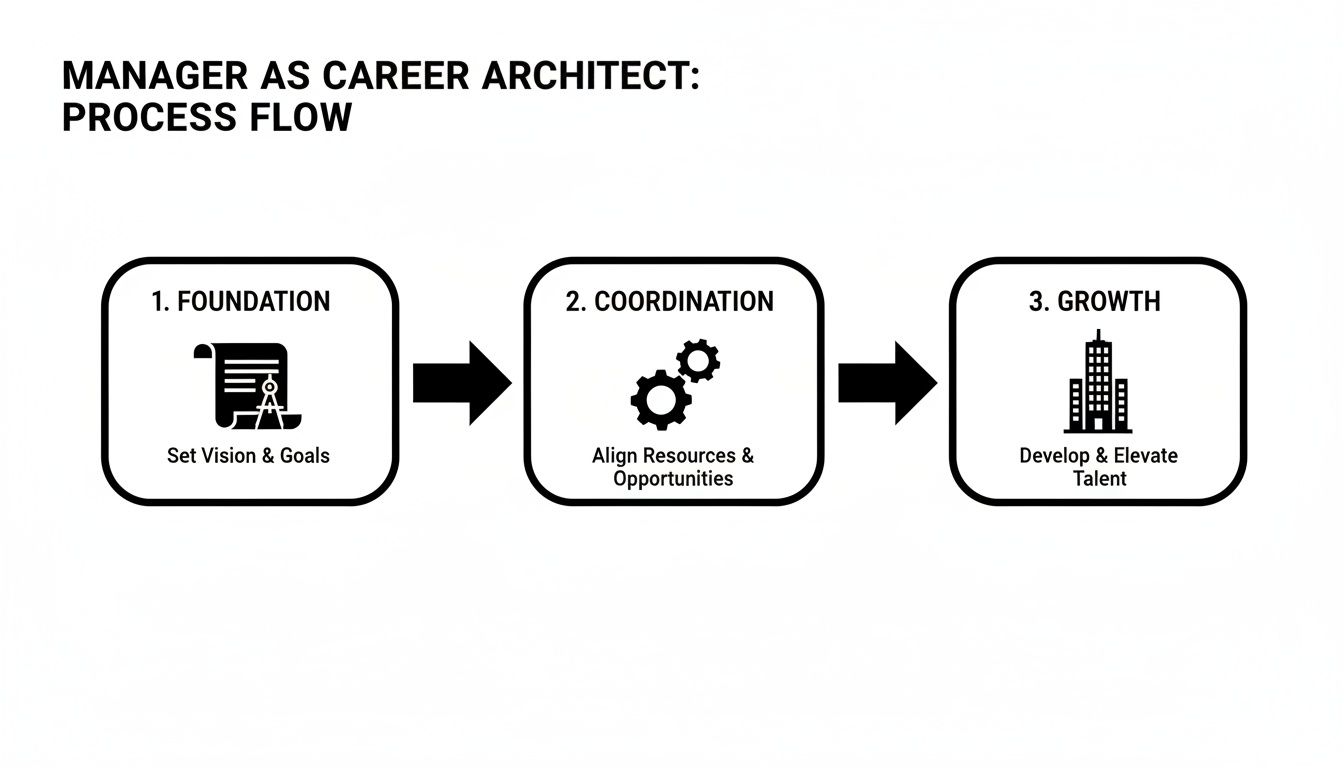
As you can see, it's a constant cycle of building the brand, coordinating the team, and scaling the artist's career.
Business and Financial Administration
Beyond the creative side, a manager is the CEO of the artist's enterprise. They dive into the nitty-gritty financial and administrative work that, while not glamorous, is absolutely essential for survival and growth. Without a sharp business mind in their corner, even the most gifted artist can find their career running on fumes.
A manager’s job is to turn artistic passion into a profitable and sustainable enterprise. They are the buffer between creativity and the often-harsh realities of the music business.
This means they’re the ones negotiating contracts, creating and managing tour budgets, and keeping a close eye on cash flow. This business acumen is critical in an industry with 25,490 music managers currently in the US alone, a number expected to grow by 5% by 2028. As traditional revenue streams get crowded, savvy managers are looking to B2B opportunities like commercial playlists, a sector growing at a 9.61% annual rate.
Marketing and Brand Coordination
In today's world, an artist is a brand. That makes the manager the de facto head of marketing, responsible for shaping and protecting the artist's public image. They ensure every interview, social media post, and music video aligns with the core story the artist wants to tell.
This involves:
- Defining a brand identity: They work directly with the artist to nail down their unique message, visual style, and overall vibe.
- Running point on release campaigns: A manager orchestrates the entire rollout for new music, coordinating everything from the pre-save strategy and social media content calendar to press interviews and digital ads.
- Managing the digital footprint: They make sure the artist's website, Spotify profile, and social media channels are all professional, current, and actively engaging with fans.
They are the central hub, coordinating the efforts of publicists, social media teams, and booking agents to create a single, powerful promotional push. In some ways, their work has parallels to other audience-building roles; understanding the Core Community Manager Responsibilities offers an interesting comparison. Both roles are fundamentally about nurturing a dedicated community around a person or brand.
How a Manager Builds Your Professional Team
No artist gets to the top alone. It’s a myth. Behind every successful musician is a hand-picked team of specialists, and the manager is the one who puts that team together. Think of them as a general contractor building a house—they might not pour the concrete or frame the walls themselves, but they hire the absolute best people for each job and make sure it all comes together to create something incredible.
Your manager is that central point of contact, the hub connecting you to the rest of the industry. Their job is to assemble your "cast and crew," ensuring everyone they bring on board is not just good at what they do, but is also a perfect fit for your vision and long-term goals.

Assembling Your Core Professional Circle
Bringing on a manager is usually the first major step, and it’s the move that unlocks the door to a whole new world of professional contacts. A good manager’s network is their superpower. They know who to call, who delivers results, and—just as critically—who to stay away from.
They use this network to build out your core support system, typically filling these key roles:
- The Booking Agent: This person lives and breathes live shows. Their sole focus is getting you on stage. Your manager strategizes with the agent on tour routing, negotiates your performance fees, and finds those career-building opening slots.
- The Publicist (PR Manager): A publicist shapes your story and gets it in front of the right people. They manage your public image and land you media coverage. The manager works hand-in-glove with them to coordinate press for a new album, line up interviews, and make sure your narrative is compelling.
- The Music Lawyer: The music business runs on contracts, and you need an expert to make sense of them. A manager brings in a lawyer to scrutinize every detail of a record deal, publishing agreement, or brand partnership to make sure your interests are protected.
- The Business Manager: This is your financial quarterback. They handle everything from accounting and tour budgets to taxes and long-term investments. They work directly with your manager to make sure your career is not just artistically fulfilling but also financially smart.
A manager isn't supposed to be an expert in law, PR, and accounting. Their real job is to find the experts and then lead them. They're the conductor making sure every instrument in your professional orchestra is playing in perfect harmony.
Ensuring Team Alignment and Synergy
Once the team is assembled, the manager’s role becomes all about communication and coordination. They are the person keeping everyone on the same page. They ensure the publicist’s media campaign lines up with the booking agent’s tour schedule, and that the lawyer’s contract terms support the financial plan you’ve built with the business manager.
This kind of centralized leadership is absolutely essential. Without it, chaos takes over. You might have a publicist hyping a tour that the agent hasn't even booked yet, or a lawyer signing a deal that completely contradicts your brand identity. The manager acts as the filter, making sure everyone is working from the same game plan: yours. This prevents wasted time, money, and opportunity, and makes every career move count.
Getting The Deal Right: Manager Contracts And Commission

Let's get down to business. The artist-manager agreement isn't just a piece of paper; it’s the legal backbone of your professional relationship. This contract spells out expectations, defines how everyone gets paid, and protects both of you if things go sideways.
Think of it as the playbook for your partnership. It sets the rules of the game so that when big decisions come up, there’s already a clear, agreed-upon framework for how to handle them. Getting this part right is one of the most critical steps you'll take in your career.
Understanding Commission Structures
The first question every artist asks is, "How does the manager get paid?" The answer is almost always commission. A manager earns a percentage of the money you make, which is great because it means they only make money when you do. Their success is literally tied to yours.
The industry standard commission is usually somewhere between 15% and 20%. But here’s the million-dollar question: 15% to 20% of what? The answer to that question is buried in the details of your contract, and it makes all the difference.
A huge part of a manager’s job involves securing income for you, from negotiating record deals to licensing music for commercial use. Each of these income streams will be subject to that commission percentage.
The single most important term in your management contract is the difference between "gross" and "net." This one word can cost you tens of thousands of dollars over the life of an agreement.
Let’s break down exactly what this means.
Gross Commission: This is a red flag. It means the manager takes their cut from your total income before any of your expenses are paid. Imagine your tour brings in $100,000, but it cost you $90,000 to put on. With a 20% gross deal, your manager takes $20,000 (20% of $100k), and you're left with a $10,000 loss.
Net Commission: This is the fair and standard way. The manager takes their percentage after specific, pre-approved expenses are deducted. Using the same example, their 20% would be calculated on the $10,000 profit, earning them $2,000 and leaving you with $8,000.
Always, always push for a net commission deal. It ensures your manager is just as motivated to keep your costs low as they are to increase your earnings. To get a better handle on all the potential income sources you'll be negotiating, check out our guide on https://oohyeah.app/posts/how-doindependent-artists-make-money-from-music.
The table below breaks down the most common deal structures you'll encounter.
Common Music Manager Commission Structures
| Commission Type | Standard Rate | Applies To | Key Considerations |
|---|---|---|---|
| Net Commission | 15-20% | All artist income after pre-approved expenses are deducted (e.g., touring costs, marketing). | This is the artist-friendly standard. Ensure the contract clearly defines which expenses are deductible. |
| Gross Commission | 15-20% | All artist income before any expenses are deducted. | Avoid this. It can leave you in debt while your manager gets paid. It's a major red flag. |
| Sliding Scale | Varies (e.g., 15% up to $100k, 20% after) | Net or gross income, based on hitting certain revenue milestones. | Can be a good way to incentivize growth, but make sure the milestones are realistic and the structure is net. |
| Commission Cap | Capped at a specific dollar amount | Total commission earned over a specific period (e.g., annually). | Rare for new artists, but can be negotiated later in a career to protect high earners from excessive fees. |
No matter the structure, the goal is a partnership where everyone wins. A fair commission deal is the foundation of that partnership.
Key Contract Terms And Red Flags
A good management contract covers more than just money. Pay very close attention to the term length—the duration of the agreement. This is typically one to three years, often with options to extend if you hit certain career goals together.
You also need to understand the "sunset clause." This is a critical term that dictates how a manager gets paid for deals they landed after your contract with them ends. It's only fair they get paid for the work they did, but that commission should decrease over a set period and eventually fade to zero.
As you review any potential contract, keep your eyes peeled for these major red flags. If you see one, stop and think very carefully.
- Large Upfront Fees: A real manager bets on your future success through commission. Anyone demanding a big "retainer" before they've earned you a dime is a huge warning sign.
- Unreasonably Long Contracts: Be very cautious of any initial contract that wants to lock you in for more than three years. A good manager is confident they can prove their value in a shorter timeframe.
- Pressure to Sign Without a Lawyer: This is the biggest red flag of all. Any manager who tells you not to get a lawyer or tries to rush you into signing is not someone you should trust with your career. Period.
How to Find the Right Manager for Your Music
So, you know what a music manager does. That's the easy part. Actually finding the right one? That's a whole different game. This isn't about carpet-bombing every industry email you can find with your demo. It’s about building something worth managing first, then finding a true partner who gets what you’re trying to do.
Before you even think about looking, you need to take a hard look in the mirror. Are you actually ready for a manager? A serious manager isn’t just looking for talent; they're looking for traction. They want to see that you've already started building a fire on your own.
- Consistent Live Shows: Are you playing out regularly? Do people in your town know your name?
- A Growing Online Presence: Is your social media active? Are real people engaging with what you post?
- A Clear Brand Identity: Do you know who you are as an artist? What's your story?
- Some Revenue Stream: Are you making any money from your music, even if it's just a little from merch or streams?
If you can tick these boxes, you're no longer just an artist with a dream. You're a small business with real potential, and that's exactly what gets a professional manager’s attention.
Making the Right Connections
Once you’re truly ready, the hunt can begin. Look, a cold email might work once in a blue moon, but genuine, human connections are infinitely more powerful. You have to put yourself in the rooms—both physical and virtual—where the industry actually hangs out. Getting out there is non-negotiable; if you need a game plan, our guide on why networking is vital in the music industry can help you get started.
Make it a point to go to industry conferences, local showcases, and online panels. Don't just show up to shove a business card in someone's hand. Go to learn, listen, and build real relationships. Your goal is to become a respected face in your scene. That's what makes you magnetic to a potential manager.
Vetting Potential Partners
When you do start having those conversations, remember this: it’s a two-way street. You need to be interviewing them just as much as they're interviewing you. Come prepared with smart questions that dig deeper than their past client list.
Your manager is your most important business partner. Treat the search process with the same diligence you would for a co-founder of a company, because that’s exactly what they are.
The good news is that the industry is changing for the better. Smart managers are moving away from old-school, restrictive deals. Many now prefer shorter, more flexible agreements that give artists clear exit strategies and more control. For an indie artist, it’s crucial to find a manager who embraces modern tools—someone who sees the value in platforms like OohYeah! for selling commission-free merch or building a community through direct fan messaging.
Ask them about their communication style. How often will you talk? Who are the key people in their network? What is their specific, tangible vision for your career? This is a long-term partnership, and choosing the right person is one of the biggest decisions you'll ever make. Don't rush it.
The Self-Managed Artist in the Digital Age
Not long ago, an artist’s career would often stall out until a manager swooped in to open the right doors. That’s just not the reality anymore. Thanks to a new wave of direct-to-fan platforms, you don’t need anyone’s permission to start building a real, sustainable business around your music.
Going it alone isn’t just a temporary fix until a "real" manager comes along—it’s a powerful, legitimate strategy. When you take the reins yourself, especially early on, you get to prove your concept, cultivate a genuine fanbase, and generate revenue on your own terms. You’re in the driver’s seat, building the kind of momentum that will make future managers want to work with you.
Your Manager in Your Pocket
Think of today's artist platforms as a "manager in your pocket." They give you the tools to handle tasks that used to require a whole team, putting your entire music business into one clean dashboard.
Instead of waiting around for a manager to build your brand, you can start doing it yourself right now. These tools make it possible to:
- Sell merchandise and music directly to the people who want to support you, often with zero commission. Every dollar goes straight to you.
- Talk directly with your audience through messaging and community features, turning casual listeners into loyal fans.
- Track your own data and analytics to see who your fans are, where they live, and what content really connects with them.
This screenshot from the OohYeah platform shows how an artist can create a central hub for their entire operation.
You can see clear options for selling music, merch, and even subscriptions all in one place. It’s a simple way to create multiple income streams from a single link.
Building a Business Worth Managing
Stepping into the manager role yourself is the ultimate way to build leverage. Imagine walking into a meeting with a potential manager and showing them you’ve already built a functioning business. You have sales data, an engaged email list, and a clear brand identity. The entire dynamic of that conversation shifts.
Self-management isn't about doing everything forever; it's about building something so compelling that the right partners come to you. You're not just asking for a chance; you're offering an opportunity.
You’re no longer just a talented musician hoping for a break. You’re an entrepreneur with a proven track record. This proactive approach puts you in a position of strength, ensuring that when you finally do bring a manager on board, it’s a true partnership built on mutual respect and a shared vision for success.
Ready to take control of your music career? With OohYeah, you can sell merchandise, music, and subscriptions directly to your fans with zero commission. Start building your business today.